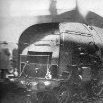
LNERW1 Posted January 23 Posted January 23 With all my toys being in boxes until they can be set up properly in the layout room, I decided to have a go at making something out of a cereal box to practice my modelling. I ended up making platform edges on the bare bones of a micro layout. As I worked I decided that, given it was a small space and I really want to do some proper modelling, I’d have a go at making a micro layout to sharpen layout building skills that I’ll need to build a large layout in the new railway room. And so a story began to take shape, and I decide to set the layout in south-east England in British Rail days, specifically the early 1970s. Bucksdown is a commuter town just southeast of Sevenoaks, with housing largely built around the Bucksdown and Ightam Railway’s station, located on King Street in what was, at the time of opening, a town of only 600 or so. As the town grew from the railway’s arrival in 1869, the South Eastern Railway built a station at Sevenoaks Weald in 1883, to attract some traffic from the town to its line. However, this was largely unsuccessful, and so in 1894 they built a short spur into the town centre, and opened Bucksdown Piccadilly station. Initially the branch could only be accessed from the south, as the line mainly served passengers headed to Folkestone and Dover, given traffic to London was served by the King Street line, joining the Kent Downs at Ightam. However, the amount of passengers changing to northbound trains at Hildenborough led the SER to opening a new chord, linking Piccadilly and Bucksdown Road, in 1902. From there, the station continued largely as normal, with once-an-hour trains going from London Bridge to Folkestone and vice versa, via the station, as well as a shuttle running to Bucksdown Road and Sevenoaks to connect with direct trains. However, it was never electrified under the SR, remaining steam powered until 1960. More importantly, British Railways started to cut services to Bucksdown Piccadilly, and with the Beeching Report, the station lost all services except a two-carriage express to London Bridge. After local protest, a peak-only shuttle to Ashford was instated, running out at the morning peak and returning in the evening. Due to the reduced service patterns, the station itself was rationalised. It was significantly shortened to accommodate for a new shopping centre, and this meant removal of the run-round at the buffer stops and one of the three platforms taken out of use. This left a much reduced station to coincide with the reduced service. However, it created issues as the locals further protested that the two-car express service could not be satisfactorily provided by any of the current DMUs on the Southern Region, and as such it was begrudgingly run with a Class 73 or 31, and two Mark 1 coaches. This provided further problems, as the loco and two coaches could not fit in the shortened platforms, and the line outside the station was too tightly restrained to allow the loco to run round outside the station. Thus, a unique operating pattern began: -As the train approached the station throat, it stopped at a point shortly outside the station, and the loco detached and ran into the Ashford platform. -The crew walked back to Thorpe Road siding, beyond the rear of the train, where a shunter was stabled. -The carriages were shunted into the London bay platform. -The driver returned the shunter to Thorpe Road siding, while passengers disembarked. -When the driver returned, boarding began of the return London service. -The crew moved the loco out from the Ashford platform, and backed onto the train. At this point the train would be ready to depart for London again. The Ashford train was much simpler, being run by various first generation DMUs, basically anything that was available at 6 on a weekday morning. This mode of operation would eventually take over the London train, as the arrival of the Express Sprinter meant the London train was worked by a pair of Class 158s from 1990, and in 2014 the line was finally electrified, with services being operated by Southeastern class 466s. As the Networkers are phased out of service, plans are afoot to extend the station further into the now partially vacant shopping complex, allowing trains up to 5 car Class 707s to use the station, and adding back the third platform. The King Street line is also doing well, providing a useful connection to the Kent Downs line. However, we are not in 2026. We are in 1970, and all services except the London train have been cut back. The Ashford shuttle is yet to start running, meaning the southbound curve is disused and only one destination, London, can be reached from the much-shrunken station. Piccadilly is near derelict, and is empty but for a few staff, for hours every day. The only people who pass through are a handful of commuters and, every now and then, the odd enthusiast down to watch the unusual operation at the station. This is the setting for the layout. And so, here are some photos: And a couple of maps to clarify the location of the layout, first the general intended location of Bucksdown: And a map of the Bucksdown area: Bucksdown Map.pdf (scanned from a hand-drawn map. Hopefully my handwriting is legible enough). I’ll elaborate more on my plans for the layout itself tomorrow, but for now I should reassure any readers that this is a short, simple project. It has a very clear endpoint, and once I’m done, if it is to a reasonable quality, I may look at exhibiting it. It’s meant to be a stop-gap until I can get a proper start on my main layout, and, most importantly, it’s my only modelling project. Im not going to bounce around and change my mind and rip up and redo. This will be a simple project that I will actually DO. I know thats somewhat hard to believe given how unreliable I am, but I hope to prove I can actually build a layout and not just sit around planning and making empty promises. This is half to find an outlet for modelling, and half to maintain my own ego, to be honest! But hopefully someone finds this interesting. (also, thank you very much @Metrovik for coming up with the name Piccadilly) 6
Mol_PMB Posted January 23 Posted January 23 Great idea. Something small and fairly simple which should give quick results and good practice to hone your skills. 1
Signal Post Posted January 23 Posted January 23 Sounds great. Taking on something that is small and achievable in a fairly short timescale will give you great satisfaction and added incentive for the bigger projects ahead later on. Looking forward to seeing this develop 1
LNERW1 Posted January 24 Author Posted January 24 A quick video update: WhatsApp Video 2026-01-24 at 16.51.30.mp4
Metrovik Posted January 24 Posted January 24 On 23/1/2026 at 7:12 PM, LNERW1 said: (also, thank you very much @Metrovik for coming up with the name Piccadilly) Well to be fair it's one of the few places in London I know. It's actual location within the city is unknown to me!
LNERW1 Posted January 25 Author Posted January 25 15 hours ago, Metrovik said: Well to be fair it's one of the few places in London I know. It's actual location within the city is unknown to me! As far as I know Piccadilly isnt a place. Theres Piccadilly Circus in London and Manchester Piccadilly station. It might be a place like Waterloo, wherein it was named after a location of a military victory? also check your phone for behind the scenes updates 1
Galteemore Posted January 25 Posted January 25 25 minutes ago, LNERW1 said: As far as I know Piccadilly isnt a place. Theres Piccadilly Circus in London and Manchester Piccadilly station. It might be a place like Waterloo, wherein it was named after a location of a military victory? also check your phone for behind the scenes updates Piccadilly is a street. A Piccadill was a sort of garment, which was originally sold there. The street runs from Hyde Park Corner to Piccadilly Circus. 1
Mol_PMB Posted January 25 Posted January 25 29 minutes ago, Galteemore said: Piccadilly is a street. A Piccadill was a sort of garment, which was originally sold there. The street runs from Hyde Park Corner to Piccadilly Circus. Every day’s a schoolday. That’s better than Peccadillo or Piccalilli! 1
LNERW1 Posted January 25 Author Posted January 25 1 hour ago, Galteemore said: Piccadilly is a street. A Piccadill was a sort of garment, which was originally sold there. The street runs from Hyde Park Corner to Piccadilly Circus. Ahhh. That does indeed make a lot of sense. British street names often have fascinating backstories. But maybe don't look into Grape Lane. 2
Northroader Posted January 26 Posted January 26 A full version still exists in London WC2, all the rest have been swept away by public sensibilities. 1
LNERW1 Posted January 28 Author Posted January 28 I did a weathering! weathering showcase 8pm wed 28 jan 8pm.mp4 click here for cool awesomeness and awesome coolness: https://www.youtube.com/@LNERW1 (no waffling yet but as the french say, i am le working on it) 1
.png.c363cdf5c3fb7955cd92a55eb6dbbae0.png)
Recommended Posts
Create an account or sign in to comment
You need to be a member in order to leave a comment
Create an account
Sign up for a new account in our community. It's easy!
Register a new accountSign in
Already have an account? Sign in here.
Sign In Now