.png.c363cdf5c3fb7955cd92a55eb6dbbae0.png)


Mol_PMB
-
Posts
3,870 -
Joined
-
Last visited
-
Days Won
239
Content Type
Profiles
Forums
Events
Gallery
Blogs
Everything posted by Mol_PMB
-
Star Of The Moment - Electrostar First Sample Breaks Cover
Mol_PMB replied to Warbonnet's topic in British Outline Modelling
You might want to take another look at the bodyside near the intermediate ends, where you have a bold raised bead line running vertically. The end module (last 800mm or so of each end of the carbody) was bolted on with 6 big bolts (2 M36 and 4 M30 if I remember correctly from my time in U shop). This left a gap between the end and the bodyside, which was filled with black Sikaflex sealant from a big air-powered sealant gun. The gap was filled flush, not to a raised profile. Also, the end module included the part below floor level. So that joint continued down across the solebar. This photo on Flickr (not mine) shows what the end joint should look like: Not like this: More recent builds may have a slightly different treatment in this area, but it's still not a raised bead line, and again the joint continues below the solebar. Again, a photo on Flickr, not mine. The raised bead between the doors also looks wrong to me. The doors were designed to seat very flush, there isn't a raised portion where they join: Cheers Mol -
All those Rebels causing trouble…
-
"Voiding the Warranty" - Mol's experiments in 21mm gauge
Mol_PMB replied to Mol_PMB's topic in Irish Models
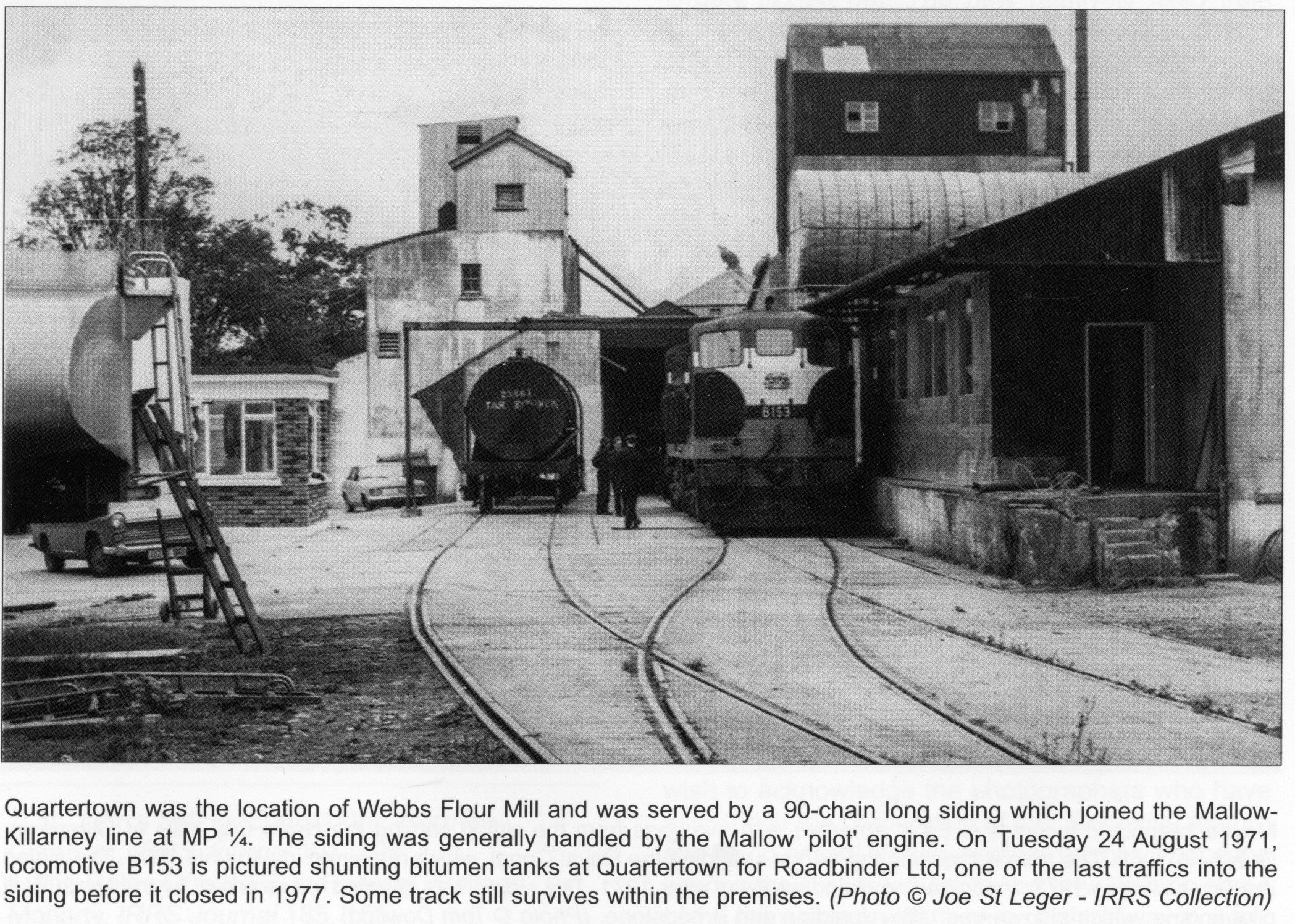
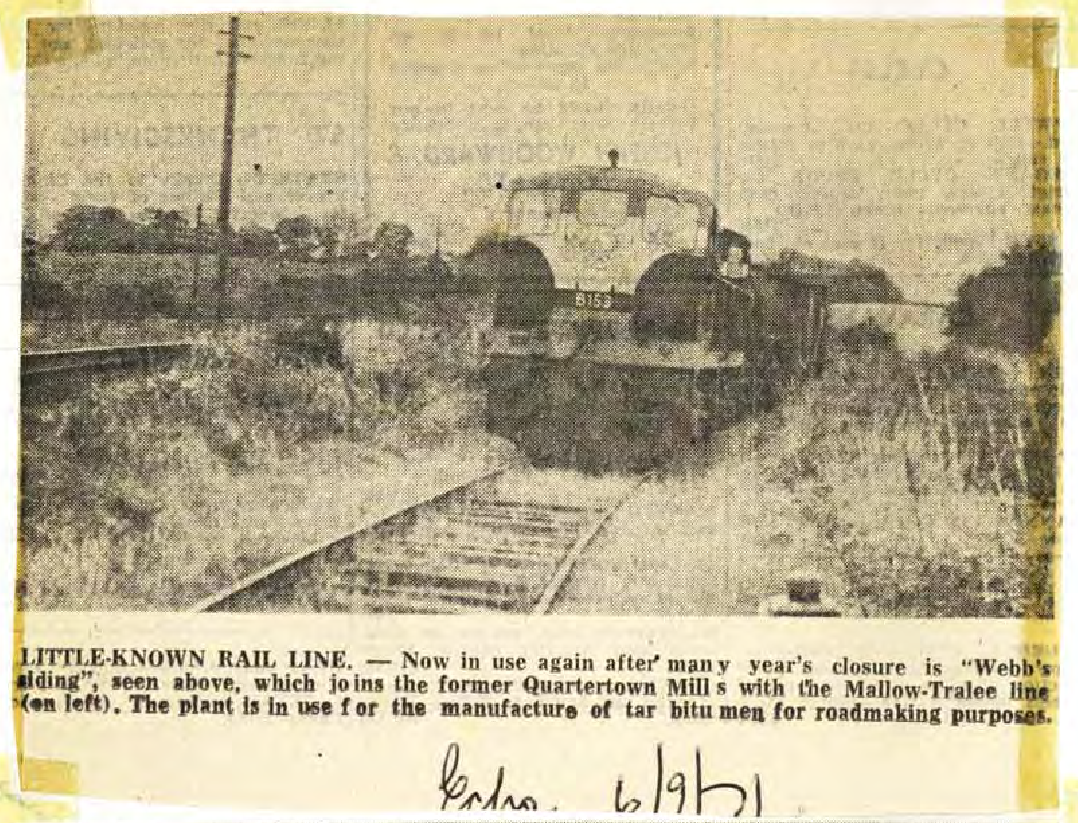
This photo is one of Colm Creedon's scrapbooks, and shows B153 at the junction where Webb's siding joined the Mallow-Kerry line: I think it was taken on the same occasion as this one in the IRRS Journal; it's the same loco and it's fair to assume a couple of weeks delay between the event and the upper photo appearing in hte 'Echo'. Although the upper photo is not at all clear, I am pretty confident that there's a brake van at the back of the train. I had been wondering whether trains to Quartertown Mill would have had a brake van, or if they would have been treated as an extended shunt move. From Mallow to Killarney Junction is about 3/4 of a mile on the up main, then there's another 1/4 of a mile from Killarney Junction on the Kerry line to where the Quartertown branch diverges. The branch itself was nearly 1/2 a mile long, so the total journey was a 1.5 miles each way. Anyway, it looks like they did use a brake van, which will make the shunting more interesting on the layout! I'm presently assuming that trains were usually hauled in both directions, running round in the loop at the mill, . But I am aware that the IRRS special that visited was propelled down the branch, so maybe that method of operation was used for the freights too?
-
I was having a look through the Dermot McCarthy collection (Cork Local Studies Library) and found this slightly gloomy shot dated 20/06/1953: https://corkdigitalarchive.ie/items/show/1796 Of interest to the wagon nerd like me is the Gunpowder Van half in shot. Note the very low roof, sheet sides, cast plate on the door. These were rare beasts. Here is a preserved GB equivalent which is similar in style and construction: The fancy lettering on the side of the Irish one (we can read 'VAN' and perhaps make out the last few letters of 'GUNPOWDER'), may be the remnants of GSR livery. The 1975 CIE WTT includes them in the list of wagon types, with 8 ton tare, 7 ton capacity, and number series 15355/15444 [not continuous in that range, there were just a few converted from normal goods vans]. Sorry I'm a day late with this post...
-
Indeed, it’s E410, the one I’ve modelled. I really like that sequence of photos on the quays. E407 also features in the photos, which is the other one I have half-finished, though my model of that will be in black. I’ve also seen photos of E403 and E414 in Cork in the silver era. But we do have a D in Cork here, in 1955 before the E’s arrived. Strictly it was a 1000 class then:
-
Ooooh - you're right. And not just the railtour, but a 1970s bitumen working too. That shows that a brake van was used on the branch, which was something I was wondering about. I've also found several groups of very nice Fenit photos too, that I hadn't seen before. That lot will keep me busy for a few evenings!
-
Wonderful - some more rabbit holes for me to explore. Thank you!
-
I do love these late 1950s colour shots. That lighter green livery did look great.
-
That's super - thanks for sharing! One or two of the first CIE repaints in the train too.
-
Thanks JHB! I do like the stealth black livery and if IRM were to produce either of those locos I would have to buy them!
-
Good idea. GSR period and early CIE (say pre-1955 ish) would fit well here. Photos become much more common from the mid-50s and the railway changed dramatically with the influx of diesels and the closure of branch lines and smaller stations in the late 50s and early 60s.
-
You need to be an IRRS member to see their Flickr archive. There are instructions on the website about how to register your membership number and Flickr ID. It’s well worth it with around 30,000 Irish railway images, and more being added regularly. The period best covered by the archive is probably 1950s to 1980s, but there are plenty of older and newer images too.
-
The IRRS archive contains some very nice older photos, particularly those in the Harold Fayle collection: https://www.flickr.com/photos/irishrailwayarchive/albums/72177720318213369 For those of you who are IRRS members, here are a few examples. DSER 2-2-2T no.27 around 1920: https://www.flickr.com/photos/irishrailwayarchive/53813452459/ WCR no.11 around 1900: https://www.flickr.com/photos/irishrailwayarchive/53813368063/ GSWR 2-4-0 around 1905: https://www.flickr.com/photos/irishrailwayarchive/53812198452/ GSWR 4-wheel carriage around 1920: https://www.flickr.com/photos/irishrailwayarchive/53813564205/ GNR no.70 with an express in the 1920s: https://www.flickr.com/photos/irishrailwayarchive/53813553975/ DESR 0-4-2 no.59 around 1906: https://www.flickr.com/photos/irishrailwayarchive/53813116576/ WLWR 2-4-0 no.6 around 1902: https://www.flickr.com/photos/irishrailwayarchive/53813563110 MGWR 0-4-2 Comet around 1900: https://www.flickr.com/photos/irishrailwayarchive/53813563865 GSWR 0-6-0 no.188 around 1920: https://www.flickr.com/photos/irishrailwayarchive/53812198922 GNR 0-6-0 no.145 around 1920: https://www.flickr.com/photos/irishrailwayarchive/53812188152 There are many more.
-
Lovely! The original pier at Fenit before it was rebuilt in the 1950s. A fair sized ship alongside. Limerick Steamship Co were the most regular visitors here. Pages 56-58 are good too - unusual view of the inside motion of an 0-6-0 goods engine, and a nice selection of goods wagons in a rather wrecked state. Pages 65 & 67 have one of @leslie10646's brake vans in a slightly ticklish position. Page 73 has a nice view of a 'Big Boy' van, 15065 I think. I must finish of my drawing of them, and then think about a model or two. I've been distracted by the layout construction.
-
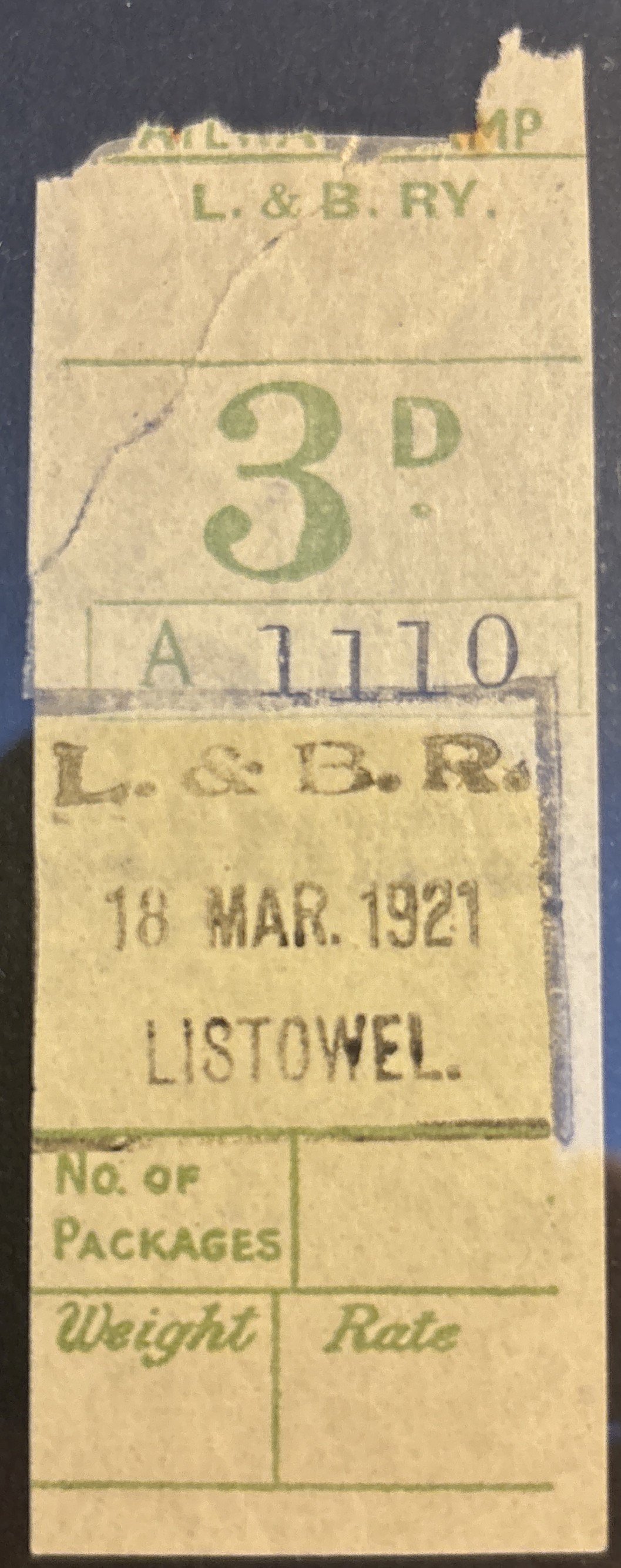
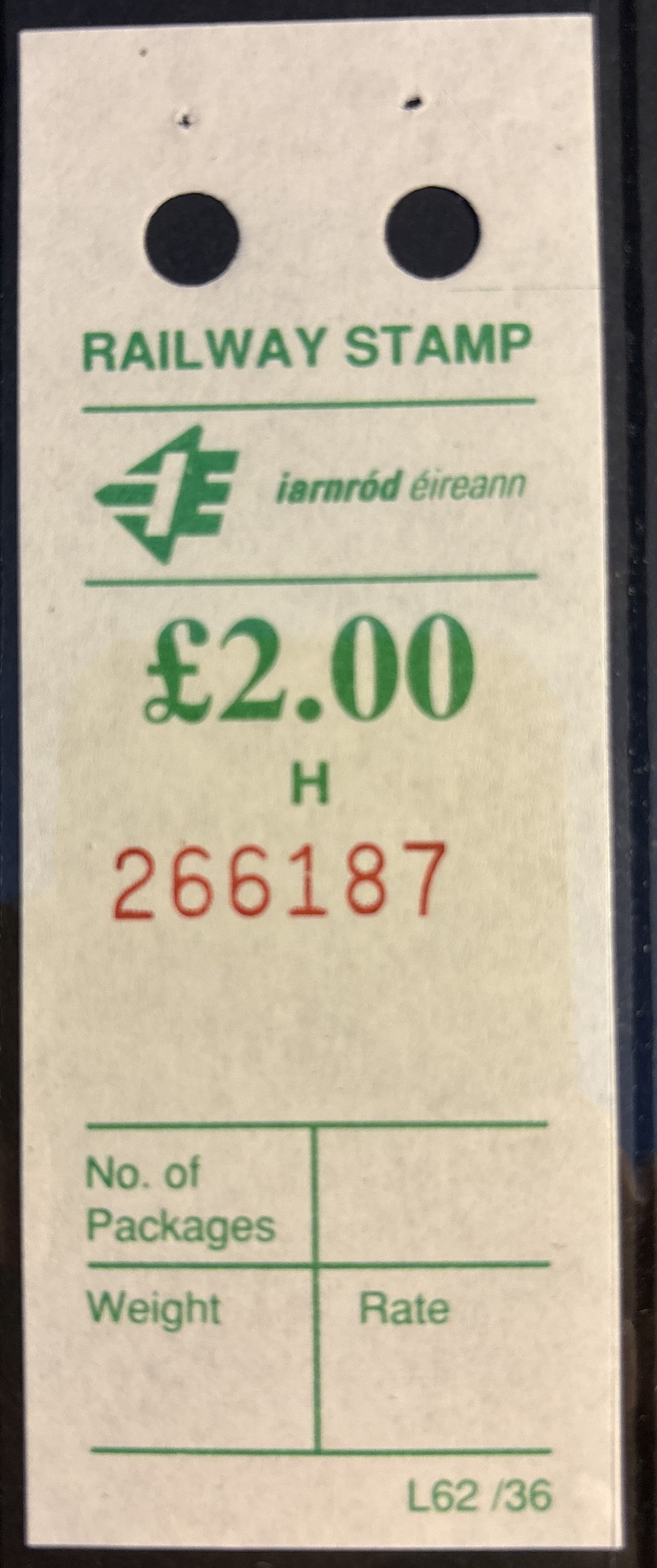
That last image you linked shows a VERY busy goods yard at Listowel - there must be about 50 wagons visible, no doubt plenty of WLWR types amongst them. Market day? Going off on a small tangent, this parcel stamp is one of the rarer pieces in my railway philately collection: And in a fine example of 'if it ain't broke, don't fix it', a parcel stamp of almost identical design from around 80 years later:
-
Lovely! I thought at first that the train at Loo Bridge was hauled by one of the single Fairlies, but on closer inspection it's one of the very similar-looking conventional 0-4-4Ts. I agree there are some super 'Easter eggs' to be found in the background of non-railway photos. Although from a later era I'm still amazed by the photo I found earlier showing a 1000 (D) class diesel shunter working in Cork.
-
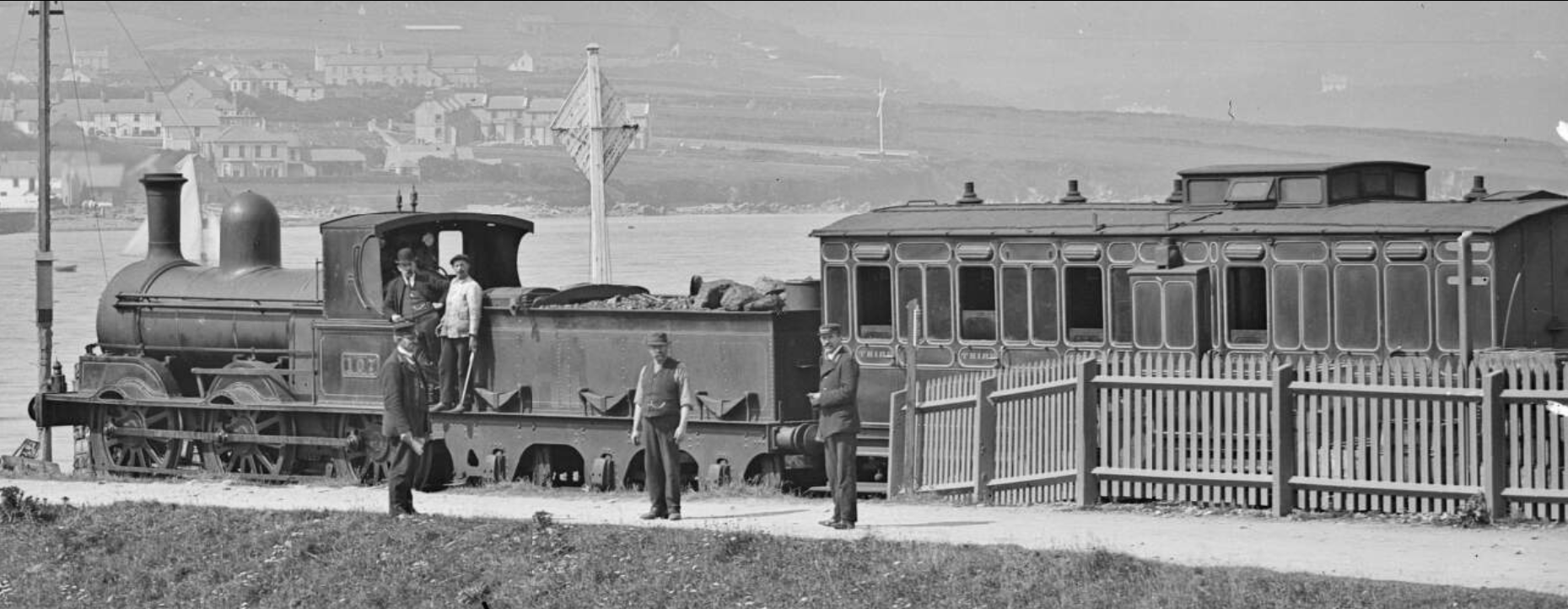
This is a beauty. Zoom right in on the NLI original to see the details of the elaborate lining and lettering on the rolling stock. The train crew make a lovely cameo too: https://catalogue.nli.ie/Record/vtls000251179 107 was built in 1881, but the line to Valentia Harbour wasn't opened until 1895. An unusual view of the Waterford coaling quay: https://catalogue.nli.ie/Record/vtls000036651 The loco is presumably 'Erin' as seen in this view: https://catalogue.nli.ie/Record/vtls000036650 No trains but what a delightful scene, asking to be modelled! https://catalogue.nli.ie/Record/vtls000058719
-
Photos of Preserved Locos in Service
Mol_PMB replied to GSWR 90's topic in Photos & Videos of the Prototype
124 at Cork with the mail in 1961. But what's that van behind the loco? Could be a UTA crest on the side. Pigeons? https://catalogue.nli.ie/Record/vtls000305726 -
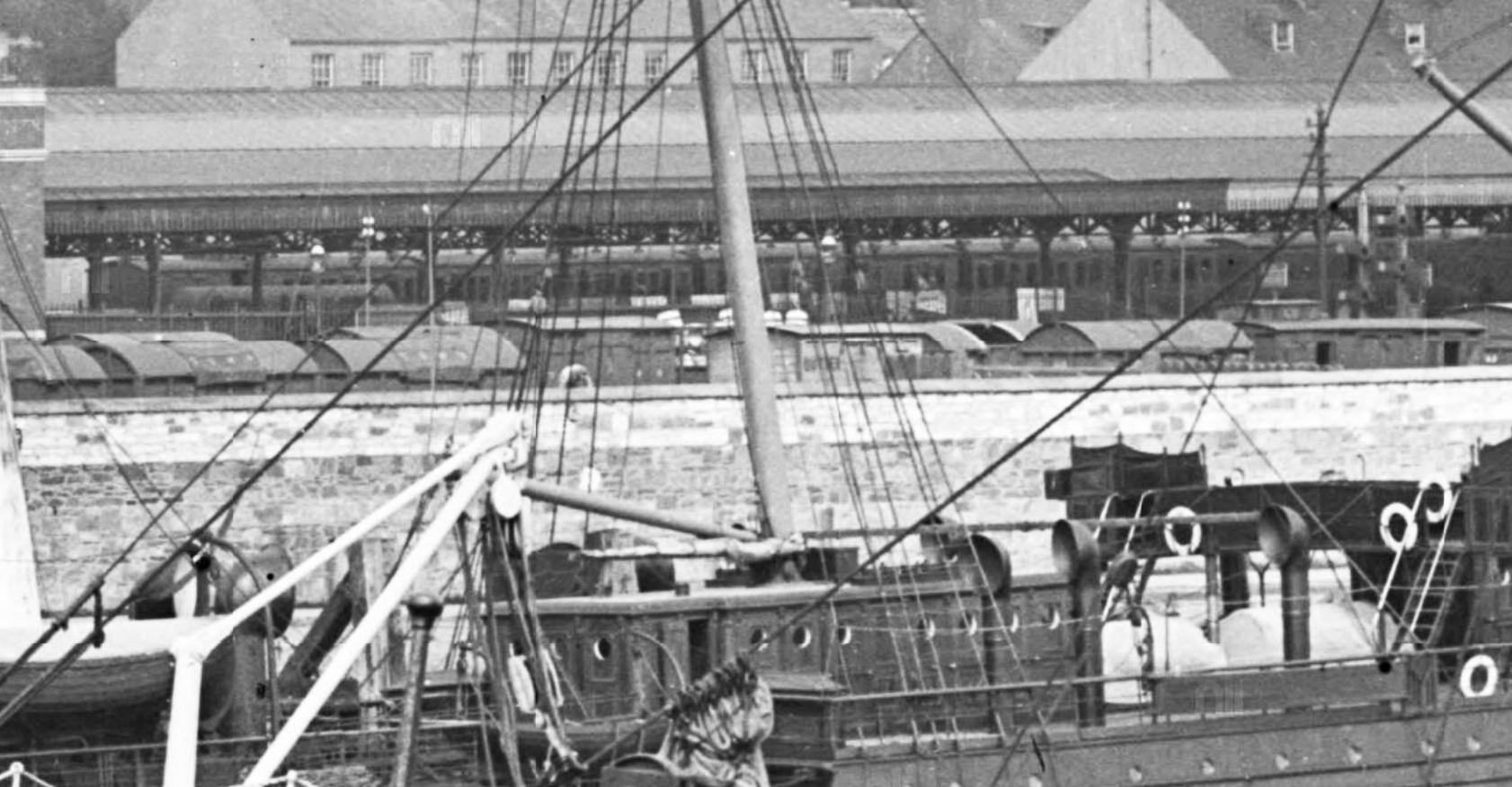
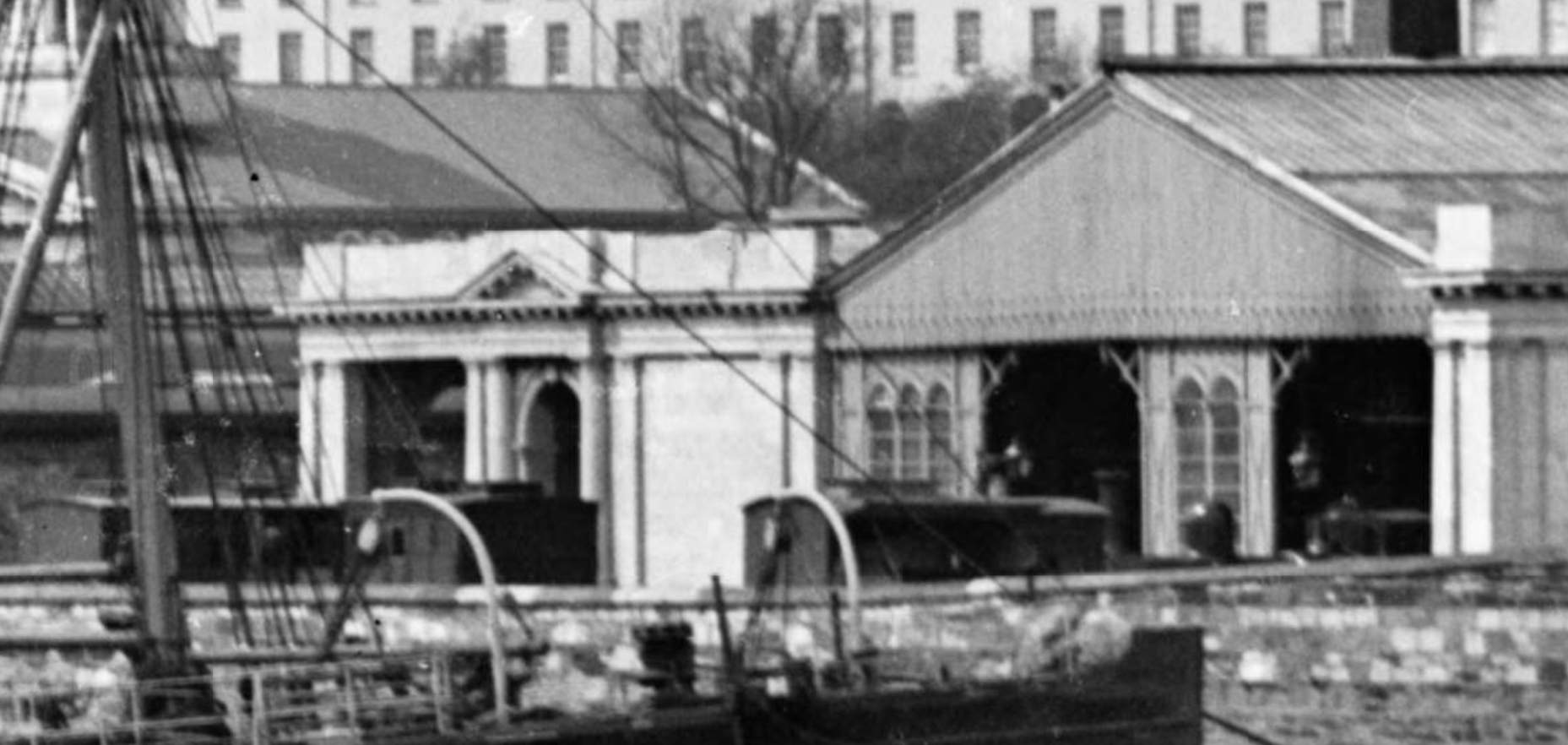
GSWR era at Cork, this is not really a railway photo but it has a lot of wagons in the background: https://catalogue.nli.ie/Record/vtls000337575 Two items of interest: on GSWR convertible vans, the sheet covering the hole in the roof is also lettered GSWR. And there's a butter van in shot too. Also in Cork, and perhaps an even earlier era when the original station was still in use? https://catalogue.nli.ie/Record/vtls000337571 Certainly some antiquated rolling stock, apparently on lines at right angles to each other (maybe lots of small turntables?). And an early loco partly visible, just teasing us.
-
That's a hell of 'a start'!
-
In CIE times there was rail traffic in gypsum, shale, barytes, magnesite and dolomite, also in lead and zinc ores. I'm not sure how early some of these mines were developed - I think in many cases they were 1960s developments and the rail traffic was won then. So I think the geology would be OK, it's more a question of when the minerals were first exploited on a scale that would use dedicated wagons to transport the output by rail.
-
There are couple of GSWR-era images at Glanmire Road here, with some early wagons and a clean and shiny 101 class (I think): https://catalogue.nli.ie/Record/vtls000168904 https://catalogue.nli.ie/Record/vtls000168906 http://www.nli.ie/digital/vtls000168906.jpg http://www.nli.ie/digital/vtls000168904.jpg Also in the J J Clarke collection, a DNGR through train to Bundoran, it would seem: https://catalogue.nli.ie/Record/vtls000168902
-
There was a trial on 7 March 1948, when 1000 hauled a goods train of 25 wagons, non-stop from Kingsbridge to Cork. It took nearly 9 hours so I hope the crew took some refreshments! Must have been tedious at that speed. But this photo is the first mention or evidence I've seen of a D class working in Cork, and being dated 1955 it's well after the trials period for these locos.
-
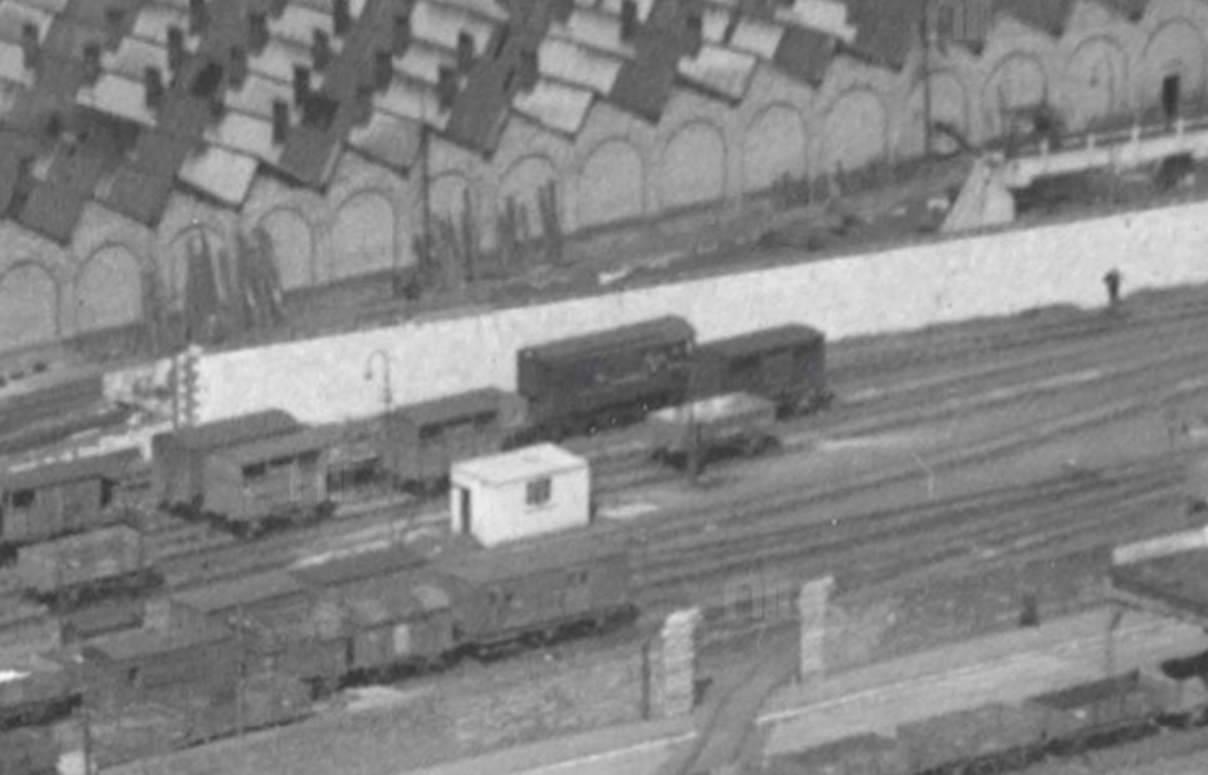
Looking at the Early Irish Railway Photos thread and the NLI collection, I have fallen down a bit of a rabbit hole. In fact I was looking for photos of mills in the NLI collection in the hope of finding some more photos of Quartertown, when I stumbled across this super aerial view of the flour mills in Cork. With Glanmire Road station, goods yard and shed in the background. I wouldn't have found this when searching for a railway-related image, but there's so much of interest in this photo I thought I'd share it here. The date is April 1955: https://catalogue.nli.ie/Record/vtls000733522 You know how much I like wagons and there's plenty of them to love here, including three different types of 6-wheel goods brake van. There's a lot of containerised freight in CIE (pre-ISO) containers - they're easy to spot as the snail is in the middle of the side, rather than at one end on the goods vans. There's also a nice view of 'Pat' working on the elevated coal gantry, showing how this served the quays and the sheds. On the turntable is one of the 'Queens', contrasting with an AEC railcar set in the station. But to me the most interesting loco in this shot is a 1000 class shunter, apparently busy at work in the yard. I knew that a D class had once hauled a trial train to Cork, but I didn't realise that one was based here prior to the arrival of the E class. This is a cruel zoom in to a tiny portion of the whole photo:
-
I just remembered that I have a book 'Transport in Ireland 1880-1910' (Flanagan, 1969) which presents many photos from the NLI Lawrence collection. Of course the book was published long before the internet, and Lawrence's photos now form a key part of the NLI's online archive: https://catalogue.nli.ie/Author/Home?author=Lawrence, William, 1840-1932 There are thousands of images, and only a fraction of them relate to railways or other transport. Probably worth a ferret through though... https://catalogue.nli.ie/Author/Home?filter[]=digitised%3A"Digitised"&filter[]=format%3A"Photo"&filter[]=topic_facet%3A"Railroads"&author="Lawrence%2C+William%2C+1840-1932"&type=Author A few nice ones I stumbled on: https://catalogue.nli.ie/Record/vtls000057129 https://catalogue.nli.ie/Record/vtls000339660 https://catalogue.nli.ie/Record/vtls000747316 https://catalogue.nli.ie/Record/vtls000317183 https://catalogue.nli.ie/Record/vtls000317056 https://catalogue.nli.ie/Record/vtls000318850 https://catalogue.nli.ie/Record/vtls000058724 https://catalogue.nli.ie/Record/vtls000333490 https://catalogue.nli.ie/Record/vtls000058720 One for @Darius43 showing his latest model festooned with advertisements: https://catalogue.nli.ie/Record/vtls000317163