jhb171achill Posted Friday at 20:45 Posted Friday at 20:45 (edited) I’ll comment on each of these by degrees…. first, the MGWR horsebox. Fry made a point, as might be expected, to get liveries exactly right. Some notable exceptions; he painted his model of a 500 class and tank engine 900 in the GSR's unique 800 class blue-green, for example, and his GNR "S" class is in a much darker blue than the GNR used, in this case probably due to wartime unavailability of the paint he wanted. This MGWR horsebox is painted to represent the maroon livery used between 1918 and 1925 for coaching stock. However, this is red - the real colour was very, very much darker. Senior recalled it as being almost as dark as GSWR "crimson lake". I'm not sure about the white roof - I do not have information on that. It could be right. These vehicles, on most (but not all) railways tended to be in passenger coach livery rather than that of wagons. Thus, the MGWR would have painted them brown from the start. That livery was very long-lived. I can't imagine too many were repainted in that short period of their maroon livery; but once the GSR took over, it would be in their very dark browny-maroon "crimson lake", as seen today on Downpatrick's No. 836. In CIE days, first dark green, then from mid-50s the lighter shade. Any repainted after 1963 were in plain wagon grey, not passenger livery - one of these would have looked odd in black'n'tan! Below, a MGWR van. Note the grey used for this and the wagons that follow. Shades like this were used by almost all railway companies. CIE started using slightly lighter shades in the late 1950s, with the light grey as seen on IRM's "H" vans appearing around 1960. Note the "maker's plate" on this. It says "CLF 2.71", indicating that Cyril Fry made the model in February 1971. It was in then-recent years that the very last of this type had vanished from traffic. It is a classic convertible van, known by railwaymen as "soft-tops", due to the canvas cover. The rationale for this - and most railway companies ran them - was that with the tarp it was a standard goods van, but this could be removed for ventiliation purposes when carrying cattle. Standard practice in Ireland, from the NCC to Wisht Caark, boyo. Strict instructions were issued regarding meticulousness in cleaning these out after "bastes" had been in them, leaving their trademark slopping about... The NCC, BCDR, DSER & CBSCR tended to adhere to their own in-house designs of all sorts of wagons to the end (leading to some very interesting yokes still to be seen into the early 1960s, plus many an oddball wagon body in farmer's fields!). Howevr, he "Big 3" (GNR, GSWR, MGWR) tended to follow more closely Irish equivalents of fairly standardised British designs (as did even the SLNCR). Thus, wagons like this below were not unlike similar on other lines. Can't you smell the cattle? Again, as will be seen with Provincial / Enda's CK Prints GNR & SLNCR wagons, the design of these was as good as the same. Doubtless small detail differences but more than good enough for the Two Fut Rule. Here, Fry has diverged from livery accuracy, like that dazzling zebra van at Whitehead; one of my pet hates, black ironwork. They didn't have them. Same with the van below. Some British companies did that, but not here, same as black chassis on wagons of later designs. Anyway; nice models. The 7 ton van is as I mentioned before - broadly similar to vans of this type on most of the other "big" companies in Ireland. Enda will be interested in this one! Note lettering and position of it all - and colour. From its inception in 1945, CIE painted logos and lettering on goods stock in eau-de-nil, not the customary white or off-white, universally used by all companies. It was during the earlier part of the 1950s that this changed to white, and latterly the "snail" was a stencil rather than being painted on. Snails on buses, lorries, steam engine tenders and carriages were the standard transfers. These had gold lining around the edges. But this 1945-fifties pale green snail was painted onto wagons, with no lining. Note, correctly, grey chassis. Relating to the earlier CIE wagon livery again, not only were logos in pale green, the "snail" was positioned a lot lower down than was the case later, and into "roundel" days. The black patch on the right, with white surround, was only applied to early "H" vans such as this, and was for chalk notes of destinations. A good idea, methinks, but it was not continued. First repaint and it was gone; and after repaint the snails and writing was white. The apparent different grey shade on the model is the light in the Casino building - it's (correctly) painted the same colour as the body. I don't know what that thing is that Fry used as a "load", but it's good to see a flat as was in use at the time. I hadn't given previous thought to the idea of a painted light green snail on these, but I 'm sure he was accurate here. Now a "H" van in later guise. Painted snail in white - but in real life it would be a stencilled one, probably. Some were painted in white. The chassis here is the same grey - again, shadow of the bright light in the museum - and he has applied some weathering to it. These exact things tended to make such things look darker in real life! The grey is accurate as used up to the very late 50s. With IRM's very welcome, and very important announcement at the weekend past, who can resist a "C" class! My order is in, and I will sell, car, family members (down to my grandparents) and dog to fund same. I've already sold the gold bars - all of them, even the ones I had as kerbstones down the drive. Edited yesterday at 00:34 by jhb171achill 9
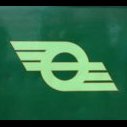
jhb171achill Posted 15 hours ago Author Posted 15 hours ago The “stencil” used for flying snails on wagons from the mid fifties until the roundel replaced it in 1963, was this - it was always white. As late as 1976, I saw one on a H van still in use, at Ballina. 2 1
Past-Avenue Posted 14 hours ago Posted 14 hours ago That's a great selection of models and thanks for sharing with us. There's a few models in there that are not been manufactured in a quantity and are food for thought as they say. Enda 3
jhb171achill Posted 14 hours ago Author Posted 14 hours ago 27 minutes ago, Past-Avenue said: That's a great selection of models and thanks for sharing with us. There's a few models in there that are not been manufactured in a quantity and are food for thought as they say. Enda Very much so!

Recommended Posts
Create an account or sign in to comment
You need to be a member in order to leave a comment
Create an account
Sign up for a new account in our community. It's easy!
Register a new accountSign in
Already have an account? Sign in here.
Sign In Now