.png.c363cdf5c3fb7955cd92a55eb6dbbae0.png)

jhb171achill
-
Posts
16,649 -
Joined
-
Last visited
-
Days Won
413
12 Followers





Recent Profile Visitors
39,667 profile views

jhb171achill's Achievements






-
Executive Coach No. 7161
jhb171achill replied to Branchline121's topic in What's happening on the network?
Wheels / chassis still under it? -
The Achill Explorer - a Bustitution Railtour
jhb171achill commented on Niles's event in Community Calendar
There will be a small amount of railway books on sale on this tour, with profit to Táilte Tours. -
Executive Coach No. 7161
jhb171achill replied to Branchline121's topic in What's happening on the network?
Wow! Didn't know that was there.... what are they going to do with it? Tea shop, maybe? -
Cork, Blackrock & Passage pre-1900 (5'3" gauge)
jhb171achill replied to Mol_PMB's topic in General Chat
The poor service levels and connections wouldn't have helped either! -
Cork, Blackrock & Passage pre-1900 (5'3" gauge)
jhb171achill replied to Mol_PMB's topic in General Chat
Probably more than the unrealistically circuitous Kinsale branch that WAS built…. -
I was persuaded to give it a go by a friend who had been making “O” gauge brass kits for years. Likewise, I had filed brass and soldering under “ABSOLUTELY never”! My biggest regret now is that I didn’t start years ago. Some of the SSM Bredin kits aren’t available any more.
-
They’ll be consigned to your good self once painted, for weathering!
-
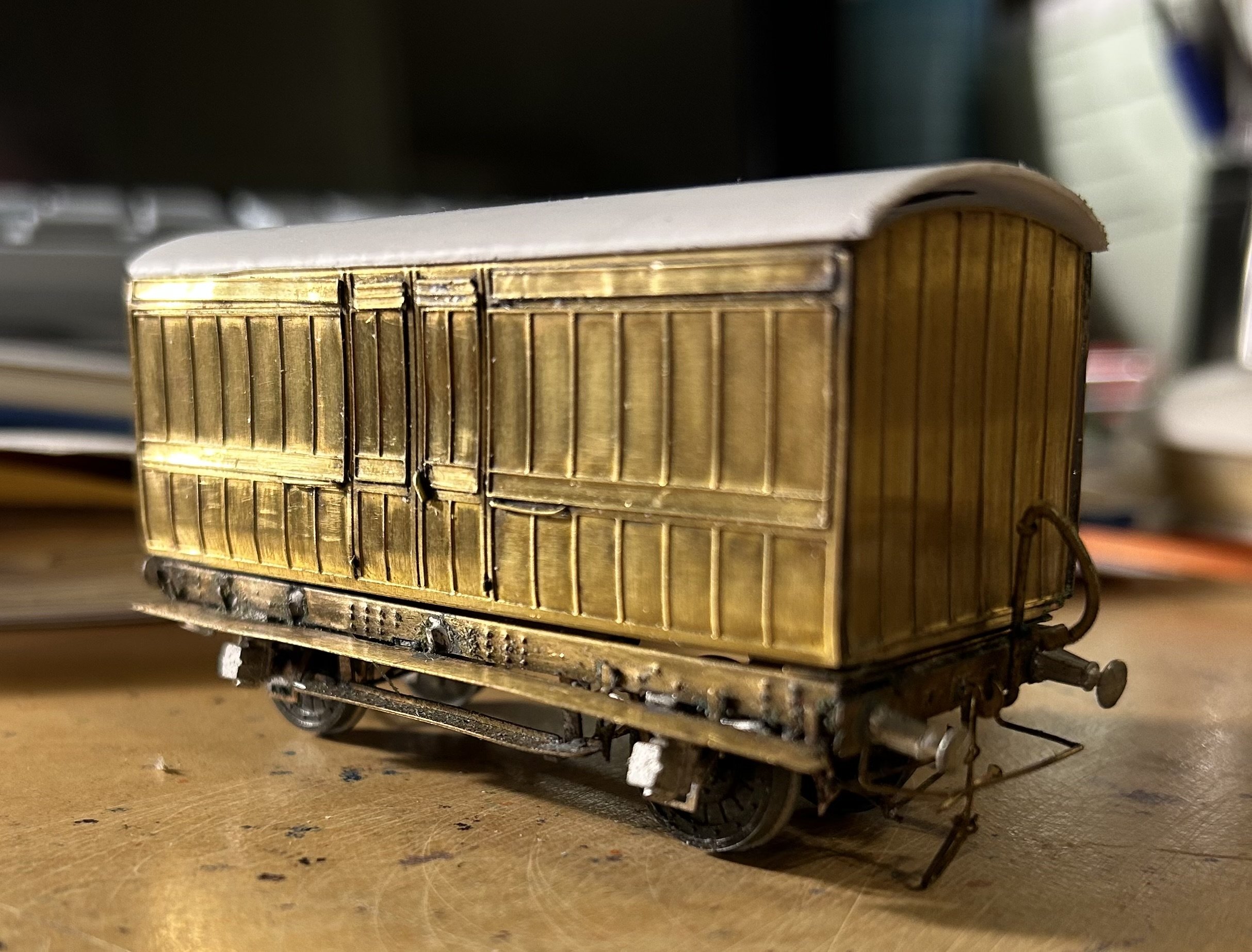
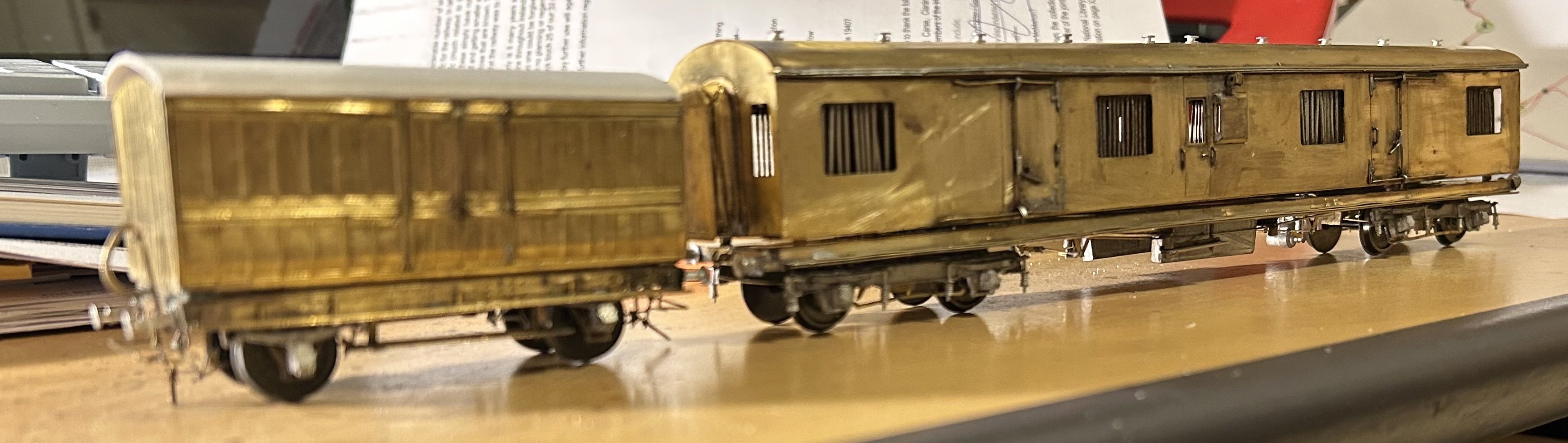
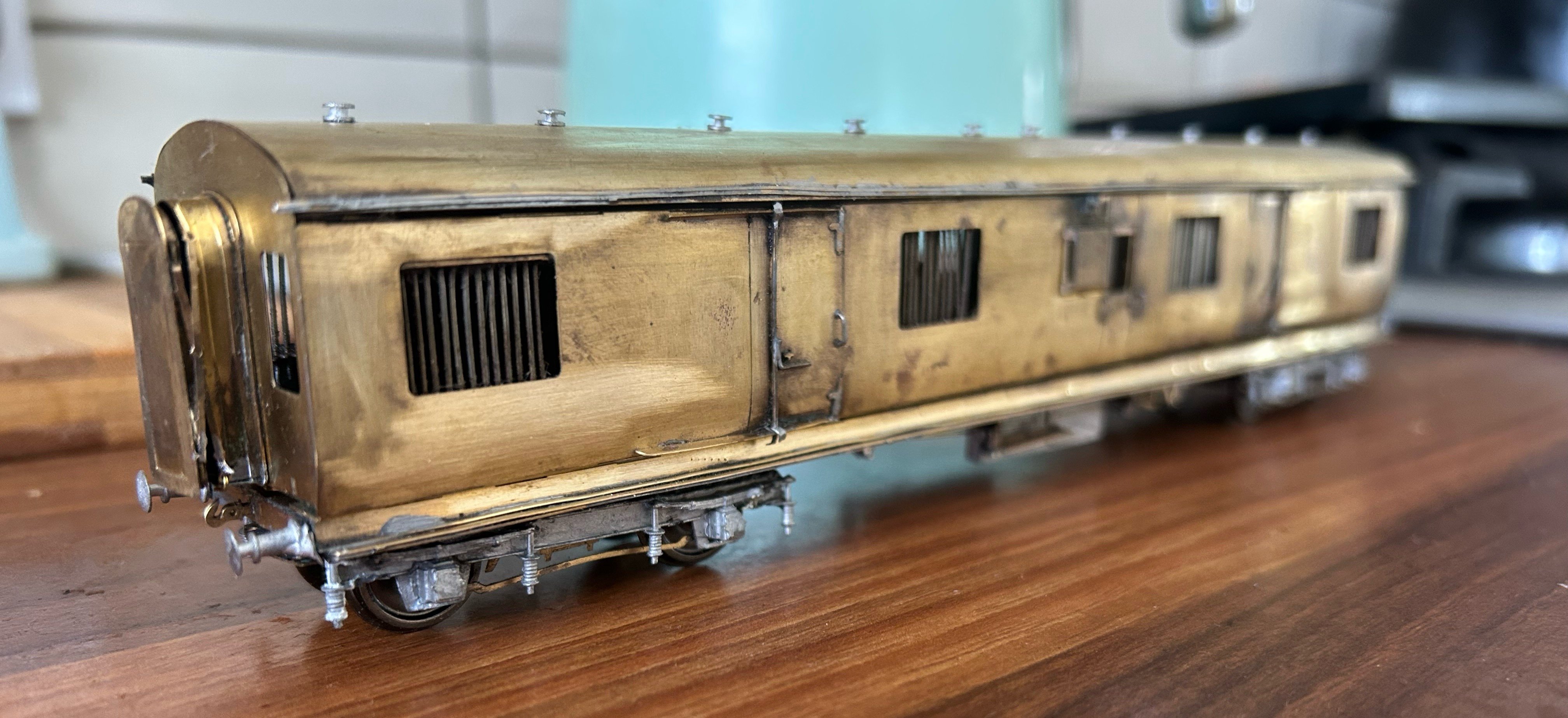
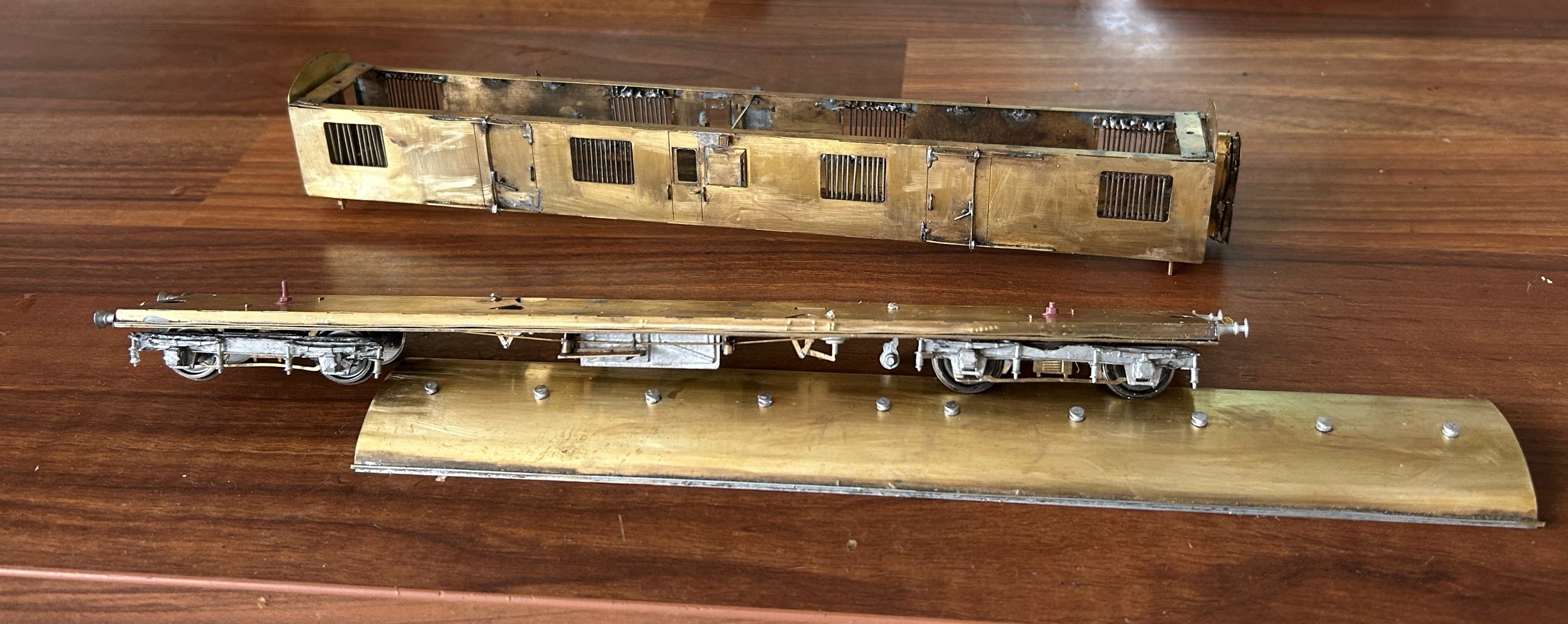
Ready for painting. As first attempts I’m happy enough, though many details don’t bear close inspection by any means. The small van is a Roxey LSWR model, but similar to vans the GSWR had many moons ago. The bogie is GSR van 2548. Glazing to go in once it’s painted. Right now the roofs and chassis aren’t attached to the bodies, pending painting, which is why the bodies look high.

-
Rare Books from The Syndicate (supporting Irish railway preservation)
jhb171achill replied to leslie10646's topic in Weblinks
Leslie - do you still have the copy of the 1897 MGWR timetable, and is it a public one or a WTT? -
Brass etches for Mol's GSWR 50ft GSWR third - ORDERING NOW!
jhb171achill replied to jhb171achill's topic in Irish Models
At some stage in departmental days, late 70s I think, 837 was also in what looked like standard wagon brown with black or dark grey roof. I have cine of it on a PW train. -
The Silverfox "C" actually looks well enough. The B101 they do is probably the only one likely to be available for some considerable time, though SSM might still have a few. I don't know what it is about the proportions or curves, but I've yet to see a TRULY convincing B101 model..... maybe IRM will put this to rights some day. If a Hunslet can sell out - a loco there were only ever three of, which didn't last all that long and which were almost completely confined to one route - there will hopefully be no argument against making a B101 model, even though they were very much "southern" engines - the only time you'd see them on the Midland was the weedspray, and I'm unaware of any heading up the GNR, certainly north of Drogheda anyway. For now, I'm awaiting the IRM announcement re a "C", and reserving thoughts on a B101 until or unless IRM make an announcement on one at some future stage.
-
Brass etches for Mol's GSWR 50ft GSWR third - ORDERING NOW!
jhb171achill replied to jhb171achill's topic in Irish Models
The livery on it now is GSWR, which is “crimson lake”, in reality an extremely dark brownish red, and off-white upper panels (which it may or may not have carried; carriages of that type were more often (lined) crimson lake all over, with the white mostly reserved for main line stock. GWR in Britain was mid brown and cream. Lining was completely different too. -
From left to right; two bogies, rest six-wheelers. As far as I can see they are all ex-GSWR. The roof profile just visible and no more in the distance is ex-DSER.
-
Brass etches for Mol's GSWR 50ft GSWR third - ORDERING NOW!
jhb171achill replied to jhb171achill's topic in Irish Models
Order placed. -
I’ve just to put the white-metal bits and pieces on the underneath of the chassis now and it’s ready for painting.