.png.c363cdf5c3fb7955cd92a55eb6dbbae0.png)


Mol_PMB
-
Posts
3,870 -
Joined
-
Last visited
-
Days Won
239
Content Type
Profiles
Forums
Events
Gallery
Blogs
Everything posted by Mol_PMB
-
Might this be of any interest? https://www.ebay.co.uk/itm/235809461941?mkcid=16&mkevt=1&mkrid=711-127632-2357-0&ssspo=5t9tlMaHSfS&sssrc=4429486&ssuid=PWnBnL0RQpq&var=&widget_ver=artemis&media=COPY
-
NiR 112: https://www.ebay.co.uk/itm/316027066234?mkcid=16&mkevt=1&mkrid=711-127632-2357-0&ssspo=gzvx98tlryw&sssrc=4429486&ssuid=PWnBnL0RQpq&var=&widget_ver=artemis&media=COPY
-
Anyone fancy doing a repaint? (photo posted by @seagoebox in a different thread a couple of years back)
-
CIE locomotive livery variations 1960-1990
Mol_PMB replied to jhb171achill's question in Questions & Answers
Regarding the D class, I'll write in words what I've found so far. There are a lot of mysteries! The class entered service in 1948 carrying a dark green livery with an 'eau de nil' cantrail stripe and flying snail, and numbered 1000-1004. There are photos of 1000, 1001 and 1003 in this condition in the 1948-1950 period. This is a fascinating colour photo dated 1964, though only IRRS members will be able to see it: https://www.flickr.com/photos/irishrailwayarchive/53570791059 Only the top part of the D class loco's number is visible, and it could be 1000, 1002 or 1003, still carrying its original number and livery. But also in shot are three E401 locos freshly repainted in black and tan, so the quoted date of 1964 is very plausible and it couldn't be earlier than 1962. C216 is also visible, freshly repainted in plain black. It seemed remarkable to me that one of the locos would still be carrying its old number and livery in 1964. We may be able to work out which of the 3 locos it was by a process of elimination. 1000 became D301 and ended its days in black livery with a white 'fringe' as seen here. It was officially stopped in 1960. There's a 'mid-1960s' photo of it here in the same black livery with fringe, in the company of some more E401 locos freshly repainted in black and tan, and with its rods and buffers missing. https://www.flickr.com/photos/irishrailwayarchive/53511473459 Did it get a repaint after it was stopped, surely not after it began to lose parts? Now, let's have a look at 1001. Here's a photo of Ernie's which shows it at work at Heuston in April 1961: Again, it still has its original number as late as 1961. But there's no trace of a cantrail stripe or snail, so I wonder if this has been repainted in light green but still with its old number? There's another much closer photo of 1001 in this condition in the IRRS archive, but only dated to '1960s': https://www.flickr.com/photos/irishrailwayarchive/53511321098 Assuming 1001 became D 302, the books tell us that it was stopped in 1960. Apart from the minor issue of Ernie's photo of it still at work in 1961, there are two more problems. Here are three photos of D302 freshly painted in black and tan livery: https://www.flickr.com/photos/irishrailwayarchive/53526390417/ https://www.flickr.com/photos/irishrailwayarchive/53526421872/ https://www.flickr.com/photos/irishrailwayarchive/53527323881/ None is precisely dated but they can't be earlier than 1962. But the story doesn't end there. D302 was repainted again, into plain black with white vee on the cab, as seen here in Jonathan Allen's photo dated 1970: Is it really plausible that the loco was repainted TWICE in two different liveries, after it was stopped from traffic? Now, 1002 later D303. Ernie's wonderful photo shows it with new number and pristine light green livery, dated 1956. That is surprisingly early for light green livery. Note also the black roof. Even if the date isn't spot-on, nevertheless it proves that the loco did carry light green with its D number, which I don't think any of the others did. Later, D303 carried black with a white 'fringe' similar to D301's last scheme. There are several photos of it at Inchicore in the 1965-1970 period in this condition. D303 wasn't officially stopped until 1970 so it would still have been in use at this time. Staying with Ernie, here are D303 and D304 together in the mid 1960s. As you can see, D304 had acquired black and tan livery at some stage in the 1962-1964 period. The tan band on D304 was a few inches deeper than that on D302. D304 was the last of the class in service, until 1972. As these photos dated 1968 and 1975 show, it was repainted in plain black with white V on the cab end: https://www.flickr.com/photos/irishrailwayarchive/53570882505/ https://www.flickr.com/photos/irishrailwayarchive/53570643303/ Finally, 1004 later D305 seems very camera-shy, and the only photos I have found of it are 1970s well after it was stopped in 1966. By then it was plain black with white V on the cab end, as seen in this photo by Jonathan Allen: So, 5 locos, and a multitude of different liveries. 2 or 3 variants of green, 2 variants of black, 2 variants of black and tan. All started in dark green, and all ended up in black, but went via different colours in between. I wonder which was the loco featured in the first photo I linked? A curved top to the last digit so it must have been 1000, 1002 or 1003 still in its old livery in 1964. Well it wasn't 1002 because that was painted light green and renumbered D303 in the 1950s. Possibly 1000, but it seems that was black with a fringe by 1964, so it's unlikely. It could have been 1003 - maybe in the works to be repainted in black and tan as D304? There are some mysteries here, but also some fascinating variations. Can anyone add more pieces to the jigsaw? -
CIE locomotive livery variations 1960-1990
Mol_PMB replied to jhb171achill's question in Questions & Answers
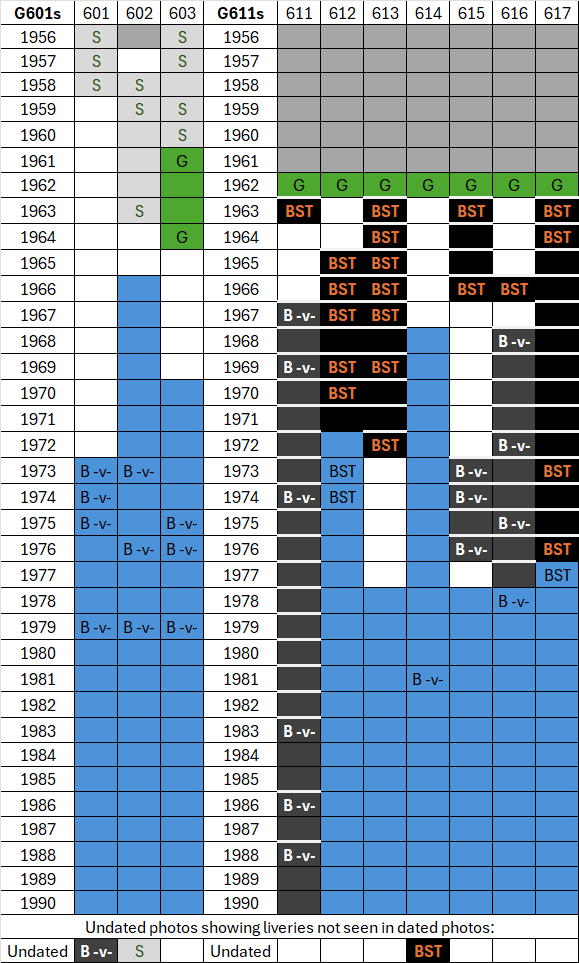
And now the equivalent for the G class. Plese refer to the notes below as well. Where there is a text entry in a cell that indicates a dated photo showing that livery on that loco. Cells coloured but empty are a reasonable assumption based on the same livery appearing in the years before and after. The blue boxes at the bottom represent the period when the locos were stopped. I expect there are some gaps that could be filled by photos I haven't found yet. There are lots of photos which aren't dated, or only to the nearest decade. They aren't shown here, unless they depict a livery not shown in any dated photos, in which case they're in the bottom row. It is possible that some photos are wrongly dated. Some findings, which probably aren't a surprise. Firstly the G601s: All locos were painted silver when new. G603 was painted green around 1961; the frames were green too. I have not found photos of the other two in green. At some stage, all three were painted in plain black with a white vee on the top of the cab end and a white line around the top of the cab (B -v-). They carried this livery when withdrawn but I have only found photos of G601 in this livery in service, and those are undated. I have not seen any photos of the G601s in BST livery. Then the G611s: These were all painted green when new, and a photo exists showing all seven together at Inchicore in green, with the cabside numbers painted on the first three. However, they were all quickly repainted in black and shallow tan line around the top of the cab (BST). This may have been before they entered traffic. From the late 1960s when they needed repainting, the standard livery became plain black with a white vee on the top of the cab end and a white line around the top of the cab (B -v-). Only 4 locos received this scheme and the others remained in BST They mostly worked on branch lines, and when those closed their remaining duties were shunting at the sugar beet factories. Initially still owned by CIE the surviving locos were sold to CSE in 1977. In the mid-1980s G611 was working for CIE again, based in Limerick wagon works. I have shown this loco as still in traffic for this period, which may not be correct, but it's all a bit academic for this table as its livery didn't change for over 20 years. It should be noted that some locos have carried liveries in preservation that they did not carry in CIE service. I have been trying to prepare a similar table for the D class. It's complicated and sparse - I could do with more in-service pictures but the vast majority show them after withdrawal. There were at least 5 different liveries carried.
-
There were many other oil tank wagons which looked superficially similar but were different in detail and dimensions.
-
CIE locomotive livery variations 1960-1990
Mol_PMB replied to jhb171achill's question in Questions & Answers
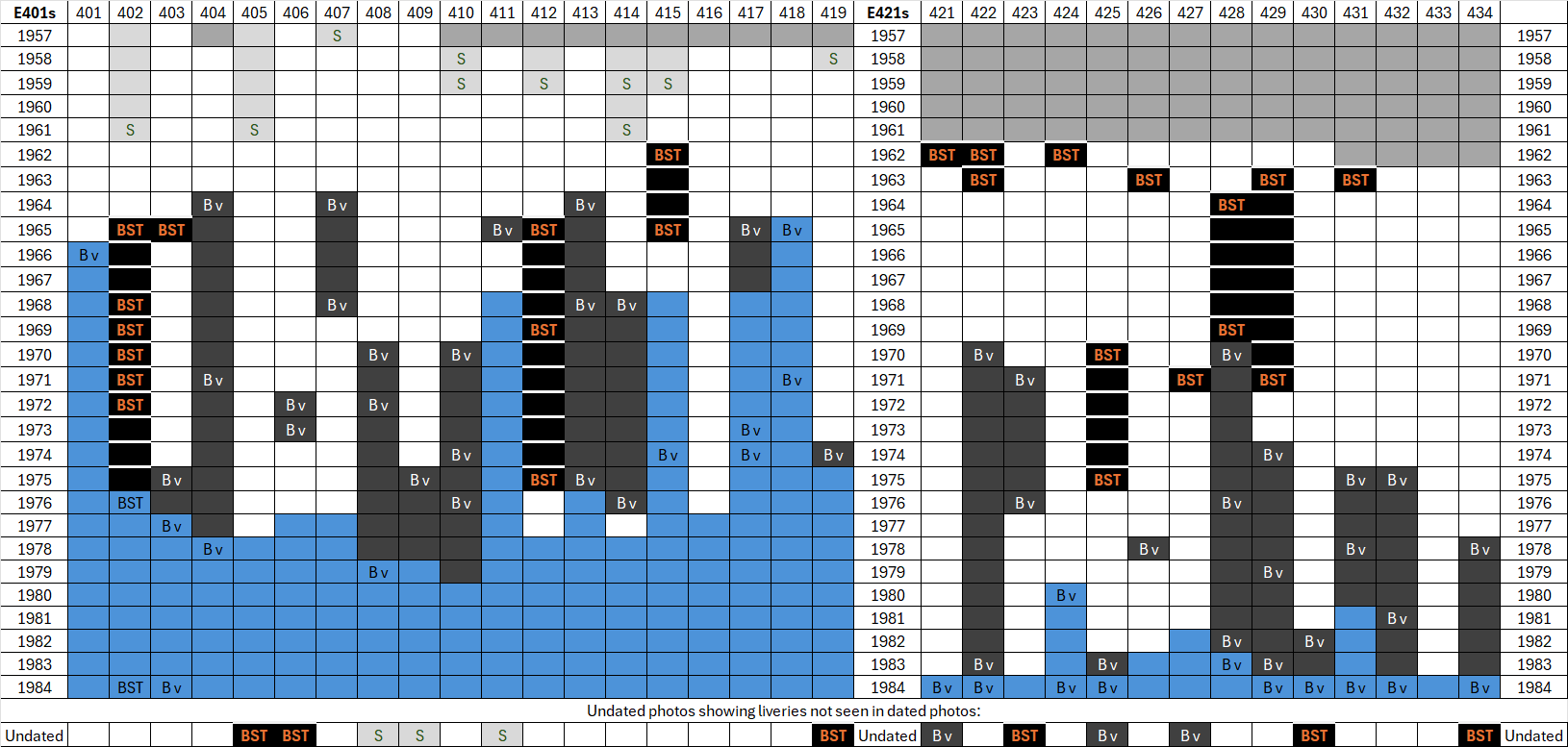
I've now finished preparing the livery table for the E class. These didn't attract as many photographers as the main-line locos so there are some significant gaps. Nevertheless, I think it's useful. Plese refer to the notes below as well. Where there is a text entry in a cell that indicates a dated photo showing that livery on that loco. Cells coloured but empty are a reasonable assumption based on the same livery appearing in the years before and after. The blue boxes at the bottom represent the period when the locos were stopped. I expect there are some gaps that could be filled by photos I haven't found yet. There are lots of photos which aren't dated, or only to the nearest decade. They aren't shown here, unless they depict a livery not shown in any dated photos, in which case they're in the bottom row. It is possible that some photos are wrongly dated. Some findings, which probably aren't a surprise, mostly livery-related but a few other snippets. Firstly the E401s: All locos were painted silver when new. Most were based around Dublin but some worked in Cork and they occasionally reached other locations like Bray, Fenit, Cobh. From around 1962, a few locos were repainted in black and shallow tan (BST) with a white stripe at bonnet-top and a white vee on the top of the ends. I have not found any photos of them in green livery and it seems unlikely that any carried it. From about 1964, the standard livery became plain black with a white vee on the top of the ends (B v). However, some locos already in BST retained that scheme, and these may have been the locos normally used as carriage pilots (E402 and E412 were regulars at Heuston). In the 1970s they apparently had a passenger duty on the Dun Laoghaire to Heuston boat train! After a serious exhaust fire in on E405 in 1975, the exhaust pipe, silencer and cowl were removed from the bonnet-top on most locos still in traffic: E403/4/8/9/12/14 but not on E410. Then the E421s: In theory these all entered traffic in black and shallow tan (BST) with a white stripe at bonnet-top. Because the bonnet was lower than the E401s, the white stripe continued onto the cabside across the side windows, and the white vee on the cab end was set lower than on the E401s. In practice some locos were used in service whilst still in red-brown undercoat, and the paintwork was finished later. Because they did not obviously display their numbers when in undercoat, it's impossible to tell from photos which locos briefly ran in this condition so I have not attempted to show it in the table. From the late 1960s when they needed repainting, the standard livery became plain black with a white vee on the ends (B v). E428 was based in Limerick from new until 1974; E422 and E429 were based in Cork for about the same period. The Dublin-based locos occasionally ventured out to places such as Howth and Enniscorthy. So, not the most exciting, only 3 liveries to choose from and they spent most of their lives in plain black. Has anyone seen photos of E416 or E433? They have entirely evaded my searches!
-
CIE Ballast Wagons, late 1960s to 1980s (not hoppers or flats)
Mol_PMB replied to Mol_PMB's topic in General Chat
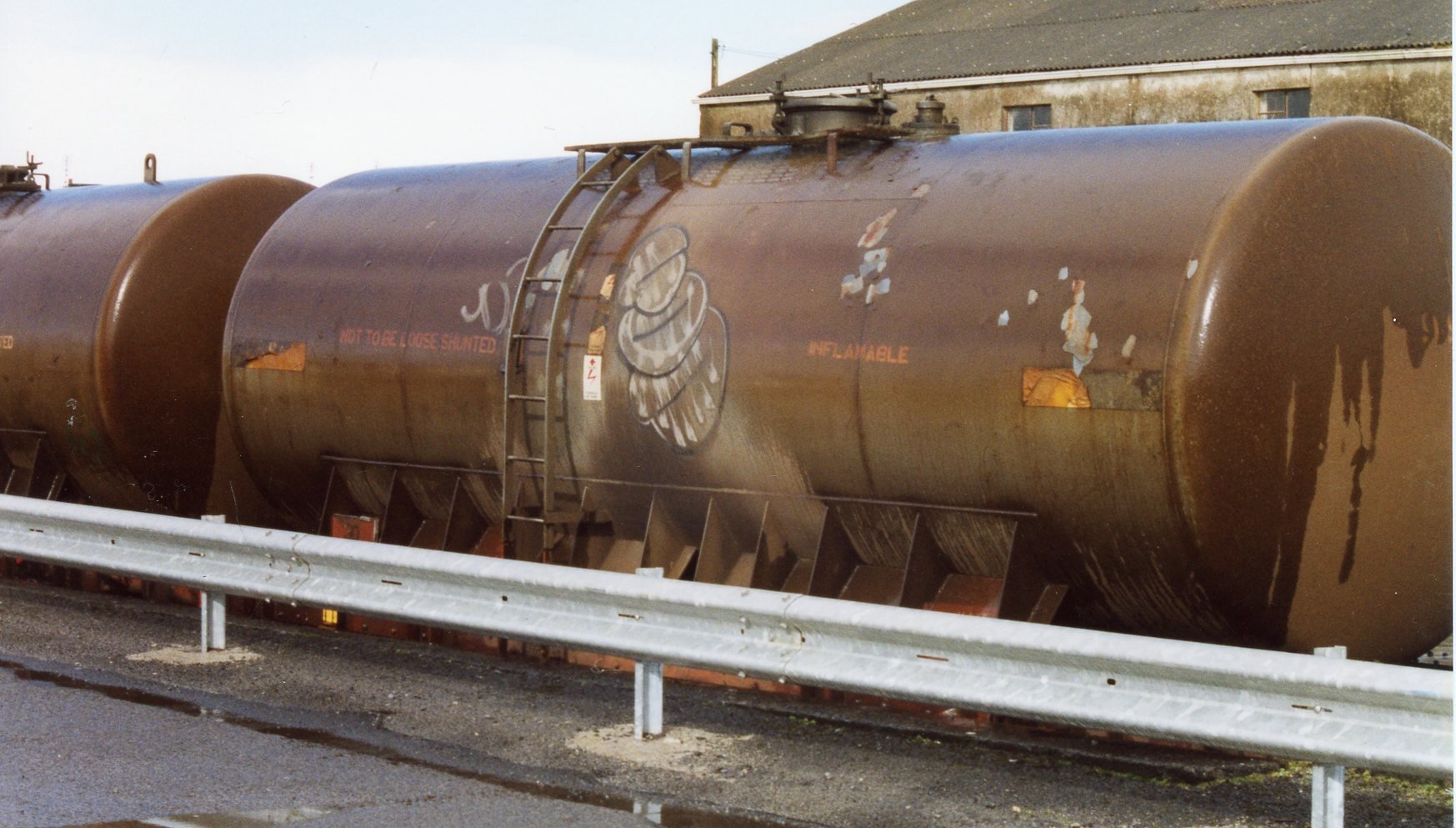
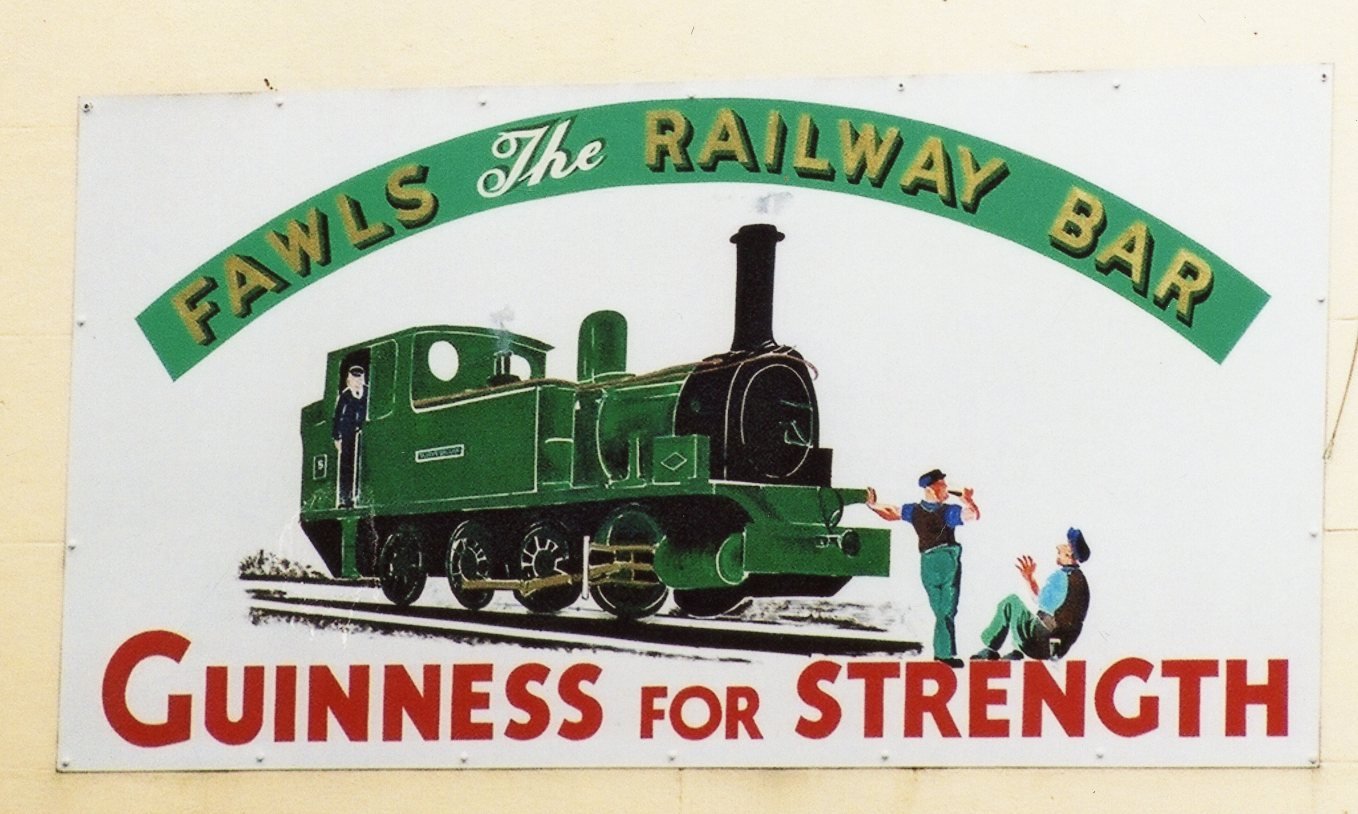
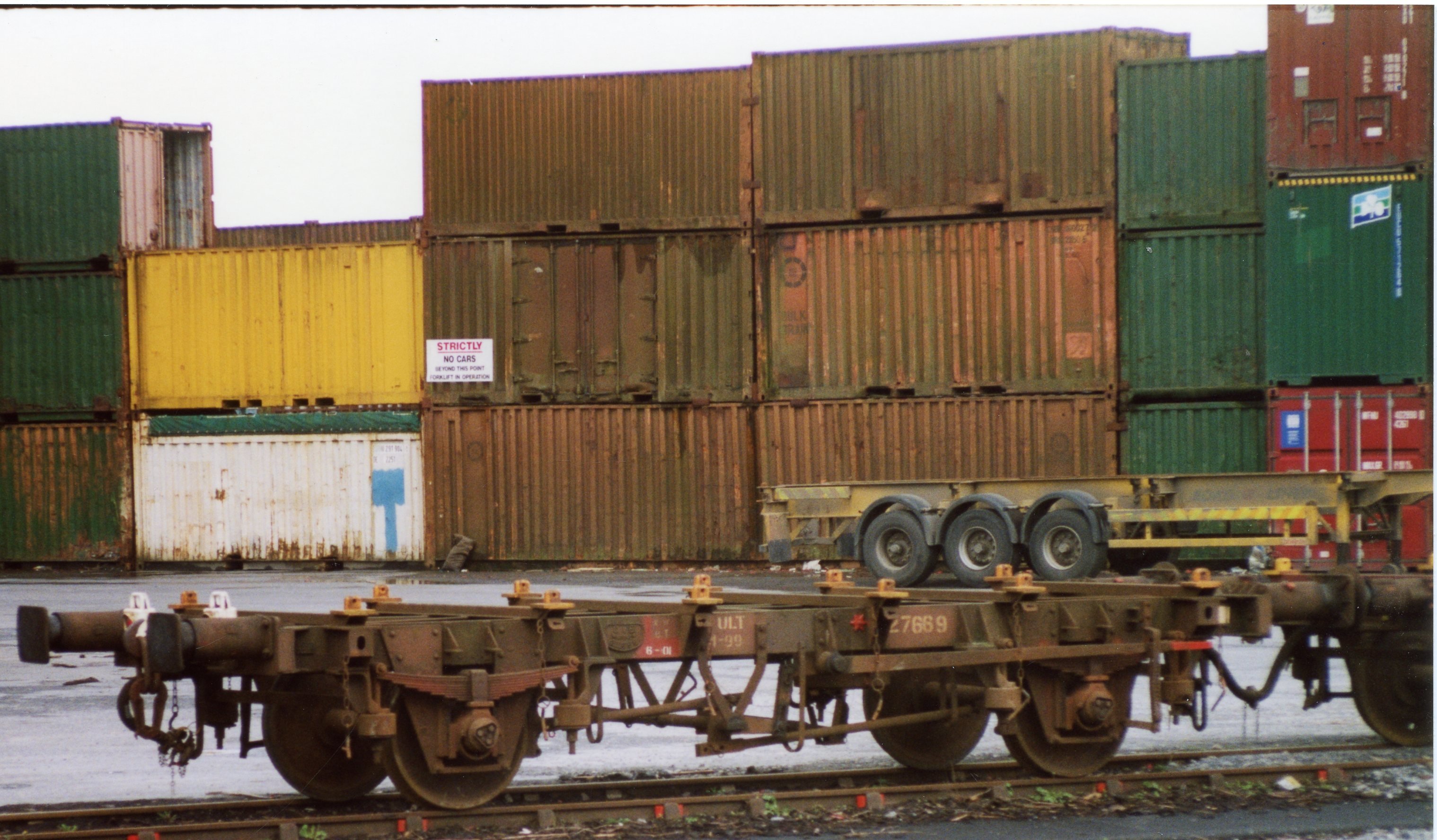
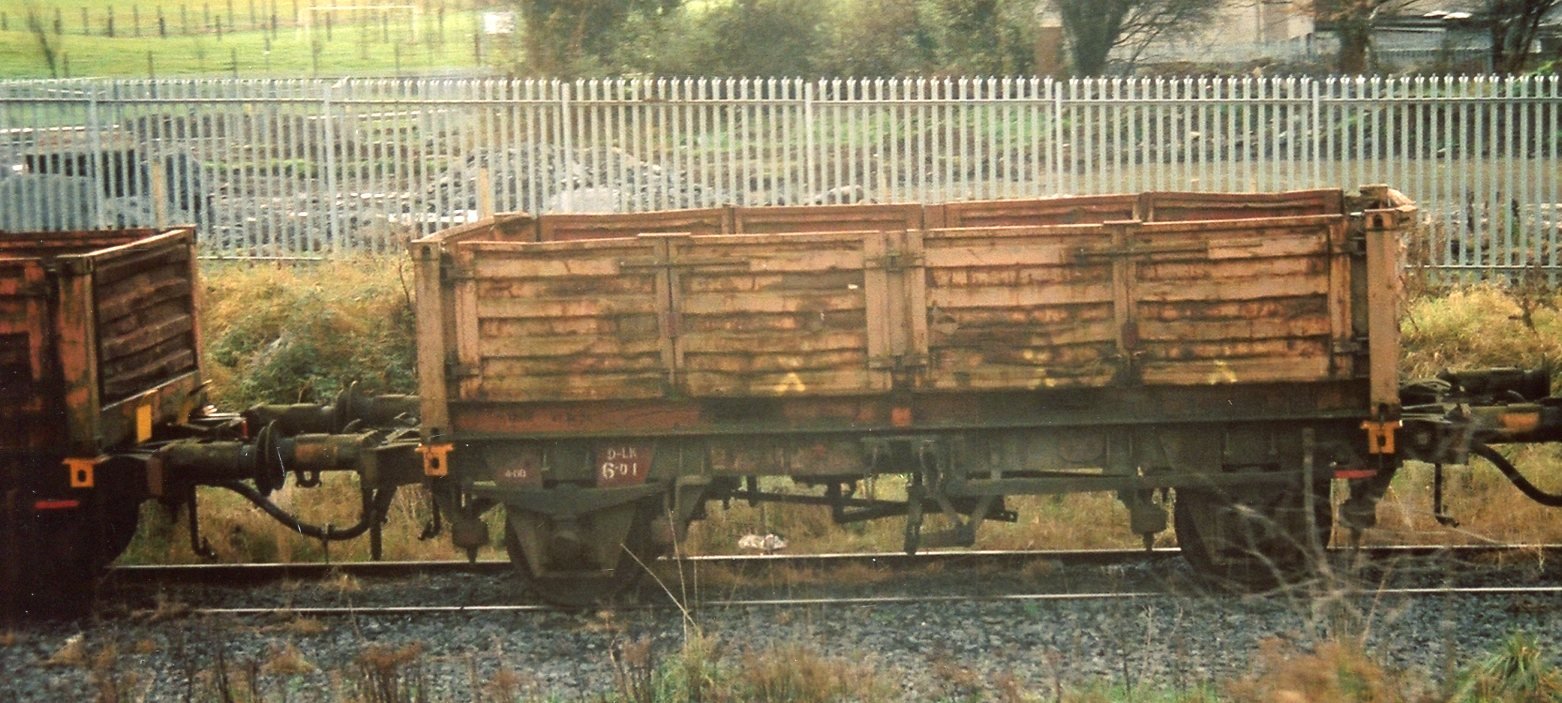
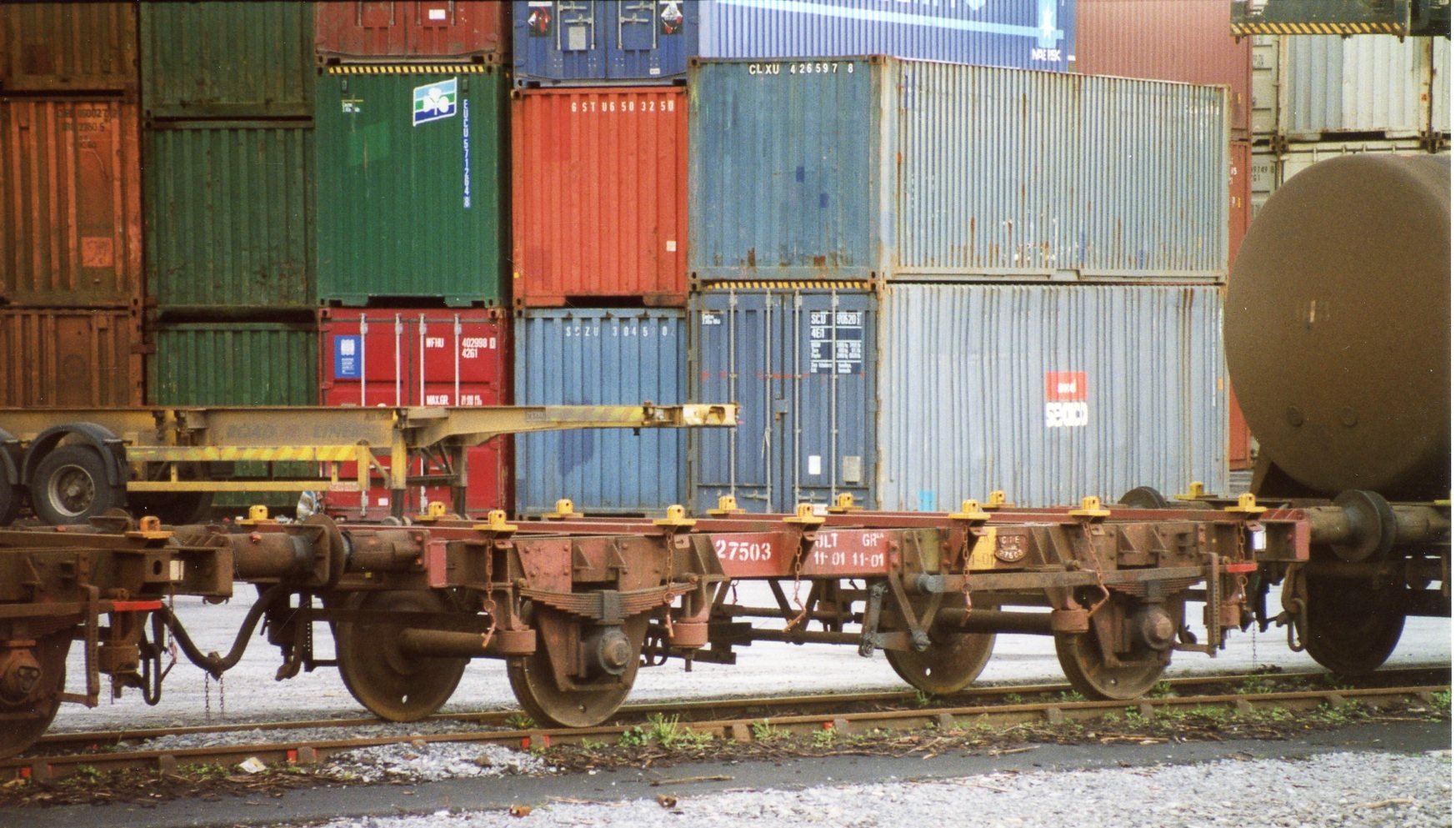
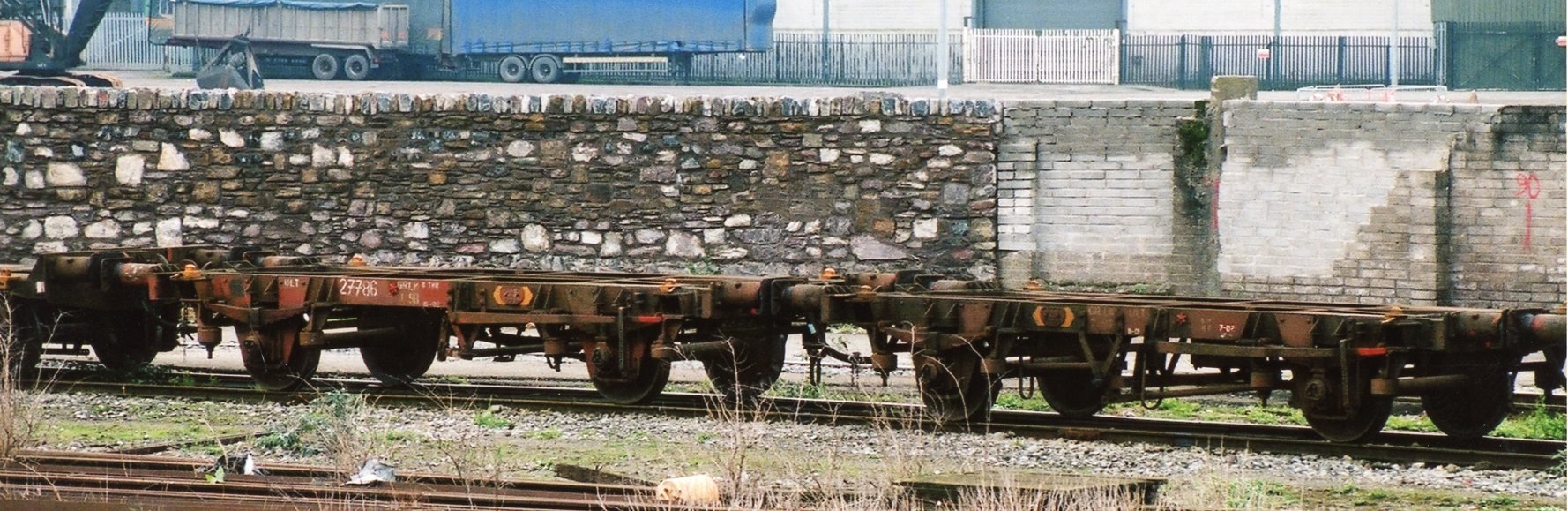
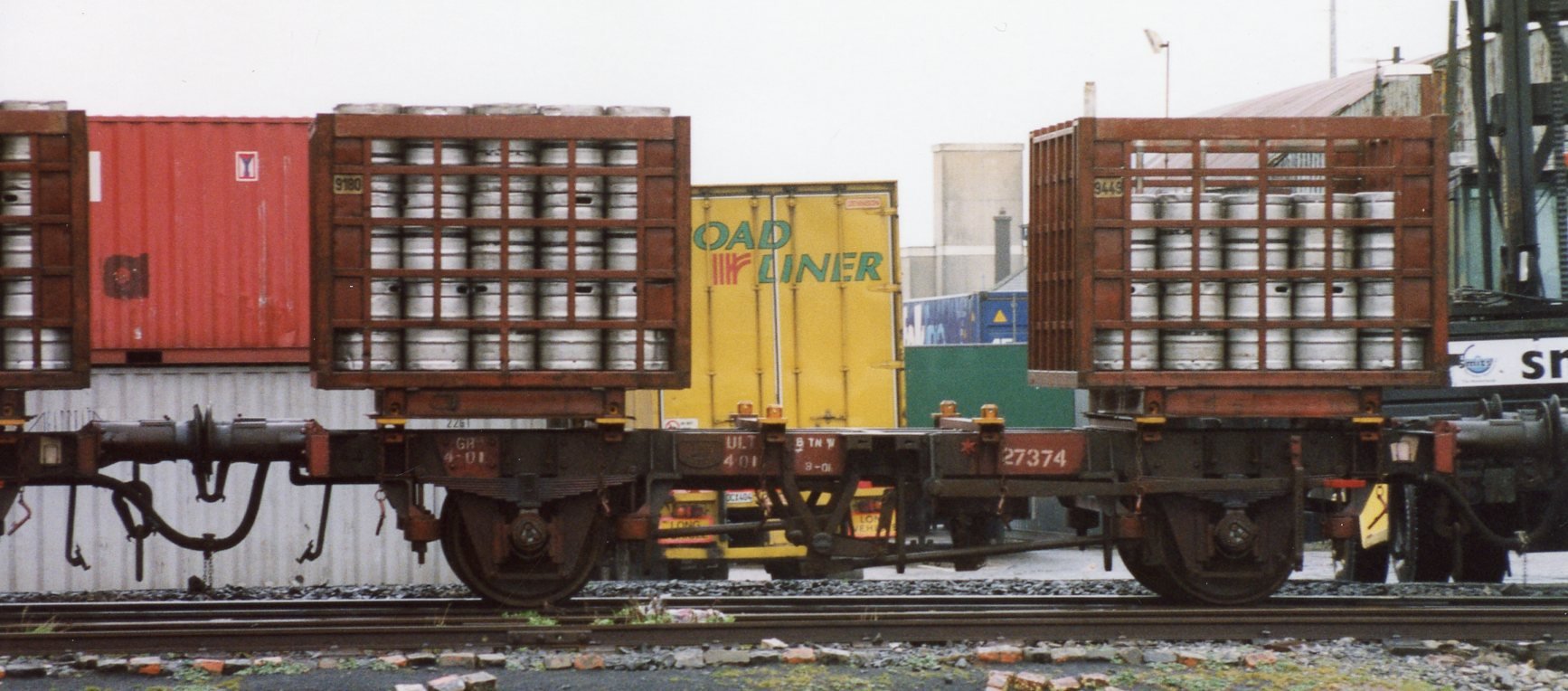
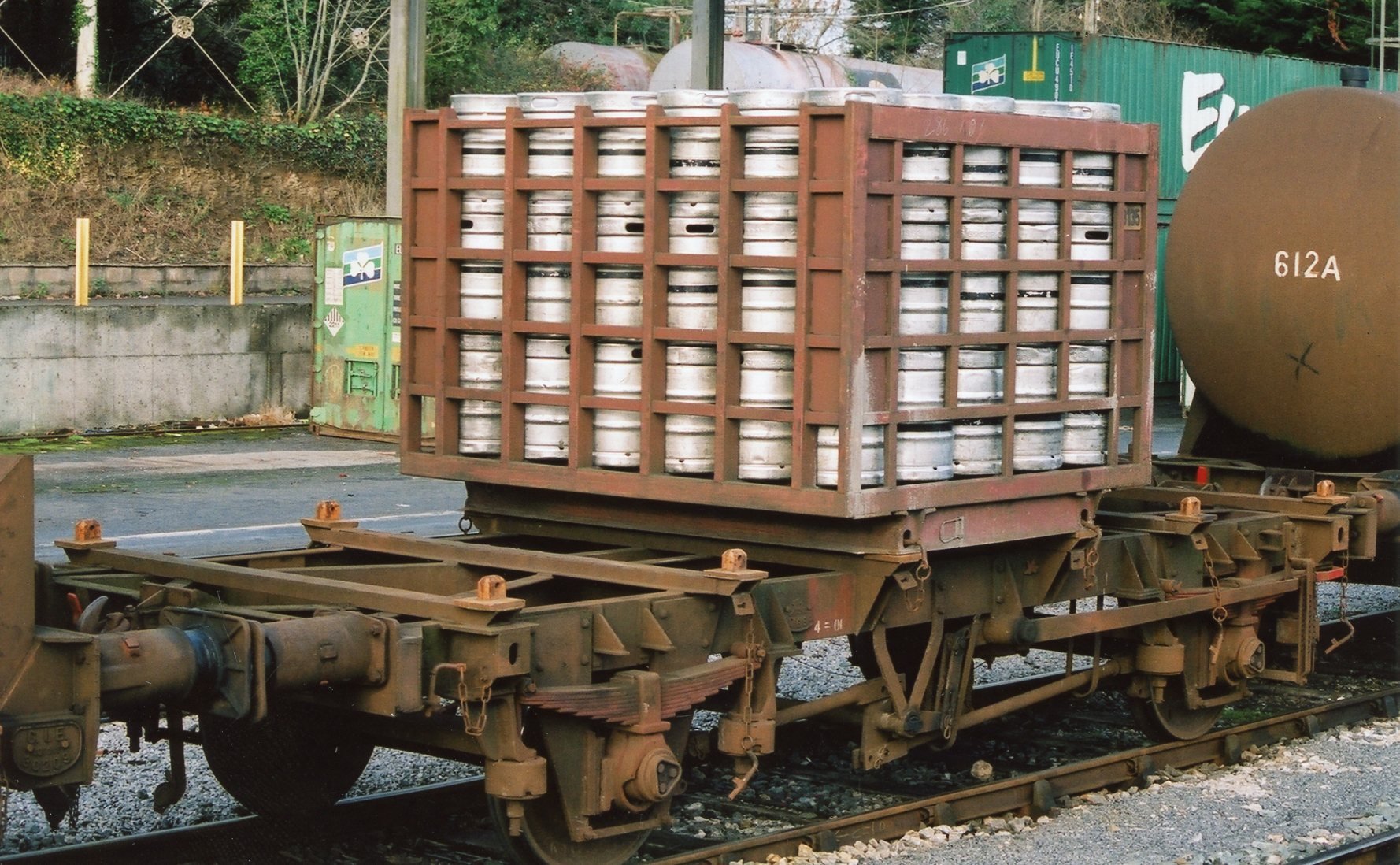
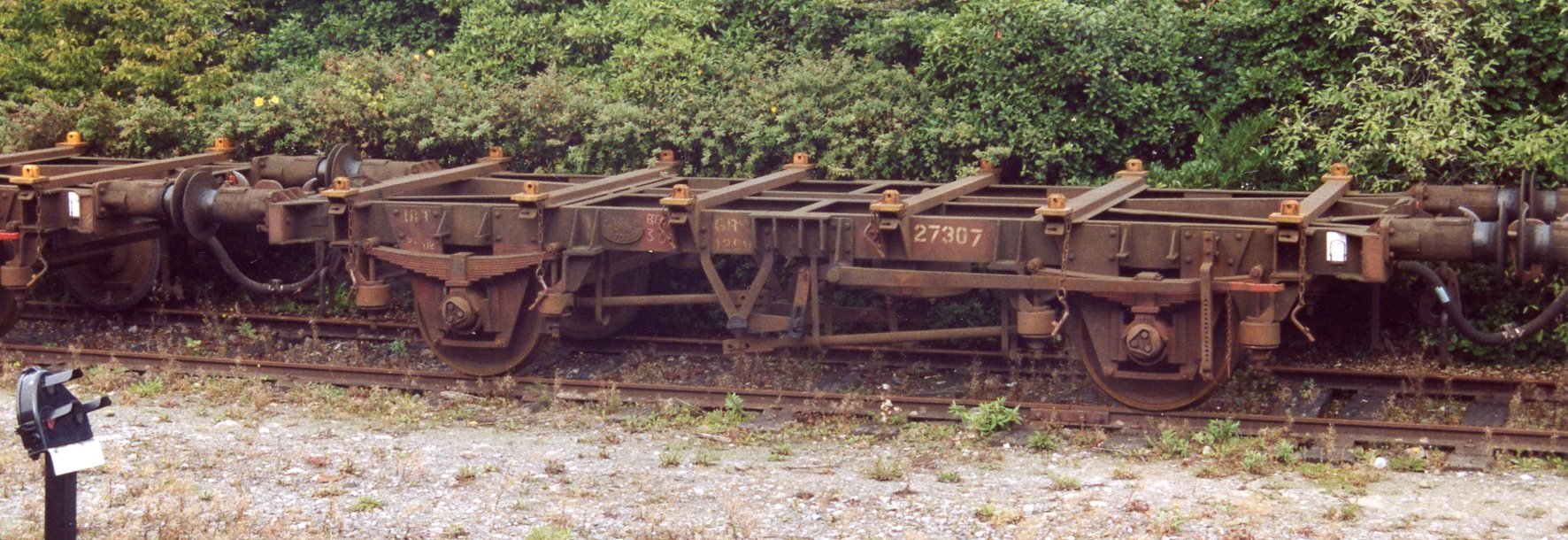
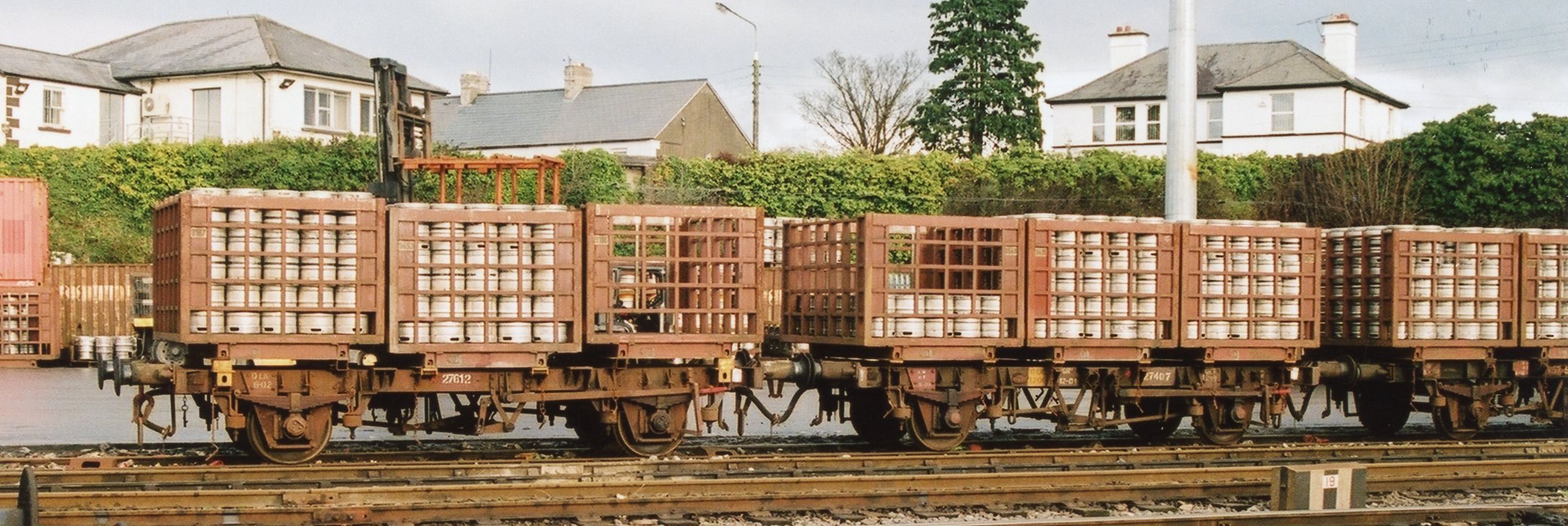
Whilst searching for E class photos I found this detail shot of the end of a 25201 series flat loaded with Guinness: -
...and I've just found another one of my own from the early 2000s:
-
Also, here are photos of the earlier (1970s) livery when the Esso logos were still carried, and before the extra reinforcements were added: https://www.flickr.com/photos/irishrailwayarchive/53527716615 https://www.flickr.com/photos/irishrailwayarchive/53511632134 The only time I photographed them was around 1990 by which time the lettering was mostly in white rather than black: I think the tank colour was still the same mid-grey, under the grime. This is one of Ernie's photos dating from 1994 showing the white lettering variant when it was clean:
-
There are some photos in the IRRS archive, but will not be visible to the wider audience. For example: https://www.flickr.com/photos/irishrailwayarchive/53509330394 https://www.flickr.com/photos/irishrailwayarchive/53509330399 https://www.flickr.com/photos/irishrailwayarchive/53509328959 The hazard markings carried are 3YE 1270, which would indicate petrol. That would explain the Class A livery. Edit, correction, thanks to @MOGUL. 1270 is heating oil/kerosene.
-
New IRM Wagon Announcement Tomorrow 11am - Place Your Bets!
Mol_PMB replied to Warbonnet's topic in General Chat
Who guessed the tank wagons? https://irishrailwaymodels.com/en-gb/collections/b-class-tank-wagons -
Ernies Massive Irish 1930's to 2005 Photo Archive
Mol_PMB replied to Glenderg's topic in Photos & Videos of the Prototype
Lovely! I'm compiling information on the green H vans for another of my wagon essays. They appear in the background and on the edges of a lot of photos, but rarely as the main subject. Many thanks for sharing all your excellent photos. Mol -
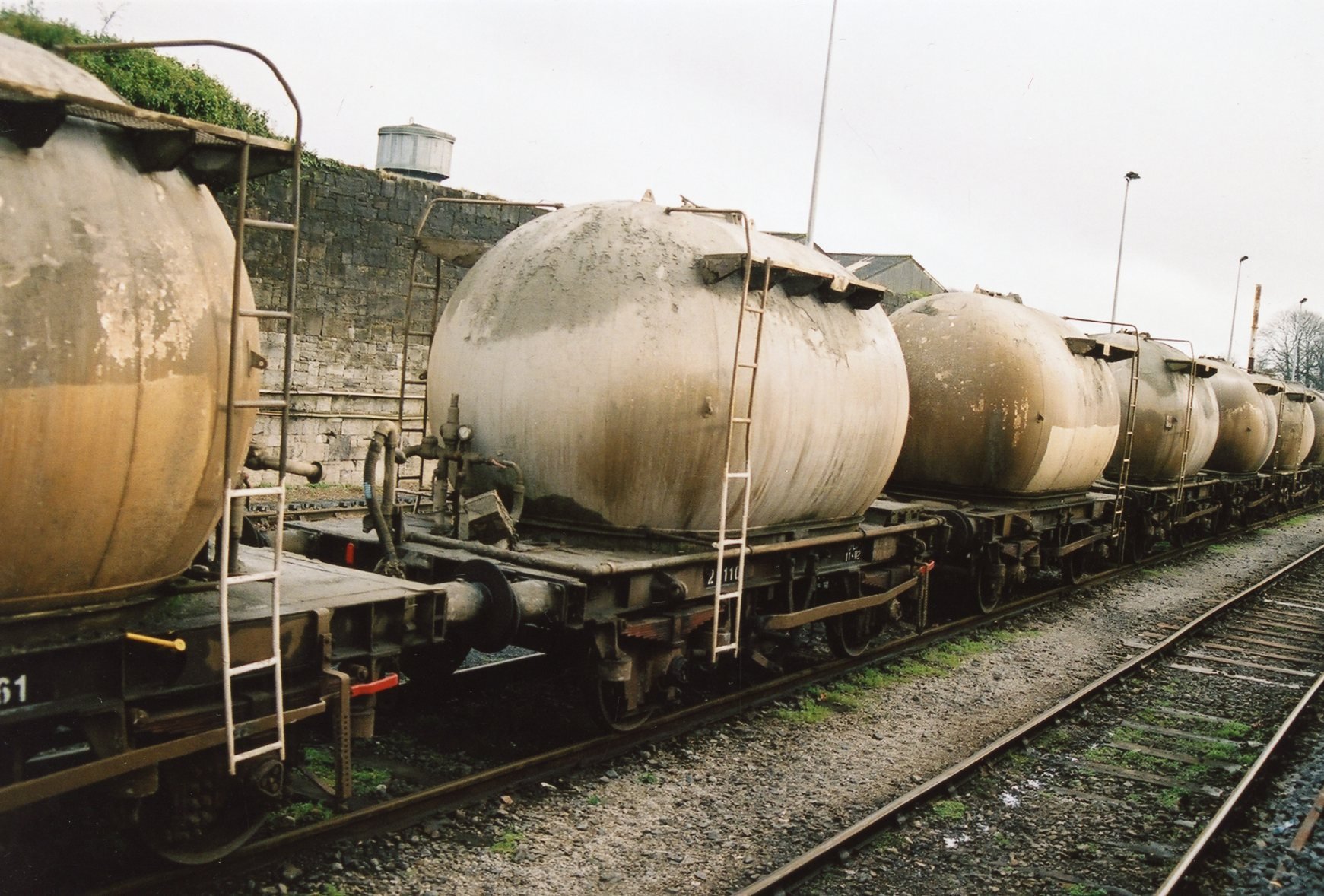
I'll finish with a few more of Ernie's excellent photos showing whole trains of bubbles. Can you spot the difference from this distance? 1967: 1973: 1979: 1990: 1999: In general, the modifications over time made the various batches more similar to each other. The differences are more obvious in the grey and early orange eras. The IRM models represent the 1970 and 1972 batches accurately, and are very close for the 1967 batch They're also pretty close for the 1964 and 1965 batches later in life, and passable for the 1965 batch in original condition too. They're not great for the 1964 batch which had handwheel brakes from the 1960s into the 1980s, though to be fair most of the models numbered in that batch are offered in the later ivory livery. Pack J must have been a Friday afternoon job - it contains two wagons numbered in the 1972-built batch, which were never painted grey - both the 1970 and 1972 batches entered service in orange. And the third wagon in Pack J is one of the 1964 batch, which ought to have handwheel brakes when in grey livery.
-
New IRM Wagon Announcement Tomorrow 11am - Place Your Bets!
Mol_PMB replied to Warbonnet's topic in General Chat
They have hinted at a narrow-gauge loco in a previous video. But not this one:
-
New IRM Wagon Announcement Tomorrow 11am - Place Your Bets!
Mol_PMB replied to Warbonnet's topic in General Chat
A few holiday snaps in case it is! They're not all the same... There was also a log wagon variant but I don't have any good photos of them.
-
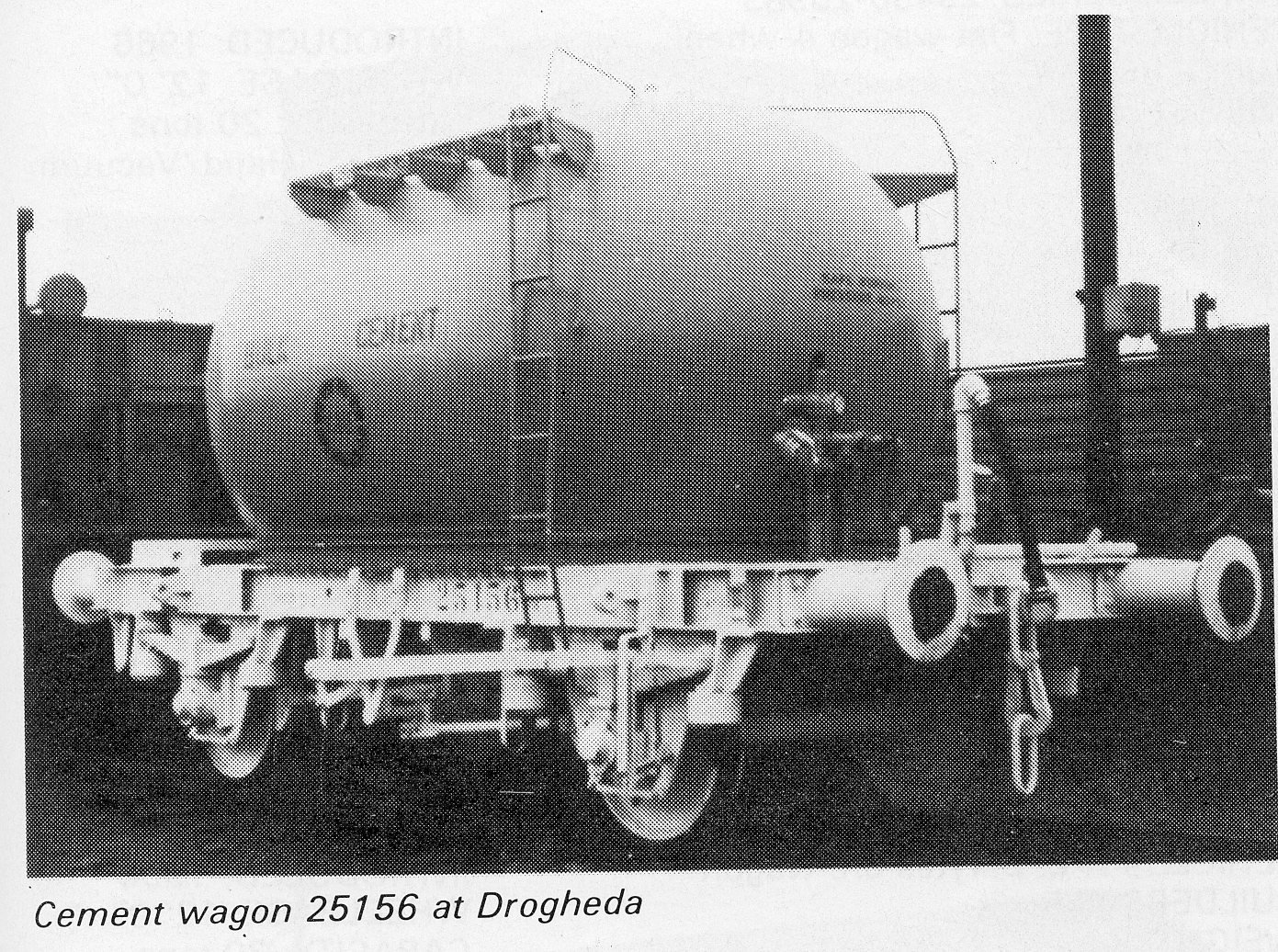
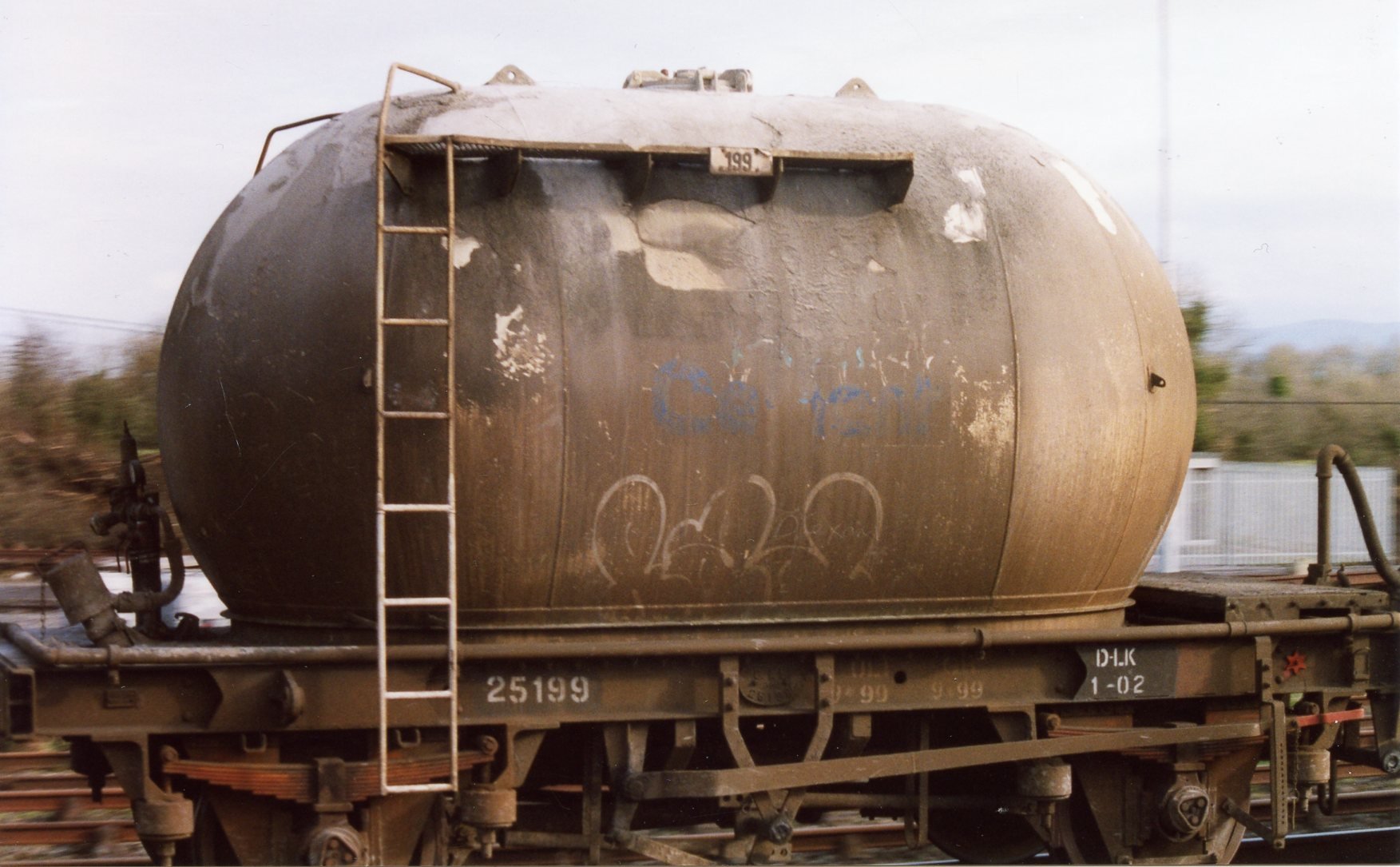
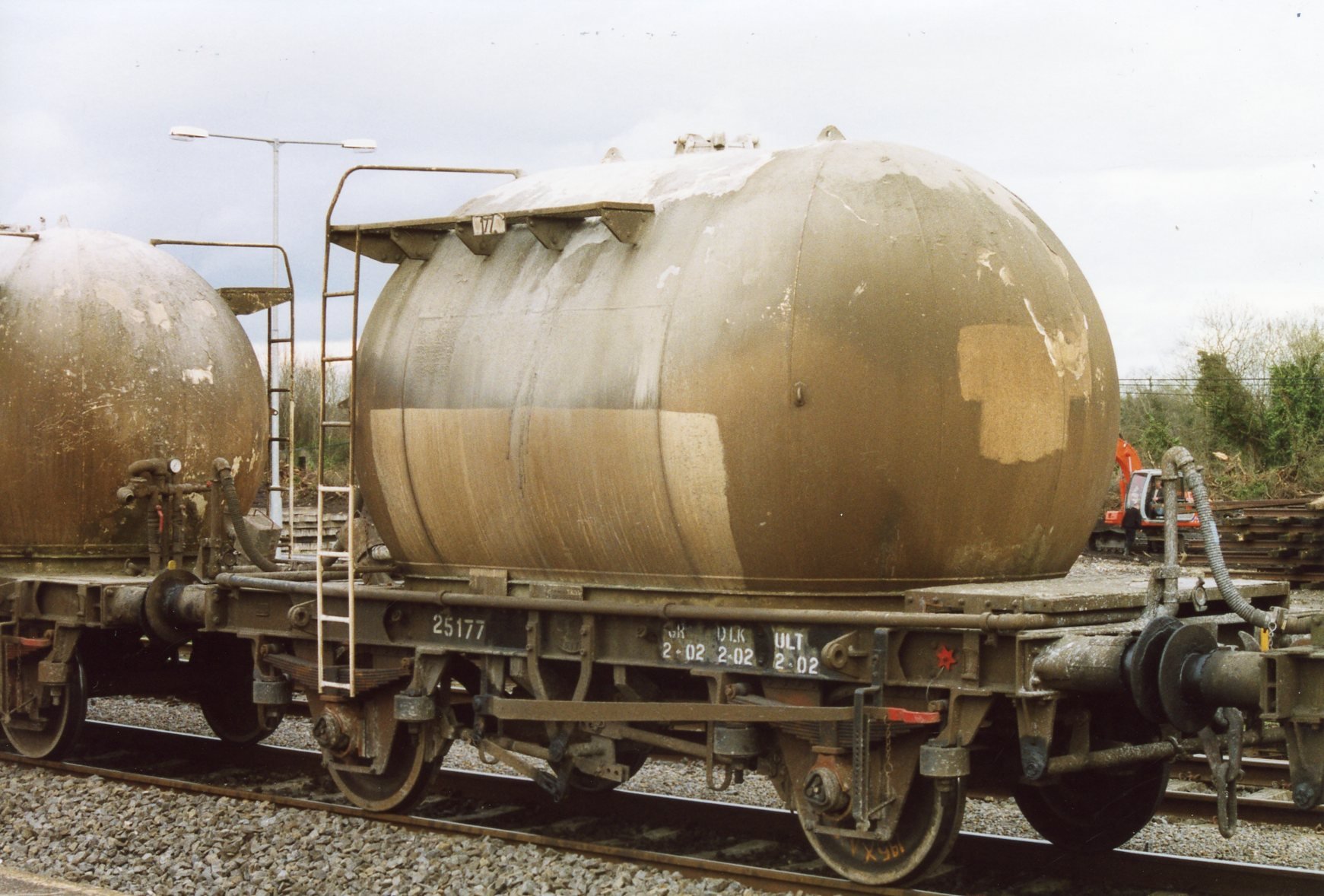
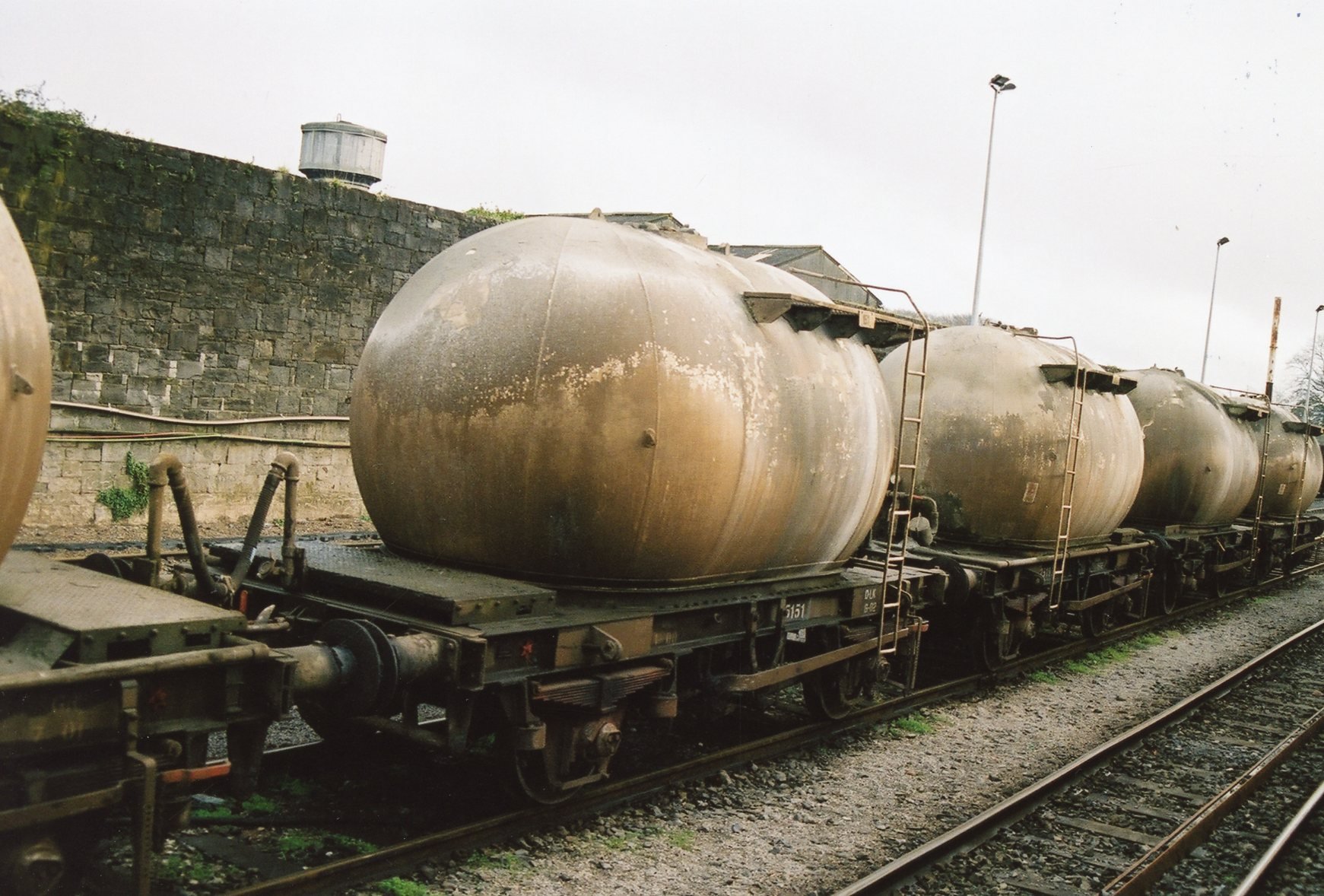
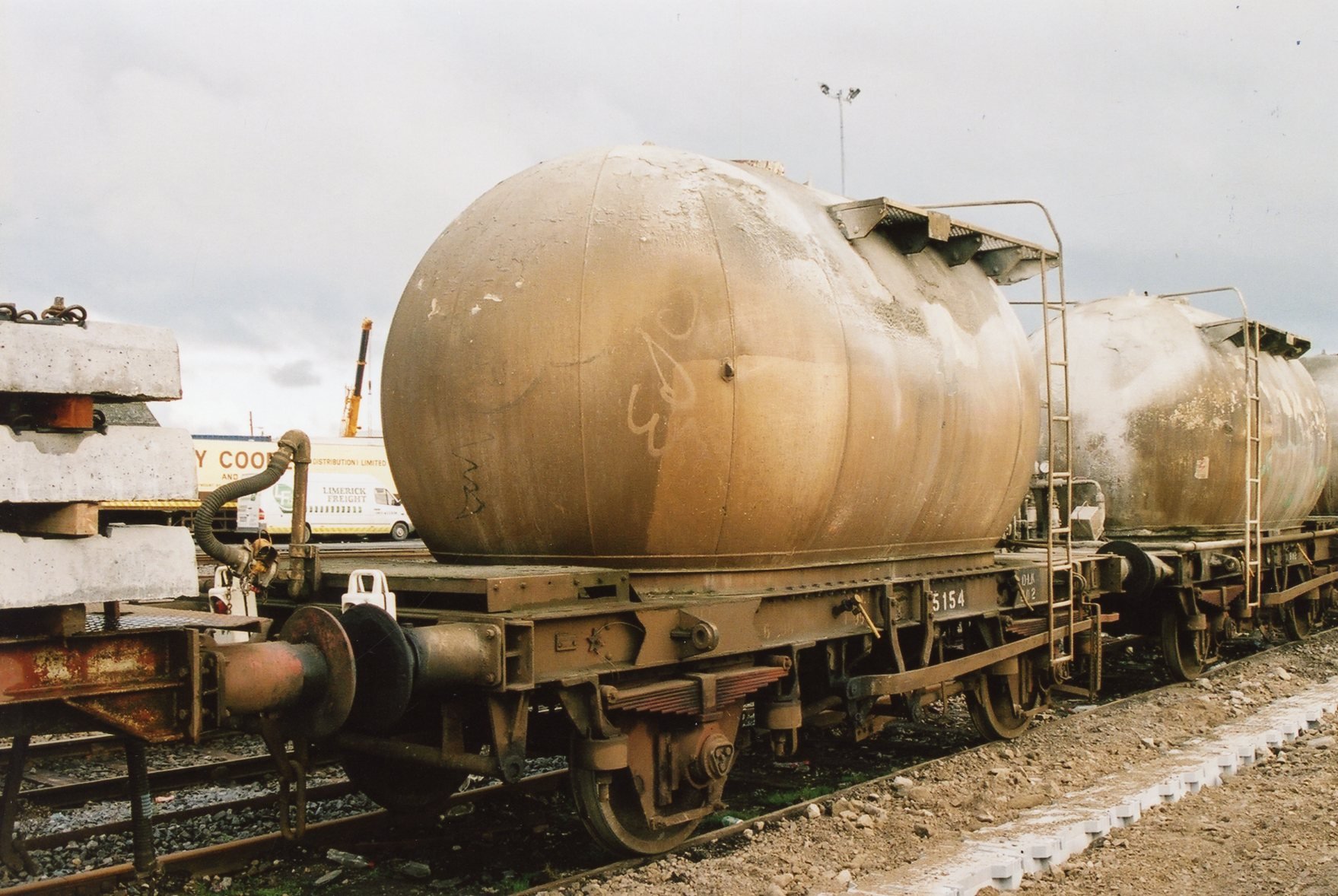
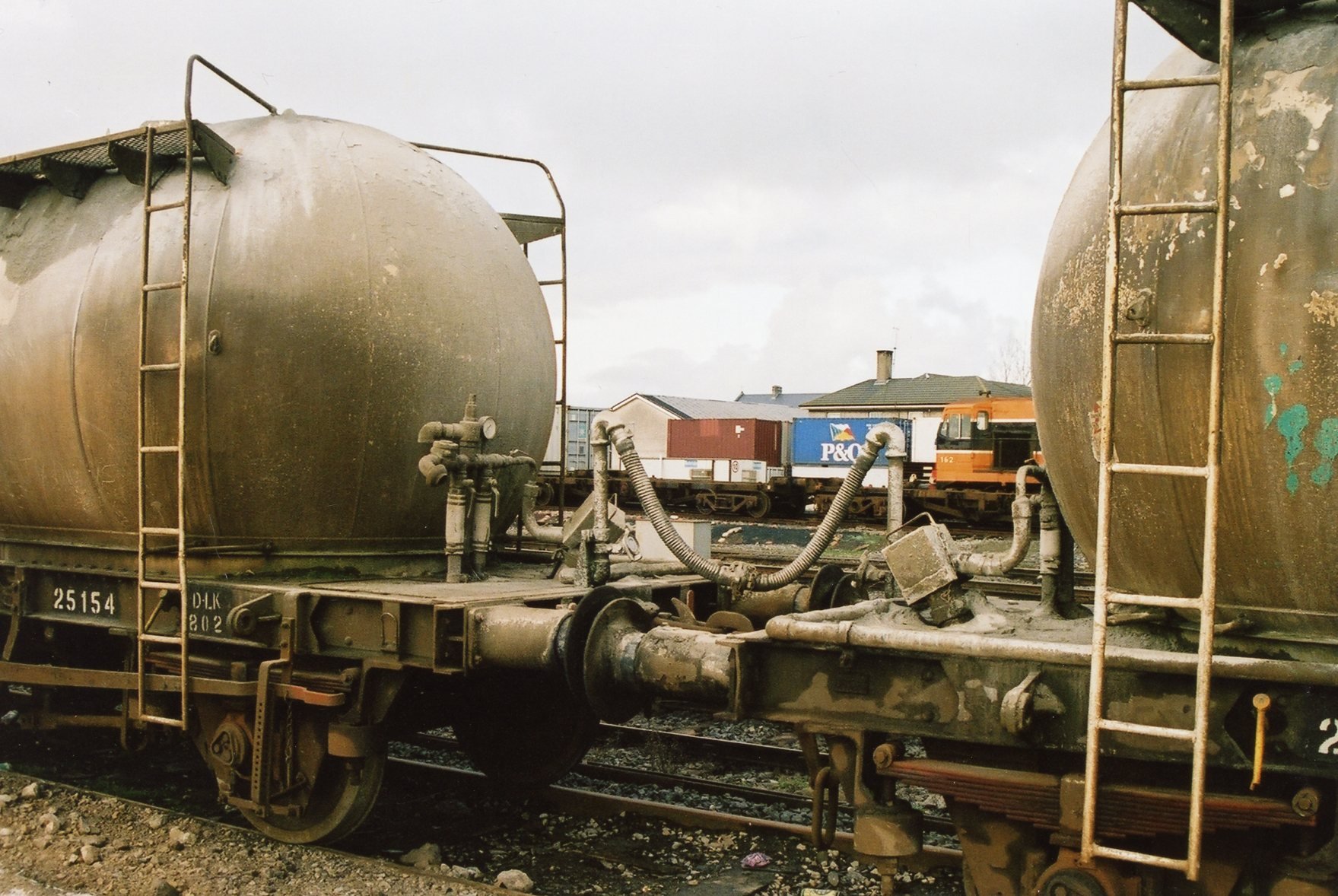
Finally, there was a large batch of 60 wagons built in 1972, 25140-25199. By now the design had matured and these seem to have been identical to the 1970 batch, and they remained largely unmodified through their lives. The photo in the Doyle&Hirsch stockbook shows one of these when new, here's 25156, and note that the tank number is 156 matching the running number, so the tank numbering policy must have changed by 1972: For completeness we'll look again at the list of 10 items: W-irons: Plain triangular plates. Solebar reinforcements: rectangular plates welded to the front of the channel section about the W-irons provide extra strength. Solebar eyes: These are fitted to the front of the solebar reinforcement plates. Bufferbeam ends: These are longer than the first batch, they protrude beyond the buffers. Vacuum pipes: These are high, on an upstand above the bufferbeam. Braked end treadplate: A raised treadplate is provided. It has 6 fixing bolts each side (rather than the 5 bolts on the plates retro-fitted to the first batch). Other details at the plain end: Just the vacuum pipe. Tank number: matches the last 3 digits of the wagon number Handbrake: The hand lever arrangement is the standard type with a long lever reaching past the vee hanger to a link arrangement. Tank support brackets: They have vertical ends rather than the chamfered ends of the first batch. I've got loads of photos of this batch so will just pick a few views showing different angles; here are 25151, 25154, 25177 And the very last one, 25199: Note that many, but not all, of these have had their solebar reinforcement plates modified or replaced with the fishtail-ended variety. Otherwise they appear to be as-built except the livery.
-
The penultimate batch of bubbles was built in 1970, numbered 25120-25139. The IRRS has a photo of one of these newly built and only partially painted; it has tank number 80 so it would be wagon 25129: https://www.flickr.com/photos/irishrailwayarchive/53570447106 Jonathan Allen comes up trumps again with this image on Flickr showing 25138 in 1976, by which time the number on the tank matched that on the wagon: As far as I can tell, these wagons were identical to the 1967 batch apart from the W-irons, which were a plain plate type slightly different in shape to the previous W. For completeness we'll look again at the list of 10 items: W-irons: Plain triangular plates. Solebar reinforcements: rectangular plates welded to the front of the channel section about the W-irons provide extra strength. Solebar eyes: These are fitted to the front of the solebar reinforcement plates. Bufferbeam ends: These are longer than the first batch, they protrude beyond the buffers. Vacuum pipes: These are high, on an upstand above the bufferbeam. Braked end treadplate: A raised treadplate is provided. It has 6 fixing bolts each side (rather than the 5 bolts on the plates retro-fitted to the first batch). Other details at the plain end: Just the vacuum pipe. Tank number: matches the last 3 digits of the wagon number Handbrake: The hand lever arrangement is the standard type with a long lever reaching past the vee hanger to a link arrangement. Tank support brackets: They have vertical ends rather than the chamfered ends of the first batch. Frustratingly, this batch of wagons seems to have evaded my camera in the early 2000s!
-
New IRM Wagon Announcement Tomorrow 11am - Place Your Bets!
Mol_PMB replied to Warbonnet's topic in General Chat
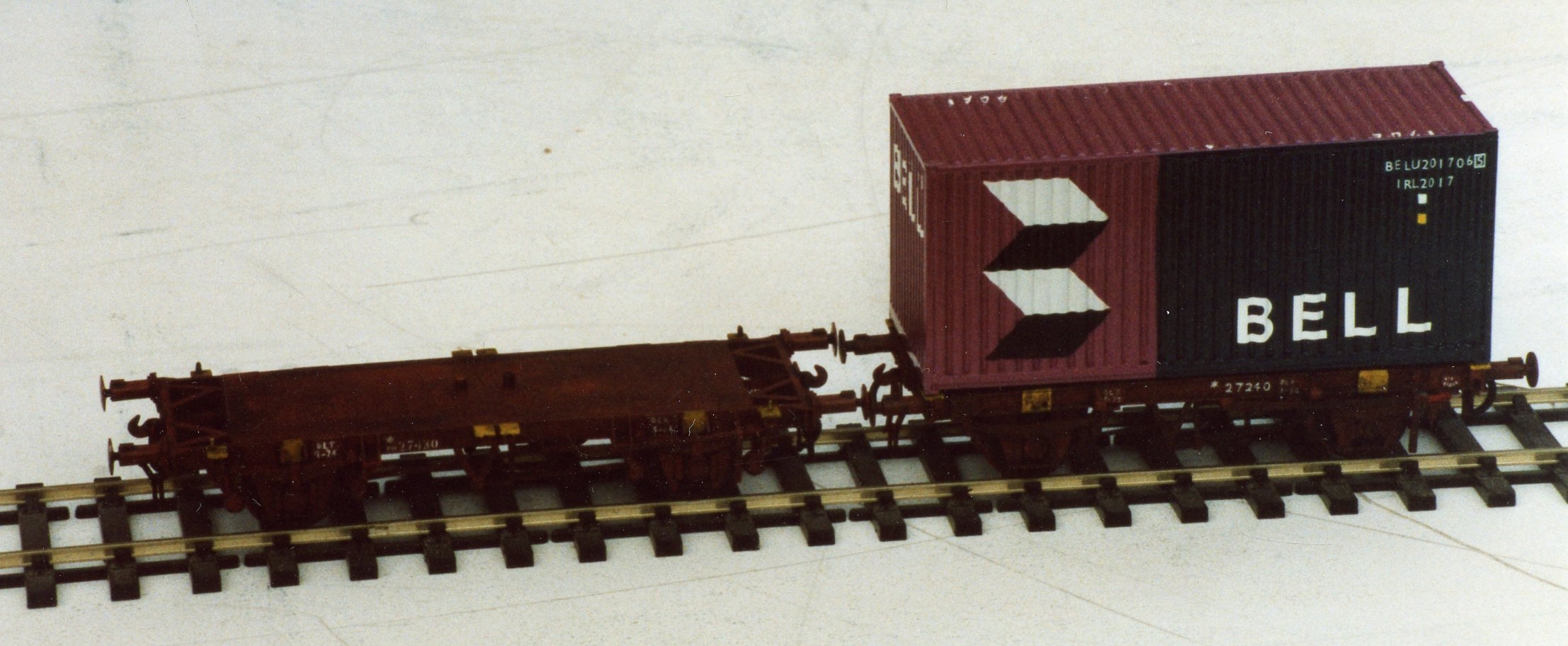
I made one of those decades ago! 6mm scale on 32mm track.
-
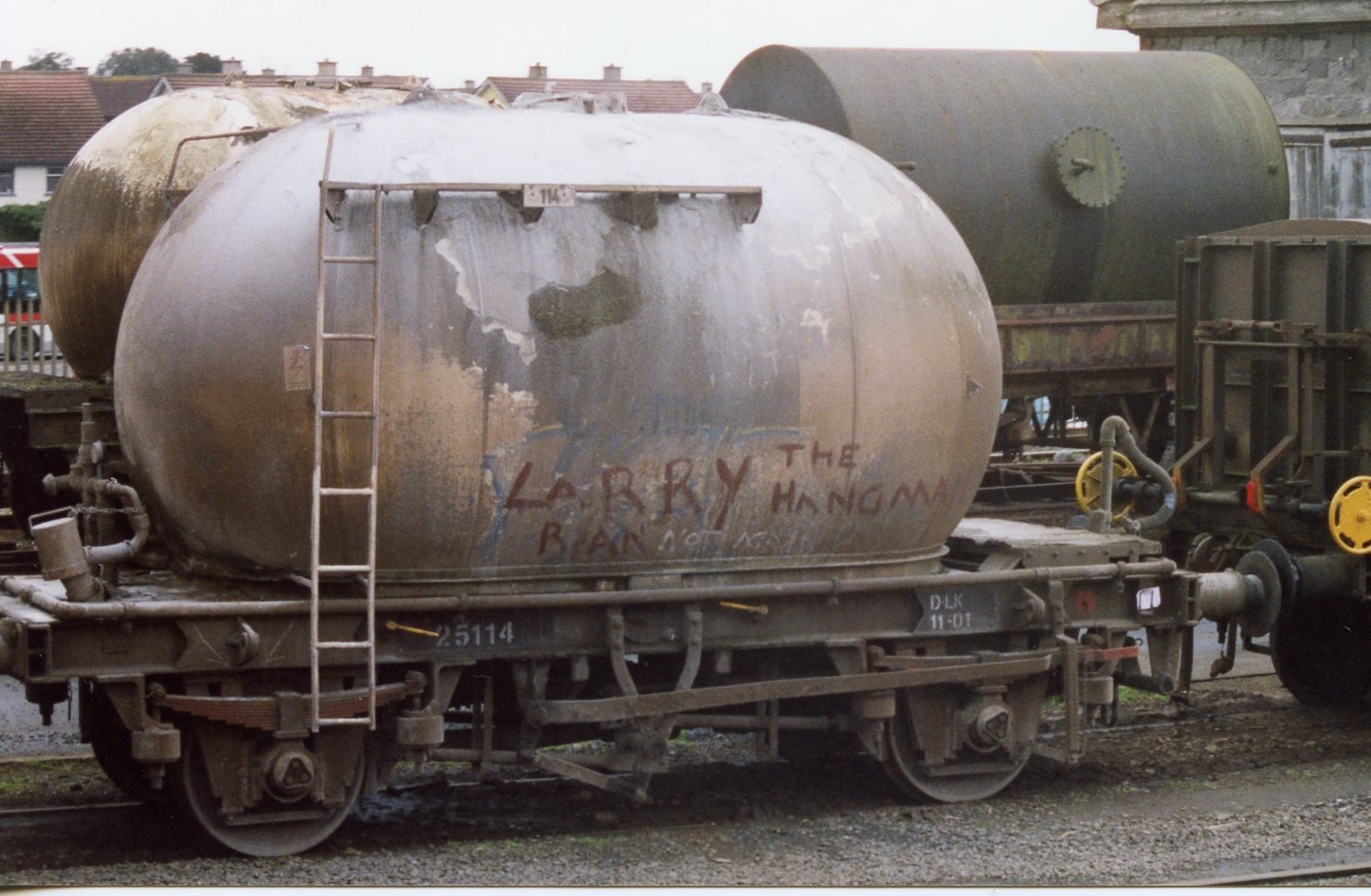
The next batch of bubbles was introduced in 1967, and this comprised 20 wagons numbered 25095-25099 and 25105-25119. I think these were built new with the final version of the brake gear, a long lever reaching past the vee hanger to a link arrangement. They also had a raised treadplate at the braked end of the wagon. I linked this wonderful 1970 photo from Jonathan Allen in an earlier post too, but I'll put it again here and talk through the different wagon types: Starting from the brake van end, the first bubble is a 1967 model, with the long brake lever reaching past the vee hanger, and you can also see the raised treadplate at the nearer end. The next two bubbles are the 1964 model, with handbrake wheels (above the solebar). Then there's a 1965 wagon, with the shorter, more angled brake lever. The clean one is another 1967 wagon, with the raised treadplate and long brake lever distinctive. Finally, just behind the loco is another 1965 wagon, bringing up a total of 2 of each type that existed in 1970. Here's an IRRS archive photo of 25098, newly overhauled at Limerick in ivory in 1986, which also shows the long brake lever and raised treadplate: https://www.flickr.com/photos/irishrailwayarchive/53509328864/ Moving now to the more modern photos which are a bit clearer, here's 25114, 25098 and 25110. I think these remained basically unmodified from the as-built condition. We'll look again at the list of 10 items: W-irons: These are W-shaped rather than triangular plates. Solebar reinforcements: rectangular or fish-tail ended plates welded to the front of the channel section about the W-irons provide extra strength. Solebar eyes: These are fitted to the front of the solebar reinforcement plates. Bufferbeam ends: These are longer than the first batch, they protrude beyond the buffers. Vacuum pipes: These are high, on an upstand above the bufferbeam. Braked end treadplate: A raised treadplate is provided. It has 6 fixing bolts each side (rather than the 5 bolts on the plates retro-fitted to the first batch). Other details at the plain end: Just the vacuum pipe. Tank number: matches the last 3 digits of the wagon number Handbrake: The hand lever arrangement is the standard type with a long lever reaching past the vee hanger to a link arrangement. Tank support brackets: They have vertical ends rather than the chamfered ends of the first batch.
-
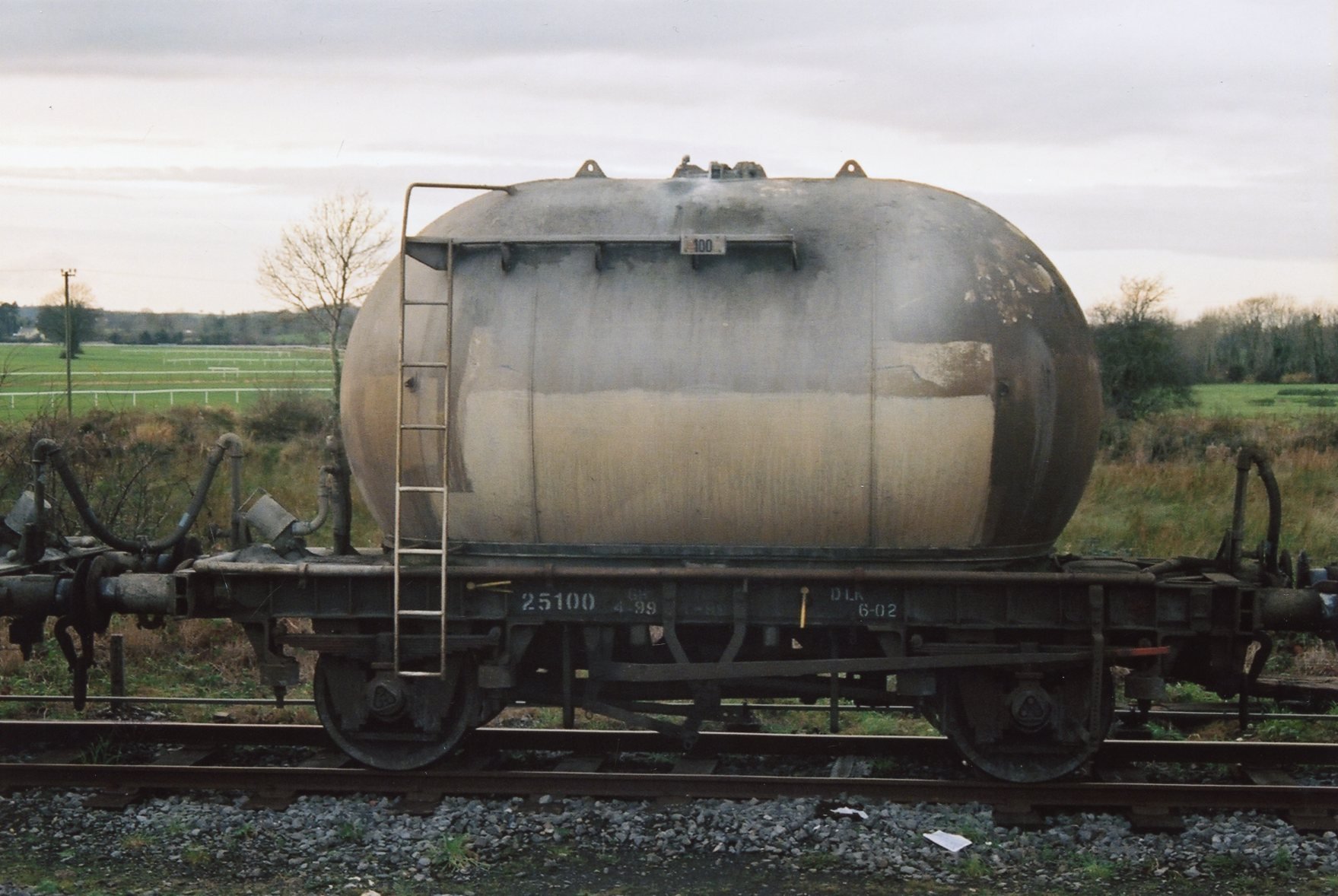
Also in 1965, there were 5 bubbles built numbered 25100-25104. I cannot explain why the numbers 25095-25099 were missed out, and this gap was filled in a couple of years later. 25100-25104 had the same tare weight as the other 1965-built wagons described in the previous post, and were probably similar originally. I have not yet found any older photos of these. However, here's my photo of 25100 in the early 2000s: We'll look again at the list of 10 items, in this case the differences from the other 1965 wagons in 2000s condition are highlighted in bold: W-irons: These are W-shaped rather than triangular plates. Solebar reinforcements: Vertical ribs above the W-irons. Solebar eyes: These aren't any. Bufferbeam ends: These are longer than the first batch, they protrude beyond the buffers. Vacuum pipes: These are high, on an upstand above the bufferbeam. Braked end treadplate: There isn't one. We can see the top of the frame channels. Other details at the plain end: Just the vacuum pipe. Tank number: 25100 carries '100'. Handbrake: The hand lever arrangement is the standard type with a long lever reaching past the vee hanger to a link arrangement. Tank support brackets: They have vertical ends rather than the chamfered ends of the first batch. The only difference from the other 1965 wagons is in the area of the solebar reinforcements and eyes, and in this respect the 25100 batch are more like the original 25050 batch. It is possible that the 1965 production started with 25100-104, and the 25070-25094 batch followed with the improved solebar design.
-
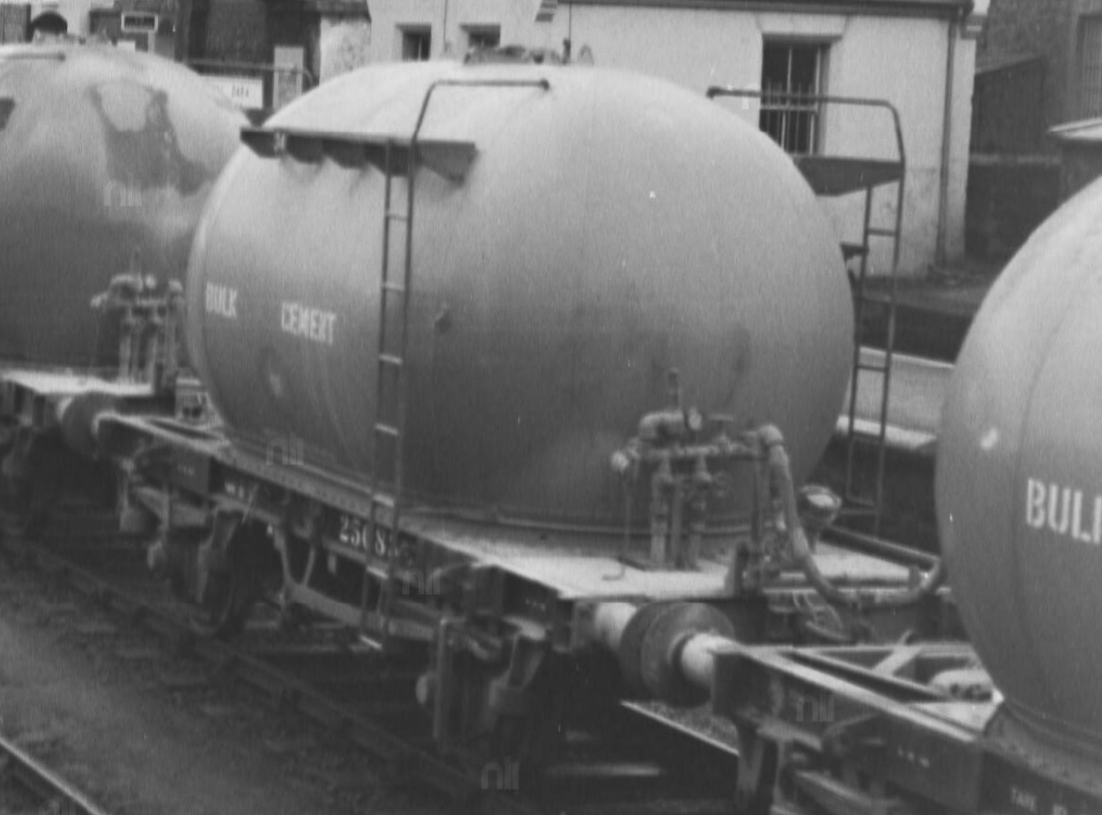
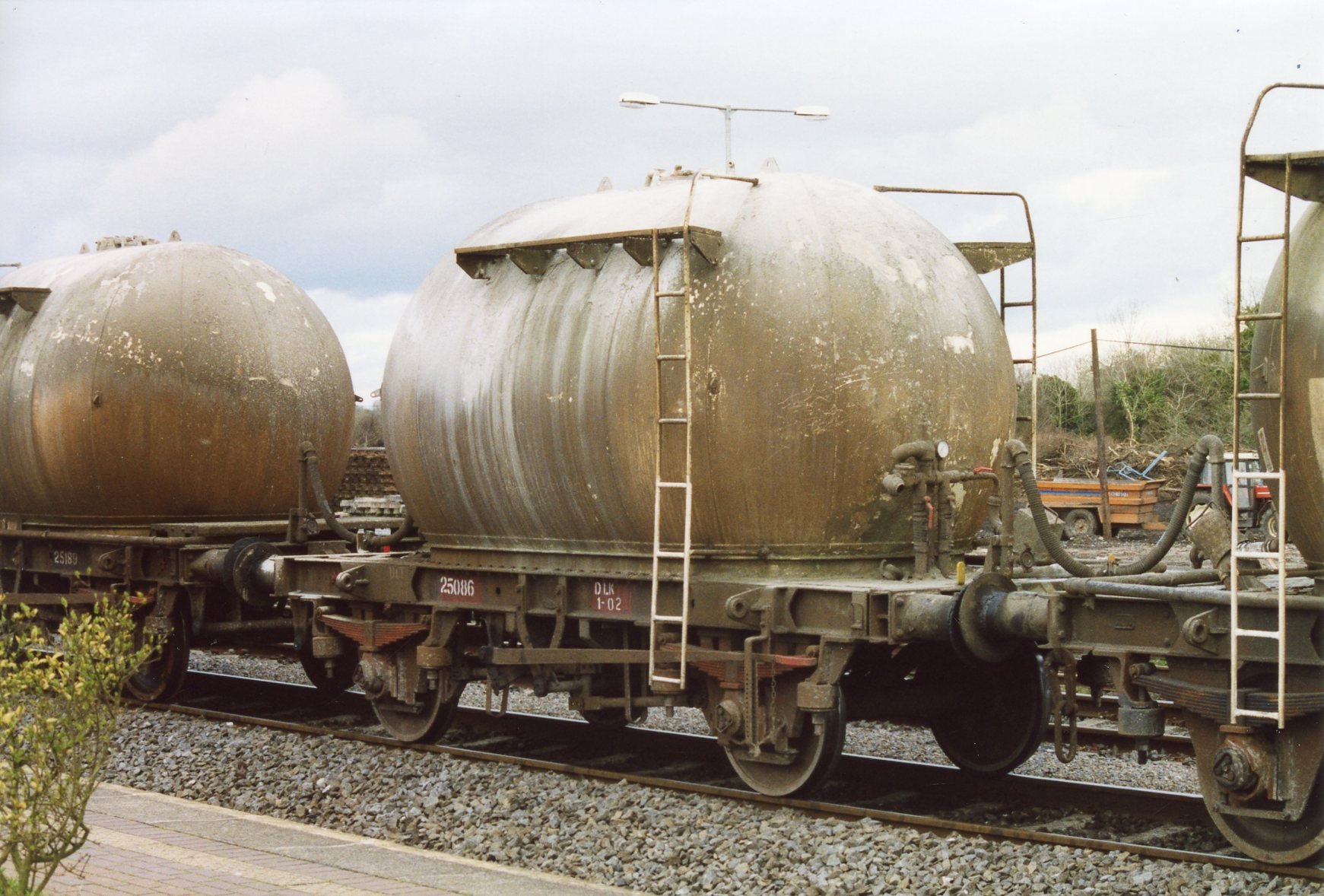
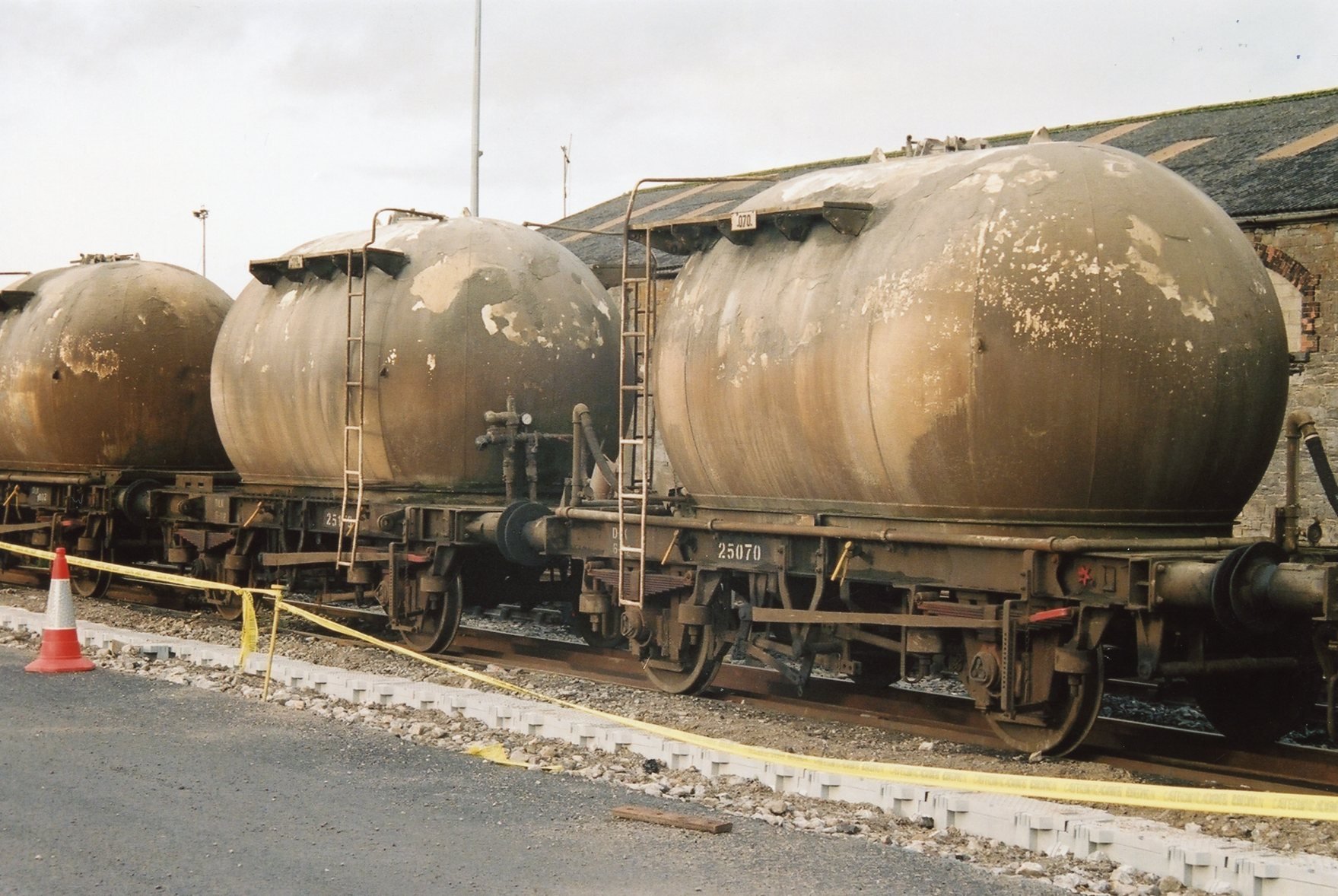
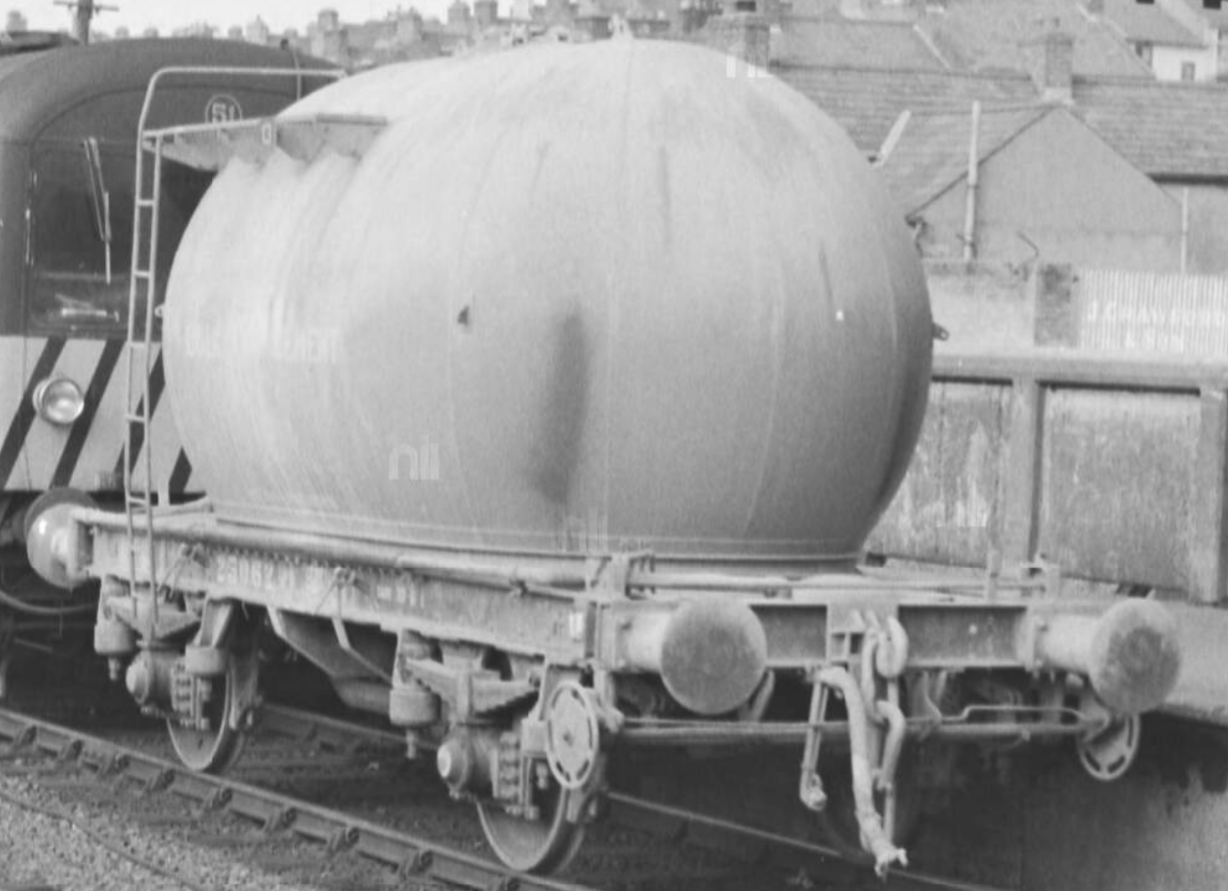
The first 20 bubbles built in 1964 were evidently reasonably successful, but the design could be improved. We've already seen how the brake arrangement was changed (twice) and the solebars were reinforced. So when the second batch of 25 wagons 25070-25094 were built the following year, there were differences. Once again we can thank the National Library of Ireland and James O'Dea for a nice photo of 25083 dating from 1967: https://catalogue.nli.ie/Record/vtls000306704 We'll look again at the list of 10 items: W-irons: Just about visible in the photo above, but we'll see more clearly later, these are W-shaped rather than triangular plates. Solebar reinforcements: rectangular plates welded to the front of the channel section about the W-irons provide extra strength. Solebar eyes: These are fitted to the front of the solebar reinforcement plates. Bufferbeam ends: These are longer than the first batch, they protrude beyond the buffers. Vacuum pipes: These are high, on an upstand above the bufferbeam. Braked end treadplate: There isn't one. We can see the top of the frame channels. Other details at the plain end: Difficult to see in this view, but it seems to be just the vacuum pipe. Tank number: 25083 was the 34th cement bubble built (the series started at 25050), and its tank carries the number 34. Not 083! Handbrake: this is now a hand lever. However, it's not the later standard type - it has a Morton clutch on the vee hanger, rather than reaching past the vee hanger to a link arrangement. Tank support brackets: They have vertical ends rather than the chamfered ends of the first batch. The IRRS photo from 1966 that I linked in the previous post also features one of these second-batch wagons 25074, viewed from the other end: https://www.flickr.com/photos/irishrailwayarchive/53508783939 Also in the IRRS archive is this view of 25078, freshly overhauled at Limerick in 1986. Apart from the new ivory livery and the tank number (strangely 078B), its condition is unchanged from the 1960s photos: https://www.flickr.com/photos/irishrailwayarchive/53508119122/ This IRRS view shows 25086 in 1985, again as-built except livery and tank number: https://www.flickr.com/photos/irishrailwayarchive/53511538110 Moving to the early 2000s and my own photos, here's the first of the batch 25070, and in the second photo 25086: We'll look again at the list of 10 items, again the modifications from original condition are shown in bold: W-irons: These are W-shaped rather than triangular plates. Solebar reinforcements: The rectangular plates have been replaced by plates with fishtail-shaped ends, on both wagons pictured Solebar eyes: These are fitted to the front of the solebar reinforcement plates on 25086, but absent on 25070. Bufferbeam ends: These are longer than the first batch, they protrude beyond the buffers. Vacuum pipes: These are high, on an upstand above the bufferbeam. Braked end treadplate: There isn't one. We can see the top of the frame channels on 25086. It's possible there is a flush plate on 25070 but it's hard to see. Other details at the plain end: Just the vacuum pipe. Tank number: 25070 carries '070', 25086 has no tank number. Handbrake: The hand lever arrangement has been modified to the standard type with a long lever reaching past the vee hanger to a link arrangement. Tank support brackets: They have vertical ends rather than the chamfered ends of the first batch. So, fewer modifications to this batch but there were still some changes implemented over the years.
-
New IRM Wagon Announcement Tomorrow 11am - Place Your Bets!
Mol_PMB replied to Warbonnet's topic in General Chat
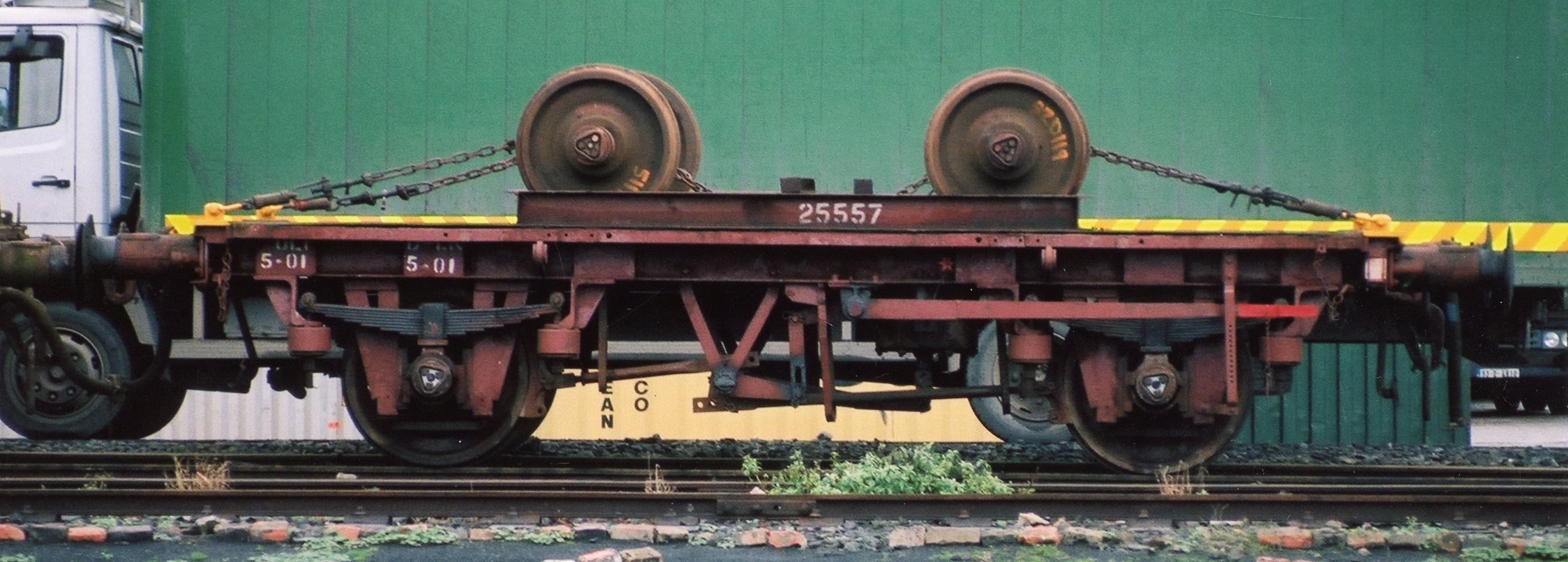
Of course, some Irish wagons had wheelsets on top...
-
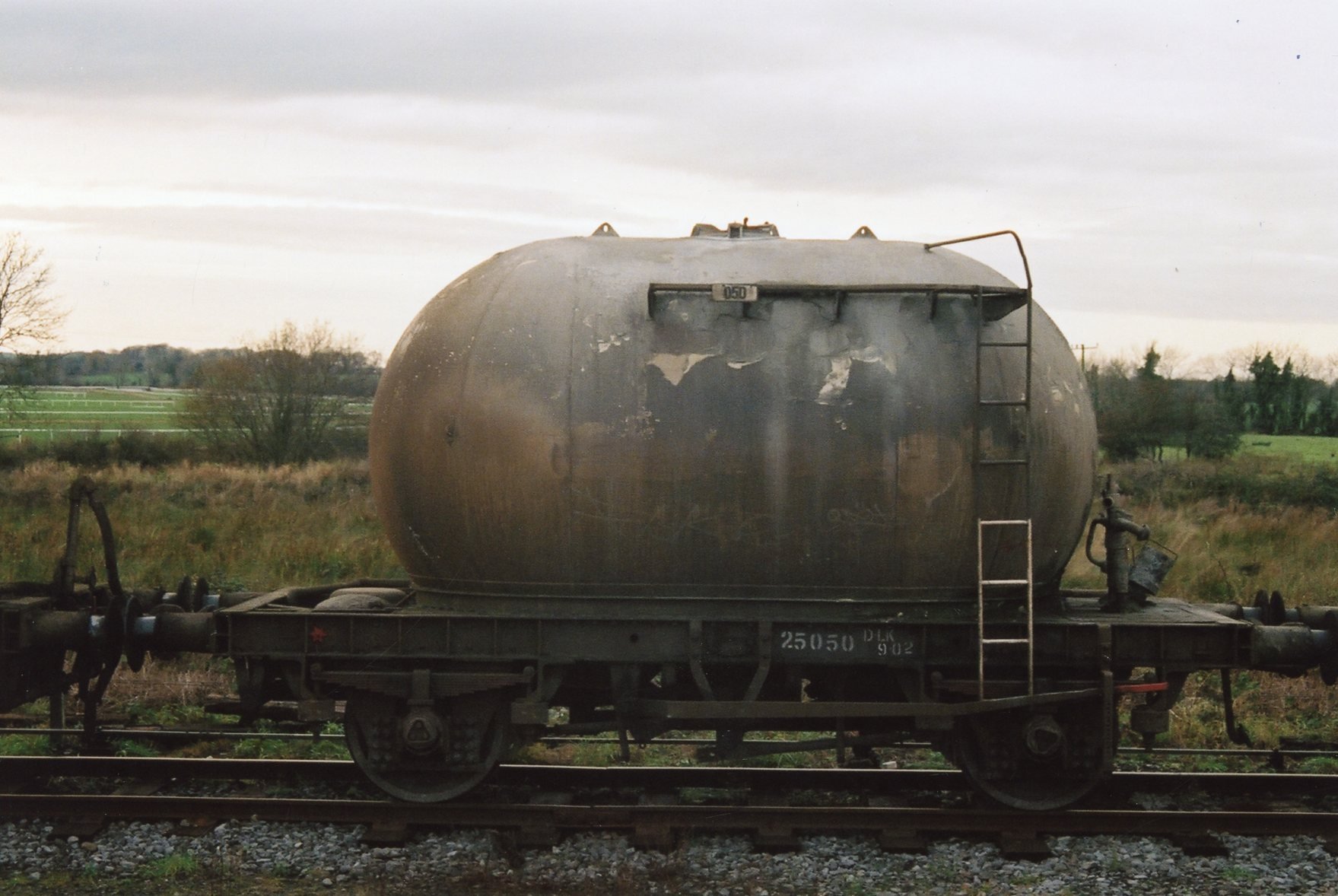
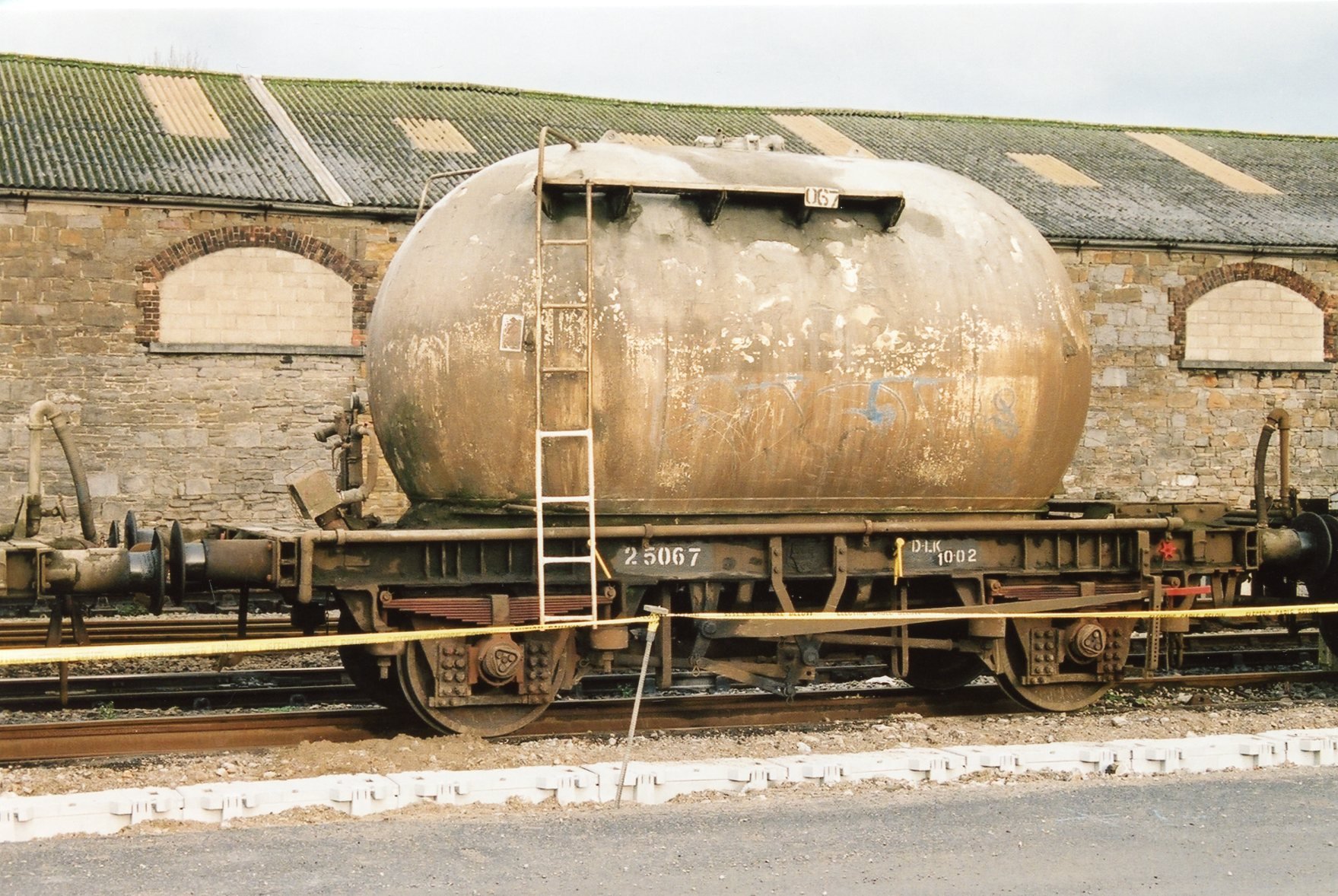
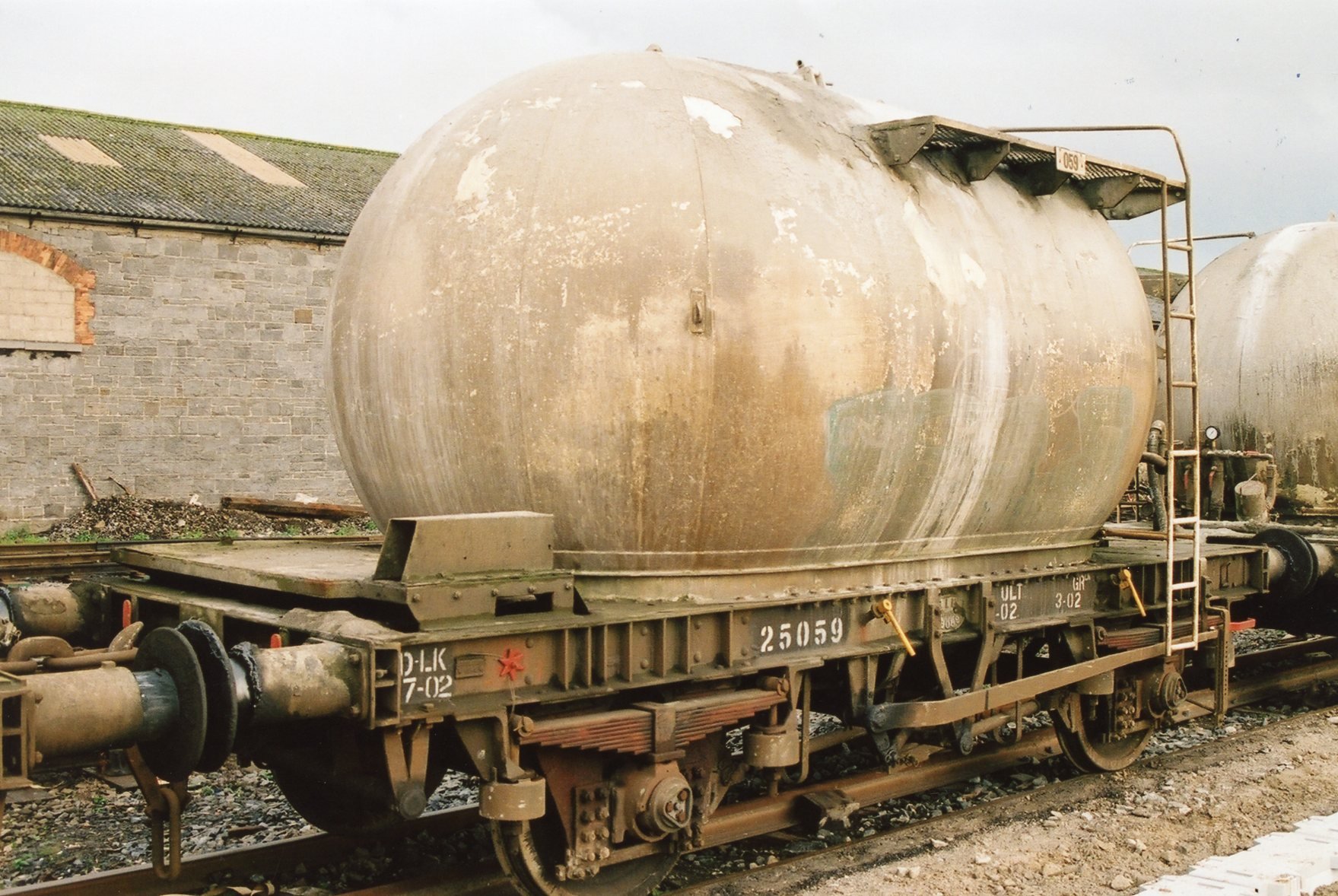
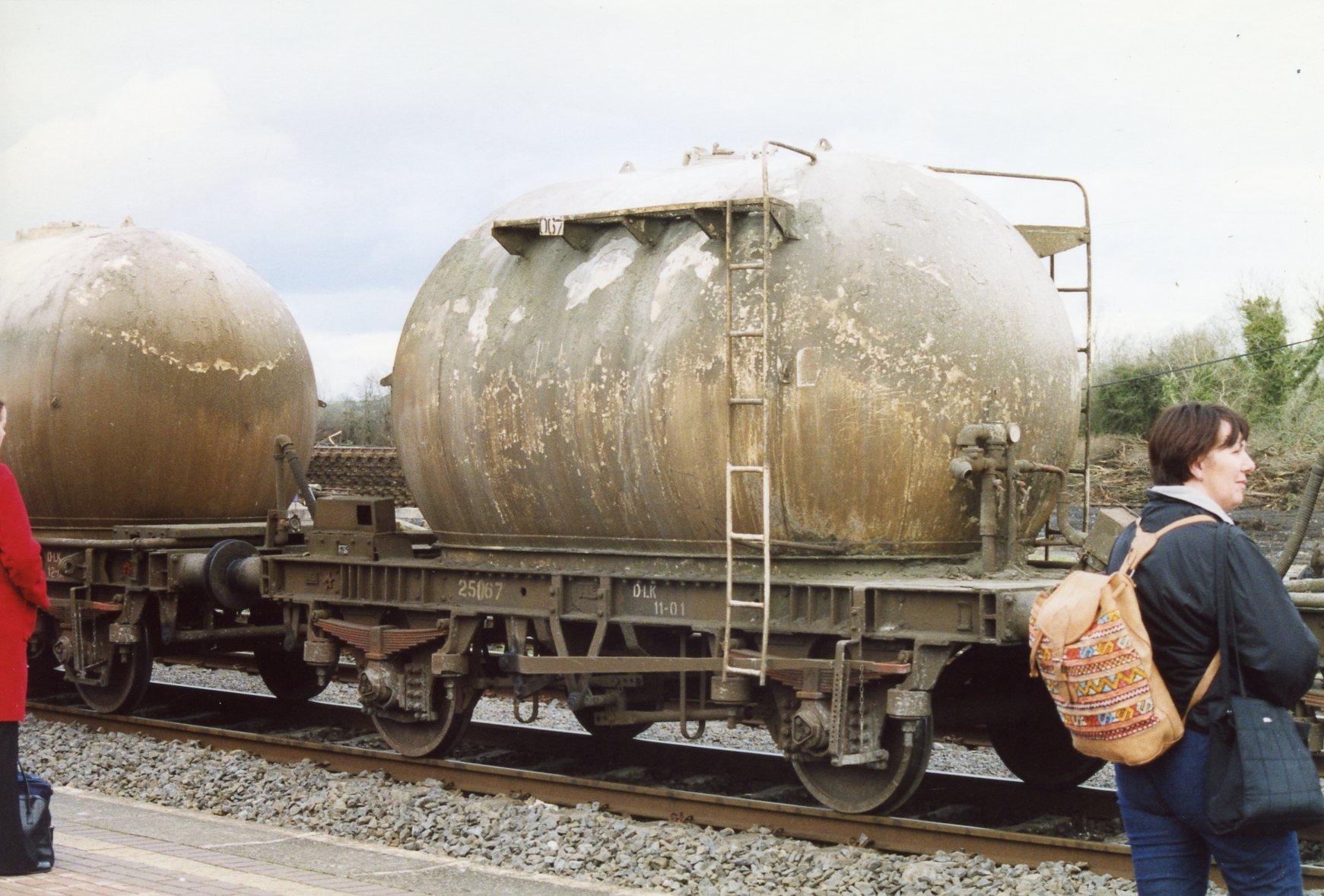
Let's start with the first batch, 25050-25069, built in 1964. Even within the batch there were some variations. The National Library of Ireland has a nice photo by James O'Dea, at Derry in 1967: https://catalogue.nli.ie/Record/vtls000307375 W-irons: These are the plain plate type, but the hornguides are festooned with bolts - 16 at each axlebox. This is a key feature of this first batch, which remained unchanged. Solebar reinforcements: There aren't any - it's just a plain channel section about the W-irons. This was soon modified. Solebar eyes: There aren't any. Bufferbeam ends: These are short, the bufferbeams barely protrude beyond the solebars and are no wider than needed to hold the buffers. Vacuum pipes: These are low, hanging below the bufferbeam. Braked end treadplate: There isn't one. We can see the top of the vacuum cylinders. Other details at the plain end: There is a bar across the end above the bufferbeam; this may be a vac brake load changeover valve? Tank number: 25062 was the 13th cement bubble built (the series started at 25050), and its tank carries the number 13. Not 062! Handbrake: this is perhaps the biggest difference to what we're used to. It's a handwheel not a lever. Similar handwheels were used on the previous type of wagon built by CIE, the 25201-25435 series flats https://irishrailwaymodeller.com/topic/17496-cie-ballast-wagons-late-1960s-to-1980s-not-hoppers-or-flats/#findComment-250654, and of course on the vac fitted H vans and cattle wagons. Tank support brackets: without a handbrake vee hanger in the middle of the solebar, these are more obvious. They have chamfered ends. This photo in the IRRS archive dated 1966 shows another bubble with this handwheel brake below the solebar, and other features the same as the wagon above: https://www.flickr.com/photos/irishrailwayarchive/53508783939 Of course in the 1960s these wagons would have been grey. Edit: here's a super photo from Ernie showing one of this first batch of bubbles in colour, dated 1967 and still in original condition with the brake handwheel below the solebar. I think it's 25068: However, 1970s and 1980s photos of these first-batch wagons show some changes, as well as the livery changes to orange and later ivory. This photo by Jonathan Allen on Flickr dated 1978 shows the first wagon with the handwheel above the solebar rather than below. Additionally, the solebars have been reinforced with vertical ribs above the W irons: Another Jonathan Allen photo from 1970 shows a short train with two early wagons having the handwheel above the solebar (the rest are later batch wagons with the familiar long brake lever): I'll leave you the fun of looking at 1970s and 1980s photos of cement trains and spotting those with the handwheel brakes - they're quite obvious when you are looking for them... This IRRS archive photo shows 25058 at Limerick, freshly overhauled and repainted in ivory in 1986. It retains its handwheel brake (above the solebar). The tank number has also been changed, it's now '058' whereas originally it would have been '9'. https://www.flickr.com/photos/irishrailwayarchive/53508119127/ Moving now to the 2000s when I took most of my bubble photos, here's the class leader 25050: Revisiting the list of characteristics we looked at for the wagon in original condition, with changes marked in bold: W-irons: These are the plain plate type, but the hornguides are festooned with bolts - 16 at each axlebox. This is a key feature of this first batch, which remained unchanged. Solebar reinforcements: 7 vertical ribs have been welded above each W-iron. The exact number and spacing of the ribs varied between wagons, as they were a later modification. Solebar eyes: There aren't any. Bufferbeam ends: These are short, the bufferbeams barely protrude beyond the solebars and are no wider than needed to hold the buffers. Vacuum pipes: These are low, hanging below the bufferbeam. Braked end treadplate: There isn't one. We can see the top of the vacuum cylinders. Other details at the plain end: Nothing. The parts perhaps associated with the brakes seen in the 1960s photos have been removed. Tank number: 25050's tank carries the number '050'; it would originally have been '1'. Handbrake: this has been modified to the long lever type, the same as on the later wagons. Tank support brackets: without a handbrake vee hanger in the middle of the solebar, these are more obvious. They have chamfered ends. Here is 25067 seen from the other side, basically the same except the arrangement of solebar reinforcing ribs, and the installation of a raised treadplate over the vacuum cylinders. Here's 25059, showing the raised treadplate at the braked end more clearly, as well as some sort of box or housing on top of it. That may have been associated with the brake handwheel arrangement when positioned above the solebar. Here's another view of 25067 and we can see from this angle that it also has a similar boxy housing at the braked end: Ernie's photo of 25065 on the left shows the raised treadplate over the brake cylinders, but not the boxy housing. Note the solebar reinforcing ribs are evenly spaced (like 25050 above) rather than the uneven arrangement seen on 25059 and 25067. We'll finish the first batch with another of Ernie's photos showing 25067 and 25068 together. This shows the short bufferbeam ends particularly well. Note also that the raised treadplates are secured with 5 bolts each side (we'll see in due course that the later wagons have 6). These two seem to have lost their tank numbers.
-
New IRM Wagon Announcement Tomorrow 11am - Place Your Bets!
Mol_PMB replied to Warbonnet's topic in General Chat
Indeed, not too much suspense! All three series of 4-wheel container flat later formed the basis of other wagon types (beet, oil tanks, logs etc) so any of them would enable further developments.