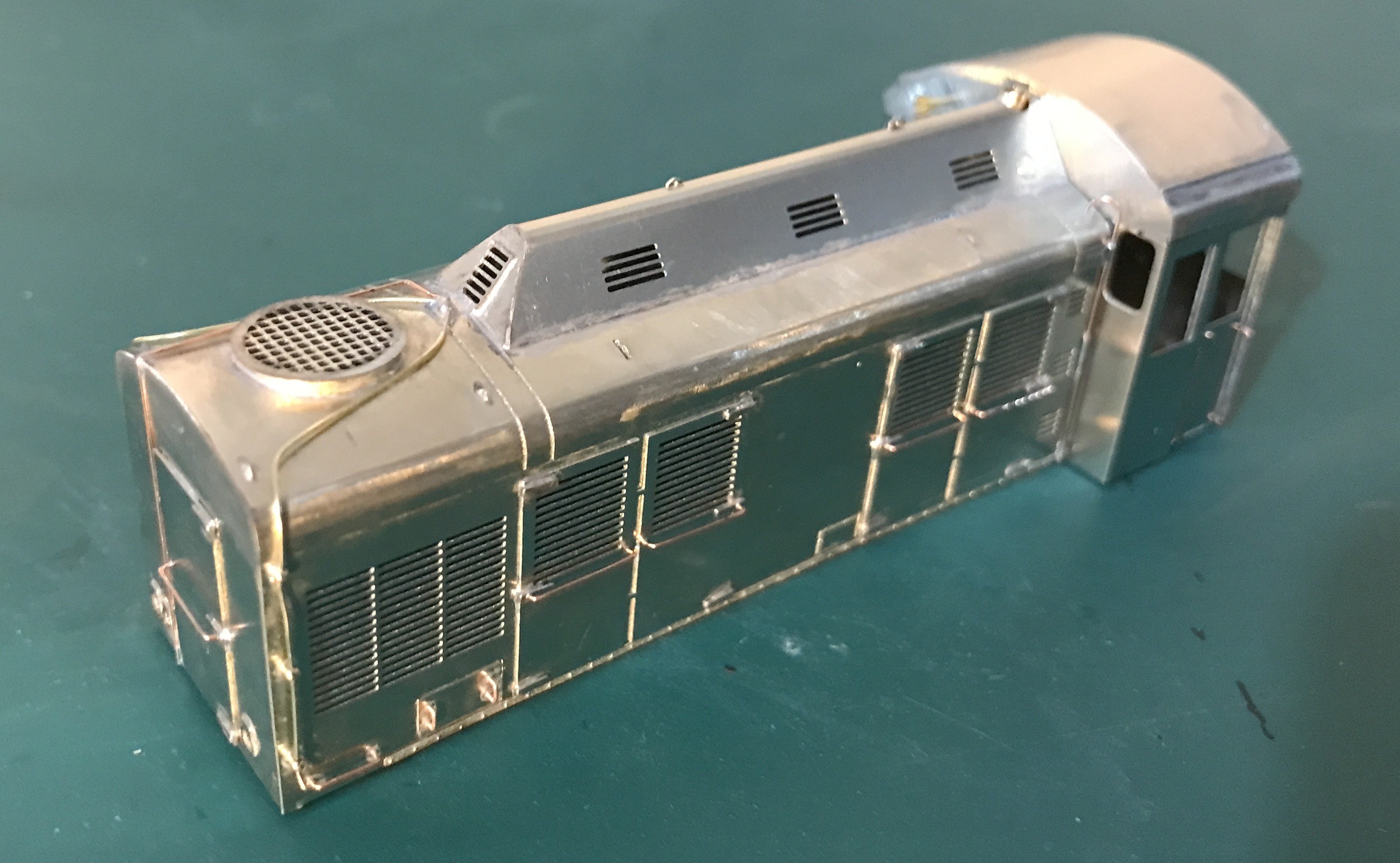
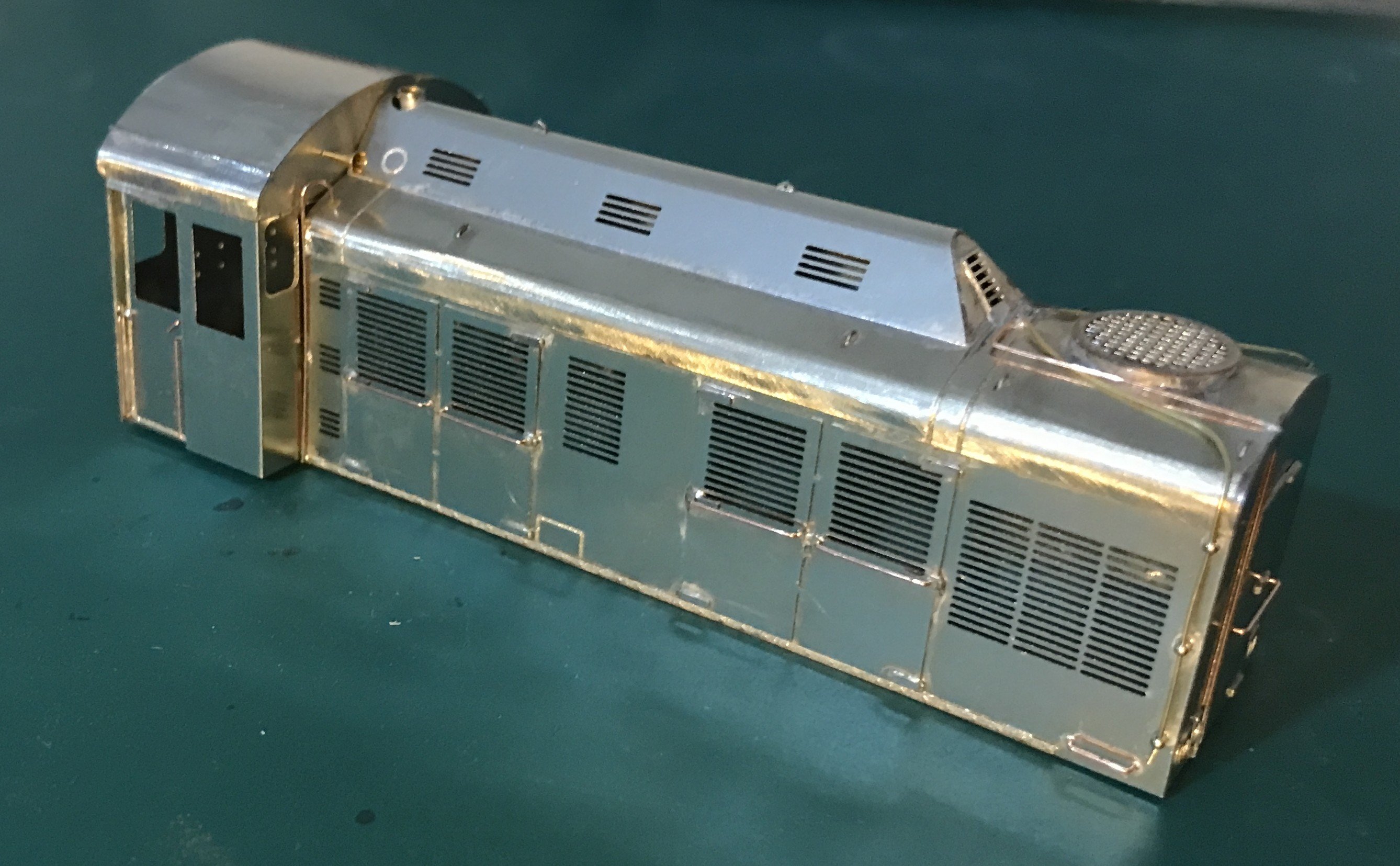
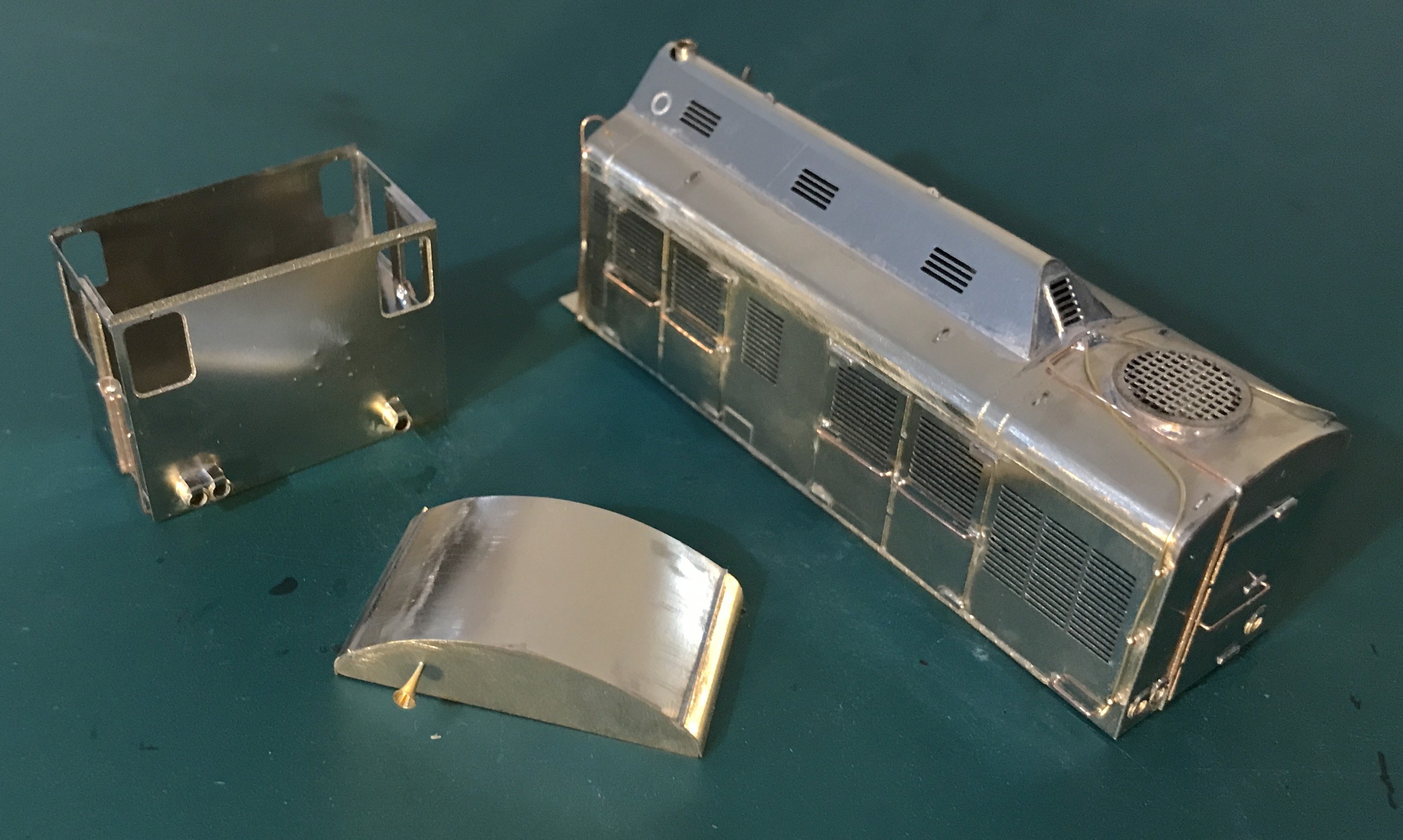
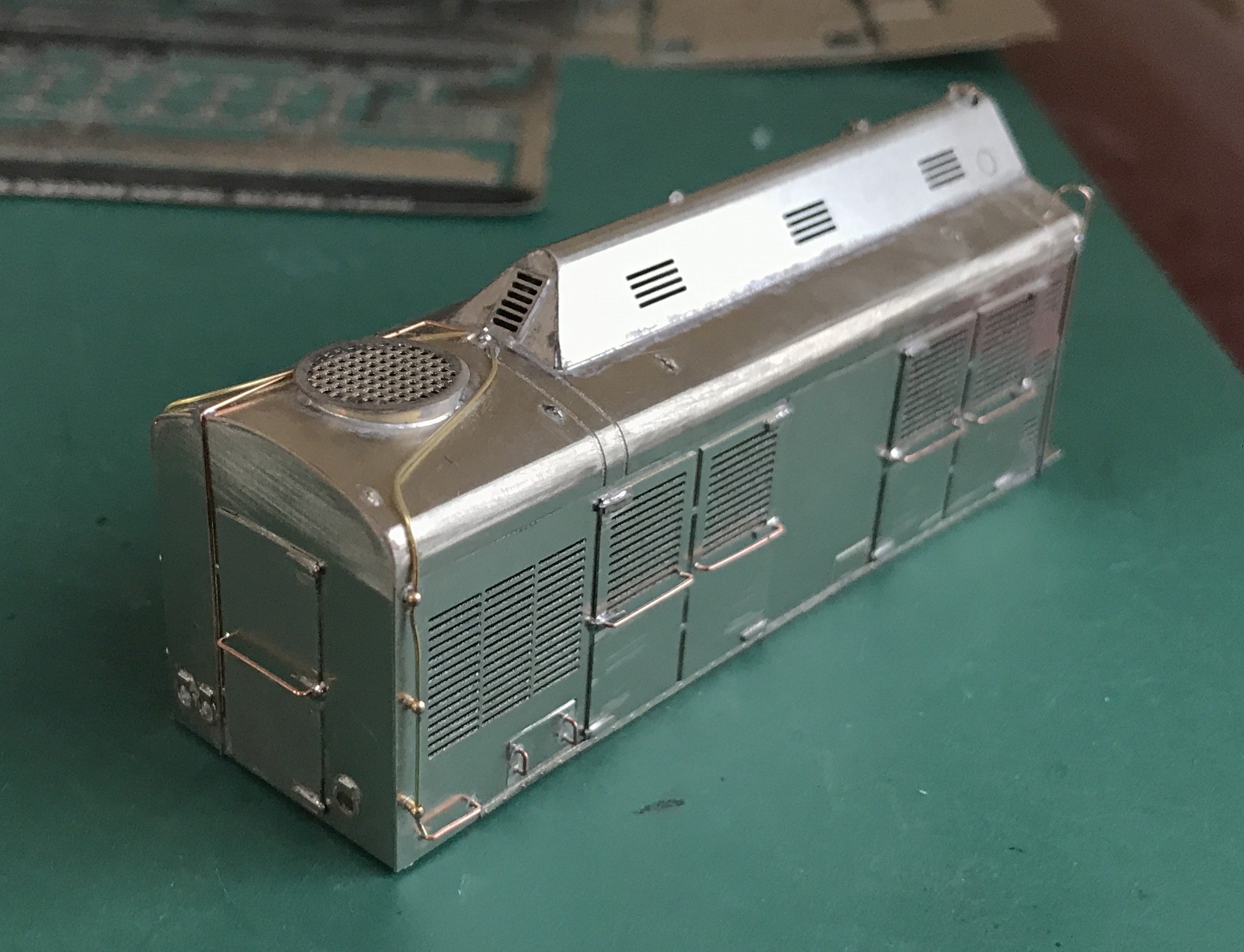
Jump to content

Mol_PMB

Members
  • Posts

    3,631
  • Joined

  • Last visited

  • Days Won

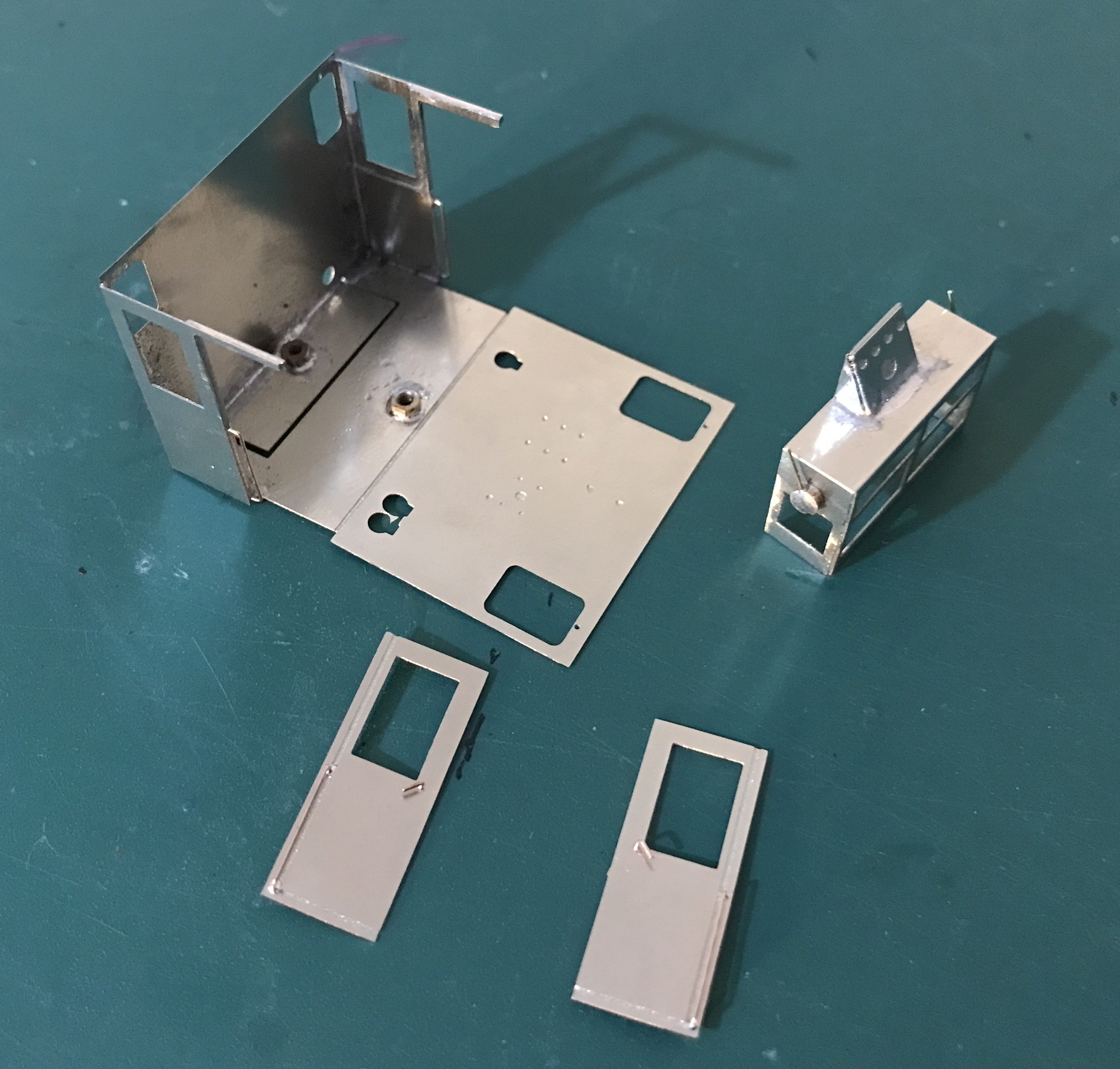
    219

Everything posted by Mol_PMB

  1. Many thanks! I hadn't previously discovered the Kennelly Archive, there are hundreds of photos of Fenit Pier on there from various different dates. Looking at them will keep me amused for a while! Regarding the cranes, the rail-mounted steam cranes were standard gauge, and ran on the same tracks as the locos and wagons. One of the NLI images shows a crane at Fenit (mainland). Now that I've seen a lot more photos of them it's clear that they don't have any buffers or couplings, and that the crane body overhangs the underframe. So they must have been self-propelled and were not intended for shunting [elsewhere, it wasn't unusual for small cranes like these to have buffers and be used for shunting]. As John notes above, by 1965 thoughts were turning to replacing the old cranes, and a road crane was hired as a trial: https://www.kennellyarchive.com/media/6edb0e7f-e29b-4aec-a32c-4487f6206210 The Kennelly Archive photos cover a good range of dates, but one sequence of 34 images is from May 1970, recording the commissioning of two new gantry cranes, and this is quite interesting: https://www.kennellyarchive.com/media/227941d5-7782-4307-a9e3-f6414e85a12a https://www.kennellyarchive.com/media/79aa37cd-dcae-4922-845c-04808a040e54 https://www.kennellyarchive.com/media/f07bcebb-3eb1-4673-bf1f-0abb563c9c32 One rail of the big gantry crane appears to be one of the railway running rails, or perhaps a new stronger rail put in the same place. The other gantry crane rail is just in front of the shed on the pier. So you could still run wagons under the crane, but not on the track nearest the quayside. The crane tracks didn't extend as far as the pointwork: https://www.kennellyarchive.com/media/4d716003-8cc6-403d-9131-069b1266ac4d https://www.kennellyarchive.com/media/9da0e68a-6d8a-40ce-bd7d-50b5129c1b75 This has interesting implications for working railway traffic on the pier! The old cranes were still there in 1970 but perhaps now obsolescent: https://www.kennellyarchive.com/media/d50d6827-9e27-43d2-b28e-0d1268e9f5a2 https://www.kennellyarchive.com/media/7042074c-a9c4-42c5-81db-8eb466b4ee65 https://www.kennellyarchive.com/media/d125f8ce-a114-4a98-8538-5638a86eb950 There is evidence of container traffic handled at Fenit, this is a pre-ISO container in 1960: https://www.kennellyarchive.com/media/e7b8bbaa-0feb-4f95-ae01-578dd613f895 And here's an ISO flat 'Hibernian Transport Group' being lifted in 1970: https://www.kennellyarchive.com/media/05f808a9-dd5a-4ccb-a8d4-f01850e28d70 https://www.kennellyarchive.com/media/20b8d016-5aee-4a0e-a623-297d7dd53e6c https://www.kennellyarchive.com/media/65fe3d37-7b93-42ef-9d6c-1aed3072c868 I think there This photo linked by John is very useful for the pier construction - it's not just a vertical wall but the front edge is on columns and the wall is a bit further back. This would be interesting to represent at the front of the model: https://www.kennellyarchive.com/-/archive/all-images/-/medias/2f0fb9d1-9f79-44ed-b526-0b3a42e42a65-sea-angling-competition/fs I will continue researching this as I do think the pier could be an attractive model and interesting to operate. The gantry crane using the same rail as the trains would definitely restrict operations within the limited space available, but might not be a complete show-stopper and would give some interesting shunting challenges. But I could choose whether or not to place the gantry crane on the layout, and without it I could represent a date pre-1970.
  2. I’m not sure if this has been posted before, but this appears to be a list of the older rolling stock still in use by IE: https://www.irishrail.ie/getmedia/aac9a861-ac8a-42a0-b7f9-a94d8d38e336/IE_FOI_733-Response-Pack.pdf I’m not sure how complete it is!
      • 5
      • Informative
      • Like
  3. Do you have a date for these photos? Just wondering because the views recently uploaded to the IRRS Archive https://www.flickr.com/photos/irishrailwayarchive/54257009944 dated 7 Sept 1963 have grey cranes, whereas these are red. On a lighter note, my eye was drawn to the lady sunbathing against the buffer stop in the second photo! I imagine that these steam cranes were self-propelled but they don't seem to be designed for shunting wagons. Any info on whether they were used for shunting in the absence of a loco? Potentially another item of motive power needed for a model!
  4. I've been doing some work based on maps, aerial and satellite photos, and ground-level photos, to produce a plan of Fenit pier as accurately as I can. Then of course, it doesn't fit the space available so I've had to compress it. Still, this has been an interesting exercise and the results are shown below. The upper version is full size, while the lower version is compressed longitudinally to fit on an IKEA 'LACK' shelf which is 1900x260x50mm. The real thing seems to use 1:6 turnouts but I've compressed them to 1:5 on the model. Minimum curve radius is 875mm, same as my best estimate of the real thing scaled down. There are some rather attractive small buildings that might be used as a scenic break at the left-hand end but I haven't yet drawn those up. With a suitable small fiddle yard I think this could be quite an entertaining layout. In reality it was mostly operated by G class in the diesel era, but E and C are easily justifiable and if a C class will fit then a 141 isn't far behind. The 'LACK' shelf doesn't favour under-board point motors, but an option is to put the motors above the service in the long thin warehouse on the pier, and use rods and cranks to operate the points. The entire track layout is set in concrete so there are no worries about rail section or fastenings.
  5. Once I've finished the current crop of wagons, regauging and weathering 007 is my next task. It will also have the IR logos replaced with roundels to match the photos above. I must confess I have also acquired 2 more IRM A class and there's a danger that the black one may also become A7. It's a favourite of mine, being the first A class I travelled behind. A11 would be another option (which I also travelled behind), but I haven't yet found a photo of A11 in black although I think it did carry that livery.
  6. Unusual one-off prototypes seem to attract more attention than the less common but still run-of-the-mill locos. I tend to agree, there's more chance of a model of the '......mental' 356 than there is of a model of its class in more typical condition. But realistically the chance of either is negligible. Preserved and operational locos will have a much wider appeal, and are there to measure. For Irish steam, 4 or 186 are surely the prototypes of choice as they were both large classes with widespread use, probably 171 as a third option?
  7. Given that they have produced a whole host of ficticious liveries on Leader, I'm surprised they didn't paint one in Irish colours!
  8. Before I do the final assembly, I thought I'd post some photos of the solution I adopted. The wagon was built in 3 sub-assemblies, body, roof, and chassis: The body and roof are pretty much as intended by Leslie, with some additional reinforcement in the interior corners. I also fitted steel buffer heads. However, to simplify the conversion to 21mm gauge I used a Parkside PA06 chassis kit, spacing the solebars out by an extra 1mm each side, and trimming the floor to be a good fit within the wagon body. This Parkside chassis has the correct wheelbase, and suitable W irons and axleboxes. It is also designed as a vac fitted underframe with clasp brakes, so I've built a fitted cattle wagon. Many of the late survivors were vac fitted. The chassis slots in like this: And here's a rather cruel closeup side view. Apologies for the imperfections in the build, it looks fine from a normal viewing distance: Once I have glued it together, I'll add the door bangers and couplings. I'm hoping some handbrake wheels will arrive soon so I can add them too. Maybe a touch more weathering, though it's meant to represent a fairly recently overhauled wagon. Not perfect I know, but it looks the part in a train: Kits still available at the time of writing, but not for long...
  9. The latest uploads to the IRRS archive have been filling a lot of gaps in my livery tables, and have produced some nice photos of less common liveries. Here are some of interest: Three gorgeous shots of C203 in its unusual (unique?) black livery with yellow panels AND yellow bufferbeams, dated 1968: https://www.flickr.com/photos/irishrailwayarchive/54255882777 https://www.flickr.com/photos/irishrailwayarchive/54257198110 https://www.flickr.com/photos/irishrailwayarchive/54255882787 Makes quite a change from the all-black stealth livery seen on sister C203 a few years earlier: https://www.flickr.com/photos/irishrailwayarchive/54257195835 And speaking of stealth black, this shot shows two numbering variants together, on A class this time. https://www.flickr.com/photos/irishrailwayarchive/54256774296 https://www.flickr.com/photos/irishrailwayarchive/54255884162/ A55 was one of the first locos to receive the black livery in late 1963 / early 1964, before the roundel had been introduced as the new CIE logo. It just carried its number in large digits on the middle of the side, no logos at all. By 1965, locos were being outshopped in a revised black livery with the roundel in the middle of the side, and the loco number in smaller digits just behind each cab door, as shown on A7 in these photos. As far as I'm aware, the locos to carry black without roundel were A21, A30, A49, A55, C214, C219, C222, C225. The majority of the A, B101, C, and E classes carried the revised black livery with roundel. Moving on to wagons, we're probably mostly familiar with the CIE progression from mid grey with snail, through light grey with roundel (from around 1965), to brown with roundel (from around 1970). A less commonly seen combination is brown with snail. This was applied to some vacuum braked freight stock in the snail era, but there weren't many vac braked wagons at that time and my impression is that many were grey anyway. The practice of using a different colour for fitted wagons may have come from the GNR? Here are three good views of ex-GNR fitted van 4166N, in 1963, fairly freshly painted in brown with snail. Underframe ironwork appears to be black: https://www.flickr.com/photos/irishrailwayarchive/54257197990 https://www.flickr.com/photos/irishrailwayarchive/54257010559 https://www.flickr.com/photos/irishrailwayarchive/54255882582 If you want to model this van, you had better have a word with Leslie, because once his current stock of kits are sold out, there won't be any more!
  10. A nice photo showing some a pair of 25201 series 20' fitted flats, the ones which were fairly quickly transferred to PW use and renumbered in the 245xx series, but seen here in original guise carrying cars: https://www.flickr.com/photos/irishrailwayarchive/54257008859 Between the two 25201 series flats is another type of flat wagon, less commonly seen. Number 23459 was formerly a fitted cattle wagon, reduced to a flat in 1960. Here's another group of the 25201 series 20' fitted flats, carrying pre-ISO containers as originally intended: https://www.flickr.com/photos/irishrailwayarchive/54255476775
  11. Mmmm - Guinness in Ennis
  12. There’s another big upload on IRRS tonight, a mix of different transport including some absolute beauties. A very good lot of Fenit, which is timely. And some unusual liveries on locos and wagons. Sifting through them all will take me some time! some favourites already: https://flic.kr/p/2qEu26J https://flic.kr/p/2qEpzGM https://flic.kr/p/2qEwjES https://flic.kr/p/2qEvmLG https://flic.kr/p/2qEvj8e
  13. Most of my Ennis memories are from the 1980s too. Currant buns from the bakery, or on a sunny day eating chocices while looking for fish in the Fergus. Climbing on 5c, initially in the old place in green and later under the canopy in black. Bunratty castle. There was another historic village place with iron age ring forts and stuff like that, at which I remember playing in the Sousterrain (tunnel). We always stayed at Trinaderry Farm in Barefield, with the McMahons. Lovely old place, etched on my memory.
  14. Tonight’s new treats from the IRRS include this beauty and several others at Fenit: https://flic.kr/p/2qEvmLG
  15. This map shows the old, pre-1950s, pier and track layout: https://osi.maps.arcgis.com/apps/webappviewer/index.html?id=bc56a1cf08844a2aa2609aa92e89497e And here it is overlaid on the present-day aerial image: This is the old map overlaid on satellite imagery from around 2000, which shows that part of the pier was widened in the last 25 years or so: What I haven't yet found is a good large scale map of the pier in the 1950s-1990s period. The track layout wasn't quite the same after the pier was rebuilt in the 1950s, though I can work it out from photos and the surviving bits visible on the modern aerial images.
  16. I've now acquired a June 1967 WTT so I can backdate the Ennis timetable by a few years. There is one passenger train which does a daily round trip from Ballina to Limerick, which is a worse provision than in 1975. However, there is heavy freight traffic on the line, with 3 or 4 northbound freights from Limerick to Sligo, Claremorris, and 1 or 2 to Athenry. Two of these are balanced by return freights, while the other two are balanced by light engine movements, suggesting that northbound traffic was heavier and southbound trains were mostly empties. There is no distinction between types of freight train, and they all paused at Ennis to shunt. However, it was the Claremorris services which had the longest time at Ennis for shunting so they may have carried most of the Ennis traffic. Just after lunch the southbound passenger passed through Ennis station while a northbound freight was shunting. The situation was reveresed in late afternoon as the northbound passenger crossed a southbound freight while it was shunting at Ennis. There was also a southbound light engine around this time. Train Arr Dep Dir’n Days Limerick – Sligo loose coupled goods 04:40 05:30 NB Daily Limerick – Athenry goods path 06:51 07:15 NB As req’d Limerick – Claremorris loose coupled goods 08:06 09:30 NB Daily Athenry – Limerick light engine path 10:30 10:30 SB As req’d Ballina – Limerick passenger 12:51 12:54 SB Daily Limerick – Athenry loose coupled goods 12:08 13:15 NB Daily Claremorris – Limerick loose coupled goods 14:50 17:30 SB Daily Limerick – Ballina passenger 16:17 16:20 NB Daily Athenry – Limerick light engine 17:13 17:13 SB Daily Sligo – Limerick loose coupled goods 20:17 20:40 SB Daily No Sunday trains are shown. This lovely photo from Ernie on Flickr shows a southbound freight in mid afternoon; this is probably the arrival of the Claremorris-Limerick freight at 14:50:
  17. You are asking the right question. Absolutely the most important thing is secure, weatherproof storage for the loco and with enough space to work on it. That may end up costing more than the loco itself. Otherwise, there will come a time, sooner or later, when the loco deteriorates more quickly than you can restore it.
  18. Lovely - very atmospheric! I only remember Fenit in the abandoned period, I have half a dozen photos of the station area including these ones of the latest Accurascale product...
  19. Hi Leslie, Many thanks for the heads-up and while I'm sorry to hear this, I can appreciate the reasons and your logic makes perfect sense. As John noted a few weeks ago, the market is moving much more towards RTR these days. Having said that, I'm very glad that I got back into this game in time to buy and build a few of your kits, which I have found very enjoyable and I'm pleased to have models of some prototypes that aren't available RTR. The two 20' container flats and the cattle wagon are on my workbench right now in the final weathering stages. If you do go on to make that last batch of UTA spoil wagons then I'm still very keen, and I'd probably add a couple of other kits from what you still have in stock. I hope the decision gives you more time to enjoy your own modelling projects and brings joy to your retirement. Kind Regards, Paul
  20. There are some new additions to the IRRS photo archive which are relevant to this thread. The best one is this lovely shot at Derry Waterside in 1965, showing 3 pre-ISO alloy containers and 3 25201-series fitted flat wagons: https://www.flickr.com/photos/irishrailwayarchive/54255476775 Note also the mobile crane, the man standing on top of the container to attach/detach the chains, and the Swilly flatbed truck. Visible in the background are some more flat wagons which appear to be carrying 'Lancashire flats'. A proper intermodal scene! Two of the containers are the type with both side and end doors, branded 'C.I.E. ROAD RAIL MERCHANDISE SERVICES' while the other one is the older non-insulated type with end doors only, branded 'C.I.E. ROAD FREIGHT SERVICES' Going back a few years, there is a nice selection of photos of steam locos at Broadstone in 1960/1961. In the background there are dozens of containers of the older wooden type, similar to the BR 'BD' type. https://www.flickr.com/photos/irishrailwayarchive/54255303079 https://www.flickr.com/photos/irishrailwayarchive/54255495975 https://www.flickr.com/photos/irishrailwayarchive/54255299703 https://www.flickr.com/photos/irishrailwayarchive/54255300013 https://www.flickr.com/photos/irishrailwayarchive/54254175782 https://www.flickr.com/photos/irishrailwayarchive/54254175877 https://www.flickr.com/photos/irishrailwayarchive/54255299053 https://www.flickr.com/photos/irishrailwayarchive/54255071131 https://www.flickr.com/photos/irishrailwayarchive/54255303904 https://www.flickr.com/photos/irishrailwayarchive/54255072361 There are plenty in a fairly plain light-coloured livery, but some more interesting ones too. Look out for: GNR FURNITURE REMOVALS with the wording in an attractive arc the full width of the side, and a number in a circle below. Numbers 11 and 12 can be seen in different photos. Dark-coloured CIE containers with a broad pale diagonal stripe from corner to corner of each side, and a Snail logo. There are at least two (maybe 3) in this livery but with quite different construction - one is diagonally planked without side doors, and the other is horizontally planked with side dooes and what looks like a roller shutter door on the end. An elliptical demountable tank.
  21. My 1967 WTT has arrived. Unlike the 1975 WTT this does actually show some trains to Fenit, though not specifically on the pier. There is a weekday goods path, as required. Tralee 1400 - Fenit 1435, returning Fenit 1600 - Tralee 1635. There is also a passenger path, operating on Sundays from 18th June to 3rd September. This leaves Cork at 1015, Tralee at 1300 and arrives at Fenit 1330. The return journey departs Fenit at 1815, reaching Cork at 2135.
  22. I'd be very keen on this! Good for containers, kegs, and logs amongst other things. There is also the group of 20' wagons that have not been tackled yet: 25436 flat, 27101 flat, pallet cement, double beet, barytes, zinc ore and various more oil tanks.
  23. At the start of a new year it's always nice to look forward to what treats might be in store for us. So Mystic Mol has been gazing at his crystal ball (OK, to be honest it's a flat-screen monitor) to read our fortunes how our fortunes might be spent on IRM products in 2025... Mentioned officially but not yet formally announced: CIE Park Royal coaches: main-line, ambulance and brake versions NIR Mk2b coaches: blue/maroon livery No-brainer based on existing tooling: CIE Unfitted H van Surprise bonus ball re-run: Cement bubbles Informally mentioned as inevitable, but no date suggested, perhaps to be announced in 2026 after the Hunslets have been delivered: CIE C / B201; NIR MV class locos Informally recognised as needed to complement existing models, perhaps following the Park Royals and H vans: CIE goods brake van: perhaps 30t? CIE Steam heat vans: Mk1 / Dutch / Tin? Here's hoping at least some of these get announced in the coming year, and perhaps some more surprises. But in the meantime I'm eagerly awaiting the fitted H vans and the first lot of Park Royals. Mol
  24. Yes, there were a load more uploaded yesterday! That tank wagon is lovely, and I had also clocked the colour photo of (D) 1004 still in original dark green livery in 1963. I have lots more data to add to my loco livery tables! This one needs to make an appearance in my thread on 1960s containers: https://www.flickr.com/photos/irishrailwayarchive/54255476775
  25. Are you an IRRS member and registered to view their Flickr pages? Unfortunately they're not visible to the public. But the archive is so large and useful that we can't ignore it as a resource. Incidentally there are another two new albums uploaded today, some interesting stuff from the 1960s.
×
×
  • Create New...

Important Information

Terms of Use