GSR 800 Posted November 23, 2025 Author Posted November 23, 2025 (edited) Work done tonight, sides soldered on, doorways soldered in also. And now a question. I was reading through one of the Irish railway rover books, which had a photo of a Night Up Galway mail train at Mullingar. The book mentioned that it was waiting for the Up Sligo mail, which in turn would then wait for the Down Mail before returning to Sligo. Am I right then in thinking that the Sligo Mail was pretty much a Shuttle from Mullingar to Sligo, first going up to Mullingar, meeting the Up Galway there and having its Mail transferred to that train, then waiting for the Down Galway Mail, having mail transferred to it, then heading back to Sligo. OR was it the case that the trains were simply split and joined as per other trains at Mullingar? There's a photo of a Cattle Engine shunting a TPO tin van at Mullingar somewhere.. Edited November 23, 2025 by GSR 800 5
Mol_PMB Posted November 23, 2025 Posted November 23, 2025 I probably have a suitable WTT to answer your question, but I’m now away from home for a couple of days. Someone else might get there first. The van is looking excellent. 1
GSR 800 Posted November 23, 2025 Author Posted November 23, 2025 5 minutes ago, Mol_PMB said: I probably have a suitable WTT to answer your question, but I’m now away from home for a couple of days. Someone else might get there first. The van is looking excellent. Many thanks Mol
jhb171achill Posted November 23, 2025 Posted November 23, 2025 30 minutes ago, GSR 800 said: Work done tonight, sides soldered on, doorways soldered in also. And now a question. I was reading through one of the Irish railway rover books, which had a photo of a Night Up Galway mail train at Mullingar. The book mentioned that it was waiting for the Up Sligo mail, which in turn would then wait for the Down Mail before returning to Sligo. Am I right then in thinking that the Sligo Mail was pretty much a Shuttle from Mullingar to Sligo, first going up to Mullingar, meeting the Up Galway there and having its Mail transferred to that train, then waiting for the Down Galway Mail, having mail transferred to it, then heading back to Sligo. OR was it the case that the trains were simply split and joined as per other trains at Mullingar? There's a photo of a Cattle Engine shunting a TPO tin van at Mullingar somewhere.. Yes, that seemed to be what it was the several times I travelled on it in the 1970s. You had to change at Mullingar and wait the guts of an hour. 1
GSR 800 Posted November 23, 2025 Author Posted November 23, 2025 7 minutes ago, jhb171achill said: Yes, that seemed to be what it was the several times I travelled on it in the 1970s. You had to change at Mullingar and wait the guts of an hour. Interesting, I wonder if this went back into the steam era. Many thanks, JB. I also presume that, given the Jail Siding was almost always full of coaches in every photo I've seen of it (admittedly, later on it was RPSI stock), that trains that were split at Mullingar would've been strengthened with extra coaches.
jhb171achill Posted November 23, 2025 Posted November 23, 2025 (edited) 36 minutes ago, GSR 800 said: Interesting, I wonder if this went back into the steam era. Many thanks, JB. I also presume that, given the Jail Siding was almost always full of coaches in every photo I've seen of it (admittedly, later on it was RPSI stock), that trains that were split at Mullingar would've been strengthened with extra coaches. In steam times, yes! But - see my post below for 1973. Edited November 23, 2025 by jhb171achill
Galteemore Posted November 23, 2025 Posted November 23, 2025 Would have been a fairly efficient way of doing business, saving Sligo crew a lodging turn to Dublin. 2
jhb171achill Posted November 23, 2025 Posted November 23, 2025 In the 1973 WTT, for example, when mullingar - Athlone was still fully functional, the Galway mails were as follows: Down Day Mail 08:20 ex Connolly 09:29 - 09:36 Mullingar 11:30 Galway Down night Mail Pearse 20:05 Connolly d 20:15 Mullingar 21:24 - 21:31 Galway 23:34 No up day mail working Up Night Mail Galway d. 20:15 Mullingar 23:32 - 23:45 Connolly 01:00 next morning Pearse 01:30 The Sligo services were: Down Day Mail Connolly 09:05 Mullingar 10:22 - 10:26 Described leaving Dublin as "Passenger", but leaving Mullingar as "PAS MAIL"; they possibly switched the bags from the earlier Galway Mail here? Or, it left Dublin with the mail? Sligo 12:40 Down Night Mail Leaves Mullingar as a connection off the Galway at 23:40 Sligo 02:05 next morning No Up Day Mail Up Night Mail Sligo 20:25 (This is the one I travelled on several times, in all cases with a pair of 121s up front). Mullingar 23:21 Await Galway train. Returns to Sligo at 23:40 as above. So - in summary - the morning ones went through, possibly; the evening one was a Galway - Dublin one, and a Sligo - Mullingar one. 1
GSR 800 Posted November 23, 2025 Author Posted November 23, 2025 18 minutes ago, jhb171achill said: In both cases, yes, almost certainly! 6 minutes ago, Galteemore said: Would have been a fairly efficient way of doing business, saving Sligo crew a lodging turn to Dublin. Very much unfortunately for me modelling Mullingar, I was not around for any of the interesting junction operations! 1
GSR 800 Posted November 23, 2025 Author Posted November 23, 2025 8 minutes ago, jhb171achill said: In the 1973 WTT, for example, when mullingar - Athlone was still fully functional, the Galway mails were as follows: Down Day Mail 08:20 ex Connolly 09:29 - 09:36 Mullingar 11:30 Galway Down night Mail Pearse 20:05 Connolly d 20:15 Mullingar 21:24 - 21:31 Galway 23:34 No up day mail working Up Night Mail Galway d. 20:15 Mullingar 23:32 - 23:45 Connolly 01:00 next morning Pearse 01:30 The Sligo services were: Down Day Mail Connolly 09:05 Mullingar 10:22 - 10:26 Described leaving Dublin as "Passenger", but leaving Mullingar as "PAS MAIL"; they possibly switched the bags from the earlier Galway Mail here? Or, it left Dublin with the mail? Sligo 12:40 Down Night Mail Leaves Mullingar as a connection off the Galway at 23:40 Sligo 02:05 next morning No Up Day Mail Up Night Mail Sligo 20:25 (This is the one I travelled on several times, in all cases with a pair of 121s up front). Mullingar 23:21 Await Galway train. Returns to Sligo at 23:40 as above. So - in summary - the morning ones went through, possibly; the evening one was a Galway - Dublin one, and a Sligo - Mullingar one. Many thanks for this JB, greatly appreciated. Regarding the down Sligo Day Mail, is there a Galway/Westport-bound PAS service leaving Mullingar around the same time? I wonder if the Sligo Mail was ever left overnight at Mullingar, awaiting a Galway bound train before heading for Sligo as the Day Mail?
jhb171achill Posted November 23, 2025 Posted November 23, 2025 19 minutes ago, GSR 800 said: Many thanks for this JB, greatly appreciated. Regarding the down Sligo Day Mail, is there a Galway/Westport-bound PAS service leaving Mullingar around the same time? I wonder if the Sligo Mail was ever left overnight at Mullingar, awaiting a Galway bound train before heading for Sligo as the Day Mail? 10:22 was when the down day Sligo got to Mullingar. The Westport table shows nothing going via Mullingar by then - all via Portarlington and Athlone. However the 03:10 Dublin to Ballina Newspaper train arrived via Mullingar in Athlone at 04:54, and Ballina by 06.57. 1 1
Mayner Posted November 24, 2025 Posted November 24, 2025 Comparison of Galway and Sligo line workings from the 1960 and 1980 WTTs indicate that the Sligo Night Mail was an out and back working from Sligo and the Sligo "Day Mail" in the 1960WTT was a through train to & from Dublin. The Dublin-Galway 'night mail" were the only scheduled mail working on Mullingar-Athlone section in the 1980s timetable, the "day mail" that operated between Dunlaoire Pier and Galway had been withdrawn in connection with DART works. Although the 'Day Mail" 1980 WTT. During the 1980s the consist of the early morning 08:00? Heuston-Galway and its mid afternoon 15:10? return included a TPO and a Luggage/Brake in its consist. During the 60s & 70s Day Mail connected with Sealink Mail Boat service to an from Holyhead running through to and from Dunlaoire Pier. The Day Mail was cancelled when the connection to the Pier was severed in connection with the DART during the late 70s and Galway Line passenger services reduced from 5 to 4 return trains daily. The note (Ltd) in the train describition on the WTT indicates that the train operates as a mail train with limited passenger accommodation often 1 coach. I travelled a couple of times between Connolly and Galway on the 8:40 during Aug 77-78, mainly carrying passengers off the overnight Holyhead boat usually hauled by a 001, of conventional stock with buffet car possibly 7-8 coaches unfortunately don't remember if a TPO or vans were attached. Night Mail may have included fitted wagons as tail traffic at least up to the 70s. I have a photo of an Up Night Mail arriving at Ballysadare in the early 60s consist made up of B149, 4w heating Van Black & Tan, ex-GSR side Corr coach Late 50s Green, Bogie TPO (possibly ex-GSR Green, approx 3-4 H vans. David Malone supplied photos of 4w Bullied Vans in consist of Night Mail during late 60s-early 70s, 4w Post Office van marshalled next to loco ( window side of PO Van facing North/East luggage bags on hooks) followed by Hooded vans with 4w heating van marshalled at rear of train, may not have retained passenger accomodation? The 1980 WTT indicates that the Night Mail may have lost its passenger accommodation, vaguely remember seeing 'a jackpot" with three trains crossing at Maynooth one evening during the early 80s. The down Sligo Liner was first to arrive and was propelled into the layby siding at the Leixlip end of the station, the Night Mail was next to arrive and routed into the passing loop, 141 Class, BR Van, TPO and a number of Luggage/Brakes. Up Sligo Pass arrived pair of 121 Class don't remember if coaches were Supertrain of conventional stock-----------its now a long long time ago! A Westport portion of the Night Mail may have operated into the 80s, I remember seeing a photo of a 141 + 1 Luggage Van with An Post Renault 5 Van waiting at Roscommon. Presumably An Post Staff had enough time while between Connolly & Athlone to sort Mayo Road mail. Down Trains 1960 1980 Galway Pas. M Galway Sligo Westport Pas Mail (Ltd) Dublin-Galway Mail M-F Westland Row 8:40 am 8:10 pm Connolly (Mail Centre) 21:45 Mullingar 9:55 am 10:03 am 9:30 pm 9:48 pm 22:57 23:07 Athlone 10:56 am 11:04 am 10:44 pm 10:56 pm Galway Pas M Mullingar-Sligo Mail T:S Westland Row 9:25 am Mullingar 10:40 am 10:46 am 11:25 pm 00:35 Sligo 1:30 pm 2:20 am 2:30 1960 1980 Up Trains Galway Pas. M Galway Sligo Westport Pas Mail (Ltd) Sligo-Mullingar Mail Galway 3:30 pm 8:15 pm 22:00 Athlone 4:59 pm 5:12 pm 9:51 pm 10:05 pm 23:10 23:20 Mullingar 6:07 pm 6:19 pm 10:56 pm 11:15 pm 00:18 00:33 Connolly (Mail Centre) 01:45 Westland Row 7:40 pm 12:40 am Sligo 2:25 pm 7:30 pm 19:45 Mullingar 5:13 pm 5:18 pm 10:55 pm 11:15 pm 22:25 Connolly Westland Row 6:38 pm 12:40 am 2 1
GSR 800 Posted November 25, 2025 Author Posted November 25, 2025 19 hours ago, Mayner said: Comparison of Galway and Sligo line workings from the 1960 and 1980 WTTs indicate that the Sligo Night Mail was an out and back working from Sligo and the Sligo "Day Mail" in the 1960WTT was a through train to & from Dublin. The Dublin-Galway 'night mail" were the only scheduled mail working on Mullingar-Athlone section in the 1980s timetable, the "day mail" that operated between Dunlaoire Pier and Galway had been withdrawn in connection with DART works. Although the 'Day Mail" 1980 WTT. During the 1980s the consist of the early morning 08:00? Heuston-Galway and its mid afternoon 15:10? return included a TPO and a Luggage/Brake in its consist. During the 60s & 70s Day Mail connected with Sealink Mail Boat service to an from Holyhead running through to and from Dunlaoire Pier. The Day Mail was cancelled when the connection to the Pier was severed in connection with the DART during the late 70s and Galway Line passenger services reduced from 5 to 4 return trains daily. The note (Ltd) in the train describition on the WTT indicates that the train operates as a mail train with limited passenger accommodation often 1 coach. I travelled a couple of times between Connolly and Galway on the 8:40 during Aug 77-78, mainly carrying passengers off the overnight Holyhead boat usually hauled by a 001, of conventional stock with buffet car possibly 7-8 coaches unfortunately don't remember if a TPO or vans were attached. Night Mail may have included fitted wagons as tail traffic at least up to the 70s. I have a photo of an Up Night Mail arriving at Ballysadare in the early 60s consist made up of B149, 4w heating Van Black & Tan, ex-GSR side Corr coach Late 50s Green, Bogie TPO (possibly ex-GSR Green, approx 3-4 H vans. David Malone supplied photos of 4w Bullied Vans in consist of Night Mail during late 60s-early 70s, 4w Post Office van marshalled next to loco ( window side of PO Van facing North/East luggage bags on hooks) followed by Hooded vans with 4w heating van marshalled at rear of train, may not have retained passenger accomodation? The 1980 WTT indicates that the Night Mail may have lost its passenger accommodation, vaguely remember seeing 'a jackpot" with three trains crossing at Maynooth one evening during the early 80s. The down Sligo Liner was first to arrive and was propelled into the layby siding at the Leixlip end of the station, the Night Mail was next to arrive and routed into the passing loop, 141 Class, BR Van, TPO and a number of Luggage/Brakes. Up Sligo Pass arrived pair of 121 Class don't remember if coaches were Supertrain of conventional stock-----------its now a long long time ago! A Westport portion of the Night Mail may have operated into the 80s, I remember seeing a photo of a 141 + 1 Luggage Van with An Post Renault 5 Van waiting at Roscommon. Presumably An Post Staff had enough time while between Connolly & Athlone to sort Mayo Road mail. Down Trains 1960 1980 Galway Pas. M Galway Sligo Westport Pas Mail (Ltd) Dublin-Galway Mail M-F Westland Row 8:40 am 8:10 pm Connolly (Mail Centre) 21:45 Mullingar 9:55 am 10:03 am 9:30 pm 9:48 pm 22:57 23:07 Athlone 10:56 am 11:04 am 10:44 pm 10:56 pm Galway Pas M Mullingar-Sligo Mail T:S Westland Row 9:25 am Mullingar 10:40 am 10:46 am 11:25 pm 00:35 Sligo 1:30 pm 2:20 am 2:30 1960 1980 Up Trains Galway Pas. M Galway Sligo Westport Pas Mail (Ltd) Sligo-Mullingar Mail Galway 3:30 pm 8:15 pm 22:00 Athlone 4:59 pm 5:12 pm 9:51 pm 10:05 pm 23:10 23:20 Mullingar 6:07 pm 6:19 pm 10:56 pm 11:15 pm 00:18 00:33 Connolly (Mail Centre) 01:45 Westland Row 7:40 pm 12:40 am Sligo 2:25 pm 7:30 pm 19:45 Mullingar 5:13 pm 5:18 pm 10:55 pm 11:15 pm 22:25 Connolly Westland Row 6:38 pm 12:40 am Many thanks John, very useful indeed!
GSR 800 Posted November 26, 2025 Author Posted November 26, 2025 Getting there with the TPO. Went with a rigid chassis, have the roof in place with two straps of brass soldered to it acting as springs. Next up will be battery boxes, then buffers, springs, axle boxes, the works! 6
GSR 800 Posted November 28, 2025 Author Posted November 28, 2025 (edited) Details added to the TPO, corridors, axle boxes and springs, roof lights, battery boxes, buffers. Then it was off for a bit of a cleaning to remove any residue! Placed next to a 3d printed (IFM?) TPO. Few more details to add yet, but I think I'll paint her in silver when I get around to it. Edited November 28, 2025 by GSR 800 12
Mayner Posted November 29, 2025 Posted November 29, 2025 17 hours ago, GSR 800 said: Details added to the TPO, corridors, axle boxes and springs, roof lights, battery boxes, buffers. Then it was off for a bit of a cleaning to remove any residue! Placed next to a 3d printed (IFM?) TPO. Few more details to add yet, but I think I'll paint her in silver when I get around to it. Very neat job Harry I settled on Tamiya "AS-12 Bare-Metal Silver" aerosol for silver/unpainted aluminium CIE coaching stock after several unsuccessful attempts with different 'silver" aerosols. I finish with a Tamiya semi-gloss aerosol to seal the model after applying the transfers. 10
GSR 800 Posted November 30, 2025 Author Posted November 30, 2025 And so it was, in 1956 Bob Clements delighted himself in the arrival of no.800 Maedbh hauling the Up Mail on trial on the Midland, having been evicted from her working on the Cork line by the new diesels. Having made her connection with both the Up and Down Galway Mail, G2 no. 664, prepares to depart with her train, with one of the new tin van TPOs, to Sligo. On 29/11/2025 at 9:55 AM, Mayner said: Very neat job Harry I settled on Tamiya "AS-12 Bare-Metal Silver" aerosol for silver/unpainted aluminium CIE coaching stock after several unsuccessful attempts with different 'silver" aerosols. I finish with a Tamiya semi-gloss aerosol to seal the model after applying the transfers. Duly ordered! 11 1
Galteemore Posted November 30, 2025 Posted November 30, 2025 Fab work Harry. And a large cab for Bob to dry off in if required. On one infamous occasion a CIE crew picked him up soaked to the skin. He proceeded to strip to the skin and dried himself off at the firebox as the loco bowled along through the midlands…… 2 1
GSR 800 Posted November 30, 2025 Author Posted November 30, 2025 51 minutes ago, Galteemore said: Fab work Harry. And a large cab for Bob to dry off in if required. On one infamous occasion a CIE crew picked him up soaked to the skin. He proceeded to strip to the skin and dried himself off at the firebox as the loco bowled along through the midlands…… I'll have to dig up that IRRS journal now. Needless to say I won't be modelling Clements on the footplate in his jocks! 1 2
GSR 800 Posted November 30, 2025 Author Posted November 30, 2025 "...And we've a tender full of round coal the like of I havent seen in ages and the train isnt too heavy.." "...Peter curls up on his box and has a sleep and for once I can fire in real comfort. She's burning next to nothing, the injectors are good, it's on the old tender with the flat tank so you throw down instead of lifting, the night is fine - in fact it's the sort of thing that never happens these days." Excerpt from the IRRS Journal no.203, Clements on the Midland. 10
David Holman Posted December 1, 2025 Posted December 1, 2025 A fine ensemble. There is something rather nice about a mixed take of vehicles and certainly more interesting than a fixed unit railcard set... 3
GSR 800 Posted December 1, 2025 Author Posted December 1, 2025 10 hours ago, David Holman said: A fine ensemble. There is something rather nice about a mixed take of vehicles and certainly more interesting than a fixed unit railcard set... Many thanks David, have to agree regarding a mixed rake. Certainly plenty of variety on the Midland during the period. Clements notes a train of 10 bogies with some 5(!) vans behind, and many photos in the IRRS show similar. 1
GSR 800 Posted December 7, 2025 Author Posted December 7, 2025 (edited) Some painting, lining and decals today for the Bredin Parcels/Luggage Van and the Corridor. The window frames are a pain in the arse to paint! I'm thinking of painting the other side of these in the later light green to have "more" coaches for little effort! Edited December 7, 2025 by GSR 800 8 1 2
Mayner Posted December 9, 2025 Posted December 9, 2025 On 8/12/2025 at 11:07 AM, GSR 800 said: Some painting, lining and decals today for the Bredin Parcels/Luggage Van and the Corridor. The window frames are a pain in the arse to paint! I'm thinking of painting the other side of these in the later light green to have "more" coaches for little effort! I5 or so years ago i painted one side of my Worsley Works Laminate & Park Royal CIE late 50s green opposite side in Black & Tan and picked out the windows on a SSM Bredin in silver, I finished my Bredin set (1 Full Brake, 2 Comp) in late 50s green, though none of these (21mm gauge) coaches have ever operated on a layout, perhaaps some day? 2 1
GSR 800 Posted December 13, 2025 Author Posted December 13, 2025 Some more work done today. The clerestory and the Bredin Mk2 got some lining, decals and detail picked out. Once again picking out the windows in silver on the Bredin Mk2 was a tedious process! And with that they now join the train! Longterm I'd like to change the roof vents on the Bredin mk2 to something smaller, the dapol ones are enormously overscale. 12 1
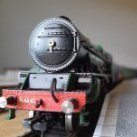
GSR 800 Posted March 23 Author Posted March 23 The SSM 800 is under trials with the train, pickups added to tender made quite the difference in terms of performance. Other than the boiler bands it's been entirely lined by hand. Certainly testing the patience! The Tin Van TPO has received her silver livery. Couldn't get bare metal silver but Mica Silver seemed to do the trick. Quite the contrast against the dark green coaches. Speaking of greens.. The Buffet car isn't far off the priming and painting stage. This, however, begs the question. What livery were these coaches painted into first? The earliest photos I've seen of them, they don't appear to be in the dark green, but rather some variation of the light green with the single edn waistband line. This is around 1953 or so? 11
jhb171achill Posted March 23 Posted March 23 18 minutes ago, GSR 800 said: The SSM 800 is under trials with the train, pickups added to tender made quite the difference in terms of performance. Other than the boiler bands it's been entirely lined by hand. Certainly testing the patience! The Tin Van TPO has received her silver livery. Couldn't get bare metal silver but Mica Silver seemed to do the trick. Quite the contrast against the dark green coaches. Speaking of greens.. The Buffet car isn't far off the priming and painting stage. This, however, begs the question. What livery were these coaches painted into first? The earliest photos I've seen of them, they don't appear to be in the dark green, but rather some variation of the light green with the single edn waistband line. This is around 1953 or so? In 1952/3 they experimented with a lighter shade, so it could be one of them. While no solid proof exists, it is likely that this was a trial run for the post-1955 lighter green. Nothing was painted dark grn with full lining AFTER 1955; and apart from this batch mentioned, notjhing was light green before 1955. It is around 1955/6 that the silver vehicles were built. Most of these were fairly quickly repainted light green, as silver was a nonsensically impractical "livery". Soe, though, survived in so-called "silver - in realty, an unsightly coatin of gunge - untiol repainted orange and black after 1962. However, the 1953 light green stock had no lining, as far as I recall; so with a single thin waistline you're either looking at a post-1955 photo. or possibly a vehicle painted to go with AEC railcar sets, which even in the earliest days never had the full top-and-lower lining. This is really quite exceptionally brilliant stuff, Harry! 1
GSR 800 Posted March 23 Author Posted March 23 25 minutes ago, jhb171achill said: In 1952/3 they experimented with a lighter shade, so it could be one of them. While no solid proof exists, it is likely that this was a trial run for the post-1955 lighter green. Nothing was painted dark grn with full lining AFTER 1955; and apart from this batch mentioned, notjhing was light green before 1955. It is around 1955/6 that the silver vehicles were built. Most of these were fairly quickly repainted light green, as silver was a nonsensically impractical "livery". Soe, though, survived in so-called "silver - in realty, an unsightly coatin of gunge - untiol repainted orange and black after 1962. However, the 1953 light green stock had no lining, as far as I recall; so with a single thin waistline you're either looking at a post-1955 photo. or possibly a vehicle painted to go with AEC railcar sets, which even in the earliest days never had the full top-and-lower lining. This is really quite exceptionally brilliant stuff, Harry! Many thanks Jb. What I've found is the following The fun starts with 3rd's 1356-71 and Brake-3rd's 1904-8 of 1953 which were turned out in apple green, which was according to Mr. Kennedy "most unsuccessful; within a short time the numbers were hardly legible, and the coaches were almost impossible to clean". Mr. Kennedy then goes on: "During 1953 and 1954 various other liveries, all shades of mid green, were tested on many vehicles, but all were unsuccessful". Sadly, the shades and vehicles are not mentioned, but those concerned would have been Buffets 2405-18 of 1953/4, Compo's 2137-61 of 1954 and 3rd's 1372-8 of 1954. The introduction of the new Park Royals, 3rd's 1379-1418 of 1955 introduced "Brilliant green" a lined light green which "became the standard livery for the following six years" So my assumption (a dangerous word!) is that the buffets would be in some kind of 'mid green', darker than the later green but lighter than the earlier green as on Maedb. A photo in Tom Ferris' book is mentioned of one of the WTR AEC's, and indeed its livery is quite the mid green, and includes a green roof! Perhaps my best bet is to go for something close to this colour. 1
jhb171achill Posted March 23 Posted March 23 The one shown there in that black'n'white photo is almost certainly (in fact, I'd say absolutely certainly) in post-1955 "standard" lighter green. The various shades trialled, which you mention, were according to JhbSenior "all much the same"; his friend who was the "paint chemist" at Dundalk Works for the GNR took the view that rather than a whole pile of different shades, theye were actually intended to be similar in colour, but mixed with different ingredients. This gentleman, the late Marcus Bailie-Gage, used to explain to a teenage me stuff about differing amounts of lead mixed in paint mixes, and the relative longevity of differing variations. Thus, these experiments were likely to be more about experiments in longevity than simply different colours; if the latter resulted, the inference is that it was a by-product of the former. Marcus, who was an absolute gentleman, lived to be a very great age and passed away about fifteen or eighteen years ago. 1
Mol_PMB Posted March 24 Posted March 24 The CIE carriage liveries in the 1950s went through a complex series of changes and I have been trying to get to the bottom of this. Much of the available information is conflicting, or over-simplified. Some of it was written decades after the event, some may be relying on fallible memories from a lifetime ago. Colour photography was rare and there were many problems with colour sensitivity and deterioration over time. So it's really difficult to be sure about shades of green. Even if there were only 3 main body colours, there were many different livery styles through this period (in terms of lining, lettering, snails, underframe colours, end colours etc). My understanding of JHB's view is that there were 2 'standard' liveries and a load of oddballs. Whilst I agree with those 2 'standard' liveries, I think there's a clear sequence to most of the other variants and I want to make sense of them. I am gathering material to write a detailed thread about the liveries of this period, but I'm not rushing into print because I need to avoid perpetuating myths. I am presently trying to arrange visits to the IRRS and CIE archives to see if I can find any clues in documents actually written at the time it happened. In fact I had a helpful email from Norman Gamble last night that I need to follow up on. I started trying to summarise my knowledge so far, but it's going to take too long - I have to go to work! I'll try and do it later. See also this recent post of mine which is illustrated, but far from the full story: 2 1
Mol_PMB Posted March 24 Posted March 24 On the buffets specifically, I would tend to agree with JHB that the photo of 2407 linked above is in standard post-1955 light green. The green-painted window is a clue - these were frosted/white when first outshopped. Also it has a snail; these were usually absent on the early 1950s liveries. IRRS journal 184 (June 2014) has an article 'Vico Day' with a whole set of (monochrome) photos of special trains taken on Sunday 5 September 1954. One of these is a 6+2 railcar set, including a buffet car which is clearly a lighter shade than the rest of the train. This must be one of the trial shades of light green applied in 1953/54. It has a waist line, but unfortunately part of the lower bodyside is hidden by a wall so we can't see if it has a snail. This photo from May 1954 shows 2408 in what appears to be a lighter green than the adjacent coach, with waist line but no snails or class designations. RNC_GSR_2408_Claremorris_09_May_1954 | [Photographer: Robin … | Flickr On the same occasion, compo 2146 still looks very clean and ex-works, and is a distinctly lighter colour than the adjacent vehicle which is one of the 1339-1355 compartment thirds outshopped in 1951 in plain dark green livery with no lining, logos or class digits. 2146 has a waist line and a 1 class digit, but no snail. This is definitely a lighter green than the traditional dark shade. RNC_MGWR_642_nr_Claremorris_09_May_1954 | [Photographer: Rob… | Flickr RNC_CIE_2146_nr_Claremorris_09_May_1954 | [Photographer: Rob… | Flickr RNC_CIE_2146_nr_Claremorris_09_May_1954 (2) | [Photographer:… | Flickr Colour views from the early 1950s are extremely rare, and without them it's really hard to tell whether the 1953/1954 experimental shades of light/bright green were similar to the shade later adopted as standard. It may be as JHB says that the experiments were more in chemical formulation than colour, though one might expect that different formulae might have slightly different colours. But the monochrome views do support the statement below that the Buffets and Compos in these series being built at the time were painted a lighter shade than the previous carriages, and they had a waist line. 11 hours ago, GSR 800 said: Mr. Kennedy then goes on: "During 1953 and 1954 various other liveries, all shades of mid green, were tested on many vehicles, but all were unsuccessful". Sadly, the shades and vehicles are not mentioned, but those concerned would have been Buffets 2405-18 of 1953/4, Compo's 2137-61 of 1954 and 3rd's 1372-8 of 1954. When looking at later 1950s photos, it's worth remembering that the '2' class digits were introduced in mid-1956 (when second class formally replaced third class across Europe) and seem to have been applied to all standard class doors on carriages repainted after then. Snails were also re-introduced. I think the '2' class digits were also retrospectively applied to some coaches in older liveries, but I think if you see a light green carriage without class digits on the doors then the chances are that it was repainted before 1956, and therefore it's worth considering whether it may be in a 1953/1954 livery... https://irishrailwaymodeller.com/topic/17455-voiding-the-warranty-mols-experiments-in-21mm-gauge/page/17/#elControls_277660_menu Also worth remembering is that the standard livery for new carriages in the 1956 to 1958 period was not green at all - it was unpainted aluminium. I really do want to get to the bottom of this, but it will take time as I need to get back to the contemporary sources in the archives. If anyone has a set of IRRS journals or Irish Railfans' News from the 1950s they could look through for info on new carriages and liveries, then that would help. It should at least mean that I can be better prepared when I visit the IRRS archives (and hopefully CIE archives) in Dublin. 2
GSR 800 Posted May 21 Author Posted May 21 Maedbh makes a spirited departure with the Day Mail Latest addition to the train, one of the two IFM bogie TPOs Really wonderful models from Tommy, very impressed! 9 1
Mol_PMB Posted May 21 Posted May 21 Very nice! When first built they had nets for catching the mailbags, which would be an interesting addition to the model. 1
GSR 800 Posted May 21 Author Posted May 21 8 minutes ago, Mol_PMB said: Very nice! When first built they had nets for catching the mailbags, which would be an interesting addition to the model. They did indeed, I'm considering adding it! Interestingly I came across a photo of staff at Mullingar unloading the down Galway Mail down at the 6 foot rather than onto the Galway platform, presumably to make transfer onto the Sligo quicker! No such thing would be allowed today, anyone between the platforms would be a full meltdown! 2 1
.png.c363cdf5c3fb7955cd92a55eb6dbbae0.png)
Recommended Posts
Create an account or sign in to comment
You need to be a member in order to leave a comment
Create an account
Sign up for a new account in our community. It's easy!
Register a new accountSign in
Already have an account? Sign in here.
Sign In Now