.png.c363cdf5c3fb7955cd92a55eb6dbbae0.png)


Colonel
-
Posts
342 -
Joined
-
Last visited
-
Days Won
4
Content Type
Profiles
Forums
Events
Gallery
Blogs
Everything posted by Colonel
-
Turned out rather well and look great in their scenic settings.
-
Gold dust, again. Being '53 no doubt all after closure of the Swilly, but interesting to see how well the lettering stands out on some of the wagons. Replicating the weathering on that T&D van would be interesting!
-
Separate cab roof - nice to both see and get at that lovely detail. Very well done.
-
Yep, an absolute joy to follow.
-
It is the detailed parts that interest me, particularly 7mm scale. Stuff like: Loco detailing parts, such as smokebox doors/darts, clack valves, springs, cab fittings etc. Underframes, such as bogie sides, springs, W-irons, buffers. Chimneys, domes and safety valves too - though have learned to turn these on my basic lathe. The reason I say this is the loss of parts suppliers. Laurie Griffin Miniatures is in limbo, following his retirement, while the older cast whitemetal supplies seem to be ever more scarce. These parts are all fairly complex shapes. I wouldn't fancy making one axlebox from scratch, let alone four or six - though resin casting is an option for multiple copies. Obviously drawing up the myriad of types used by post and pre group companies could be quite a task, but can't help thinking that without such small luxuries, fewer and fewer people will think about scratchbuilding. Basic body shapes are a mixture of tubes and rectangles that just need joining together it is all the details where it gets harder and this is where the growing dearth of small castings becomes a problem.
-
Interesting to see you've printed it as a set of parts. Coming from a kit/scratchbuilding background, this appeals more to me than a single print because it makes things like adding hand rails and painting easier. Others have said there can be issued with separate parts distorting, but doesn't look like it here.
-
Amazing work - the detail inside the cab is remarkable. It would be a shame to lose that work and great if it could be painted. Any way of enabling the details to be added separately?
-
And still has some of the best looking track anywhere.
- 492 replies
-
- 1
-

-
- ballyercall
- layout
- (and 1 more)
-
Some gems there, Ernie! Am I the only one here who didn't realise the Donegal station at Letterkenny had such a fine canopy? The town and all the trees make a fine backdrop to the station too.
-
I must try harder when using those fine saw blades as your results speak for themselves. Have I said that I use a slitting disc in a Dremel for such stuff? Crude in the extreme, though sort of works in 7mm scale, even if it does feel like using a chainsaw at times.
-
Always good to see you Leslie. Swillybegs did pretty well over the weekend, which only goes to show that cleanliness and and proper maintenance is essential. You just can't cut corners. There's a knack to lining up the turntable. Get it wrong and it will bite - and narrow gauge stock can be very difficult to rerail... Anyway, the newly adjusted couplings stood up well and the to do list before Kempton Park in December is fairly short for once!
-
They are all great, but the 4-4-0 at Westport is a beauty. Shows I could do one for Northport Quay. It's on the list...
-
Mmm - longevity still an issue, then and while I suppose you can always print a new one, there's still the matter of painting and so on. A few hundred years hence, Starfleet will have developed the replicator, so our home computer link will be able to produce whole layouts according to our whim, though the Holodeck and/or time travel will enable us to experience the real thing. That or we will have all be replaced by machines anyway. Don't forget that The Terminator has already happened... Doomed, we're all doomed!
-
Commisserations - been there, got that T-shirt. With apologies to all the 3D printers out there, one of the many things I like about this thread is that it's traditional modelling - cutting, filing, fitting and so on - which for me is a lot easier to understand that all the computer stuff. Can't help thinking that, time wise, there is probably not much difference between scratch building a model in metal (or indeed plastic or card) and scratchbuilding one using CAD and a printer - though with the latter I guess you can then go on to replicate as many as you like and as big or small as you like too.
-
Presumably, a loco chassis could also be printed - semi solid, maybe, with a cut out for the motor gearbox and holes to take brass bearings? Keeping the body and chassis separate (to be bolted together later), might be better than trying to source a doner chassis which, like as not is almost always going to be a compromise. Would the axle holes be accurate enough to take preprepared coupling rods though and thinking of Tullygrainy's work could a printed chassis be done to accommodate compensation or springing?
-
I must have done something similar, which led me to buy Can't Buy a Thrill. The first track I played was Reelin in the Years. Completely mind blowing and still is One of those complete songs in a perfect album. One of my favourite memories was how they used Bohdivsatka as their "warm up" first song. No messing, straight on it at 90mph and after that it just got better!
-
Could have chosen almost any Dan song, Alan! Managed to see them twice, back in the day and have pretty much everything they've recorded, including things like the New York Rock and Soul Review, featuring Michael McDonald. Indeed until fairly recently Donald Fagan was performing with Dukes of September, the line up of which includes McDonald and Boz Scaggs. They do a fair bit of Dan stuff. Check them out on Youtube. This side of the water, we have a very competent tribe band, Simply Dan. Full complement of very talented musicians including horn section and backing singers. Only Fagan's voice is missing, but they do stuff from every album. The Chatham Club has its own rock star in the form of the drummer with Trexstacy - excellent tribute band who've toured world wide, including Japan and Russia!
-
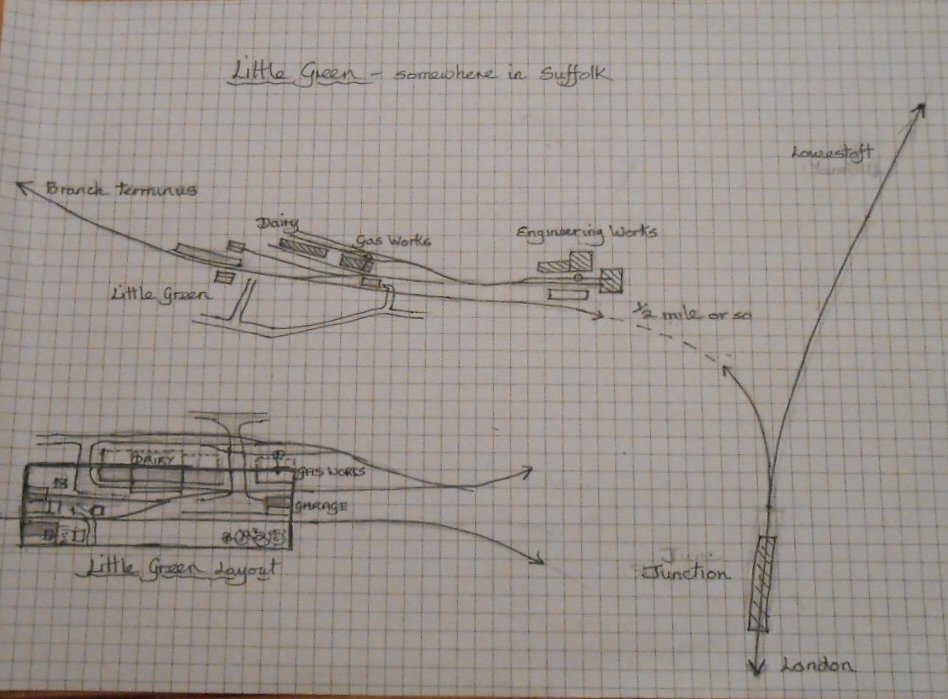
Thought it was time my 0 gauge project had a name and back story. As you can see have decided on "Little Green" - partly because it is indeed very small [and green] and partly because both words feature quite often in East Anglian settlements. Also, Little Green is one of my favourite Joni Mitchell songs - and perhaps a better name for a layout than Free Man in Paris. Or Led Zeppeiln's Kashmir, Steely Dan's Pretzel Logic or indeed any of Puccini's arias for that matter... Anyway, this really is minimal space modelling: just 2m x 0.5m, so in 00 it would be only about 1.2m long and just 60cm in N! There's a 70cm fiddle yard at one end and a 30cm one at the other, giving a total length of just 3m overall, so making it both operable and plausible has required a lot of thought. What I've done is to set Little Green on a branch just off the East Anglian main line, somewhere in Suffolk - think Sudbury, Hadleigh or similar. It is the late 1950s/early 60s and the branch has already been rationalised to a long siding, served by a basic passenger service using one of the Waggon Und Maschinbau 4 wheel railbuses. However, Little Green is home to some private sidings, serving [on scene] a dairy and gas works, with an off scene small engineering works too. It is only about a mile from the junction with the mainline and has lost its passing loop, being left with just a single platform. Because of this, goods traffic for the private sidings has to be propelled to Little Green, where one of the small shunters then takes over. The sort of traffic I'm envisaging uses my existing 0 gauge stock as follows: Dairy traffic - two milk tanks or one milk & one refrigerated van are propelled on scene and left in the platform, while the loco [maybe an 03 shunter, or even a D16 4-4-0] eases back out of the way so the Dairy shunter [a 48DS] swaps the pair of wagons, before the BR loco couples up and pulls them off scene again. Gasworks - two loaded coal wagons & a brake van are propelled on scene by a J69, 08 shunter or even an E4 2-4-0 and left in the platform with the loco reversing back light engine. Ex Wantage tank 'Jane' comes off shed and picks up the three wagons, putting the brake van in the middle siding and departing off scene swapping the two loads with two empties. While this is happening, the Railbus goes by on a passenger run. After, Jane returns with the empties, couples them to the brake van and propels all three on to the branchline, where the BR loco has arrived, ready to haul them back to the junction. Engineering works - a similar sequence occurs, this time with a couple of box vans and/or pipe wagons or similar. A different branchline offering will be something like a loco & brake van or a horse box going through to the terminus. So, at least four different trains and two different shunting moves, which should add up to about half an hour's operation, which hopefully will seem realistic enough, even though trains are short. I've got plenty of different wagons to play with, while motive power options also include J17, J15 F5 or even B17 steam locos [all of which did branch line work in their final years] and a Class 15 diesel too. Hopefully, this shows that you don't always need a lot of space to build and interesting layout that provides ample entertainment value too.

-
For me, that looks nicely " under done" at the moment. Very realistic, in fact.
-
Alan's grubby little shunters thread
Colonel replied to Tullygrainey's topic in British Outline Modelling
A real little gem - build, paint job, weathering, the lot! -
Looks like a nice half hour's work so far Alan - should be done and painted by next week... Lovely stuff, as ever!
-
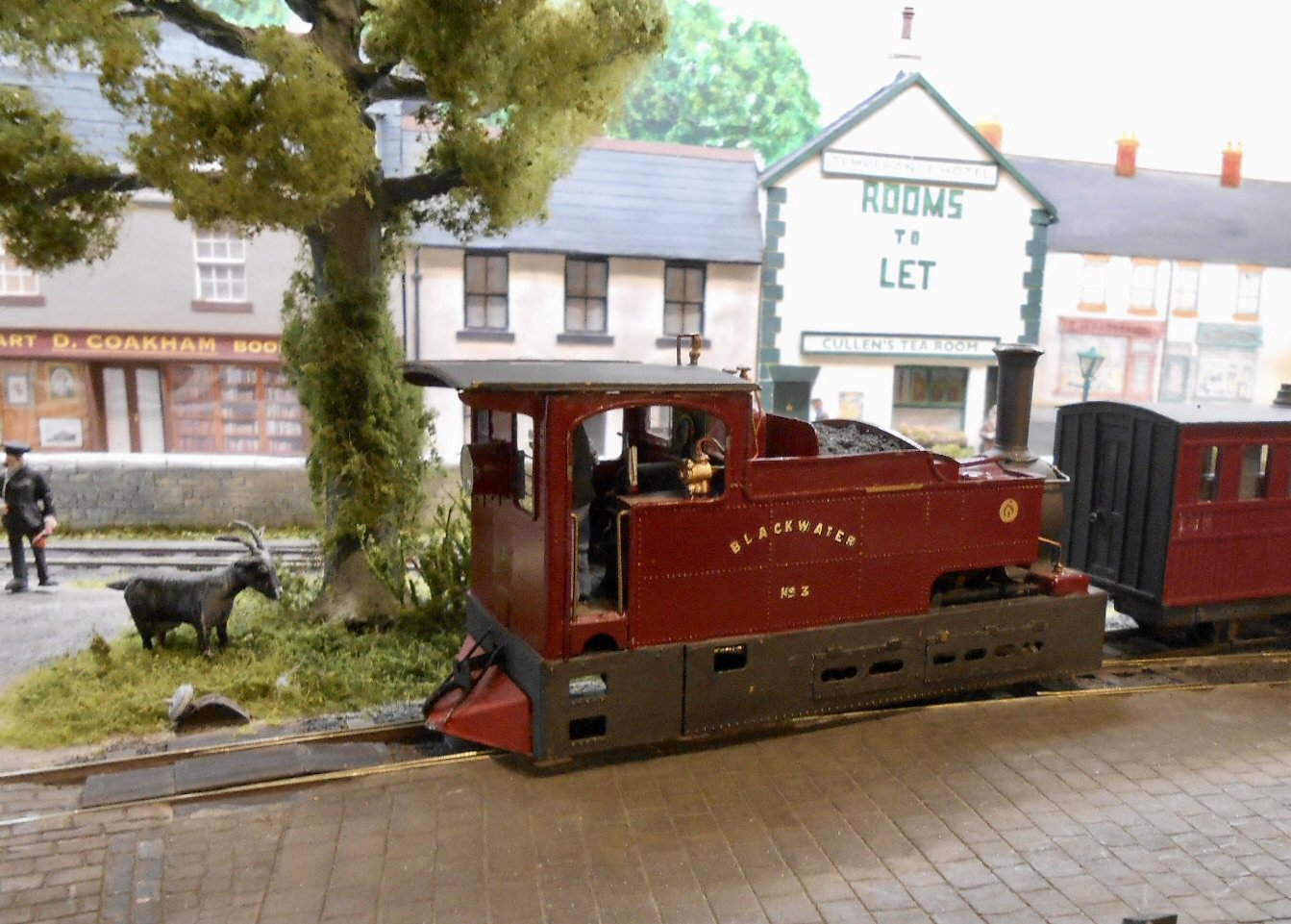
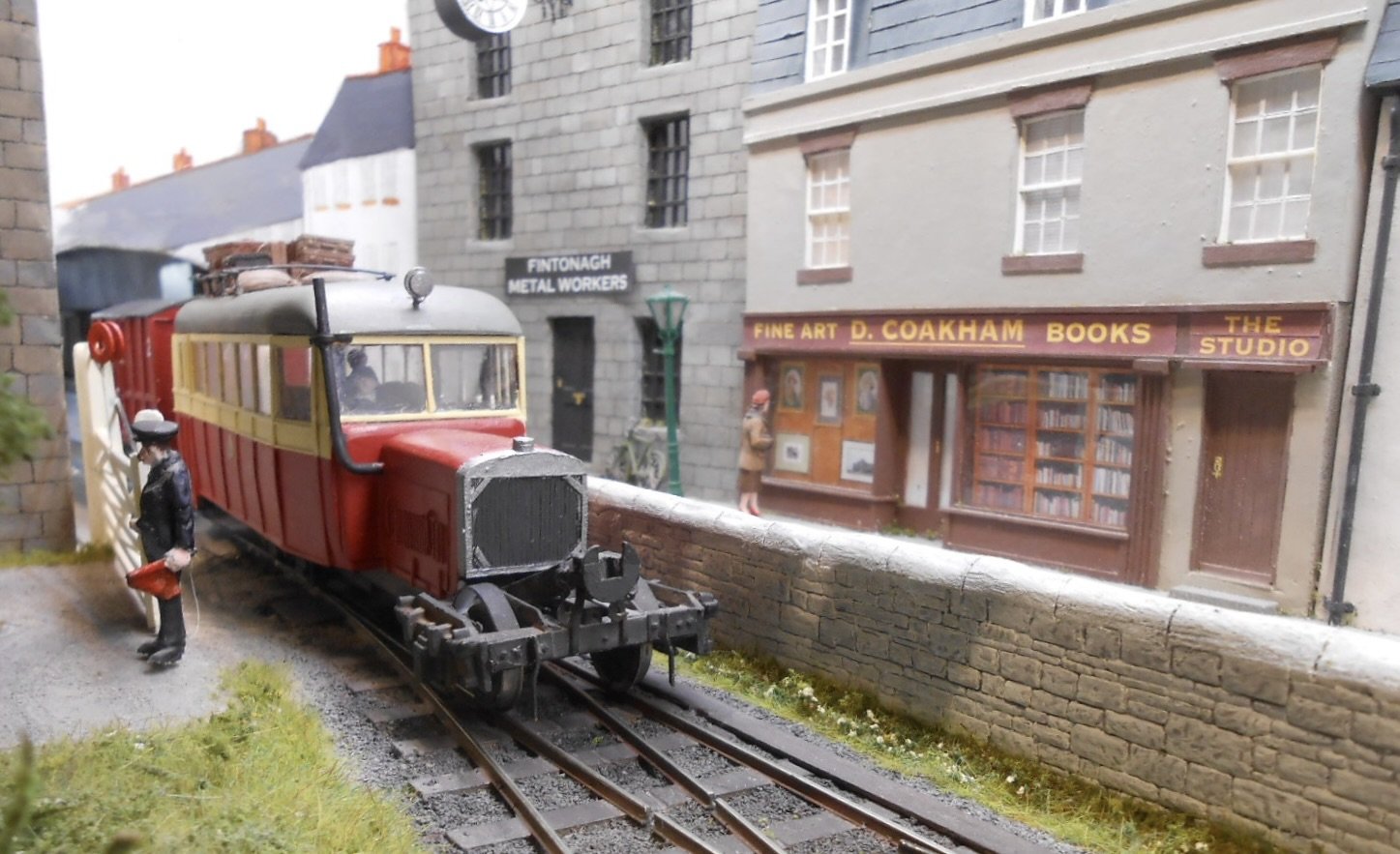
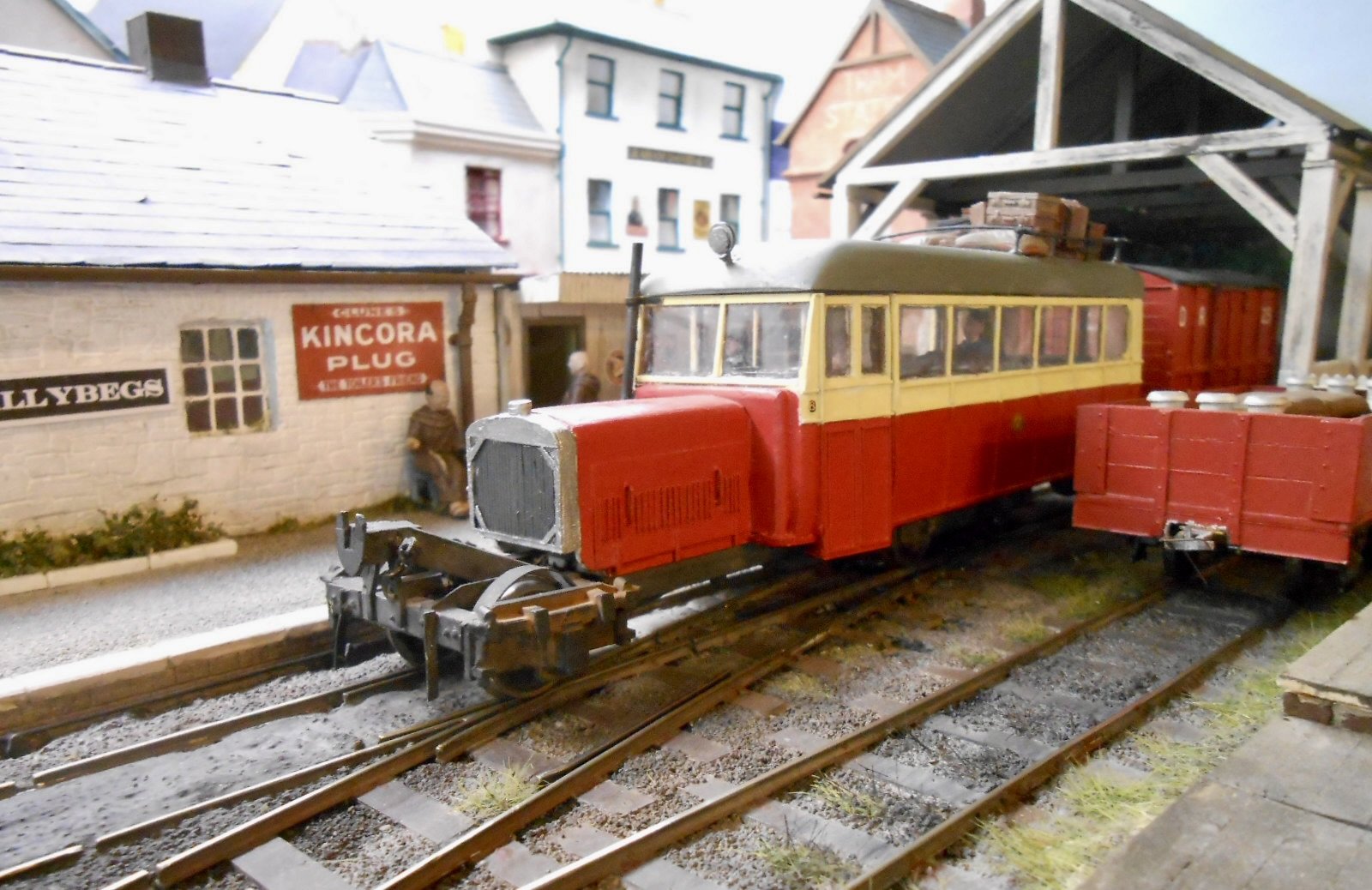
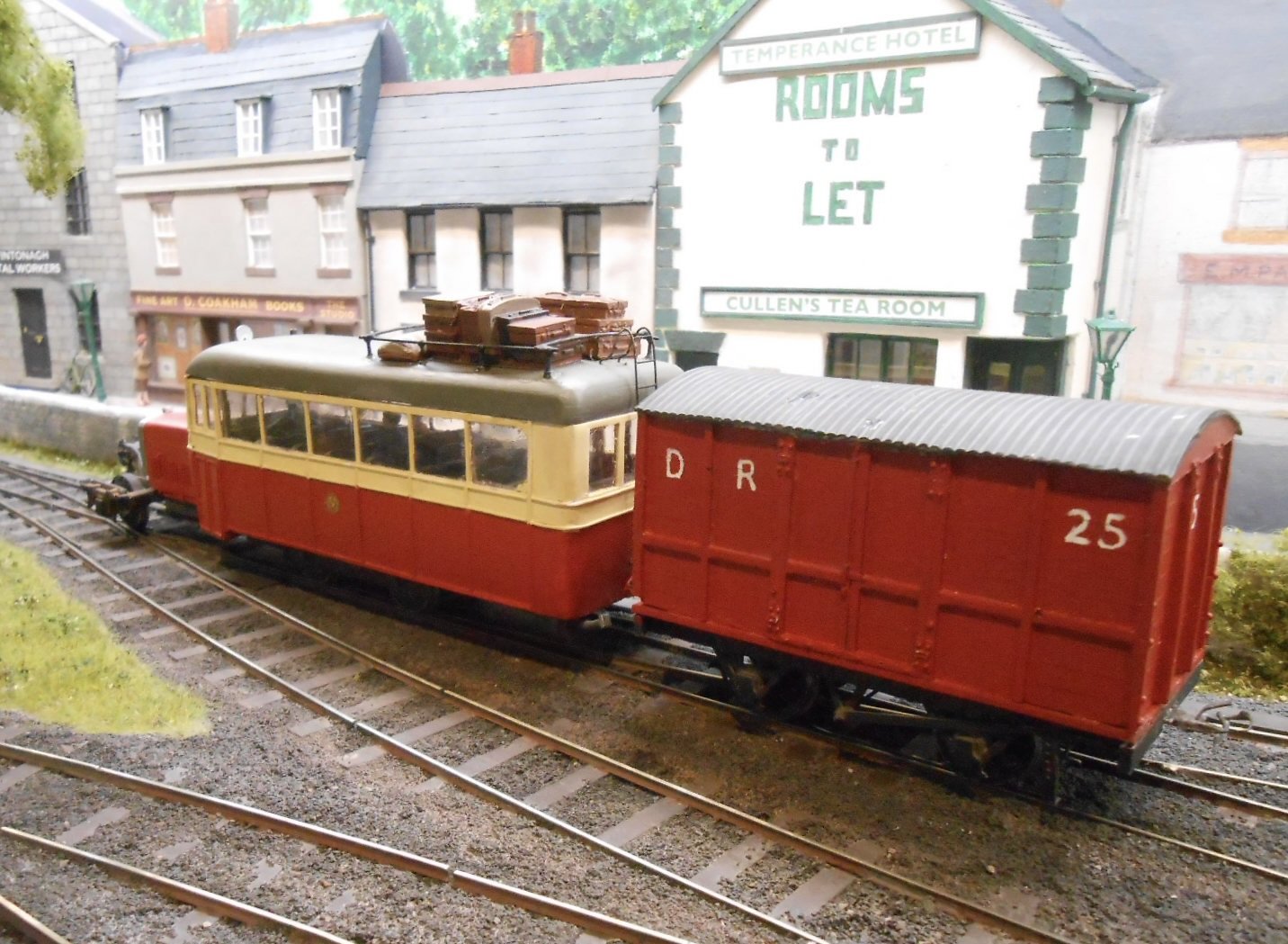
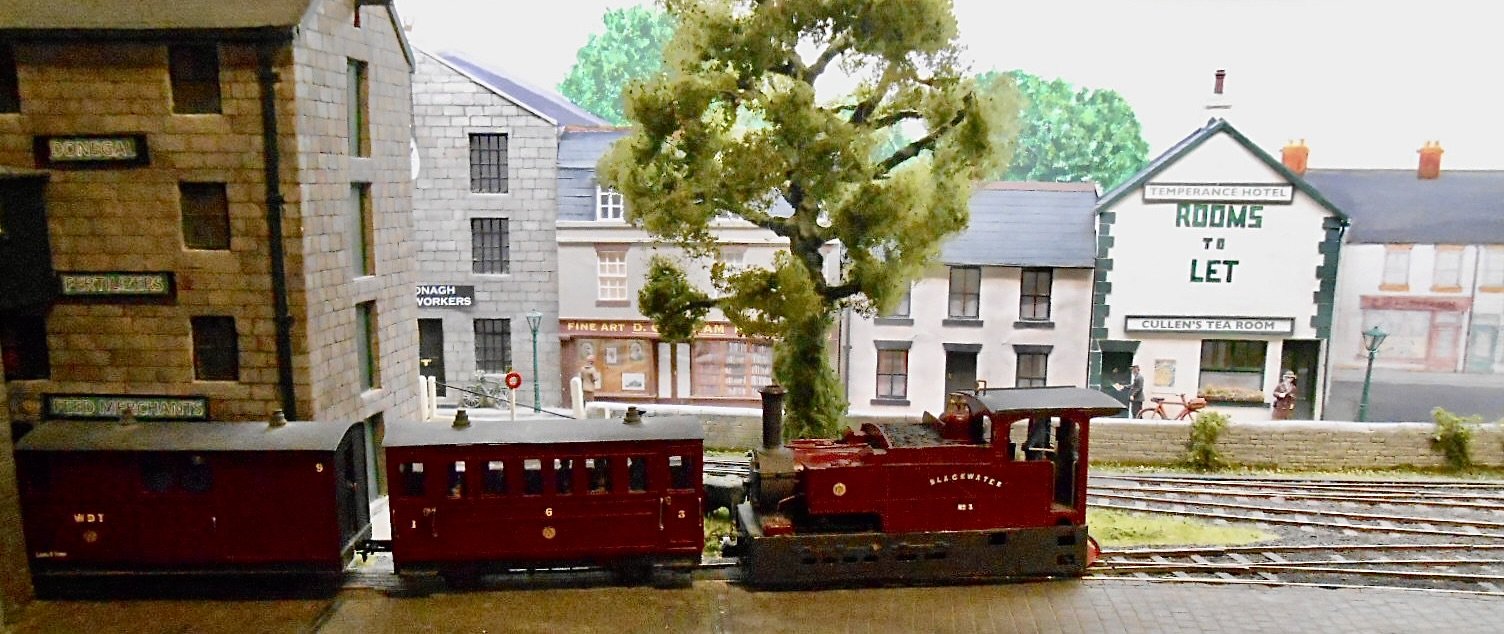
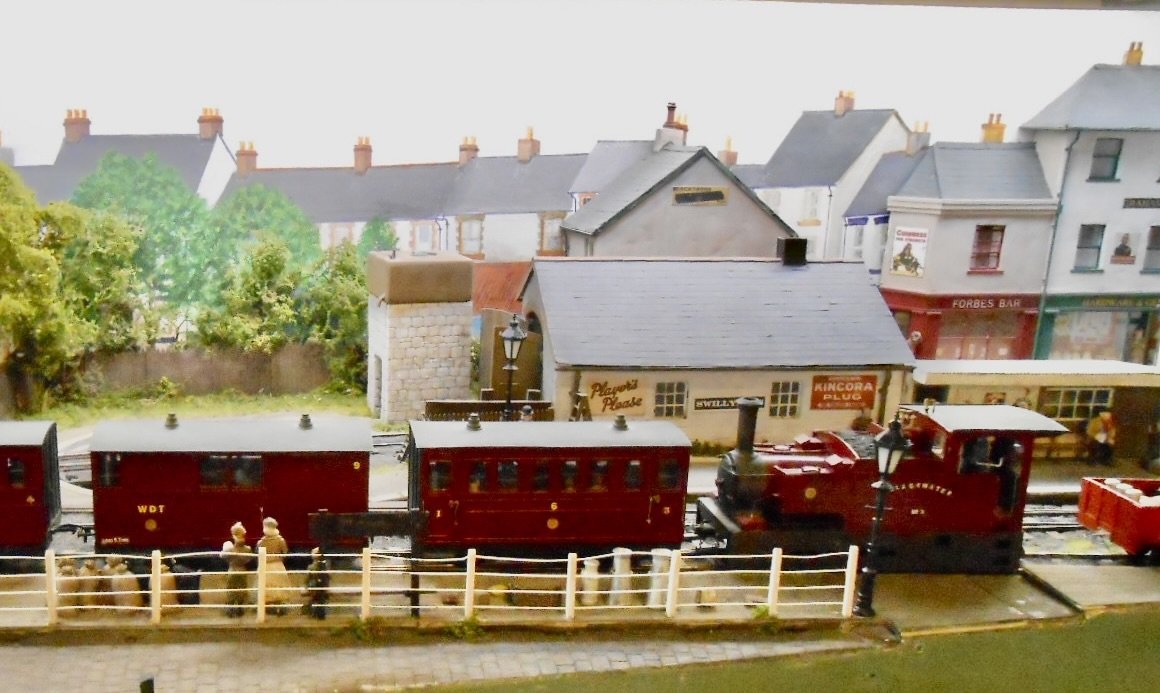
Swillybegs is out next weekend at the Farnham [Aldershot] show. So, much time is being spent trying to get things ready - or as much as they can be, before everything is boxed up, bounced fifty-odd miles and then reassembled for the show. As Alan [Tullygrainy] has previously said, all stock has received a thorough service and been given a good talking to. Likewise track and fiddle yard, in particular the cassettes and all important interfaces with the layout. Thus far [whisper it quietly], all is well - even the DG couplings and I've had a couple of enjoyable sessions at home without any need to address derailments or succumb to fingerpokens. So, not wanting to over cook things, there will be one final track and wheel clean [for the motive power - all rolling stock wheels have been cleaned this afternoon], then all will be boxed up, ready for the weekend. The final jobs will be giving the scenic part of the layout a thorough clean, then check the lighting system and my "sundries' crate, which contains the electrics, tools & other odds & ends vital for any show. After that, it will be a case cross everything, avoid ladders, mirrors etc and hope for an easy weekend. A few pictures below show a couple of changes to the running sequence, with the West Donegal Tram now emerging from the front siding [as originally planned], with CDR railcar 8 going to the main platform. Oh yes - after the controller horrors at Chatham, back in July, I am now packing four of the blighters - two Handheld and two Ws. If I need anymore, the Moderators made need to censor my next post!
- 86 replies
-
- 15
-

-
-
Was only thinking the same, though they appear to be dead frog ones, so that ought to make life easier
-
Amazing stuff. 're axles, I've long used 2mm brass wire for my 7mm scale, 3ft narrow gauge Irish models. Not too difficult to pin point the ends, while being non magnetic, you don't get problems with uncoupling magnets.
-
Fascinating, but forgive my ignorance here - how does 3D printing with metal actually work?