.png.c363cdf5c3fb7955cd92a55eb6dbbae0.png)

jhb171achill
-
Posts
16,687 -
Joined
-
Last visited
-
Days Won
413
Content Type
Profiles
Forums
Events
Gallery
Blogs
Everything posted by jhb171achill
-
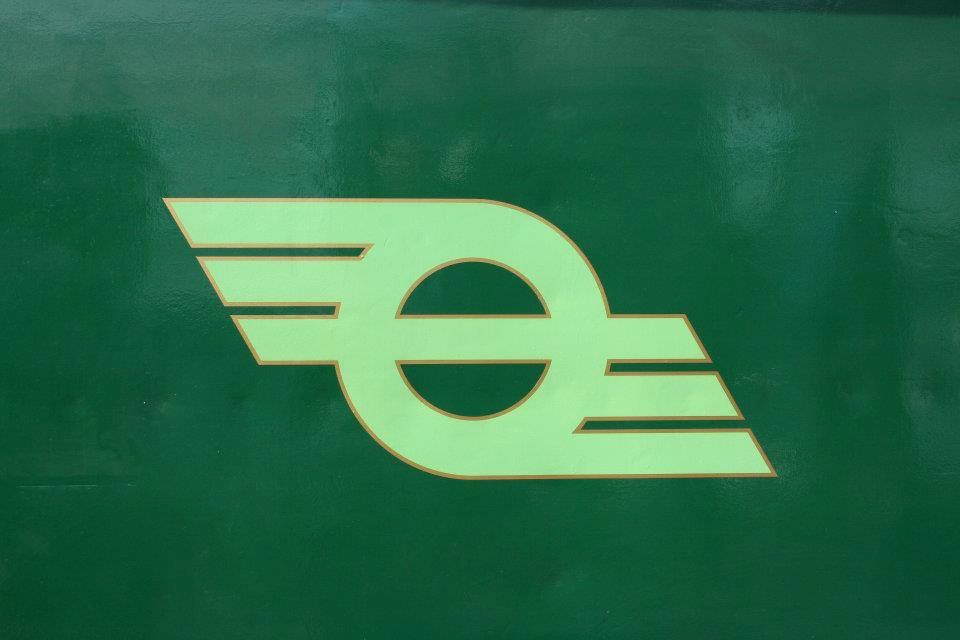
071 class in supertrain livery with IR logo?
jhb171achill replied to frankderpfeifer's question in Questions & Answers
If there's a photo there ye go lads, that's the proof! If such things occurred, they didn't stay that way long copmpared with 141s and A's - although with a greater number of locos in each of those classes that might explain why they seemed more numerous.. Interesting re. 121's; again, while I never saw one myself, that's not proof it didn't happen! It would be interesting to see photos. Yes, they did tend to "slap the new logo on" - I suppose with the new IE logo similar will happen. It certainly did when flying snails gave way to broken wheels. Possibly more so on CIE buses, but I have seen a pic of a green double decker with a white broken wheel, and pics of both navy and cream double deckers, and red and cream single deckers, with white "snails". Preserved NCC "WT" No. 4 ended NIR service with an NIR logo on one side and a UTA crest on the other........ -
why they went to a foreign country to take pictures of another railway's locomotive Ouch!!!!!!!!!! :-)
-
071 class in supertrain livery with IR logo?
jhb171achill replied to frankderpfeifer's question in Questions & Answers
Have to agree with Killucan - I certainly saw most of the class all over the place in those days and I never saw a supertrain-liveried loco with the "set of points" logo but no "tippex" white lines. They seemed to all have been repainted properly. One 141 at least sported "sets of points" on the sides, while still carrying a "broken wheel" on each end!!! See page 43, "Rails Through the West", loco 155, caught on film by Barry Carse in 1990. I stand to be corrected on this one, but I would be reasonably sure that no 121 carried the new logo without white stripes - I certainly don't remember seeing it. Seemed to be a disease caught only by classes A, 141 & 181! -
A British Rail 08 is close enough. Quick slap of black paint and away ye go!
-
AHHH!!! Have we proof that 077 still exists???? Methinks tis all a plot by subversive extra-terrestrial forces.
-
Very interesting pics - believe it or not, that's the green. For comparison see the coach attached to it - it's green too, albeit faded; but the pic makes it look greyish. That is the thing in its pre-stripes version, thus it is certainly taken on early trial runs.
-
Very much so! In the line's final days, the 8 native C & L engines were reduced to at best three in w/order, often only one. And the T & D ones, with the exception of No. 6, weren't in best order either. As for the carriages!!!!....
-
It's quite possible, Minister. Those engines were unsung heroes in Irish narrow gauge lore, having b een designed for fast suburban trains on Ireland's only narrow gauge double-track suburban line. That the CBPR could operate an intensive service reliably with just four of these engines all its narrow-gauge life is testament enough. Apart from the NCC 2.4.2Ts, the only n-g locos with which they were comparable, they would have been the fastest narrow gauge locos in ireland. While the other locos and rolling stock on the C & L were very decrepit indeed by CIE days, strangely the track on that system was in tip-top condition. The only thin g I would have worried about if racing one of those engines on the C L would have been whether the carriage behind me would fall to bits!
-
Minister and Warbonnet - I'm only aware of green. It would certainly have had grey undercoat as locos were often photographed officially in grey for works photos before being properly painted. This showed detail up better in the b & W works photos. 800 "Maedb" was grey with details picked out in black and white for its works photo in 1939 - I have several copies showing this (and minus nameplate too). I know that the "wasp stripes" were not added right a the start, (and I've a notion they were yellow rather than eau-de-nil, but can't be sure), and the number CC1 was also not there right at the start. Once painted thus, it ended its days in the standard CIE mid-green, albeit with non-standard markings! I remember seeing the chassis of it kicking about Inchicore - that was still green. Odd looking thing..........
-
Dingle, I'll be in the IRRS tonight and willmake enquiries on your behalf. As Garfield says, it can take a while as they are voluntarily run, but I know the relevant people who would deal with such things. If I've time I'll poke about in the archives and see what i find - but that will probably be over the next few weeks.
-
Got meself two black'n'tans..........! Thanks, Leslie, for the tipoff! And I've a "Maedb" on the way from Des. Happy Christmas / Easter / birthday to me! :-)
-
That thing was green, though... (I'm chasing up a colour pic of it right now!)
-
Here's a bit of a theory. Since that plan has the 3-pin-plug logo on it, could it be a potential experimental design for when they first brought in the freight livery; one which they discarded in favour of the black and silver at the time? You'd think that if it was a new one, it would have the new tricolour logo on it.
-
Wow!!!! Absolutely fantastic. The silver CIE coach in the first scene is something not often seen on layouts, and I love the clerestorey roofed old GSWR coach in green.
-
Oh wait, that's been done...........
-
Cow says to cow: "Dem oul horses, comin' here an' takin' all our jobs"
-
Three pin plug logo rather than that new thing?
-
Didn't know about that one.... a six day closure... back in the day it would probably have been 6 hours! Let's see - an hour to fix the problem, 23 hours for an evaluation of it, and five days health and safety stuff? (Or have I little to do today!!) :-) :-)
-
Or an old J15.... oh, wait..... !!!!
-
In answer... Those brake vans were indeed all bauxite in later years but up to about 1970 (from my own memory) they were grey, with the black / yellow stripes on the ducket. Earlier, they were grey all over. That layout is one of my all time favourites!!!!! For a next book, I'd be hard put to pick between a still shot off that layout, or an actual photo of Lixnaw or Cappoquin in the sixties!!!!
-
VERY nice, very original!
-
Mad!!!!! Imagine an 071 scaling the Dublin Spire.... photoshop, anyone?
-
I'm afraid, Heirflick, there are no pics! He took very few pictures of anything - which is a pity. However at 95 he retains an extremely accurate and on some subjects almost encyclopaedic memory and knowledge of things*. He recalls one story of being taken with his friend on a Saturday to Inchicore where they were able to climb up a ladder onto the frames before the boiler was put into "Maedb", and of seeing her in works grey before painting. If ONLY there were pics of that!!!!! I have a number of negatives of things he did take pics of, but strangely none of the 800s were among them... (* So, if there's anything that anyone wants me to ask...........!)
-
Murphy Models 071 - New, detailed pre-production photos added!
jhb171achill replied to Admin's topic in Irish Models
Ah! OK - could have varied. I knew on one side there were both which probably prompted me to assume the other side were both blue! Or maybe they varied. -
Made a few enquiries this morning from one who was on trial trips with 800 and footplated it a number of times Dublin - Cork and back. To his knowledge it almost hit 100mph, but not quite on trips he was on. He says it could have on other trips, but he thinks that had it happened he would have heard of it. Just wanted to clear that up!