.png.c363cdf5c3fb7955cd92a55eb6dbbae0.png)


Brendan8056
-
Posts
66 -
Joined
-
Last visited
-
Days Won
1
Content Type
Profiles
Forums
Events
Gallery
Blogs
Everything posted by Brendan8056
-
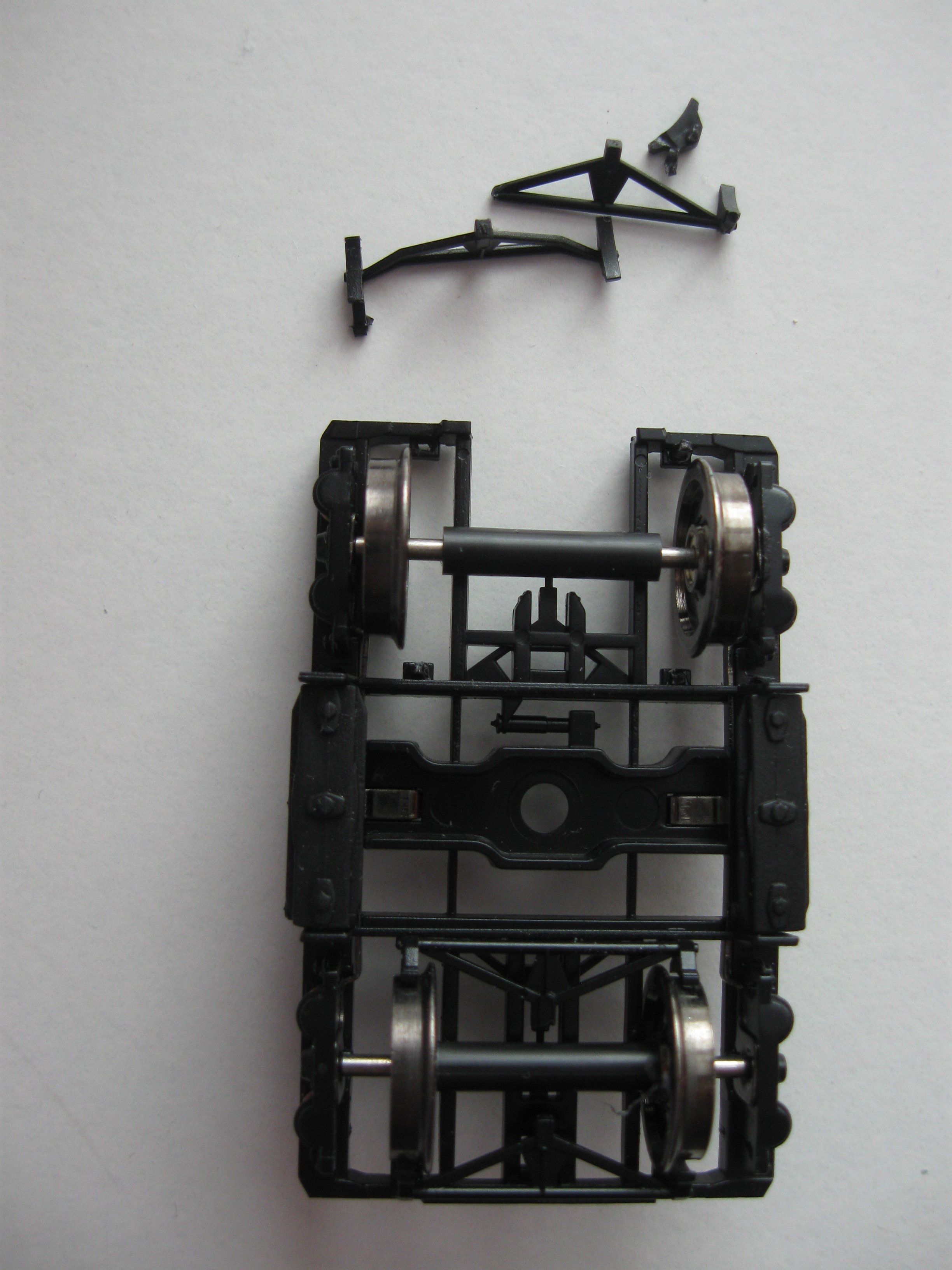
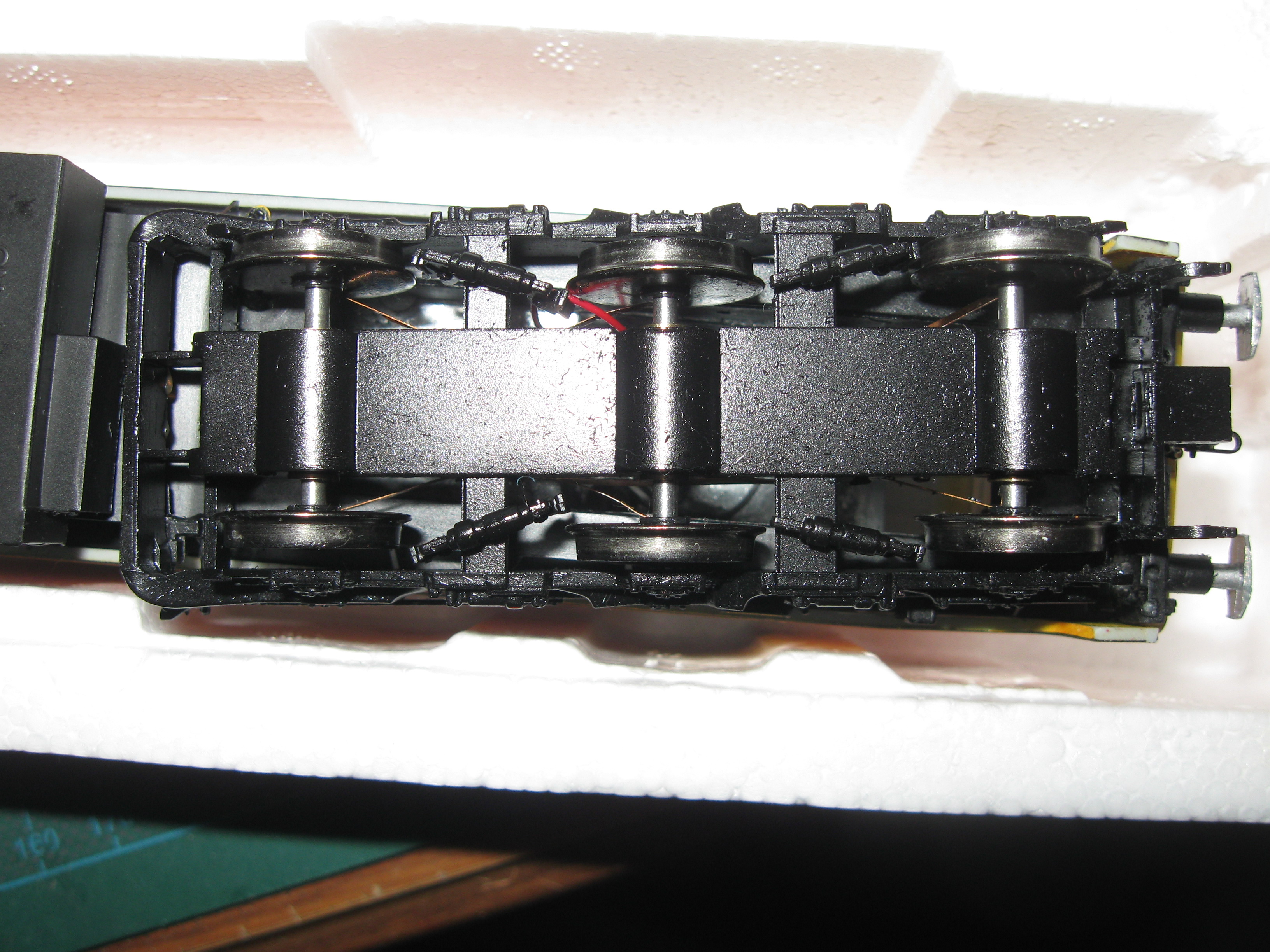
It's a B4/B5 bogie, viewed from underneath. The brake bits are push fit, but the factory may have put a dab of glue on them? For 21mm you would need to reposition them, and that would require glue to hold in place. I should add that nothing I have done affects the running of the bogie or the pick ups for the lighting.
-
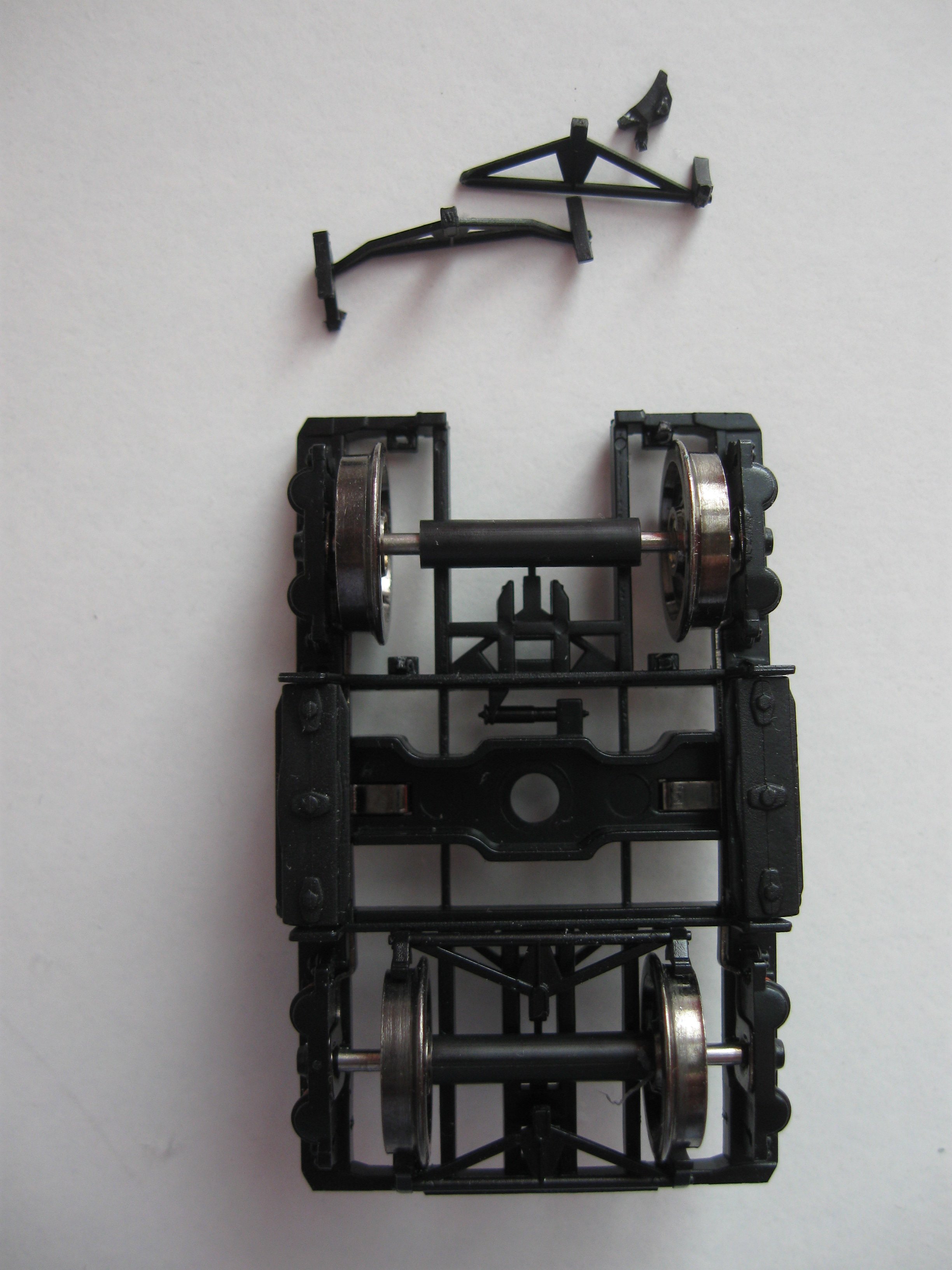
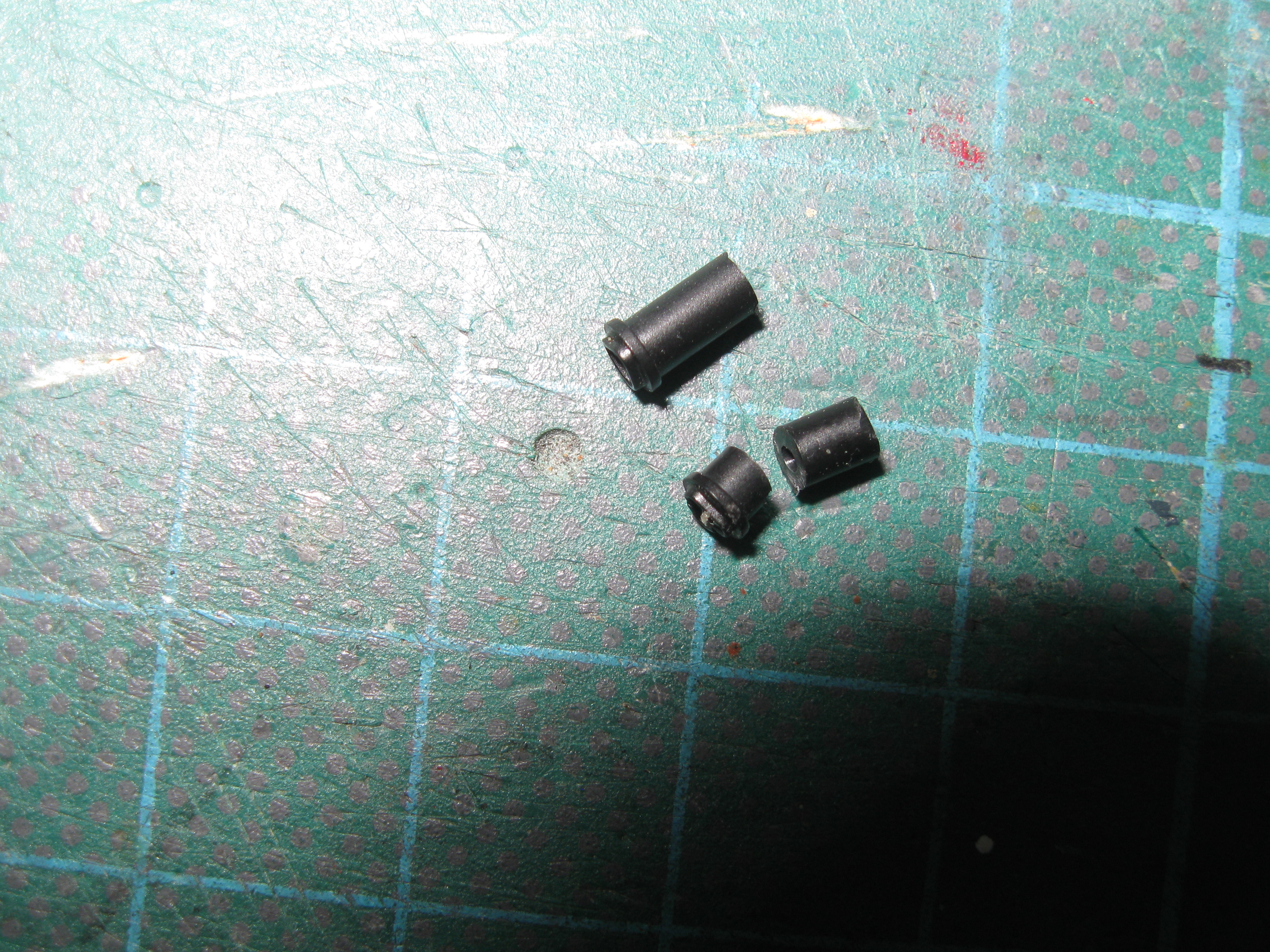
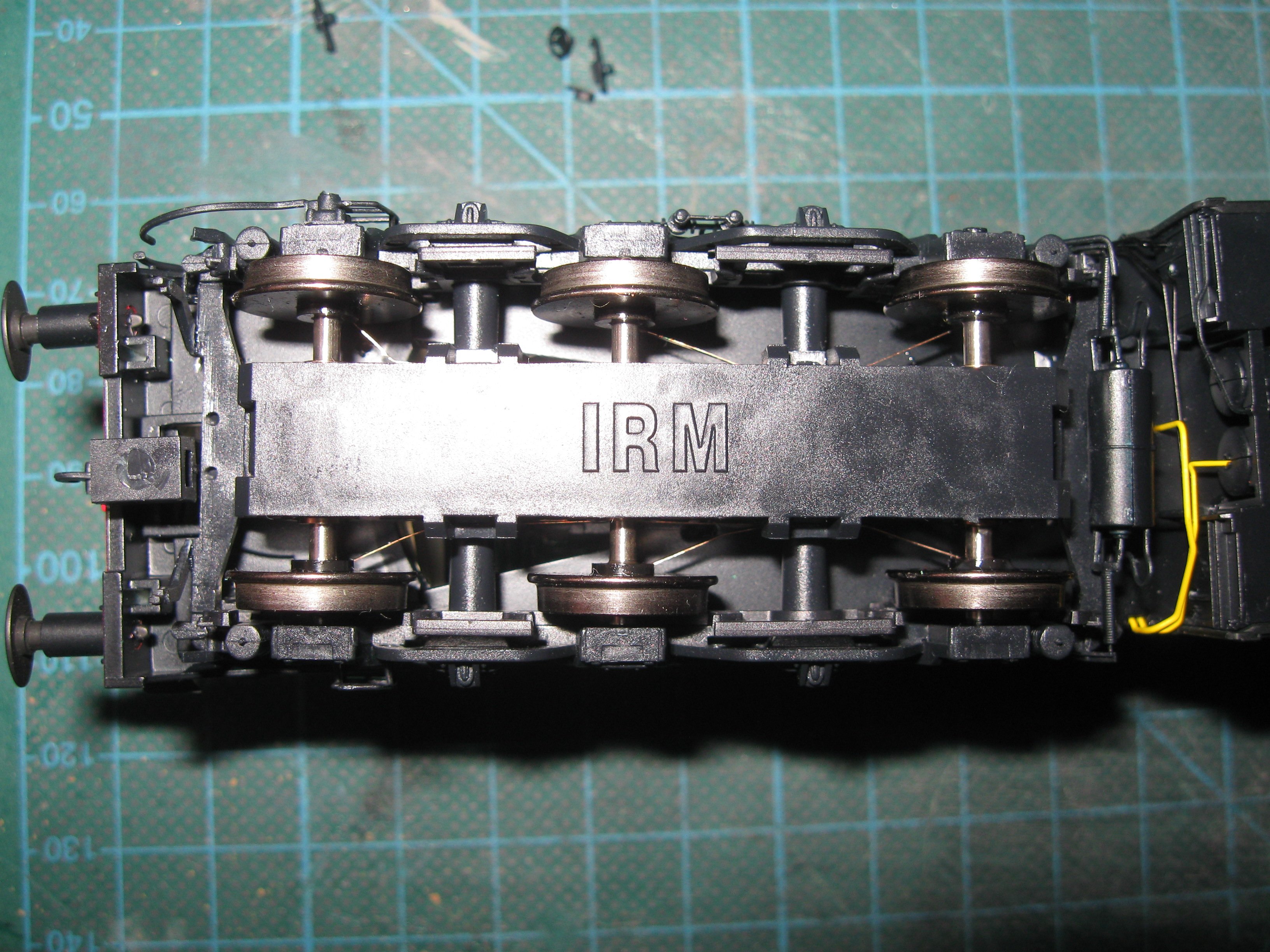
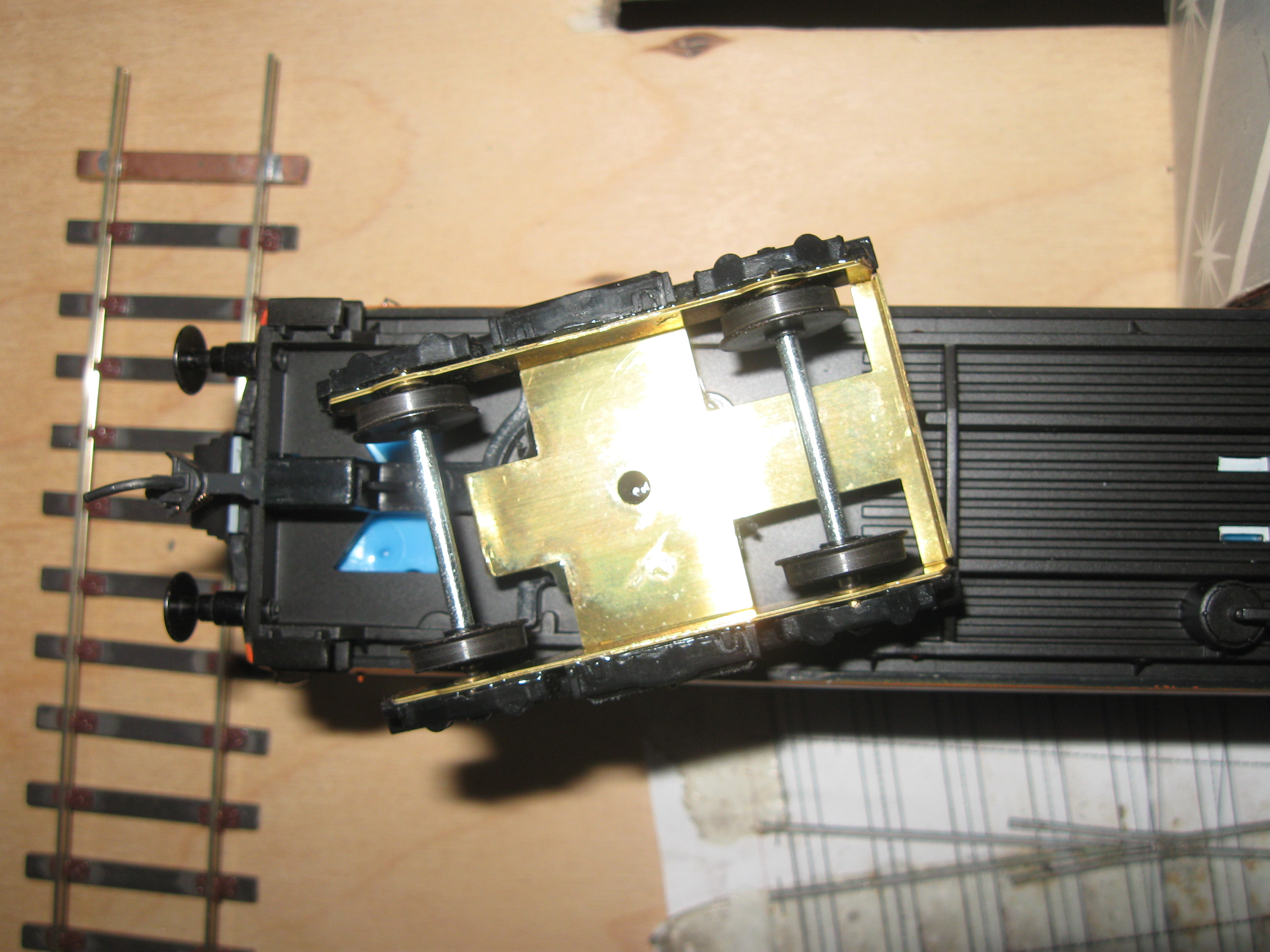
If it helps with the re-gauge discussion I just took the easy route (P4 modellers look away). The pic has before and after wheelsets. Take the half axles, put pinpoint side upwards in a vice, and use a few taps of a hammer or similar object to push the axle down, leaving just enough to allow the wheels to slot back in. Join the pair of half axles with the plastic sleeve, use a wheel gauge and all is done bar putting the wheels back in the bogie frame. Works for me, and the lads on IRM/Accurascale stand at Alley Paley seemed to like it as well. (The Bulleid opens looked lovely, and have 28mm length axles, ready for proper gauge modelling) You do have to discard the brake blocks, but if needed you could probably glue them in place.

-
To regauge or not to regauge that is the question
Brendan8056 replied to TippTrainLad's topic in General Chat
Like John I have modelled 21mm Irish for 30 plus years and would not go back to the very narrow 16.5mm. I have just worked out how to easily re-gauge the NIR coaches just released (where fitted with the Irish bogie). A small vice, an object to hammer with and a wheel gauge to make sure it is correct. The result is in the picture, one wheelset at correct 21mm gauge. I had to remove the brake blocks/links but otherwise all runs freely. For anyone new to Irish Railway modelling it is the easiest ever to model the correct gauge, of course you can still kitbash, scratchbuild and modify, that is the fun side of it.
-
When I say the only mobile phone I have is the works one, and it is only switched on when I am at work, people stare strangely at me. The same look as when I tell them I have never owned a car or a microwave oven.
-
Irish Railway Modelling Circle newsletter
Brendan8056 replied to Flying Snail's topic in General Chat
Hello, " New Irish Lines" is superb as ever. the website does appear to be offline. I would suggest you try emailling Alan O'Rourke. alanorourke@hotmail.co.uk. Anyone who is serious about Irish Railway Modelling should consider subscribing, I always find every edition inspiring and interesting. Lots on this forum write articles for it. -
If it helps I was able to download the videos to my computer. Then I went to Downloads and played them with "VLC Media Player". They played perfectly. I find VLC a good programme for playing a wide range of videos that other programmes don't play, and it was free to download. They are well worth watching, as always.
-
Darius, Well done with the class 74. It really looks the part, one of the better MTK kits. I did a class 71 many years ago from an MTK kit and also used the Lima class 33, the body was so heavy the chassis bent. Having said that the MTK kit went together really well and if I saw an MTK kit for a class 74 at a good price I would consider buying it.
-
Best DCC Controller for a small project?
Brendan8056 replied to Leyny's question in DCC, Electrics and Electronics
Hello, This afternoon I have been helping get a layout ready for a show in 4 weeks (this show at Lenham, Kent http://frenchrailwayssociety.org/ ). We have converted it for DCC and most of us have used various Roco DCC sets, which are widely available and easy to use. One of the group has an NCE powercab, which we all had a go with and it is very user friendly. The scrolling control is very good for slow speed shunting and engines can easily be selected very quickly. Up and down keys can also be used to control locos and it works well with sound fitted ones. All our locos have 2 digit numbering for DCC. The display is very clear about what loco is selected and whether it is in forward or reverse. The display can also be set to show the amps the loco is drawing, very useful. We did find the locos do not like even a hint of dirty track, which will be a pain at shows, as track gets dirty very quickly. It seems the NCE user guide is rather poor, and it is best to look at you tube videos about using the system. I hope that helps with your choice. -
I think Phil (Murphaph) is right, I am certainly going to buy some ,and hope 21mm is easy to do. At least the axle lengths are 26mm, unlike some other Irish ones which are 24.5 (HO scale) axle length, so in theory this should mean less work to move axle boxes out a bit. The only past "generic" range as good as this was the Grafar (Graham Farish) 00 gauge bogie coaches made in the 1970s and early 1980s. The suburban versions could be converted to British third rail EMUs or modified to look Irish, and the corridor ones looked very Southern Railway or GSWR. Well worth looking out for on the secondhand market. Well done Hattons.
-
Well done on making the move nearer to the proper gauge! Here is a link to a couple of articles in "New Irish Lines" about 21mm gauge diesel locos, including the 121 class. It is well worth subscribing to this magazine if you model Irish railways. https://www.dropbox.com/s/d86eqxk57ajch81/New Irish Lines Vol. 9 No. 3 - 2021 May.pdf?dl=0 I was rather brutal with my 121 rotating hubs, to get clearance. When shortened I carefully glued them in place so they are now fixed. You have to have very good eyesight to see them rotate at normal viewing distance. I have had no problem with the extending of the wheels to the axle ends, the excess play does not seem to cause any problems.
-
British stuff from the Catacombs
Brendan8056 replied to jhb171achill's topic in British Outline Modelling
I love the picture of 5132, it is indeed a Bulleid style 4EPB. I even recognised the location, the building with the chimney stacks is on the appoach to London Waterloo. It is still there today, looks the same. Also the shadow of the signal gantry confirms this. This means 5132 is probably heading to Guildford via Cobham, judging by the 42 headcode. Many of the 4EPBs had full yellow ends applied in the late 1960s, according to records, March 1968 for this unit. When I was travelling to school this was a regular unit , as units 5101-5132 were allocated to Wimbledon Depot. It is a great shot, much harder nowadays with so few windows to lean out of. -
Phil, I am jealous, I was in the Harz in February 2020, and the weather was similar as it was a very mild winter. I hope when you got to Wernigerode you went to the lovely Rathaus restaurant in the cellars for a meal before you travelled back. (Other places to eat are available in town and they are all superb)
-
John, That is again superb, the loco weathering and great camera angles make for an Oscar winning video. On Kadees, do not use the under the track magnets unless all rolling stock is fitted with non magnetic (eg, not steel) axles. I say from experience on an HO scale layout I built. I had one under track magnet and every time I tried to uncouple there the wagons would literally bounce back to where the magnet was. I replaced it with a through the track example, no more problems after that. Putting them in place with blue tack is a clever idea.
-
Irish Railway Models A Class Re-wheeled to 21mm
Brendan8056 replied to JohnMcGahern's topic in Irish Models
John, I have a few posts about trackwork, here is one relating to some points I built last year, I hope that is helpful. https://irishrailwaymodeller.com/topic/8752-freelance-mixed-gauge-handbuilt-trackwork/?do=findComment&comment=138410 -
Das Clay for surface areas e.g. depots and roads
Brendan8056 replied to dave182's question in Questions & Answers
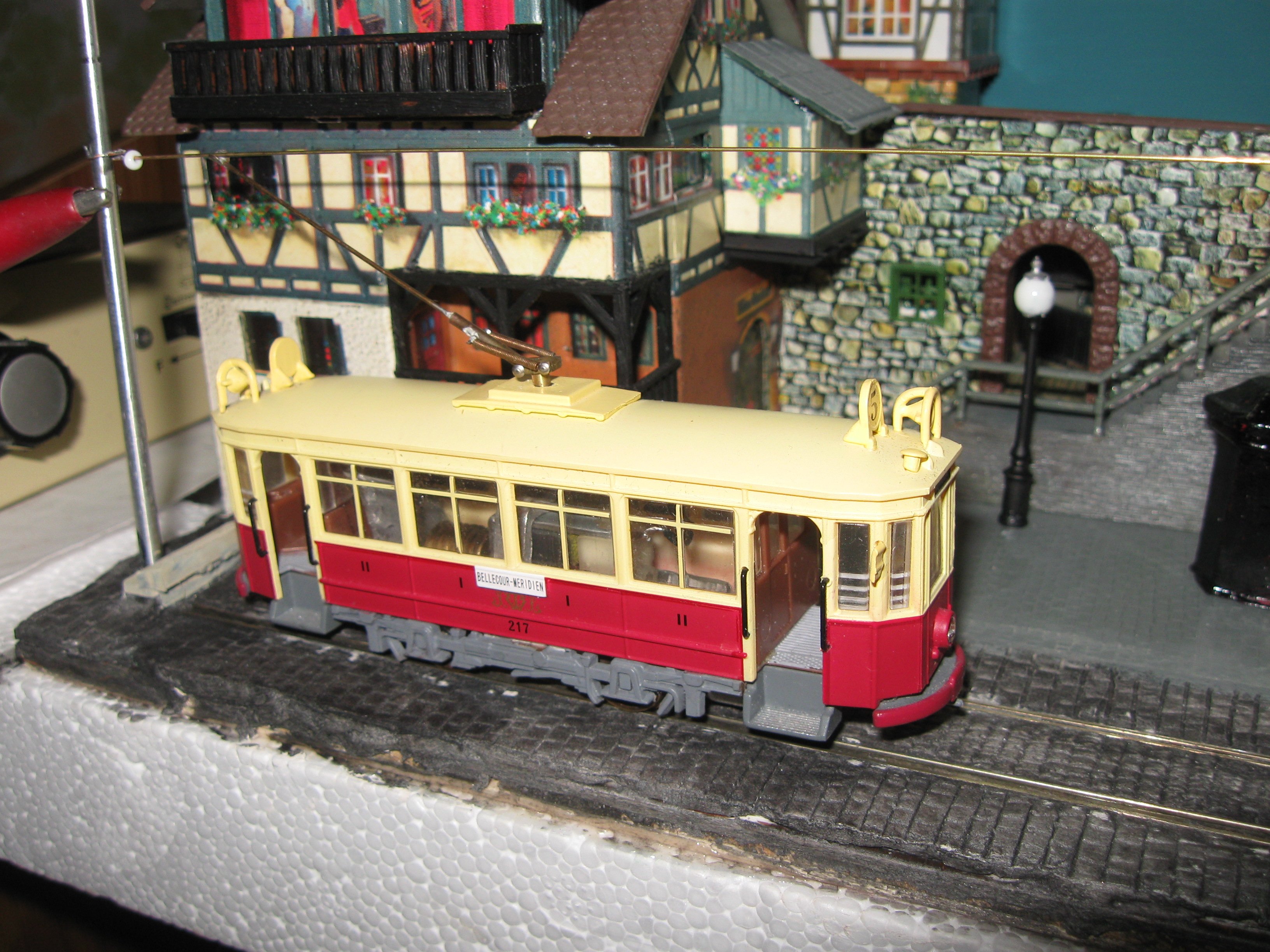
I used Das on a small (A3 surface area) tram layout for a French Railway Society competition. I did small areas at a time and impressed the cobble effect while the Das was damp, blending sections in using nothing more than a finger and some water. 3 years later and there is no shrinkage that I can see. I used polyfilla many years ago and that was difficult to get a decent finish with.
-
Irish Railway Models A Class Re-wheeled to 21mm
Brendan8056 replied to JohnMcGahern's topic in Irish Models
John, Your pointwork is so realistic, I have done plain track with C&L and Peco parts but still stick to copperclad for points, so they lack the detail of yours. Here is another picture of the gauge change to 21mm. I am doing an article for "New Irish Lines", those who have yet to subscribe should consider doing so, as it is an inspiring read for Irish modellers of all gauges and scales.
-
Irish Railway Models A Class Re-wheeled to 21mm
Brendan8056 replied to JohnMcGahern's topic in Irish Models
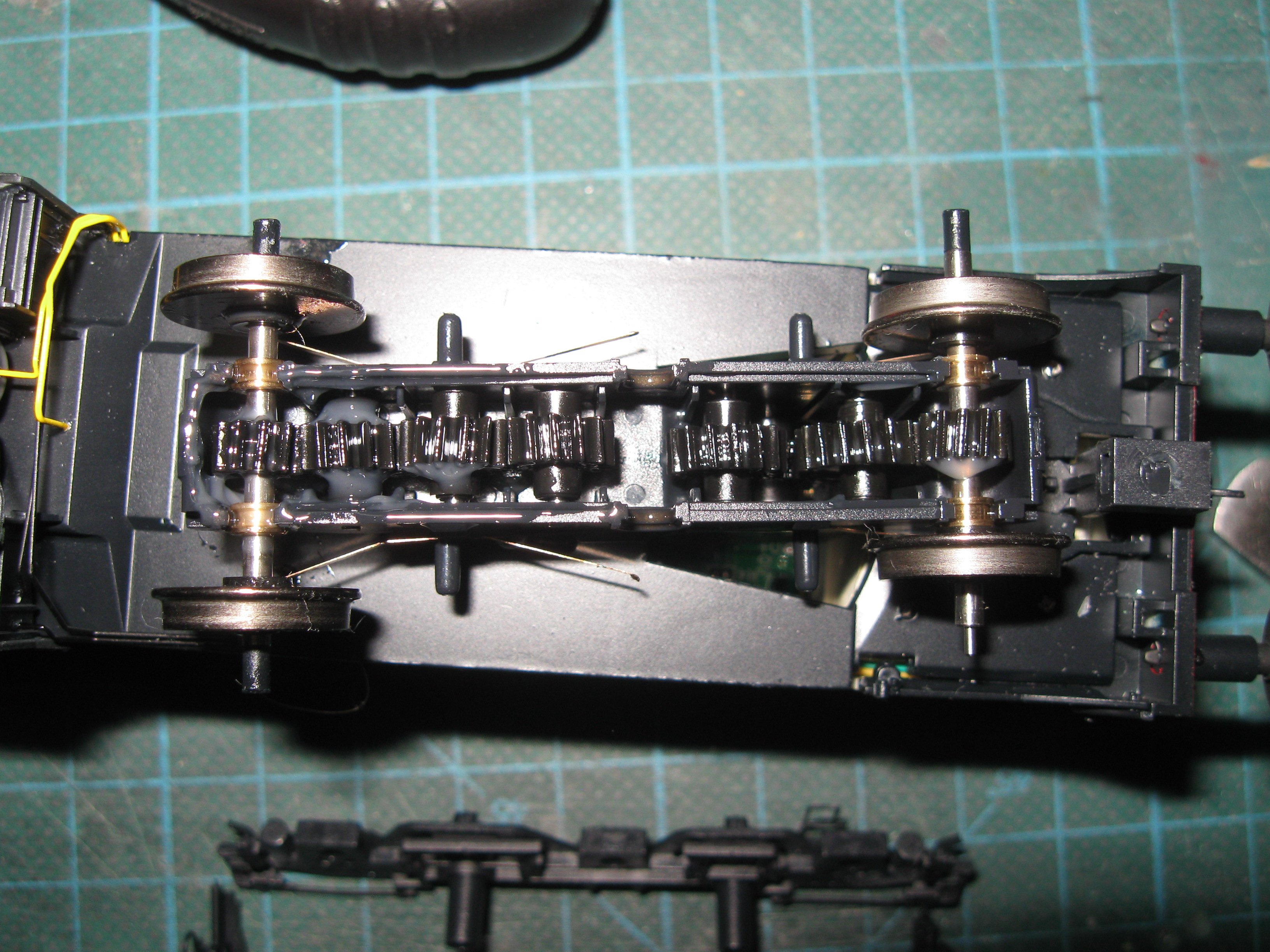
John, That looks superb as does your trackwork. Phil, I have re-gauged an A using the original wheelsets and axles. It really was easy and the axle ends still rotate. The hardest bit was carefully taking out the wheelsets and re fitting the bogie sides afterwards. Also if fitted with the speedo cable (top left in below picture) make sure that wheelset goes back in the correct place in the bogie, as it has the rotating hub on one end only.
-
You may want to see if local hardware shops stock Humbrol, or Revell tins of paint, or can get them for you. I am lucky as my nearest one stocks a selection of Revell tinlets and Richardsons, up the road in Feltham, stock the full range of Humbrol paints, as they have a model department as well as the main hardware/ironmongers.
-
21mm gauge track; the pros and cons?
Brendan8056 replied to jhb171achill's topic in Irish Model Layouts
Well done on purchasing the materials to become a fully fledged Irish Gauge Modeller. For the track I make I use just ordinary tin/lead solder, on a roll. A roll lasts years and I use it for wiring and track work. Track I made 30 years ago has no problems apart from an occasional dry joint or 3. -
21mm gauge track; the pros and cons?
Brendan8056 replied to jhb171achill's topic in Irish Model Layouts
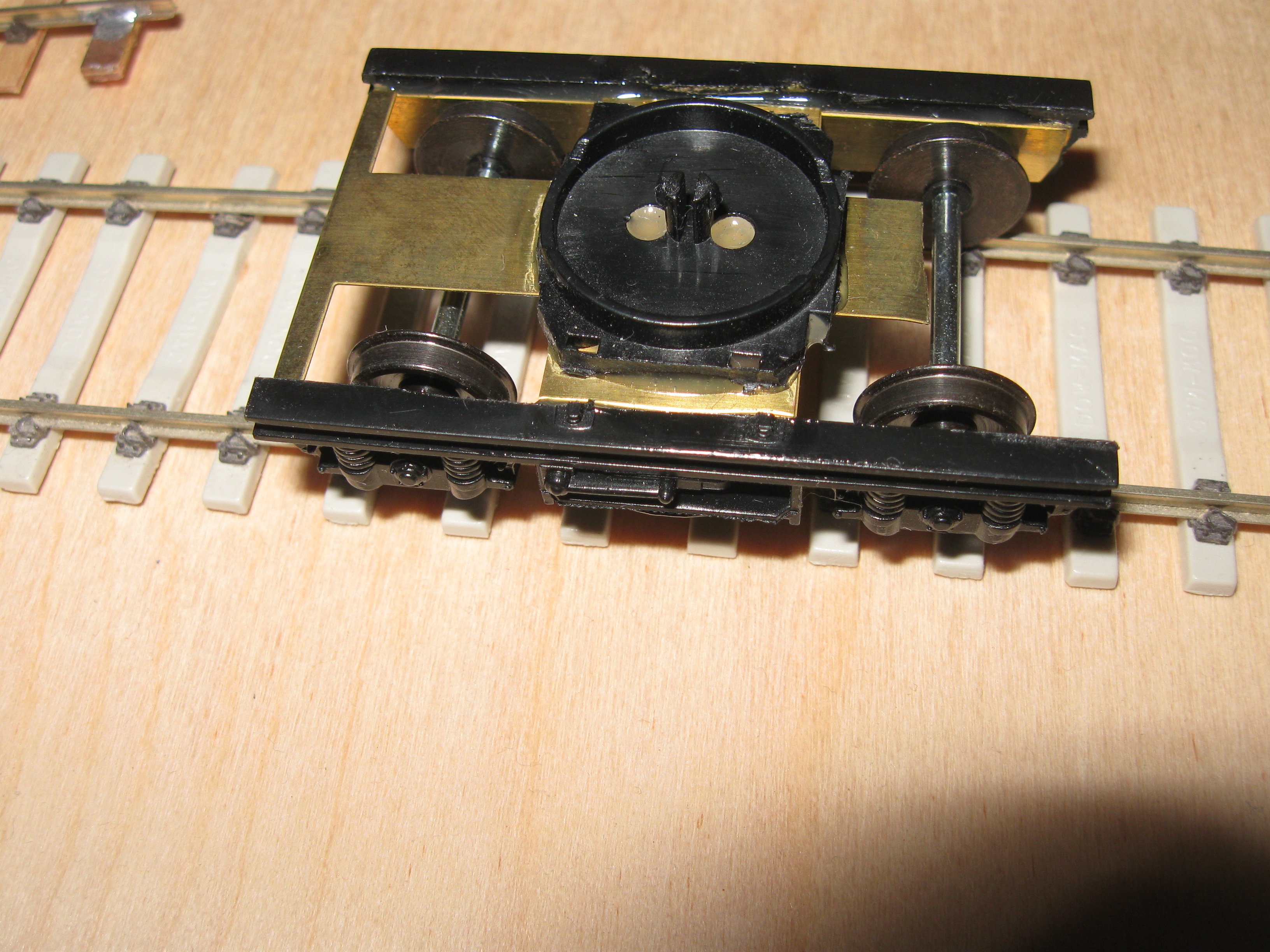
Mayner is probably correct about the Murphy's bogies (on both the Cravens and AC stock). Using the brass bogie etch and existing centre casting to secure bogie to coach leave too big a gap. Replica Railways do some very nice plastic B4 and B5 bogie kits, and also sell the sideframes seperately, for a bargain price of 4 for £1. You could probably make up your own plasticard bolsters to go with these. The etched bogies have worked well on Lima mk1 steam generator conversions and should also work on mk2 or 3 coaches by Lima. -
21mm gauge track; the pros and cons?
Brendan8056 replied to jhb171achill's topic in Irish Model Layouts
I too did some etches many years back, originally for use with Lima sideframes. I converted a Murphys Cravens, but tried to keep the close couple mechanism, which meant I used smaller wheels to keep the ride height correct whilst resung the bolster. I would not use the same method again. The bogie is on a bit of 21mm gauge track. The concrete sleepers are C&L with Peco code 75 FB track and pandrol fittings.
-
I have a variety of track gauges, including some of the washer type, some comercial ones, usually a single run of production only, and a friend with a lathe made me some brass roller gauges. The track gauge is 21mm, nothing more, nothing less. Build the stock to run on the track, not the track adapted to the stock. My wheel back to backs are not always spot on, as long as it runs I do not worry about a bit of variation. (P4 modellers look away at this point!). I am sure I read somewhere that britishfinescale was branching out to 4mm scale?
-
Robert, I am the author of the New Irish Lines article and also the re-gauging IRM wagons pics on this site. Do not confuse yourself about P4/EM/20.8mm, go for the easy option, the so called finescale 21mm gauge. All current RTR diesels can be re-gauged using their existing wheels, though needing new axles. I have just done a Murphy's 121, and an article will appear in New Irish Lines about that as well. I use templot for point plans and use track gauges for 21mm gauge, no problems. Make up a bit of plain track, re-gauge a diesel and some wagons, run them up and down, and you will never look back on the "narrow gauge". If you really do not like it after that you can just push the wheels back to 16.5mm gauge. Apologies, It is not Robert but Murphaph I should have replied too!
-
26mm is the common axle 00 gauge, as murrayec points out, there are exceptions. Lima wheels were on 24.5 mm axles, and so are Murphys Models coaches, both Craven and AC types. I assume this is because they are manufactured in factories that make HO scale coaches normally, where 24.5mm is the common axle length.
-
John-r--I have turned down the Lima pizza cutter wheels on HO scale Italian wagons and railcars. The wheels are made of an easy to turn metal (brass?). Just don't try it with Jouef wheels, they really are rubbish. I use a minidrill and some files (and eye protection of course) to turn the wheels down and make the flange more shallow. DiveController--A pic of the 21mm gauge bogie on the 201 class. I used the existing wheels and gears. for the axles I used spare Romford/Maygib axles with the pin point ends filed down. 2mm steel rod would do the job as well. I recall the gear was pressfit onto the axle and I used a toothpick to apply a bit of superglue to hold it more firmly in place. There is plenty of room between the bogie sides and I moved the dampers out by twisting them slightly as they fouled the wider gauge wheels. The Murphys 141 and 071 classes have similar design bogies and can be regauged this way as well.