Galteemore Posted May 6 Posted May 6 5 minutes ago, Mol_PMB said: Locos might be a 101 piloting a 321 class? Just a guess - happy to be corrected. Almost looks like an ex WLWR 2-4-0 as pilot 1
jhb171achill Posted May 6 Posted May 6 On 12/12/2025 at 3:32 PM, Killian Keane said: Railmotor no.92, location unknown Kingsbridge? 92 spent a large part of its life as the Inchicore "taxi", I believe.
jhb171achill Posted May 6 Posted May 6 On 5/11/2025 at 3:34 PM, Westcorkrailway said: Not going to unload the entire Colm creedon stuff here. But just a taster of what you can find within his archive regarding old interesting stuff. Again, I strongly encourage to go and browse yourself! 1890s CBSC mainline train 1933 cashel service the following 2 locos are of pike and Carlisle. 2 original cork and youghal railway tank engines Clayton railcar trials in the Newmarket and kanturk and finally. A CMDR 4 wheel coach Not just an exceptionally rare picture, or an exceptionally rare vehicle - but an exceptionally rare TYPE of vehicle in Ireland. A four-wheeled anything of that style is almost unheard of here, though once relatively more common in the Neighbouring Island, but a two-compartment four-wheeled brake third would be little more than unique. Excellent find - and it has lasted into GSR days! 2
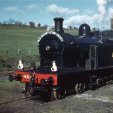
Mol_PMB Posted May 7 Posted May 7 21 hours ago, Galteemore said: Almost looks like an ex WLWR 2-4-0 as pilot Like this? (Flickr image by Trainiac) 4 1
Mol_PMB Posted May 7 Posted May 7 12 hours ago, jhb171achill said: Not just an exceptionally rare picture, or an exceptionally rare vehicle - but an exceptionally rare TYPE of vehicle in Ireland. A four-wheeled anything of that style is almost unheard of here, though once relatively more common in the Neighbouring Island, but a two-compartment four-wheeled brake third would be little more than unique. Excellent find - and it has lasted into GSR days! Another gem from Trainiac on Flickr on that theme. From the same source, this one is almost as stubby as the Triang-Hornby 4-wheeler: 8
jhb171achill Posted May 7 Posted May 7 1 hour ago, Mol_PMB said: Like this? (Flickr image by Trainiac) They’ve captioned that wrongly - this was a GSWR 2.4.0…. 1 hour ago, Mol_PMB said: Another gem from Trainiac on Flickr on that theme. From the same source, this one is almost as stubby as the Triang-Hornby 4-wheeler: That lower one is Bishop’s Castle Railway in England rather than Belfast Central. Fior that line, and quite a few others in Britain, vehicles like this were not uncommon. The 3rd class compartments must have been cosy…. 1 1
Mol_PMB Posted May 7 Posted May 7 44 minutes ago, jhb171achill said: They’ve captioned that wrongly - this was a GSWR 2.4.0…. That lower one is Bishop’s Castle Railway in England rather than Belfast Central. Fior that line, and quite a few others in Britain, vehicles like this were not uncommon. The 3rd class compartments must have been cosy…. Thanks for setting me right, JHB. There's some great photos on that Flickr site but we obviously need to interpret the captions with more caution than I had done.
2996 Victor Posted May 7 Posted May 7 3 hours ago, Mol_PMB said: This is a fascinating conveyance! Would it have been restricted in use to a specific service or branchline? Cheers, Mark
Galteemore Posted May 7 Posted May 7 (edited) 1 hour ago, 2996 Victor said: This is a fascinating conveyance! Would it have been restricted in use to a specific service or branchline? Cheers, Mark Looks tbh like a drovers van. Attached to cattle trains to accommodate the guard and also the ‘escorts’ for the cattle. SLNC was using them right up until closure. Edited May 7 by Galteemore 1 1
2996 Victor Posted May 7 Posted May 7 34 minutes ago, Galteemore said: Looks tbh like a drovers van. Attached to cattle trains to accommodate the guard and also the ‘escorts’ for the cattle. SLNC was using them right up until closure. Thanks! Presumably, then, it would have been finished in goods stock livery rather than passenger livery? Thanks, Mark 1
jhb171achill Posted May 8 Posted May 8 (edited) 8 hours ago, Galteemore said: Looks tbh like a drovers van. Attached to cattle trains to accommodate the guard and also the ‘escorts’ for the cattle. SLNC was using them right up until closure. That's exactly what it is. They were used on cattle specials and tended to be found lurking in Athlone, Mullingar and Broadstone when not in use. You would think that they also might have seen use on branchlines, especially where cattle was a big thing (e.g. Loughrea) but seemingly not so much. Certainly not in GSR times. Senior took a photo of a similar van but without passenger accommodation at Broadstone in the early 1930s. It was shabby looking and as he said, probably (but not certainly) out of use. It was still in MGWR livery like the above. The full brake versions of these were green, so the above may be too. Failing that, certainly standard dark wagon grey. There is a Cyril Fry model of a yoke of this nature in the Malahide Model Railway Museum. It is a very dark green, not unlike UTA coach green or BCDR loco green. The van that Senior saw in the 1930s was a dulled mid-green, but since anything in Midland livery in 1931 or 1932 hadn't seen a paintbrush for at least seven years, the original colour could have been very much darker indeed. Fry's livery interpretations are generally exceptionally accurate and exceptionally detailed, though there are a few aberrations to the theme; he painted a model of a 500 class 4.6.0, and two other locos, which spent their entire working lives in dark grey, in "Maedb"-style blue-green! Edited May 8 by jhb171achill 1 1
Mayner Posted May 8 Posted May 8 (edited) Actually classed as a Goods Brake Van apparrenlly for general use. The H C Casserly photo was described in the IRRS paper as "11 ton brake van No50 built 1892, shown in rebuilt state with 'glasshouse: at Broadstone 1932 A raised guards lookout(s) and drovers compartment/(s) were almost a standard feature of MGW Brake Vans until a 'conventional' van with balconies at each end and no duckets were introduced during the early 1920s Interestingly a pair of 6w 20T Brake Vans with guards compartments (with raised lookout) at each end and two passengers compartments were introduced in 1912. There is a photo of these vans in a decrepit condition in one of the collections in the IRRS Flickr Site. P. O'Cuimin Feb 1970 IRRS paper Wagon Stock of the MGWR includes details of MGW Brake Vans. Brake Vans listed "Generally brown" 1874 type mid-green as running circa 1923-4 Scratch built model of 1874 Brake (1stStandard Type) Brake Vans, plasticard/stripwood approx 30 years ago. My model of the 1874 van is based on a 1931 LGRP photo of No29 in MGW livery still with wooden brake blocks. The HC Casserley photo of No 50 appears to be a re-built verison of a new type of van introduced 1892 for use on the "new Western Lines. O/Cuimin indicated that the van as built was quite different to the 1932 photograph, origonally the 2 passenger/drovers compartments were located at each end with the guards/luggage compartment in the middle, no balcony but retaining a birdcage look out, 56-61 introduced 1904 were listed with differning compartments and 'this design" used for 'renewal" (replacement) of 1874 vans with same leading dimensions as in the 1892 Class. I suspect that these older 'caboose' style vans were withdrawn/taken out of use as more 'conventional" steel underframe Midland, GSWR/GS vans became available during the late 20s-early 30s. In his 'Enginemans Son" IRRS paper PJ Currivan wrote about playing 'cowboys & indians" in the long line of caboose brake vans stored in a siding in Athlone during early GSR days, his father was a former GSWR driver transferred to the Athlone Midland shed following the amalgamation and wrote about his adventures growing up on the railway. PJs two Engine Mans Son papers are a great read. Basically looking at short 14' mainly GSW Cattle Wagons or 14' Convertibles for modelling the GSR/pre-Amalgamation period the longer KN Cattle Wagons only seem to have appeared in CIE days. The Midland mainly relied on Convertibles to handle the bulkof its cattle traffic with covered cattle wagons relatively rare and camera shy 430 Covered, 1613 Convertible still in service 1924 Edited May 8 by Mayner 4 3
Mol_PMB Posted June 3 Posted June 3 This old panoramic photo of Albert Quay / Rocksavage in August 1910 sold on eBay recently. 1911 RP Panorama Cork City Railway Road Bridge Real Photo Cork Ireland Scarce | eBay UK Some interesting roof detail on the wagons, ideal for modellers. 3
Westcorkrailway Posted June 11 Author Posted June 11 On 3/6/2026 at 8:51 AM, Mol_PMB said: This old panoramic photo of Albert Quay / Rocksavage in August 1910 sold on eBay recently. 1911 RP Panorama Cork City Railway Road Bridge Real Photo Cork Ireland Scarce | eBay UK Some interesting roof detail on the wagons, ideal for modellers. Only seeing this now…never seen this before!
Mol_PMB Posted June 11 Posted June 11 7 minutes ago, Westcorkrailway said: Only seeing this now…never seen this before! Sorry, I didn't win it! Thought you might be interested. 1
Killian Keane Posted August 3 Posted August 3 (edited) Quite a rare photo, or at least one I had never seen before of old no.36, taken (presumably at Inchicore) about 1890, from The Engineer, January 17th 1896, whats almost as interesting as the loco is the narrow gauge line to the right, I had been unaware Inchicore had such a system, presumably purely hand and horse worked Edited August 3 by Killian Keane 9
Auto-Train Original Posted August 3 Posted August 3 On 6/5/2026 at 11:03 PM, jhb171achill said: Not just an exceptionally rare picture, or an exceptionally rare vehicle - but an exceptionally rare TYPE of vehicle in Ireland. A four-wheeled anything of that style is almost unheard of here, though once relatively more common in the Neighbouring Island, but a two-compartment four-wheeled brake third would be little more than unique. Excellent find - and it has lasted into GSR days! That is incredible. Had no idea these ran in Ireland. What railway and colour scheme?
jhb171achill Posted August 3 Posted August 3 (edited) 3 hours ago, Killian Keane said: Quite a rare photo, or at least one I had never seen before of old no.36, taken (presumably at Inchicore) about 1890, from The Engineer, January 17th 1896, whats almost as interesting as the loco is the narrow gauge line to the right, I had been unaware Inchicore had such a system, presumably purely hand and horse worked Yes, that tramway was hand worked. 2 hours ago, Auto-Train Original said: That is incredible. Had no idea these ran in Ireland. What railway and colour scheme? It certainly IS incredible! Built for the Great Southern & Western Railway, could get from Dublin to Cork in five hours...... Livery was a dark green, possibly not unlike what it carries on display in Cork station nowadays - at first. In later years a very dark olive green, same as 90 at Downpatrick. Black and white lining originally, but it possibly got the elaborate lining seen on 90 before it was withdrawn. It would not have carried the much paler green it was displayed in for very many years, as far as I am aware. For anyone wanting to model that era, the passenger stock carried a variety of colours to denote 1st, 2nd & 3rd class. I think I have the details somewhere. By the late 1860s anyway, the GSWR seem to have standardised on an exceptionally dark maroon / brown colour (like the lower panels on preserved coach 836 at Downpatrick), which in traffic, and weathered, looked almost black. Goods stock at that time was also an extremely dark shade of grey, more or less black; much darker than "normal wagon grey". Edited August 3 by jhb171achill 3
Branchline121 Posted August 8 Posted August 8 (edited) Found this image of Larne, description says it was taken c. 1888. There’s a nice view of the town and sidings and a loco that looks ancient — even for 1888! Edited August 8 by Branchline121 Typo 7
jhb171achill Posted August 8 Posted August 8 On 6/5/2026 at 7:21 PM, jhb171achill said: Kingsbridge? 92 spent a large part of its life as the Inchicore "taxi", I believe. That four-wheeled van it’s towing was one of several mobile tool vans. Operating between Kingsbridge and Inchicore would be typical of their use.
Flying Snail Posted August 28 Posted August 28 @cheesy_peas found an interesting railway collection on the National Museum of Ireland page (thread here) , and its thrown up some interesting images, like this one dated 1942 of GSWR 1st class carriage 282 https://www.museum.ie/collections/collection/object-166391/?return=%2Fcollections%2Fcollection%2F%3Fterm%3DGreat%20Southern%20and%20Western%20Railway%26media%3Dyes%26adv_sub%5B%5D%3DHistorical%20Collection 4
Flying Snail Posted August 28 Posted August 28 (edited) There's also some models, diagrams etc on the NMI website. This is a rear view of the Dublin and Kingstown Railway locomotive Alexandra: https://www.museum.ie/collections/collection/object-166396/?return=%2Fcollections%2Fcollection%2F%3Fterm%3Drailways%26limit%3D100 images of side and front views can be found there too. Here's a front view: https://www.museum.ie/collections/collection/object-159643/?return=%2Fcollections%2Fcollection%2F%3Fpage%3D2%26term%3Drailway%26media%3Dyes%26adv_sub%5B%5D%3DHistorical%2BCollection and here's a side view: https://www.museum.ie/collections/collection/object-166397/?return=%2Fcollections%2Fcollection%2F%3Fpage%3D3%26term%3Drailway%26media%3Dyes%26adv_sub%5B%5D%3DHistorical%2BCollection Edited August 28 by Flying Snail 5 1
Killian Keane Posted August 28 Posted August 28 That model of Alexandra is in the Science Museum in Kensington now, or was about 12 years ago when I was last there 4
jhb171achill Posted August 28 Posted August 28 On 4/11/2025 at 1:54 PM, Flying Snail said: The 'Abbeyleix' photo appears in the Poole Collection on the NLI. The caption is that it was 'commissioned by Mr. John Gorry, Derrykearn, Abbeyleix'. So to be fair, it doesn't actually claim to have been taken in Abbeyleix. It almost certainly wasn't, thats a MGWR loco. Original link here: https://catalogue.nli.ie/Record/vtls000595074 100%; couldn’t possibly be Abbeyleix.
cheesy_peas Posted August 28 Posted August 28 1 hour ago, jhb171achill said: 100%; couldn’t possibly be Abbeyleix. What's the dog kennel-like wagon for? Resembles a uk salt wagon.
jhb171achill Posted August 28 Posted August 28 12 minutes ago, cheesy_peas said: What's the dog kennel-like wagon for? Resembles a uk salt wagon. Luggage wagon, I believe.
cheesy_peas Posted August 29 Posted August 29 16 hours ago, jhb171achill said: Luggage wagon, I believe. I was thinking afterwards it looked like those SLNCR trailers. 1 1
Mol_PMB Posted October 1 Posted October 1 Has anyone else discovered this yet? Photograph album, directors' inspection tours, 1902-1920 About 70 old photos, sometimes there's more of interest in the background than the foreground. 4 1
Mol_PMB Posted October 1 Posted October 1 Looking behind the people (sorry, my sociopathic tendencies): Page 18 shows a GSWR 6-wheel passenger brake van in the 2-colour livery in 1906. Page 25 shows the directors posed on a step wagon on the Listowel & Ballybunnion. Page 45 has some detail of two covered carriage trucks. Page 46 has a variety of goods wagons. Pages 47 and 48 show details of inspection saloon 352 and the interior of Killarney train shed. Page 49 is the Rosslare image in my previous post. Nice view of 6-wheel coaches behind. Pages 55 and 56 seem to show narrow-gauge rope-worked railways at Lisduff Quarry. Page 66 shows the Cahirciveen fishing fleet - a huge number of small vessels! Page 67 is the Valentia image in my previous post. 4
Tullygrainey Posted October 1 Posted October 1 Wonderful stuff. And what a great bunch of characters. I can almost hear the chatter and smell the pipe tobacco. 1 1
jhb171achill Posted October 1 Posted October 1 1 hour ago, Tullygrainey said: Wonderful stuff. And what a great bunch of characters. I can almost hear the chatter and smell the pipe tobacco. “Splendid, old chap!” On 28/8/2026 at 8:49 AM, Flying Snail said: There's also some models, diagrams etc on the NMI website. This is a rear view of the Dublin and Kingstown Railway locomotive Alexandra: https://www.museum.ie/collections/collection/object-166396/?return=%2Fcollections%2Fcollection%2F%3Fterm%3Drailways%26limit%3D100 images of side and front views can be found there too. Here's a front view: https://www.museum.ie/collections/collection/object-159643/?return=%2Fcollections%2Fcollection%2F%3Fpage%3D2%26term%3Drailway%26media%3Dyes%26adv_sub%5B%5D%3DHistorical%2BCollection and here's a side view: https://www.museum.ie/collections/collection/object-166397/?return=%2Fcollections%2Fcollection%2F%3Fpage%3D3%26term%3Drailway%26media%3Dyes%26adv_sub%5B%5D%3DHistorical%2BCollection Wonder where that model is!
.png.c363cdf5c3fb7955cd92a55eb6dbbae0.png)
Recommended Posts
Create an account or sign in to comment
You need to be a member in order to leave a comment
Create an account
Sign up for a new account in our community. It's easy!
Register a new accountSign in
Already have an account? Sign in here.
Sign In Now