.png.c363cdf5c3fb7955cd92a55eb6dbbae0.png)


Horsetan
-
Posts
2,754 -
Joined
-
Last visited
-
Days Won
4
Content Type
Profiles
Forums
Events
Gallery
Blogs
Everything posted by Horsetan
-
Surely you mean the eBay flip value?
-
That's putting it mildly. Seven scale inches too narrow for standard gauge. A whole 1ft 1½ins too narrow for Irish standard. And that's all due to decisions made, and the state of electric motor technology, in the 1930s...
-
....and if you develop an attachment to your Hunslet or a B1a, you can always arrange to have it buried with you when you die. That way, nobody else can have it, and the remaining ones become even more valuable. A bit like the fella who, many years ago, had a rare postage stamp. He then acquired the only other one in existence and destroyed it so that his would be unique and, thus, priceless.
-
Hopefully converting to 21mm won't devalue 'em too much.....
-
Funny, that
-
Some people use LEGO bricks to form the moulding box
-
There's still a problem about the brake rods which pass either side of each wheel, though. These need to be detached somehow (not easy) and moved outwards to give clearance.
-
 I think someone has already modelled Macmine in OO before... ...and that there was still a starter signal retained for the Down line to Westport Quay.
 -
Yes, there is space
-
The Hunslet axles are plain-ended and are flush with the face of the OO wheel and don't protrude any further. They are not pinpoints either. This means they can't be used for 21mm as they are not long enough.
-
The additional bad news is that if you lever the driven axles out, the current pickup strips may part company with the exterior of the gear casing and fall off - this happened to me earlier today, so it's going to be a gas gluing them back in place.... The 2mm driven axles are plain ended, and pressed into insulating bushes which in turn are pressed into the wheel hubs. Completely different to the "A" class: you cannot reuse the axles as they're too short for 21mm gauge. For P4 profile purposes, that means all new "live" wheels (12mm dia) from AGW and new longer axles, but that means the wheels will have to be re-bored to 2.4mm or as much as 3mm to take the insulating bushes.
-
Yodel, was it?
-
It's massive.
-
It's massive.
-
You can almost feel the heat...and that's outside of the locomotive cab
-
The Indians had a WT class as well - a substantial 2-8-4T, with a lot of the Stanier look about it.
-
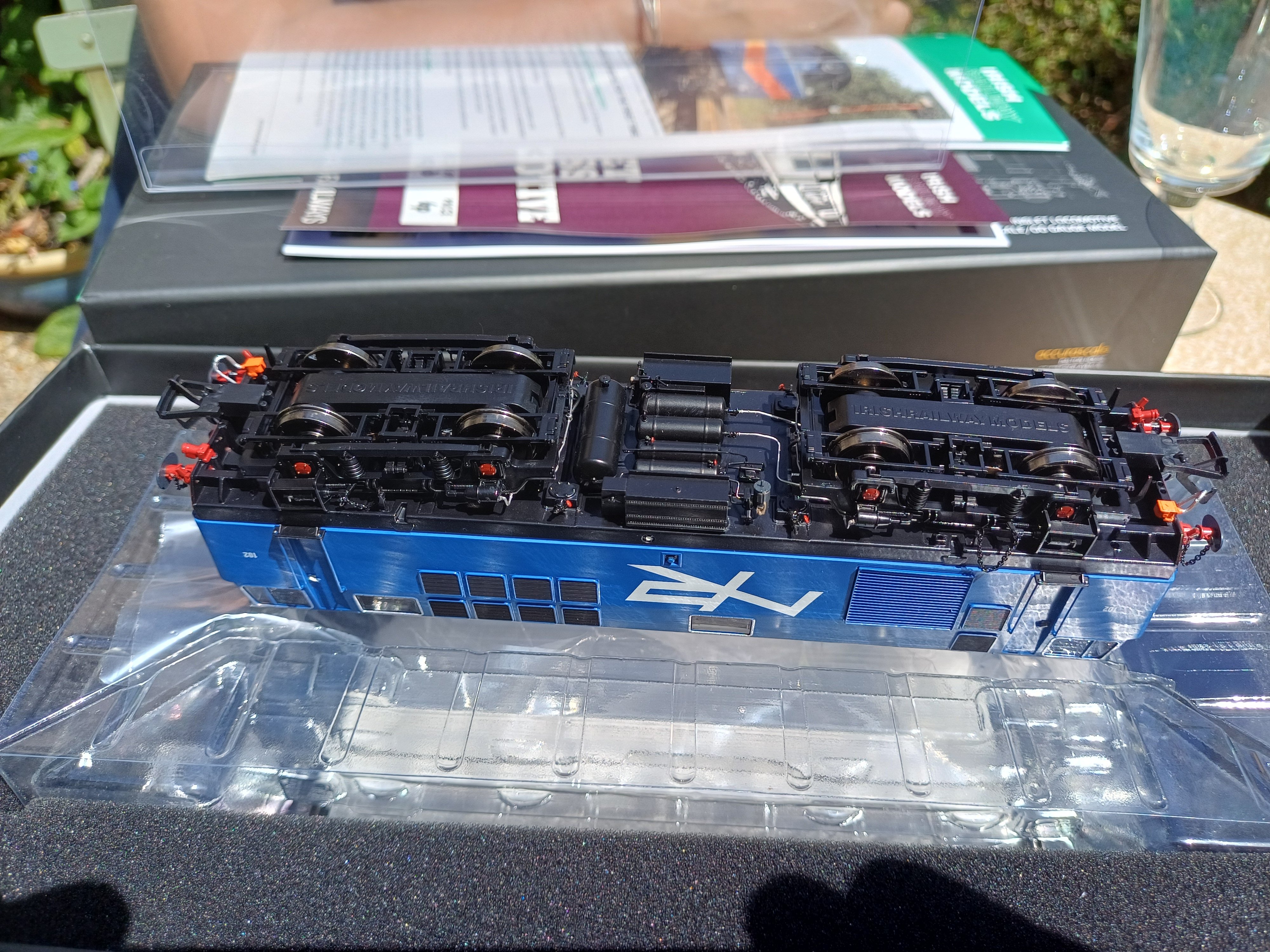
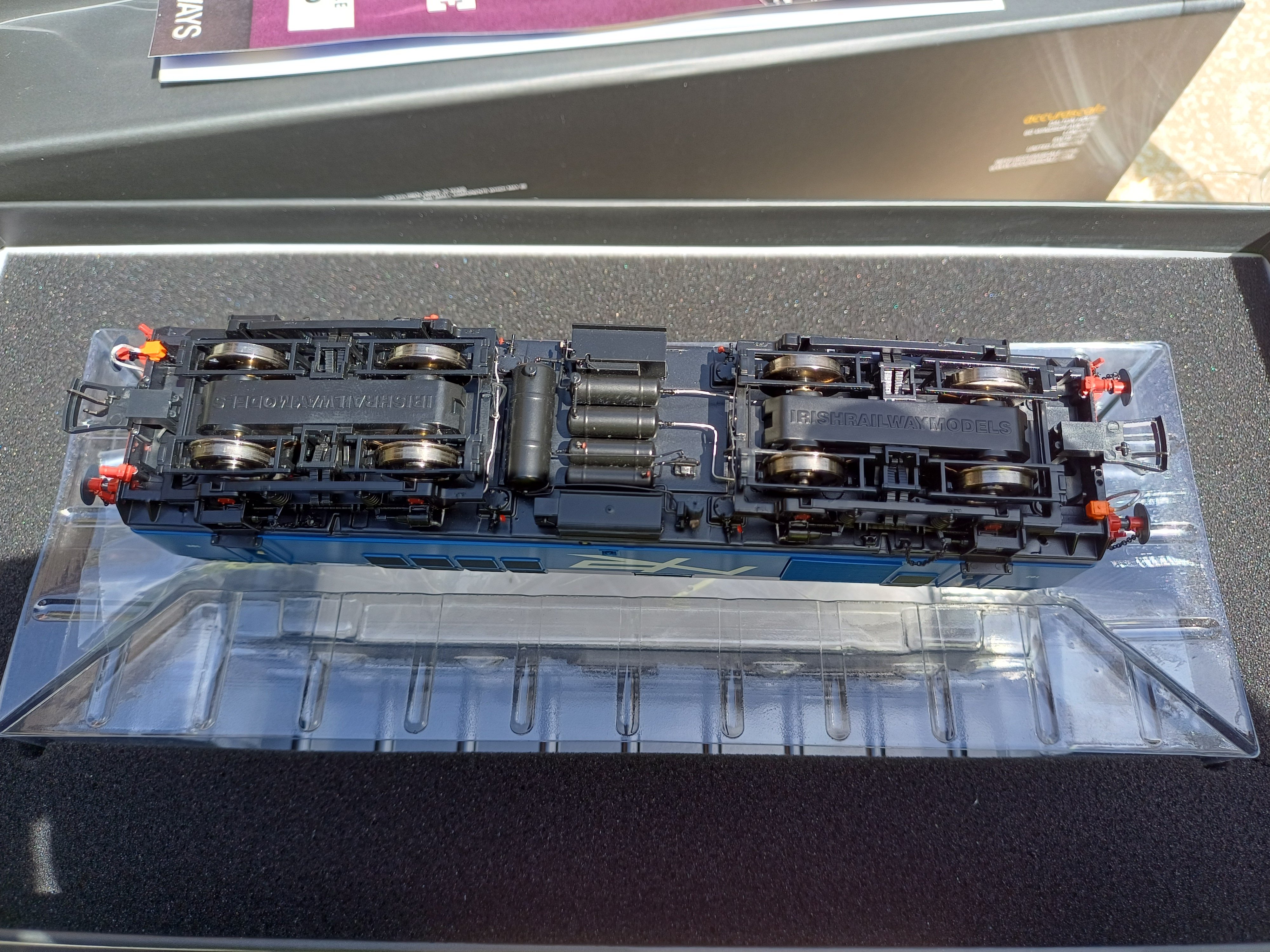
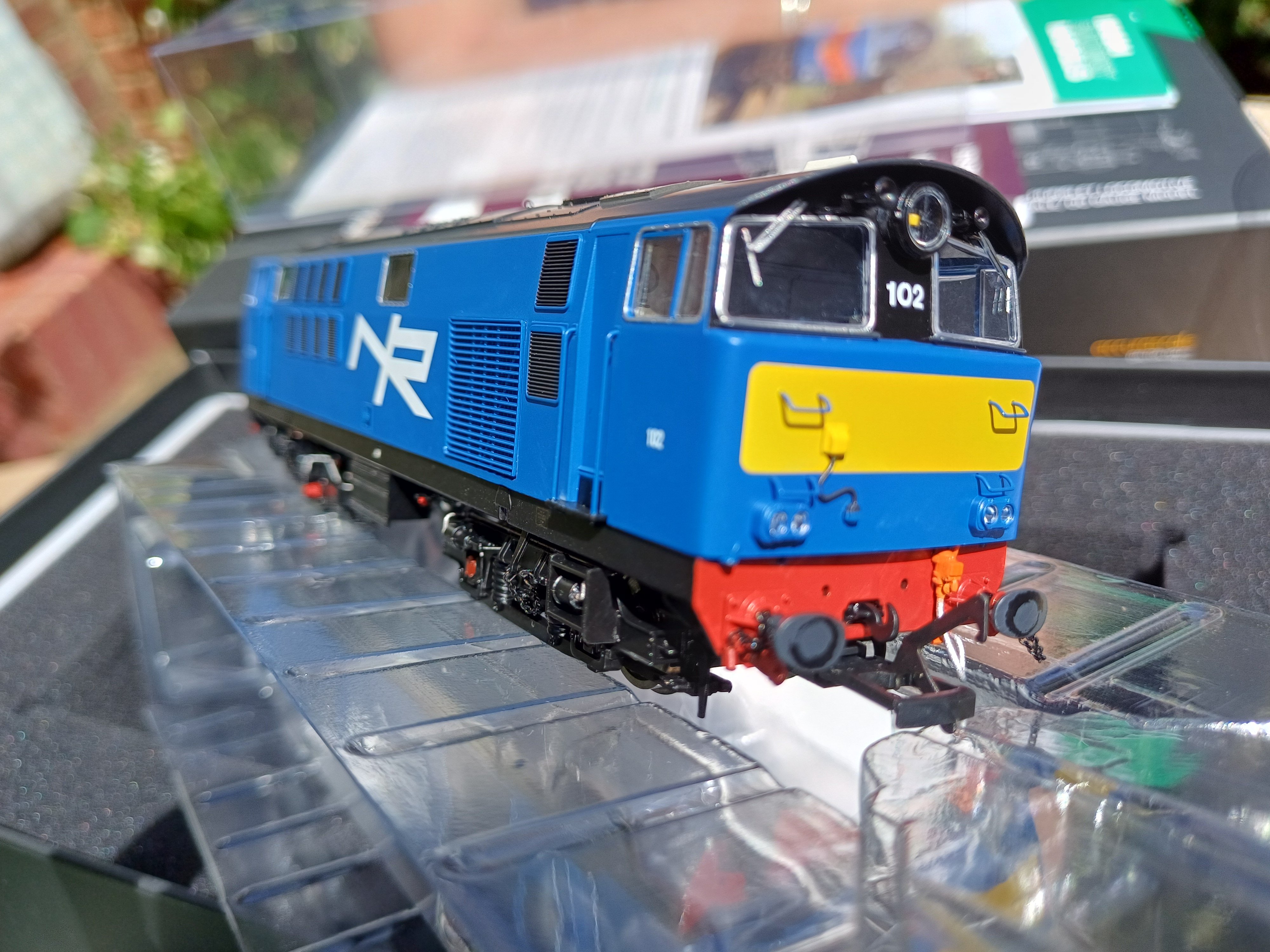
Once we get underneath, there's a lot to like, but also a lot to be wary of. The good news is that the bogie outside frames are easy to lever off. Mine lifted off in my hand, no screwdriver necessary. The bad news is that the frames can only be lifted as far as the brake chains will allow. An initial try does suggest it's possible to lever the driven axles out without necessarily damaging anything. Less certain are the brake rods that surround the lower part of each wheel - they're fine for standard OO, but unhelpful for 21mm gauge, so may have to be re-mounted further out or, if not possible, split before repositioning.

-
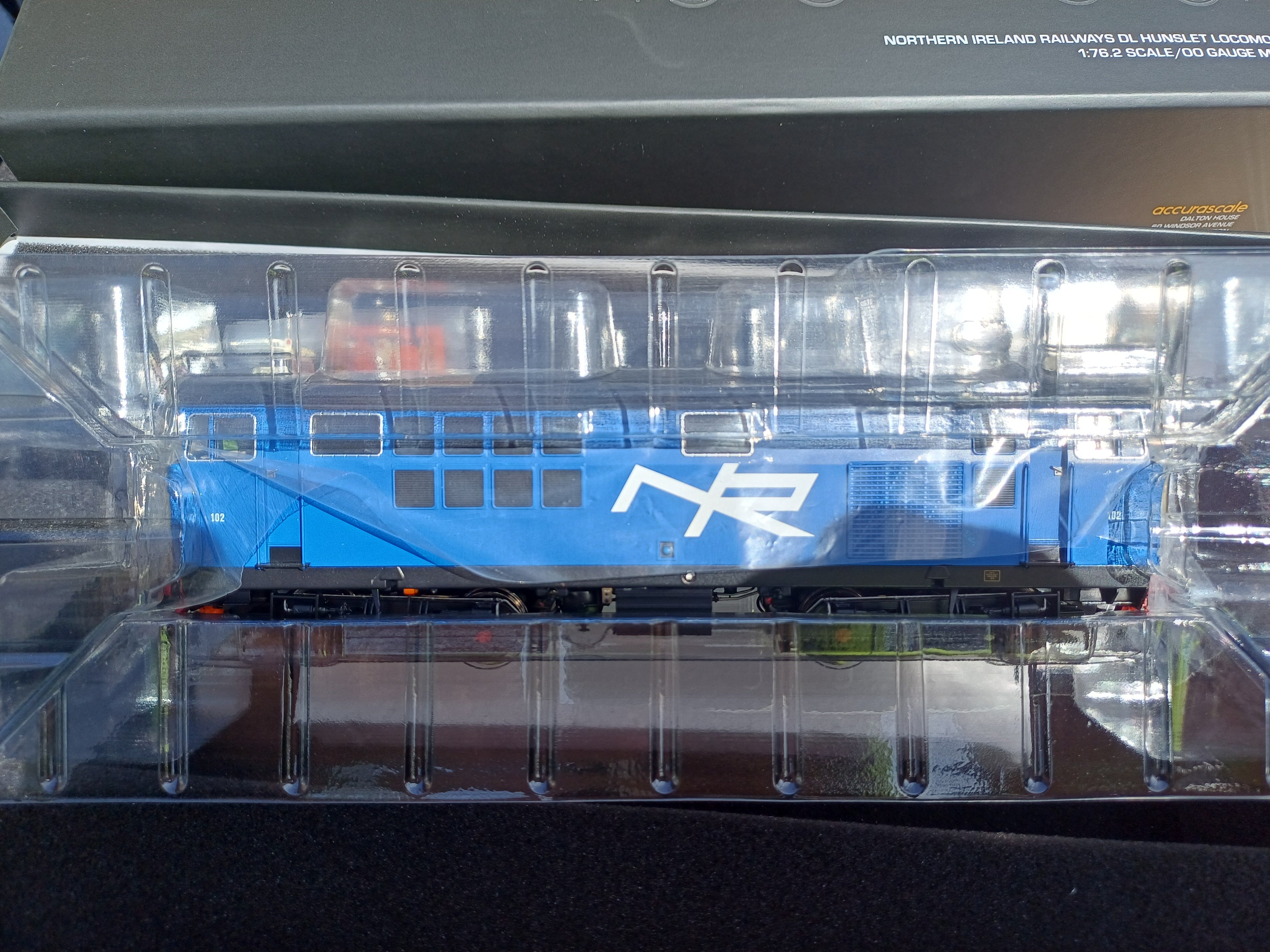
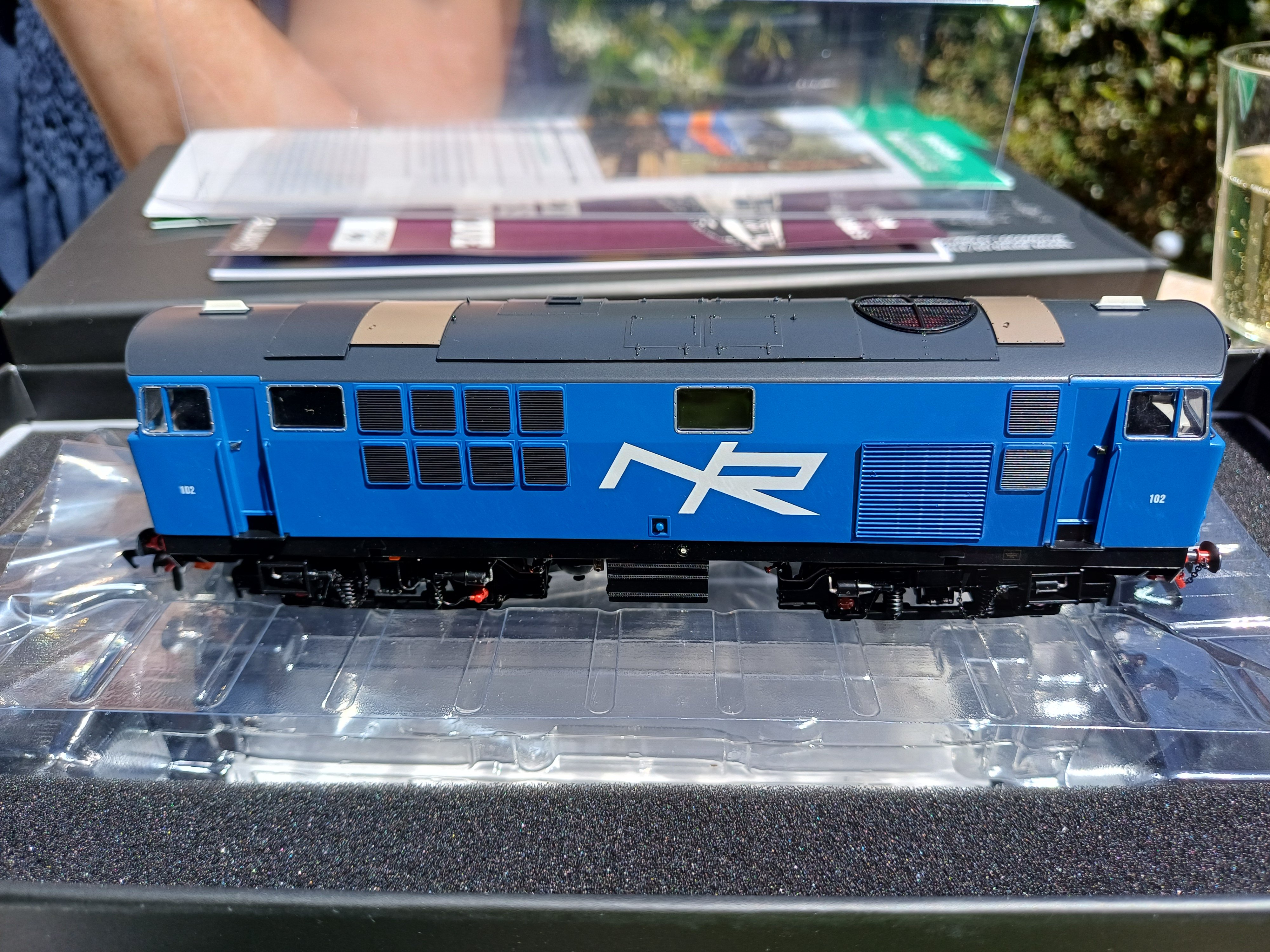
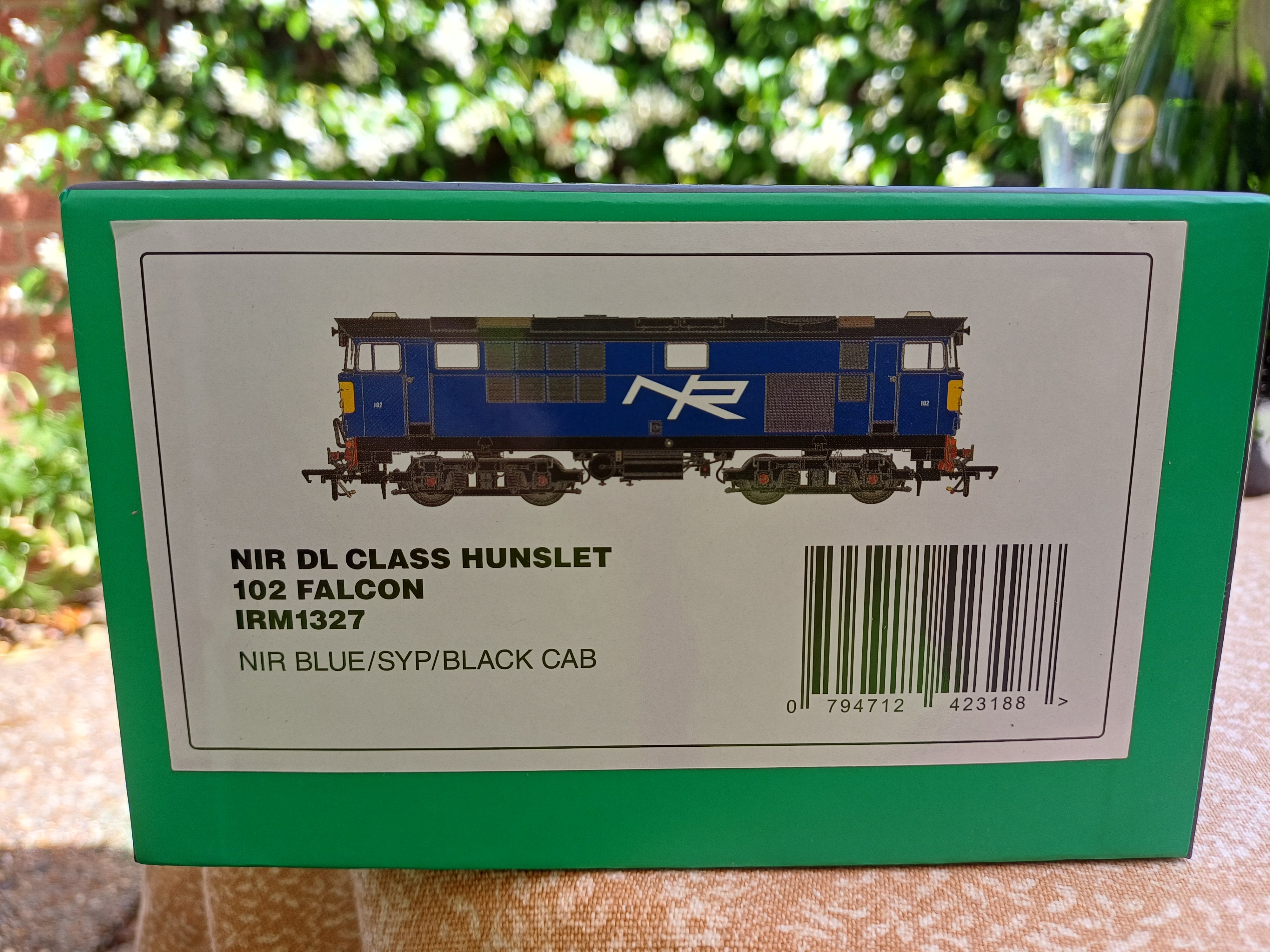
As someone who generally only goes for models of preserved stock, I went for 102 Falcon in fairly late NIR livery. It has been said in the past that the Hunslets owed their styling to BR's Class 52 Westerns, but I'm not so sure. The general look of the Hunslet has much in common with metre-gauge diesels that were supplied to South East Asia, particularly Thailand and Malaysia, and there's a bit that seems to resemble the 5'6" engines that went to India and Sri Lanka. For something relatively compact, the model is quite heavy. There's a mass of fine detail, much of it underneath, and a small bag containing even more detail to be fixed to the model. Both bogies have chains, actual miniature chains, attached to brake levers on the bogie and on the underframe. These are likely to pose a problem if you’re opening up the bogies for general maintenance or regauging, as it means that you only get a certain degree of clearance to get into the geartrain or to remove the wheelsets.
-
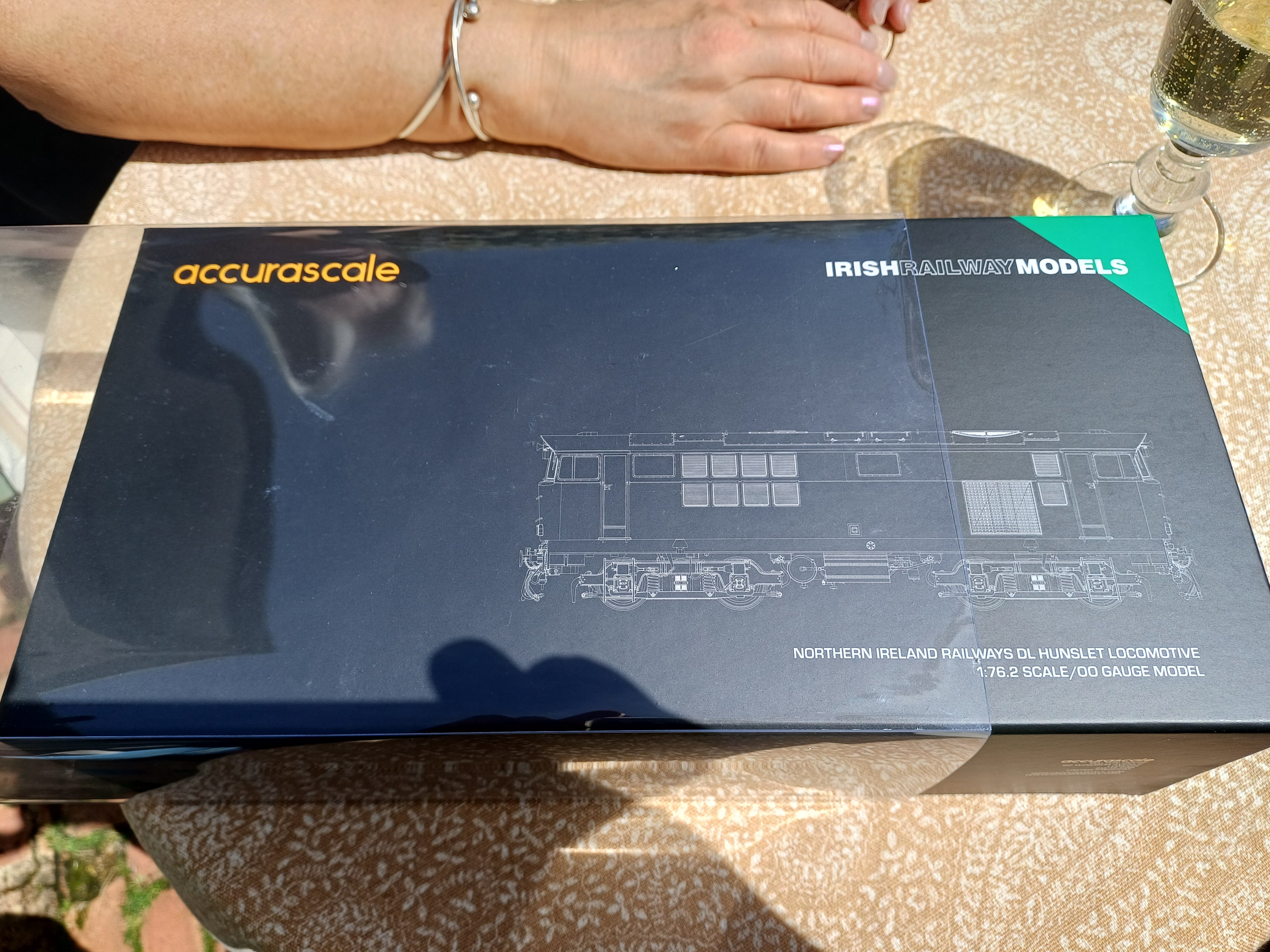
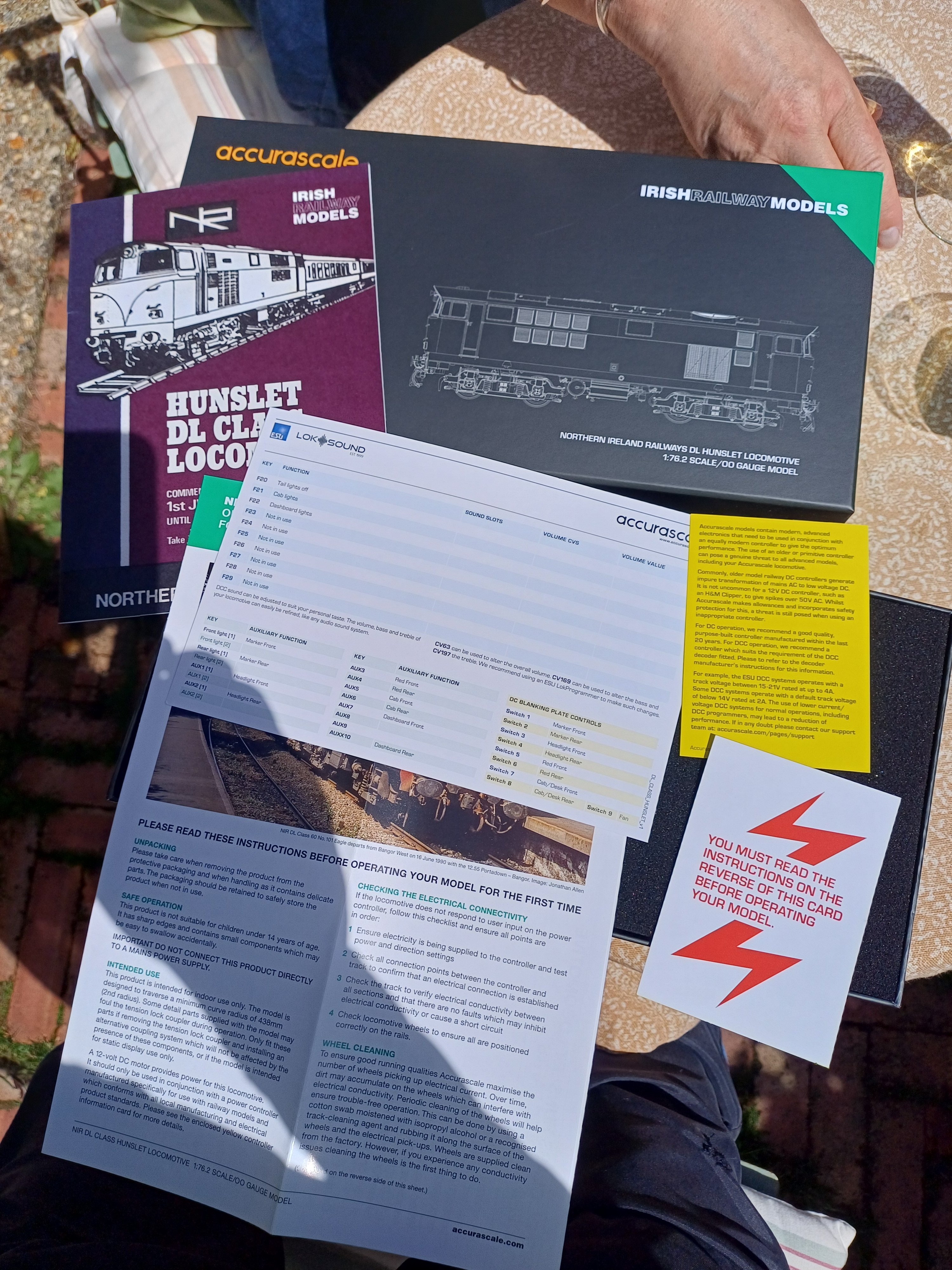
Well, here we are now.... The box is massive. Possibly bigger than it needs to be... There's a bunch of paperwork that you get for free. And a spares diagram that shows around 200 parts went into the thing.
-
I wonder if the H/4 was derived from the HG? There's a very Robinson Great Central 8K look about it.
-
Skip lorry. Driver didn't hang around either, but was arrested later.
-
Good luck with that, so
-
Anyhow I don't see your EM check clearances as necessarily a problem. My back-to-backs and flange profile should allow my stock to negotiate your points without falling off, but your EM profile wheels won't be getting through my P4 check clearances....
-
"Voiding the Warranty" - Mol's experiments in 21mm gauge
Horsetan replied to Mol_PMB's topic in Irish Models
The question you have to ask yourself is: "Do I feel lucky?".... -
There's Irish solutions for Irish problems...