.png.c363cdf5c3fb7955cd92a55eb6dbbae0.png)


Mayner
-
Posts
5,206 -
Joined
-
Last visited
-
Days Won
130
Content Type
Profiles
Forums
Events
Gallery
Blogs
Everything posted by Mayner
-
 An excellent example of the use of N for modelling a railway in the landscape https://www.facebook.com/share/v/18CqMpGYwC/
- 1 reply
-
- 1
-

-
"Popeye" on this Board assembled a Worsley Works GSWR 6W Brake 3rd on Page 7 of his Workbench. I was tempted to try a Worsley Works GSWR 6W Comp with Luggage Compartment a type not produced by SSM, but I already have 4 SSM GSWR 6wheelers awaiting assembly for 2-3 years.
-
Narrow Gauge in the Rockies not quite
Mayner replied to Mayner's topic in US / Canadian Railway Modelling
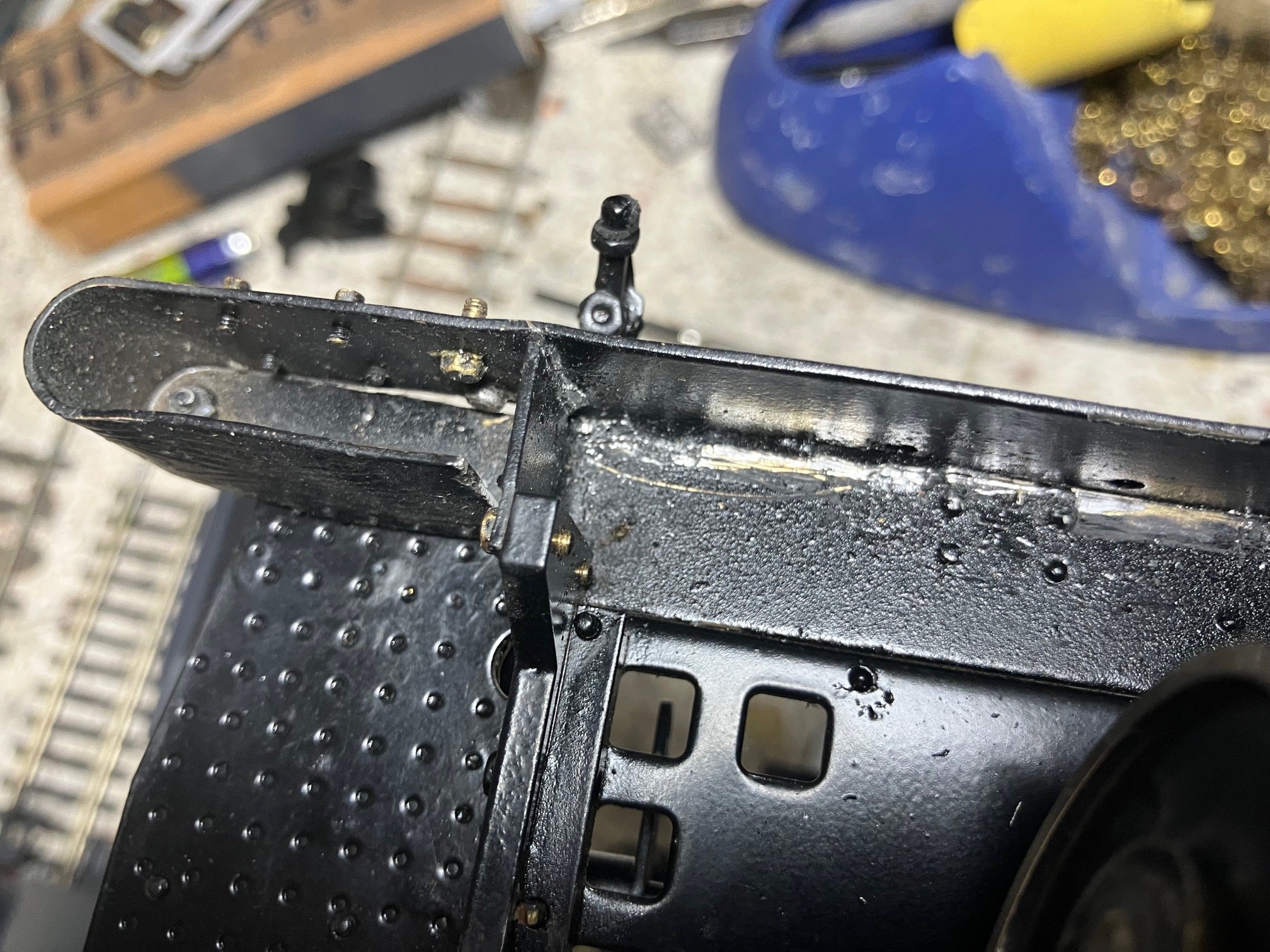
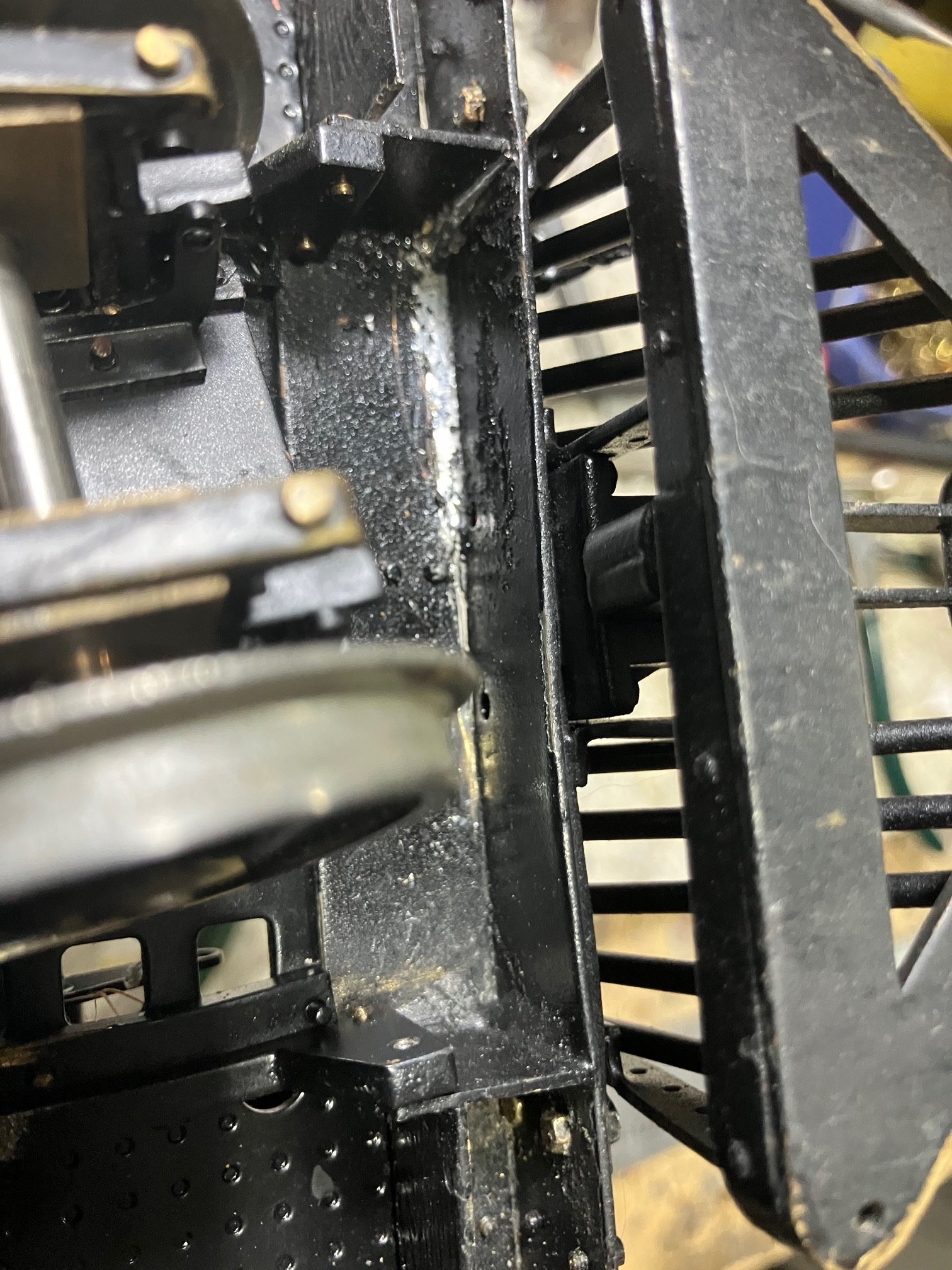
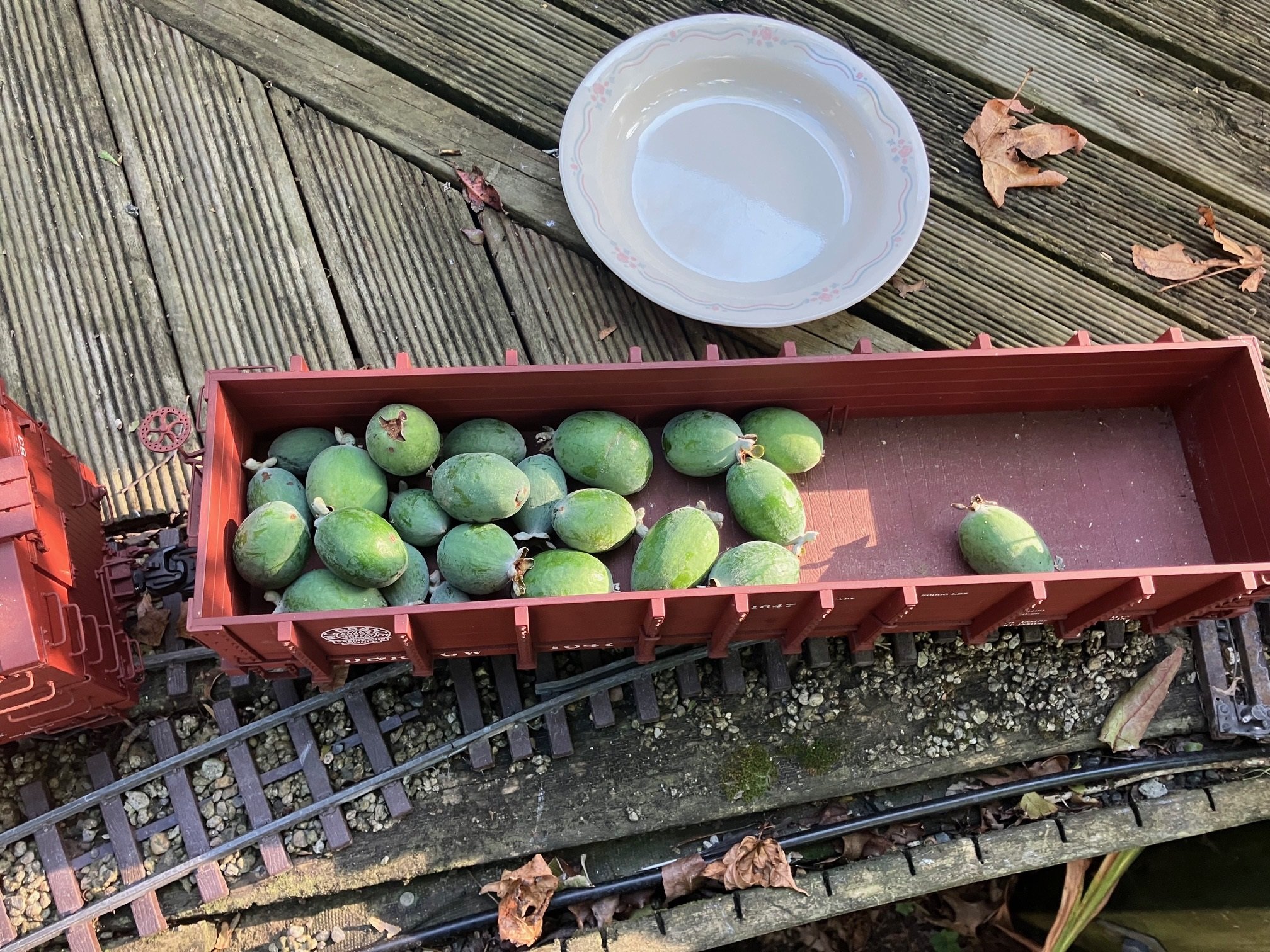
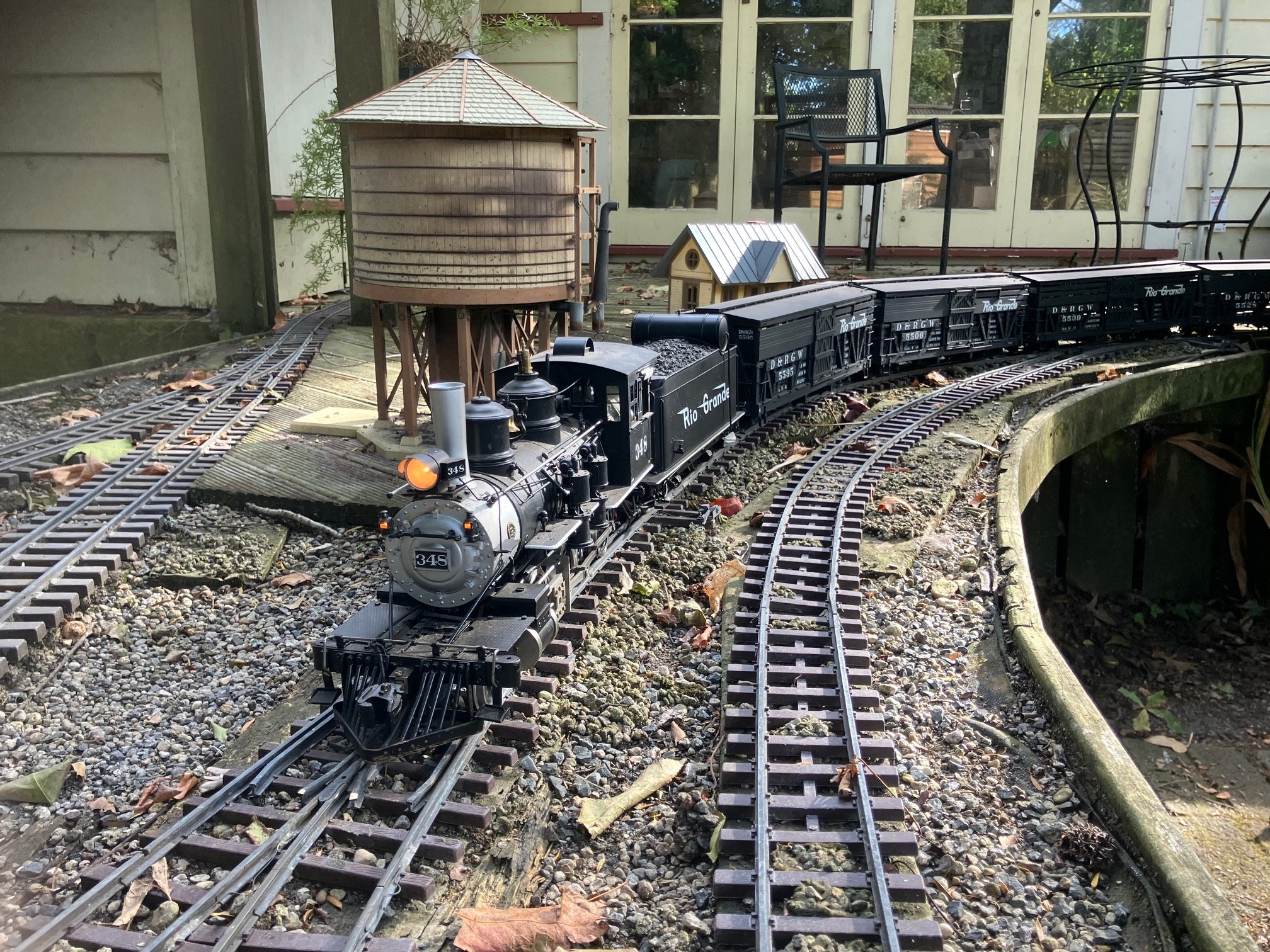
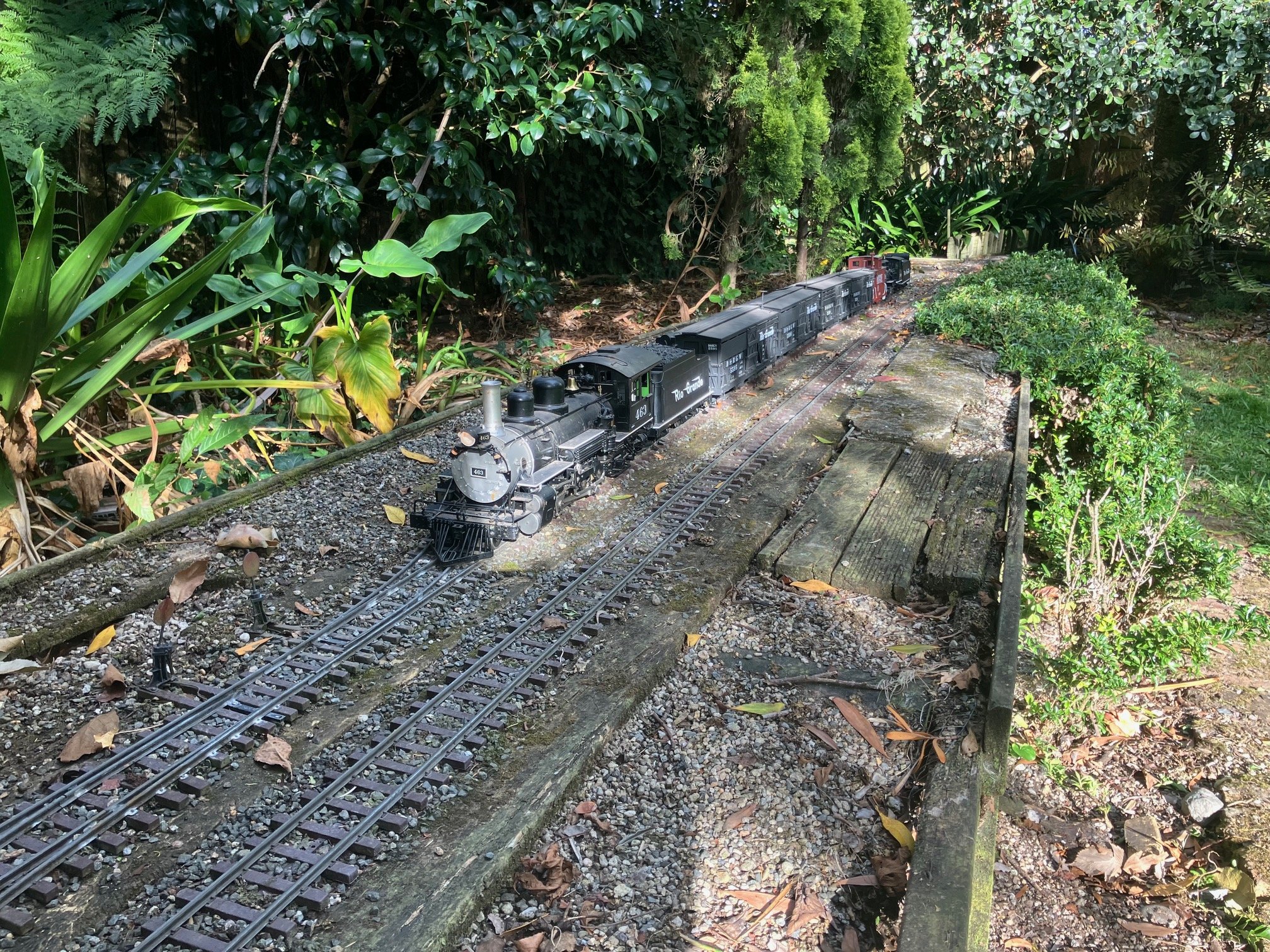
Maintaining a Large Scale garden railway and its stock is a constant battle, now that K27 #464 is behaving itself this week was #463turn to give trouble. Like 5T on the Cavan & Leitrim during the 1950s #463s pilot/cow catcher started hitting/fouling the wing rails on some main line points resulting in damage to the locos pilot beam! Although the bolts that secure cow catcher to the loco had worked loose in the past, this time the bolt were secure, some of the soldered joints in the pilot beam had failed possibly as a result of the cowcatcher hitting the wingrails while running through some points in a trailing direction. The pilot/cowcatcher is secured to the pilot beam with 4 bolts, the beam had distorted and soldered joint had failed on one side. Remade failed joints using 145º solder with phosphoric flux using a Hakko W60-90watt soldering station. Clearance between pilot and railhead improved, but need to physically check for sudden changes in vertical aligmnent through pointwork, my largescale locos and stock are a bit careworn with natural weathering. Autumn officially begins on 1 March in this part of the World and leaf fall and first fruits on schedule. Picked up our first Feijoas (similar to guava) windfalls from a tree by the railway and just about ready for eating. Beginning of the Fall Stock Rush one of the busiest times on the Colorado narrow gauge, so #348 (actually a C16 pretending to be a C19) ran the first special of the season with 4 cars and caboose. While #348 usually can handle 4 cars and caboose on the 4% grade to the storage tracks in the garage, today she could just not handle the load, so we next tried to "double the hill" with 2 cars and caboose and got no further, so had to send for help with 463 which luckily had just been charged. The Stock Special eventually departed behind #463 (after turning on the wye) with #348 helping though both locos strugged a bit with the train. Although weather was recently mild and dry, the 4% which is in permanent shade although rails are brass and loco drivers stainless steel similar effect to rust on the prototype
-
A high quality 3D printed rtr tin van is likely to be significantly more expensive than an equivalent Chinese manufactured model, on account of the higher unit cost (compared to plastic injection molding) of 3D printing. Two-three years ago I considered producing a batch (500+) 3D printed CIE 20T Brake Vans in the UK in conjunction with Rails who had earlier produced a 3D printed SECR Van in conjunction with Dapol. Unfortunately a single Brake Van would have had to retail at a similar price point to a small loco (approx £180) due to the high cost of 3D printed parts and high rejection rate experienced during assembly/finishing. In the end I sold 13 Brake Vans from our final Nov 2024 production batch of vans at a price point of £78 incl shipping a far cry from 500 @ £180 excl UK shipping! Over 3 years sold approx 100 vans with 5 distinct variations. I guess the question at this stage is whether a manufacturer would consider its would be worth while to commit money and time to manufacture a rtr Tin Van the same or similar standard to Accurascale/IRM coaching stock.
- 41 replies
-
- 1
-

-
- heating van
- luggage van
- (and 1 more)
-
The late Alec Phillips a talented modelmaker built a scratch built B141 and a pair of B121 for an MRSI Irish outline O gaugle layout during the late 70s/early 80s. The locos were scratchbuilt in brass or nickle silver with the possible exception of Lima Class 33 power bogies. Alec worked for Aer Lingus where he instructed shetmetal work apprentices who may have been involved in building the locos as a project. The signal cabin in the background is a scratchbuilt model of Carlow cabin built for the Irish outline layout together with a scratchbuilt station on Cahir, good to see the cabin survives after more than 40 years. The original layout was basically an oval of double track with a small station with scratchbuilt buildings on one side and fiddle yard on the opposite side. Locos and stock were initially Lima O Gauge "Irish' models with a pair of 4Fs black white snail numbered as "Cattle Engines" and MK1 coaches in CIE green. Goingback to the original topic: I think a 141 would be a better option than a C or 121 for a 1st quality RTR O gauge loco, a true maid of all work from the 1960-early 2000 at home over a long period on duties ranging from shunting to goods/freight to express passenger work often working singly. While no suitable rtr wagon or coaching stock is currently available, the release of a high quality O gauge Irish outline diesel is likely to have a similar effect to MM release of the B141 in 2007 initially with cottage industry suppliers such as IFM and Silver Fox later succeeded/displaced by IRM mass produced Far Eastern models. C-K Prints are already producing O gauge wagons https://ckprints.ie/page/o-guage
-
Funnily enough I assembled 4mm EM gauge West Country "Bodmin" from a DJH kit about 25 years ago when I was going through a phase of assembling large British outline locos. I became interested in EM while a member of the Milton Keynes Model Railway Society while living in the UK during the early 90s and brought the loco over from Ireland while on holidays for a test run on the clubs Milton Quays layout where some friends joked that it was a pre-production sample of the new Hornby West Country. I went for a large Mashima motor (with flywheel) hidden in the boiler driving the rear axle through a 50:1 Branchlines Multi box smooth and powerfull in operation but top speed too slow for an express passenger loco, I have a set of replacement gears with a 35:1 gears stashed away somewhere to increase her top speed if I ever come close to clearing my loco building backlog. I byepassed the pick up quandry by using live axle pick up on loco and tender on the American system with Markits wheels, though pick up on my 4mm Irish narrow gauge locos is arranged using top wiper pick up using short pieces of copper clad and 0.45 pb largely hidden behind the valence, but a pain to fit to a 4mm narrow gauge loco.
-
Depends on where you live distance between top of North Island and bottom of South Island is lightly longer than between Lands End and John O'Groats. We live in the Waikato in the Upper North Island both winter and summer slightly warmer than Ireland humid with high rainfall. Typical winter low 5-6C and occasional frost, gets up to low 30s high summer (late Jan-Feb), night time temperatures generally don't drop greatly during hot humid tropical weather systems typical of mid-late summer not unlike an Irish August. Interestingly Santa doesn't seem to have problems getting down the flue of the wood burning stove in our lounge, when our kid was little, Santa's glass of whisky was always empty and the carrot for the reindeer always eaten when they checked out the Lounge on Christmas morning.
-
how much would it take to fix up the tralee to blenervile
Mayner replied to irishrailways52's topic in General Chat
Nothing suspicious about the Council engaging a firm of architects to carry out an analysis of the state of the Tralee and Blennerville, carrying out assessments of this nature is part and parcel of an architects role as lead designer for construction projects. The railway appears to be on Council owned land and any required memedial works with structural decay, infrastructure deterioration and costal erosion will involve spending public (Ratepayers) money. The underlying problem with the Tralee and Blennerville is that the railway was never financially sustainable and became a burden on both Tralee and Kerry County Councils. The origional restoration scheme was funded by tax incentives that were popular during the 90s for funding tourist infrastructure, but the railway itself was unlikely to have generated sufficient fare income necessary to maintain or operate the railway. The railway was funded under a business expansion scheme where 'investors" could use their investment in the railway to claim tax relief on income from other sources, the original investors no longer had an interest in the railway once they had exhausted their tax write offs possibly over a 3-5 year period. I once worked for a company that built large budget hotels in Cork, Galway and Dublin for a group of investors to obtain tax relief during the mid-90s. The company was approached by the promoter (an architectural firm) in the autumn of 96 to build the Dublin hotel within an especially short timeframe in order for the investors to claim relief during the 96-7 tax year. We completed the hotel on time so it could theoretically be occupied, but it was several weeks before the kitching and dining room was completed and the first guests (overseas tours) arrived. As far as I recall the origonal investors sold the hotel immediately/soon after completion and moved on to thier next target. Personally I think the best option would be to have 5T stuffed and mounted possibly with one of the remaining T&D coaches at Tralee in an annex/extension to the Blennerville Museum, unfortunately because of her size she would be too uneconomic to operate on a short section of restorded railway with light passenger traffic like the T&B, Dromod. Possibly light railcar/tramcar similar in principal to the Parry People Mover https://en.wikipedia.org/wiki/Parry_People_Movers or a battery electric may be more effective and less costly to operate than diesel or steam as a short shuttle between two tourist attractions. Drewry railcars appear to have been successfully used on shuttle services on the Kilkee and Kilrush sections of the West Clare during GSR days in a way setting a precedent. -
Back in the 70s and 80s when I was building houses in Ireland oil fired central heating was the main source of heating, with an expensive open fireplace in the lounge mainly for show. Apartment blocks tended to have electric heating. In this chimneys are rare in modern housing in this part of the World with an increasing shift away from woodburning fires to heat pumps, we tend to fluctuate between cold and damp and hot and clammy weather. We live in a 100 year old house in a conservation area nicknamed the Rocky Horror House once Richard O'Briens first New Zealand home. Despit our homes age our house no longer have chimneys, but metal flues for a wood burner in our Lounge and a gas fire in the fireplace in what would have been the parlour, we use electric heaters in bed and other rooms during winter. Other half is not gone on heat pumps, most effective approach to reducing energy costs would be to reduce heath loss by installing wall insulation, fitting replacement windows and going solar, but returns likely to be marginal considering the outlay.
-
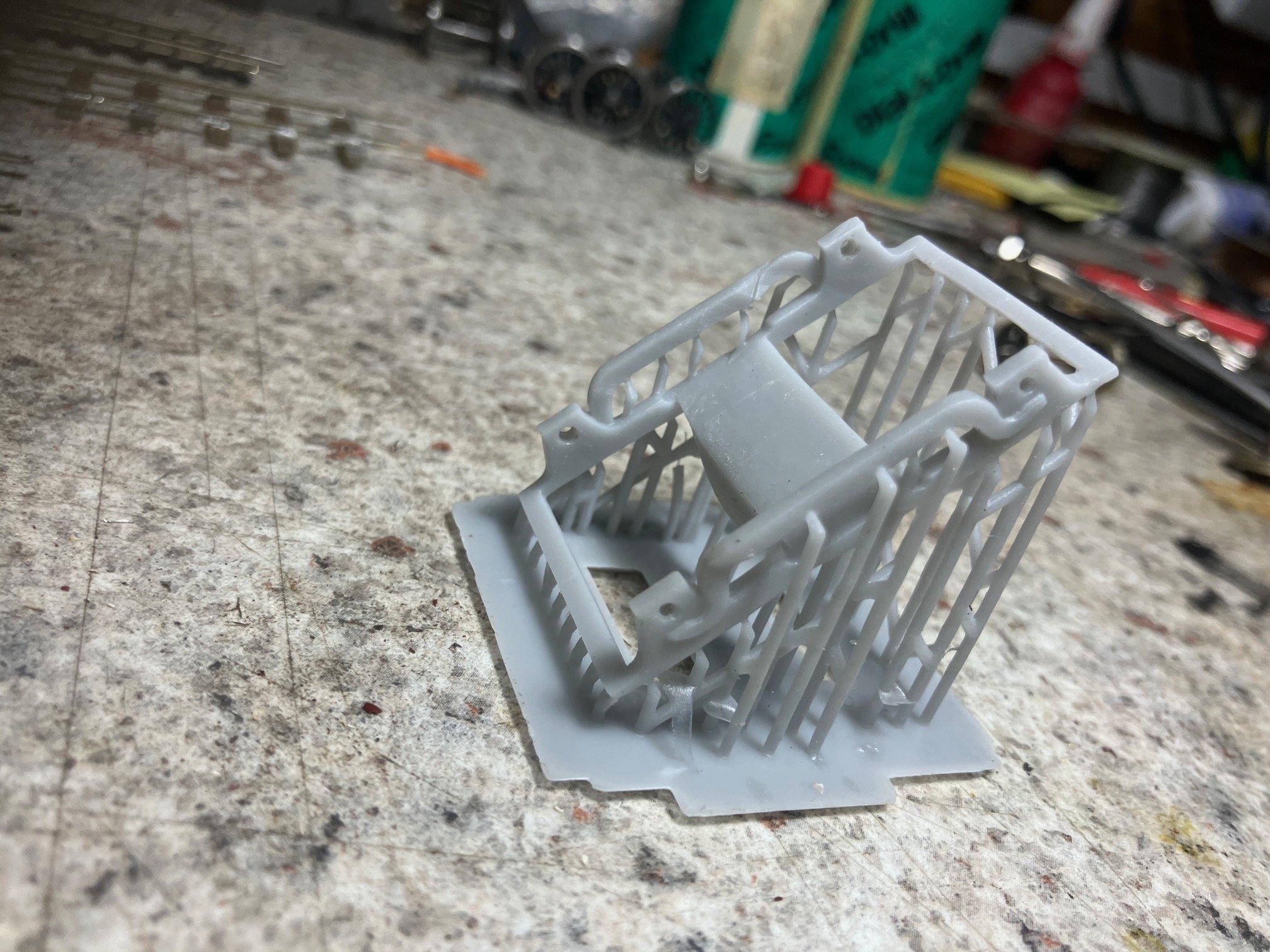
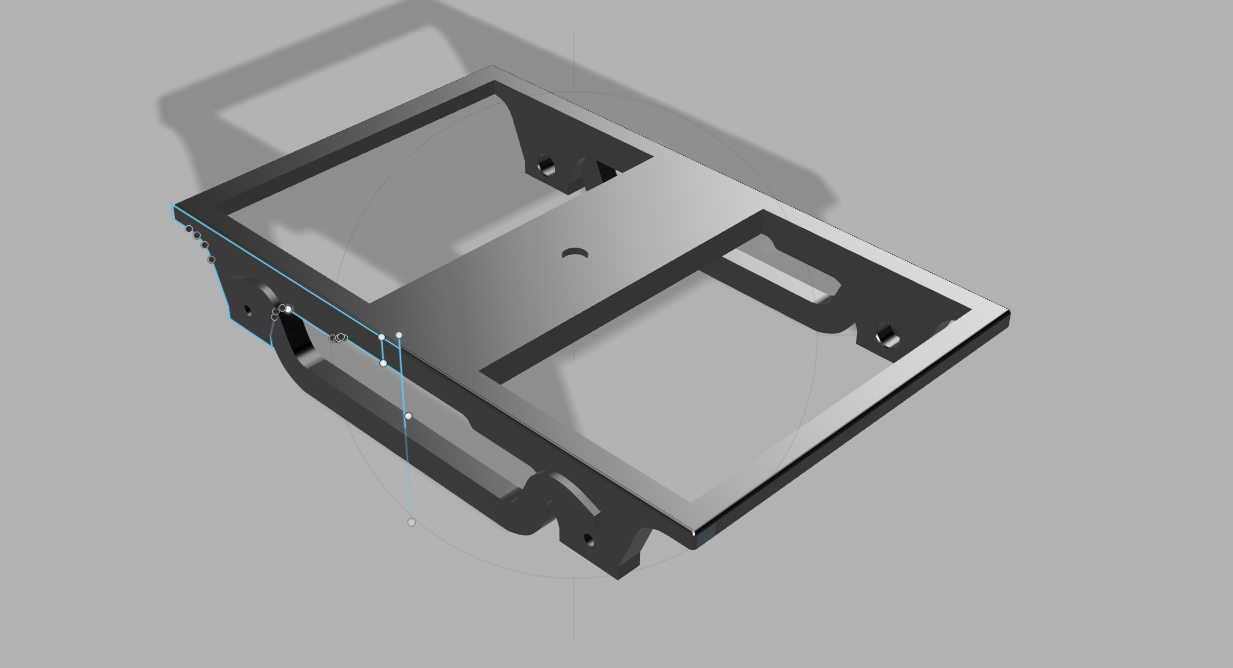
I ran a 3D test print of the frame of a CIE 8' Commonwealth bogie to check clearances for 21mm gauge and set up for printing. Cured print on temporary supports, the model is orientated at 45º to the build plate in accordance with the resin manufacturers recommendations. Test model was printed with a Monocure resin (Australian supplier) who produce a high strength tensile resin which I found suitable for printing detail parts and rolling stock. One of the main objectives of the test was to ensure that supports were adequate to prevent sagging/distortion during printing. Test bogie with 21mm wheelsets. I need to fine tune the bearing holes and bogie detailing. The bogies are to upgrade my 3 Worsley Works CIE coaches a Park Royal and two Laminates assembled almost 20 years ago! Other almost break through was finding No 1s original coupling rods, crankpin bushes and nuts stored 'safely' 3-4 years ago when I dismantled the loco for painting, though I still haven't found the replacement rods, bushes and nuts I stored safely 3-4 weeks ago! I still have to find No 1 s number plates, though I have some un-numbered J15 plates and Slaters brass numerals somewhere The "replacement rods" are from a spare chassis fret which may be used to convert No98 to 21mm gauge
- 405 replies
-
- 15
-
-
-
FDM printed roofs for Worsley Works Laminate Coaches
Mayner replied to Mayner's topic in Irish Models
Your Laminate is looking very nice! Mine got bashed around before trying a modified Comet roof, looks like it might be worth buying a couple lof replacements. Co-incidently began work on designing a 3D printed bogie At the test print stage for a rolling chassis before adding final detail.
-
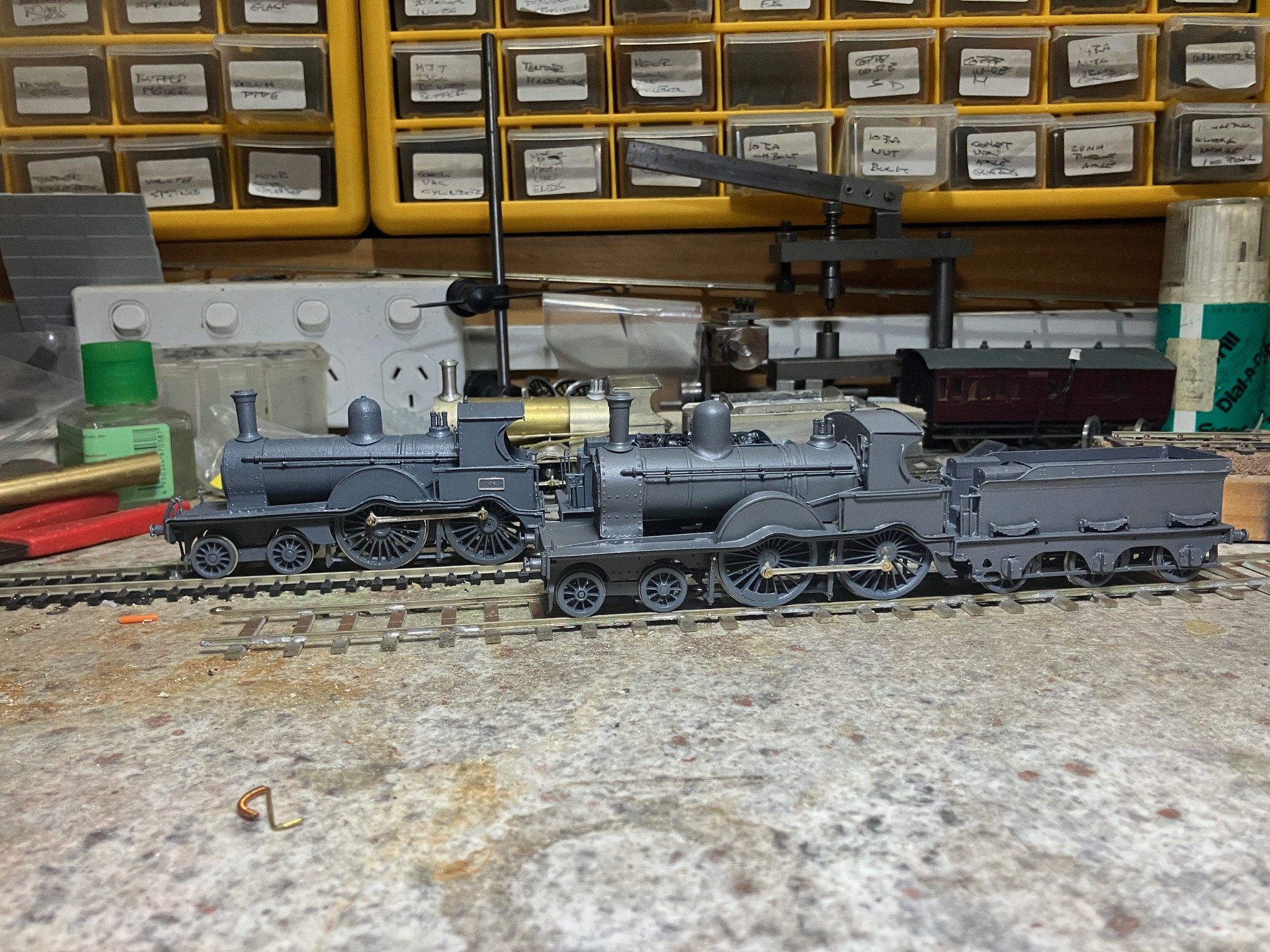
Re-assembling D17/52 Class No 1 this time as 229 is waiting for material to arrive from Wizard Models in the UK. I originally painted No1s sub assemblies 2-3 years ago, but did not stand up to well to handling when I re-assembled the loco before Christmas so touched up damaged areas and re-coat and finish with a matt aerosol lacquer. The grey was matched with a sample provided by JHB several years ago and I am down to the last can. Assembled chassis, I got to bed in the bearing for the leading bogie axle in the hornblock. Bogie is basically rigid, coupled axles compensated, tender on Sharman free bogie system leading and centre axle lightly sprung trailing axle rigid. No 1 was the test build for my 52 Class/D17 kit released about 5 years ago but never got round to motorising the loco for myself, I still have 2-3 MGW 2-4-0s to motorise although I did the test build over 10 years ago. Next step is to fabricate an insulated loco-tender drawbar, from a section of copper clad sleeper with the copper removed!. Electrically connect the motor to the loco and tender frames and add weight to the loco and tender (front of boiler barrell and front of tender and locate No1s coupling rods which I stored in a safe place before I dismantled the loco for painting Loco and tender body fitted. No 1 runs with an SSM GSW 1840 type A tender originally introduced by TMD (Terry McDermott) with his J15 kit over 40 years ago! One I finished earlier No 1 posed with No 98 my OO gauge 52 Class I assembled 5 years ago. Fitted 3D printed tender axleboxes to 229 since last post, though centre axlebox.springs needs adjustment. I placed an order with Wizard for parts to complete 229 and some Midland 2-4-0s, finishing the 2-4-0s should help use some Sharman driving wheels I had in stock for almost 40 years. There are modelling backlogs and my modelling backlogs.
- 81 replies
-
- 13
-
-
-
Original brickwork "Flemish Bond" actually , I am a bit pedantic when it comes to brickwork and building details. Curiously 30 years ago one evening I carried out a photo survey of Moate while working in Athlone, at the time Mullingar-Athlone was theoretically usable, loop and signalling a Moate intact but track would have required re-laying to carry regular traffic.
-
Nothing new I am afraid. Back in the 60s when my father worked as a maintenance fitter with Fry Cadburys, a gang of thieves arrived on a Saturday morning and began stripping lead off the East Wall Road factory roof while production was continuing inside. The gang were pretty brazen parking in the carpark, dressing in overalls before putting up ladders to 'work" on the roof, even having breakfast in the staff canteen. Cadbury staff assumed that the thieves were from Colin Bros the contractors that regularly carried out work on the building. All was going well from the thieves perspective until the Factory Manager arrived mid-morning and advised that Colin Bros were not scheduled to work that morning. Thieves were thowing down/loading lead from the roof onto a truck parked out of sight at the back of the factory. Although we had 24hr security we had a major theft of copper cable from a Dublin construction site during a Christmas shut down during the late 90s that delayed completion by several weeks, would have been a major operation requiring a couple of trucks and heavy lifting gear. Security companies insurers eventually coughed up.
-
Pity I still have a stash of SSM 21mm gauge W Irons and brake gear parts possibly bought when Paul Greene still operated the business. At this stage I don't know if I'll ever get to use the W Irons.
-
2-3 years ago one of my customers converted Mainline & Bachmann opens to Irish wagons using my open wagon chassis supplied as a separate part. I may be able to sort something out later this year. Almost finished the loco release module and experimenting with running longer trains 5 wagons+Brake. The layout had ceased to be a "Timesaver" when I added a siding (to serve a drystore) to the basic layout in November making the layout more interesting to operate (from my perspective) and increasing the layouts capacity for wagons, last year I had to remove 3-4 wagons to provide some elbow room. B125 is waiting to depart having picked up 2 Vans from the dry store (animal feed). 1 Tar Tanker from off-scene tar depot in the staging!, 1 Van possibly flour from the Mill. 1 Empty Ranks Grain. Earlier B125 had arrived with 1 van (for mill) 1 Tar (empty), 1 Open with BR container & 2 Opens empty just about visible behind Atkinson truck (teenage favourite) Train after arrival in staging, B121 just about fits. "Tar wagons" started life with IRM PW Wagon Set and re-purposed as tank wagons, I initially planned an etched Triangulated chassis but ended up using a standard GS/CIE chassis based on my photo of Tar Wagon of 23826 at Galway during late early 80s.
-
Nice to see some traditional scratchbuilding methods, relatively quick way to build an unusual model. GSR/CIE had the same issue with Woolwich Moguls fouling the Mayo Line loading gauge while being turned at Athlone Shed. Apparently the staff for the Athlone West-Knockcrockery section was required to unlock the table.
-
Studio Scale Models produced etched brass W irons suitable for 21mm gauge and a brake gear fret with long handbrake lever and single brake shoe typical of Irish unfitted wagons. May be worth contacting Des although not listed as separate parts the Convertible wagons which use these parts are still listed on the SSM website.
- 40 replies
-
- 1
-
-
- ready to run
- cie
- (and 4 more)
-
FDM printed roofs for Worsley Works Laminate Coaches
Mayner replied to Mayner's topic in Irish Models
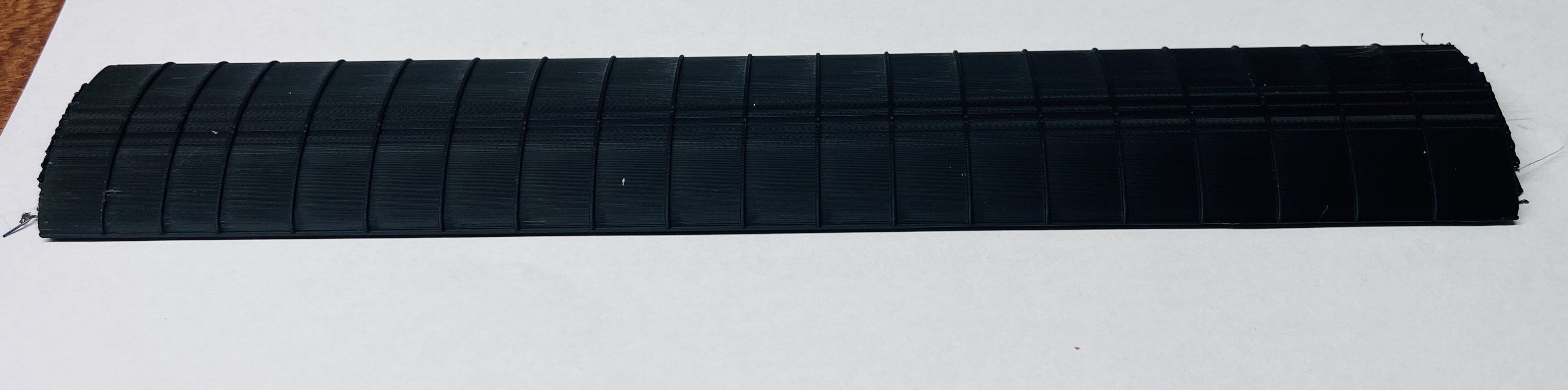
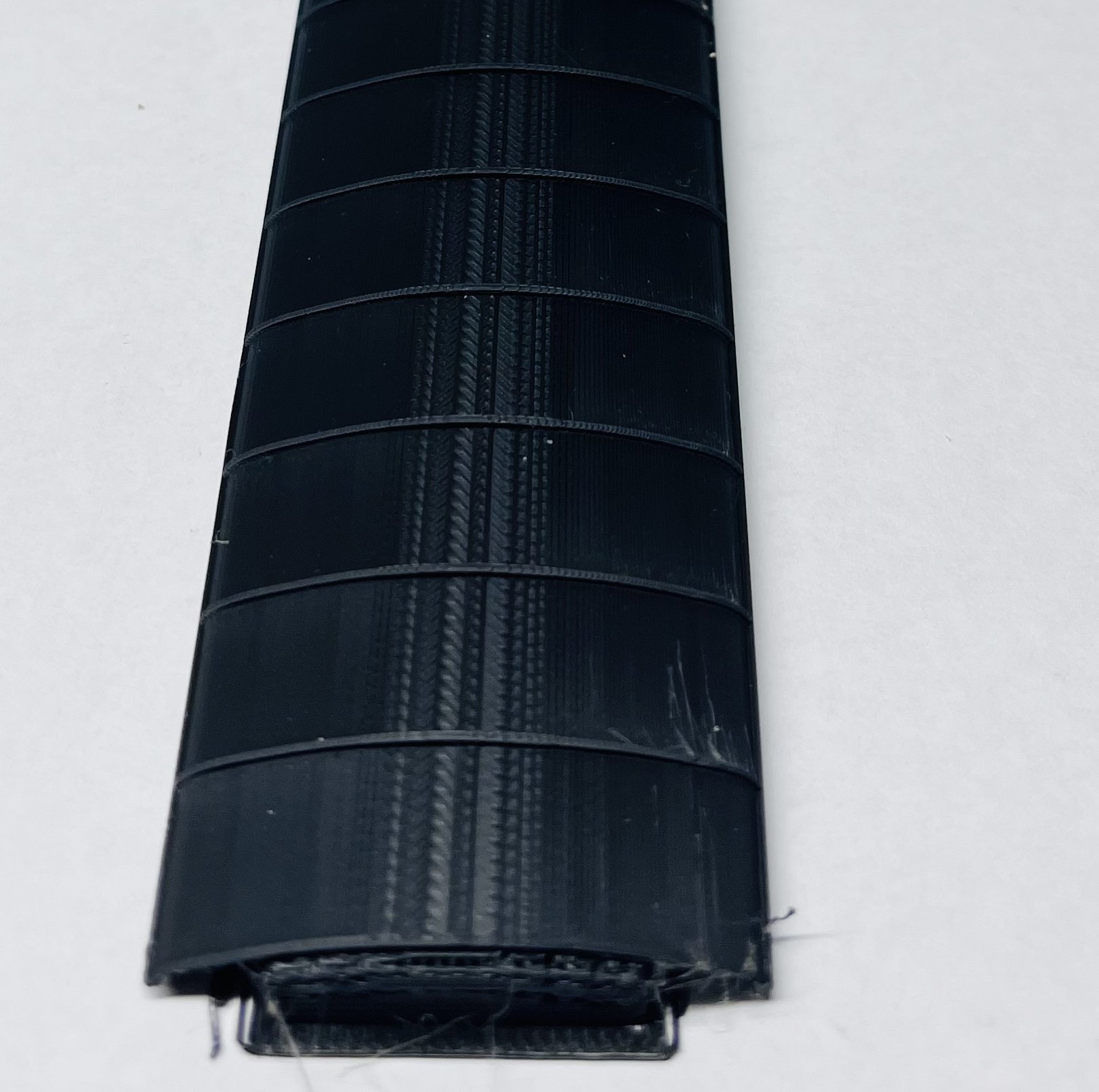
Probabably best tie up with Harry (GSR800) before contacting Paul. My 3D CAD models of the Laminate roof are based on info supplied by Harry, Paul is to supply a sample roof to Harry and I have offered to ammend the CAD if necessary. A lot simpler hopefully with better results than my cutting and widening of Comet roofs all those years ago! http://www.worsleyworks.co.uk/NG/NG_NIL_Art1.htm Photos of sample, temporary supports still in place.
-
I Several years ago I produced an etched brass 'fold up" rigid chassis for assembling Leslie's resin GN Cattle Wagons and Vans to 21mm gauge but only got round to assembling one of each type, but never got round to fitting brake gear! An etched brass chassis or W Irons may be an option for assembling Leslie's C-K Prints GN & SLNCR 3D printed wagons to 21mm gauge, there appears to be insufficient space to produce a workable 3D printed chassis without increasing the width of the wagon/underframe. If anyone is interested I can supply the fold up underframe frets direct from my supplier in the UK. Cattle wagons are supplied in frets of 16 wagons, GN/IRCH Vans in frets of 8 wagons, I would need to check pricing.
- 40 replies
-
- 8
-
-

-
- ready to run
- cie
- (and 4 more)
-
The Byrytes wagons were regularly used by PW Dept as spoil wagons on weekends while still in use for Byrytes Traffic for several years before traffic ceased in the late 80s. During this period Byrytes traffic appeared to be down to a 5 day operation, an empty fixed formation (20wagon) train of wagons would depart Foynes after unloading on a Friday and return to Limerick/Slivermines for loading Mon morning. Wagon bodies would be a simple choice for 3D printing or scratchbuilding in plasticard using a NWSL Duplicutter https://nwsl.com/products/the-duplicutter-ii sides and floor in 0.04"/1mm plasticard & Evergreen rectangular V V strip. A Duplicutter has been one of the essentilas of my modelling tool kit for many years.
-
FDM printed roofs for Worsley Works Laminate Coaches
Mayner replied to Mayner's topic in Irish Models
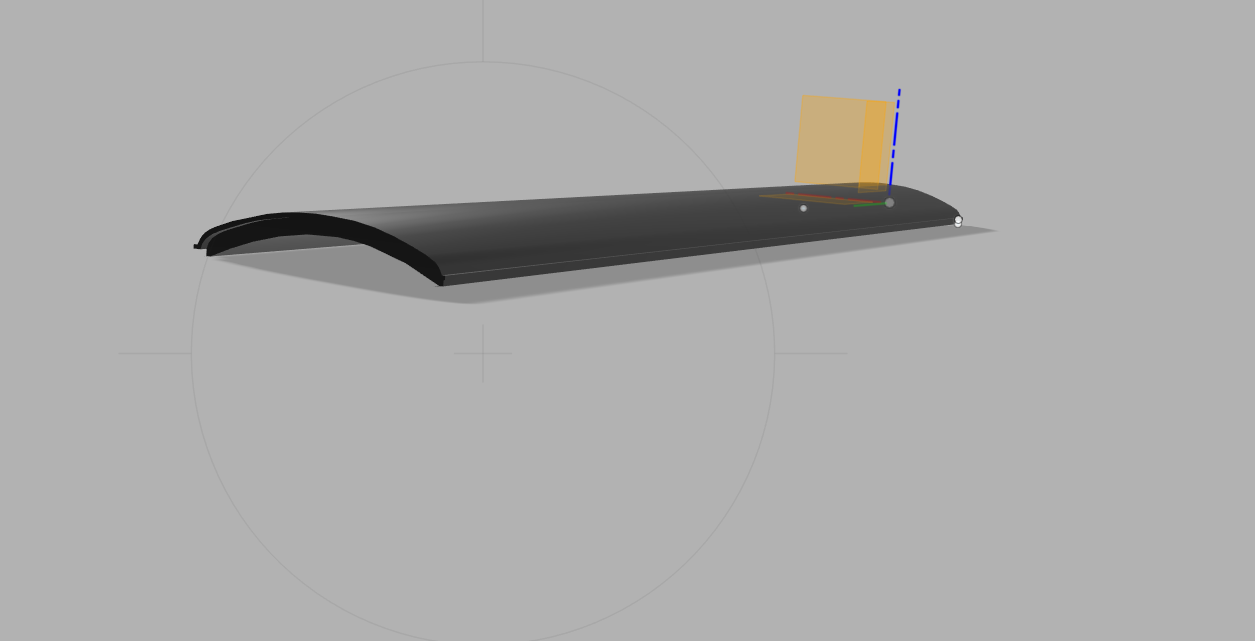
Worslet Works Park Royal roof: I would need a scan of the end of a Worsley Works Park Royal to ensure the profile is correct. JM Design coach side overlays: I have no plans to produce a 3D roof to suit the side overlays. The overlays were designed (shrunk)to fit Airfix/Dapol 60' Stanier coaches and marginally underscale for 4mm, in my opinion the overlays used in combination with a Stanier/LMS 60' body shell is a reasonable compromise particularly with a representation of CIE roof detail. I considered producing a 4mm scale length/height/width version, but there was insufficient interest to proceed. Worsley Works Laminate roof without ribs. Original design before adding the ribs! Plain Laminate roof. Please feel free to forward the stl. to Paul info@modelrailwaybuildings.ie or print the roof. Worsley Wks Laminate Roof plain.stl
-
FDM printed roofs for Worsley Works Laminate Coaches
Mayner replied to Mayner's topic in Irish Models
The printer Paul Morris of Model Railway Buildings https://modelrailwaybuildings.ie/ has advised that while he is kept busy with the buildings "but doesn't mind running projects off for the lads" If interested please contact Paul directly info@modelrailwaybuildings.ie or 353 87 3878561 I am prepared to produce 3D model (Stl. file) roof for other Worsley Works Irish coaches from scan of 1 side & ends (Jpg.) coaches & driving end railcar -
The wooden opens are my own 3D prints of the steel underframed version of the 'Standard Irish" open wagon. Studio Scale Models produced a nice cast whitemetalkit of the wooden underframed version not sure if its still available.
-
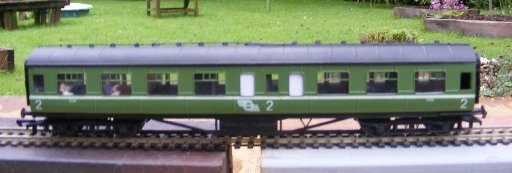
The repainted coaches look reasonably ok from a distance/as a complete train, ideal if you want to get something running in a reasonable time frame. Accurately modelling 1950s CIE stock involves either a considerable level of time and effort modifying or scratchbuilding stock, its really a question of how a person prefers to spend their spare/model railway time.