.png.c363cdf5c3fb7955cd92a55eb6dbbae0.png)

jhb171achill
-
Posts
16,658 -
Joined
-
Last visited
-
Days Won
413
Content Type
Profiles
Forums
Events
Gallery
Blogs
Everything posted by jhb171achill
-
I think I may already know the answer to this one, but just in case; I have a number of brass coach kits, unmade. Mostly SSM stuff. My eyesight is simply not up to putting these together, let alone detailed lining on them. I am not getting any younger. Like most of us here, I'm aware of a number of folks who will make these up for a suitable cost - but all that I have asked are either too busy to take on any more, or no longer taking on commissions. I had been in touch with someone in England too, who seems no longer available either. I am also aware that for those who can take on such commissions, the lead-in times run into years and years..... as these folks have other lives to lead too, no doubt! So, my question is - does anyone know a builder of these types of kits who might be in a position to complete about half a dozen carriages for me, in a realistic timescale?
-
Only seeing this now. The only diesels which regularly needed turntables were, of course, the 121s. A 45 foot table is more than adequate for these, plus the majority of Irish steam locos. Many rural stations had turntables of standard 40 foot or 45 foot diameter. In my current meandering researches on Loughrea and Kenmare, I note that tables of this sort of dimension were the norm in Loughrea, Attymon, Headford Junction, Kenmare - and, for that matter, many other places like them. If you plan to make one I will also be interested.
-
True!
- 16 replies
-
- 2
-

-
- tara mines
- navan
- (and 1 more)
-
Only €45,000. Buyer collects. €5,876.12 in brexit charges added.
-
Nope!
-
Dark green 1945-55, with some examples remaining longer. Light green 1955-62. Black’n’tan 1962 onwards. Most six-wheelers in traffic by 1960 were repainted light green. ALL passenger-carrying six wheelers were withdrawn by 1963, so none got B’n’T. However, a few six-wheeled full vans (3 or at most 4) survived into the late 60s, gaining BnT. This is why only the van is offered in this livery.
-
And there was me offering €25,000 for it because a man told me it was a genuine ancient Egyptian Ming dynasty Victorian Snail-Splicer, almost 4,000 years old.
-
It would have had a departmental number ending in “A”. I’ve a note of it somewhere, it’s in the form of something like 543A.
-
Clogherhead - A GNR(I) Seaside Terminus
jhb171achill replied to Patrick Davey's topic in Irish Model Layouts
Also a good base for low-lying scenery, if it's moulded into shape and covered in grass. -
SOLD - MGWR Goods Vehicle compendium by IRRS
jhb171achill replied to Nestor's topic in For Sale or Wanted
PM sent -
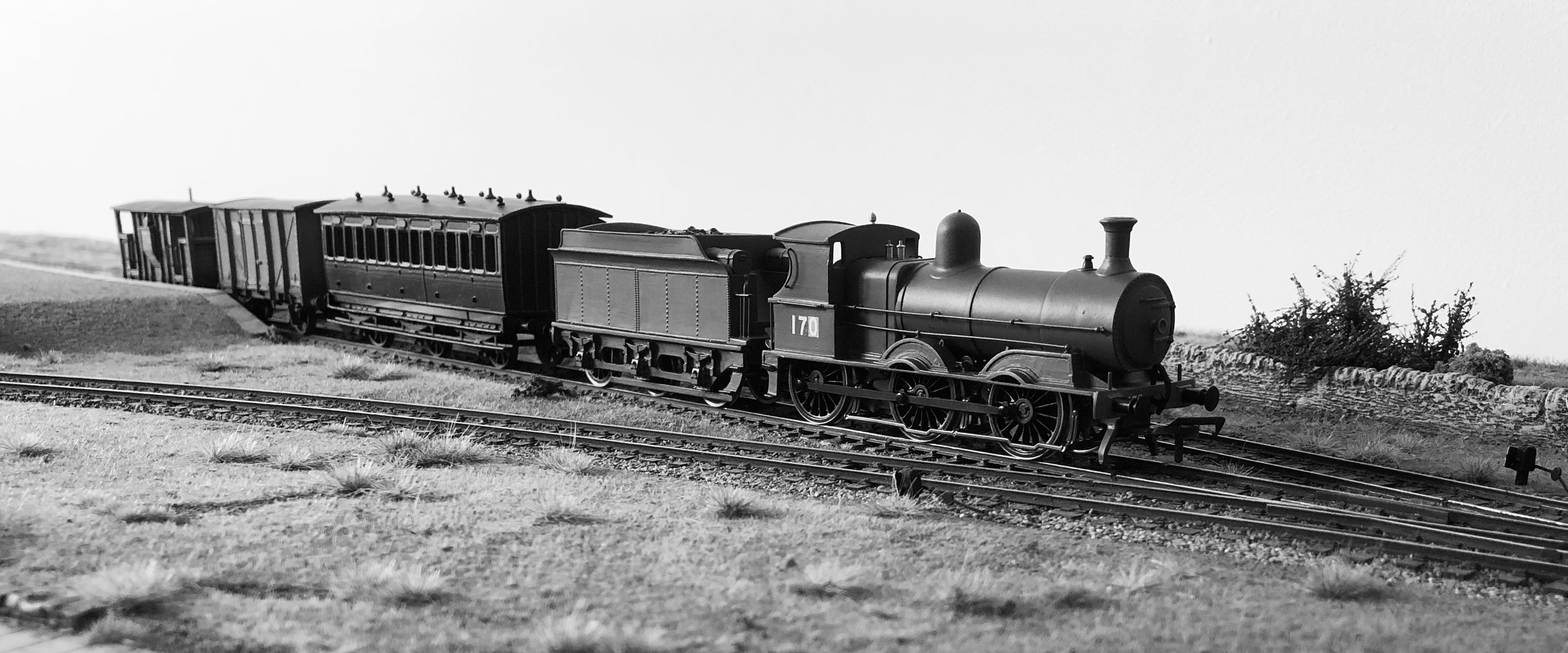
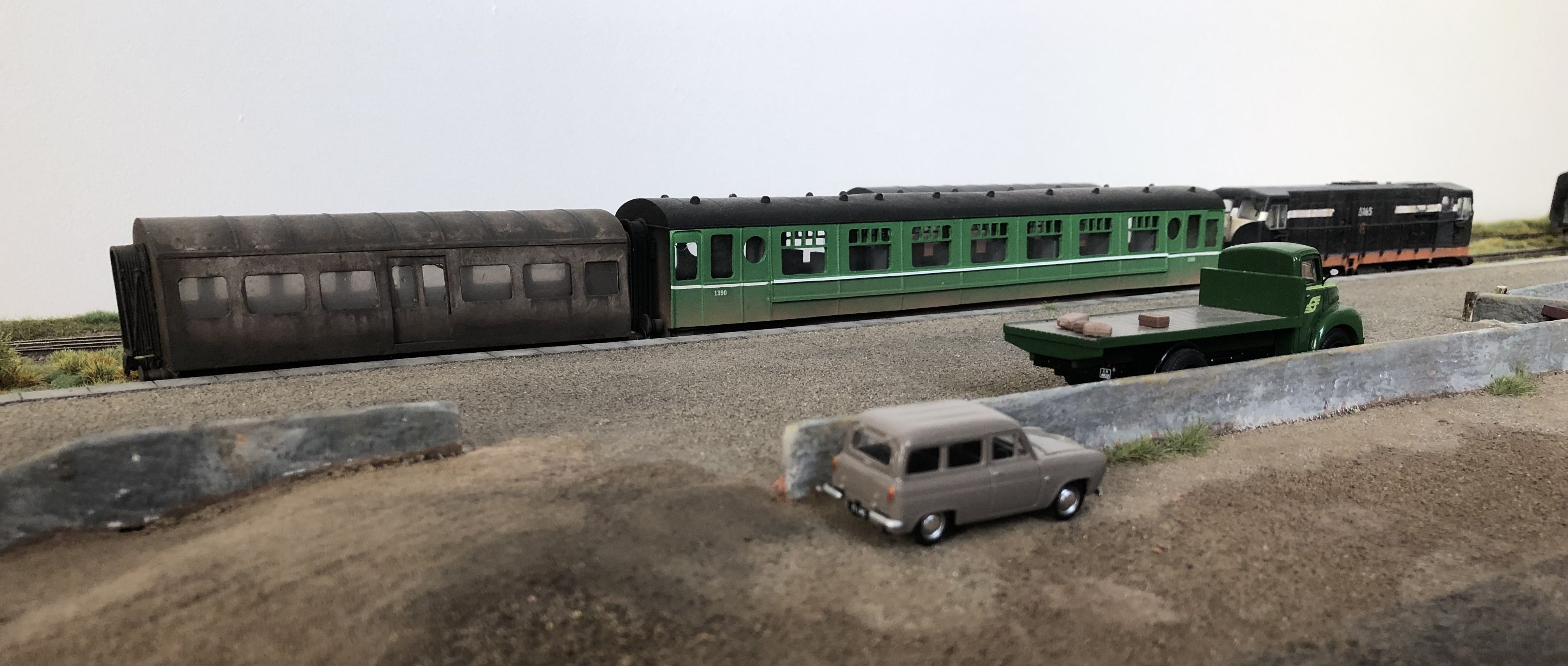
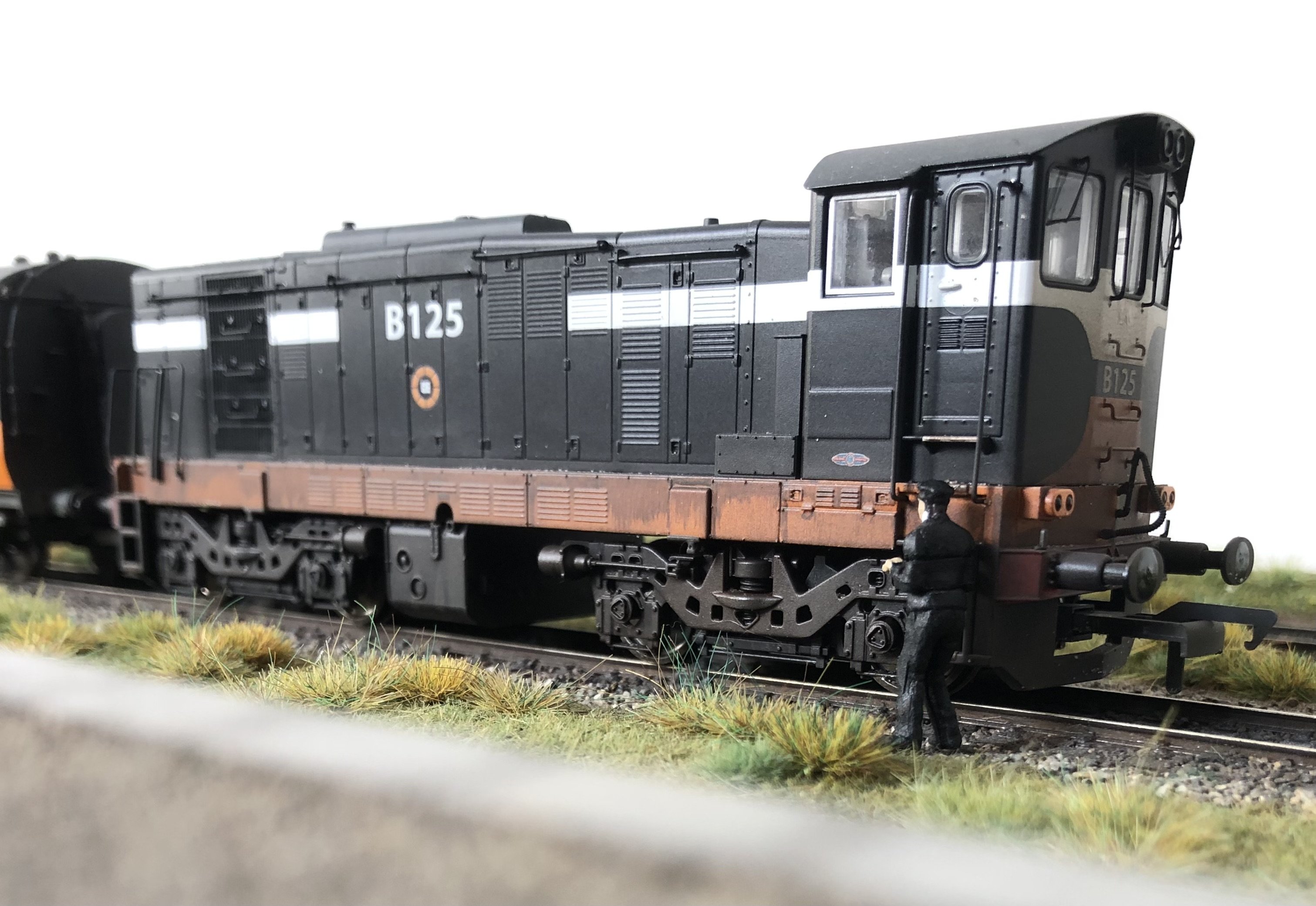
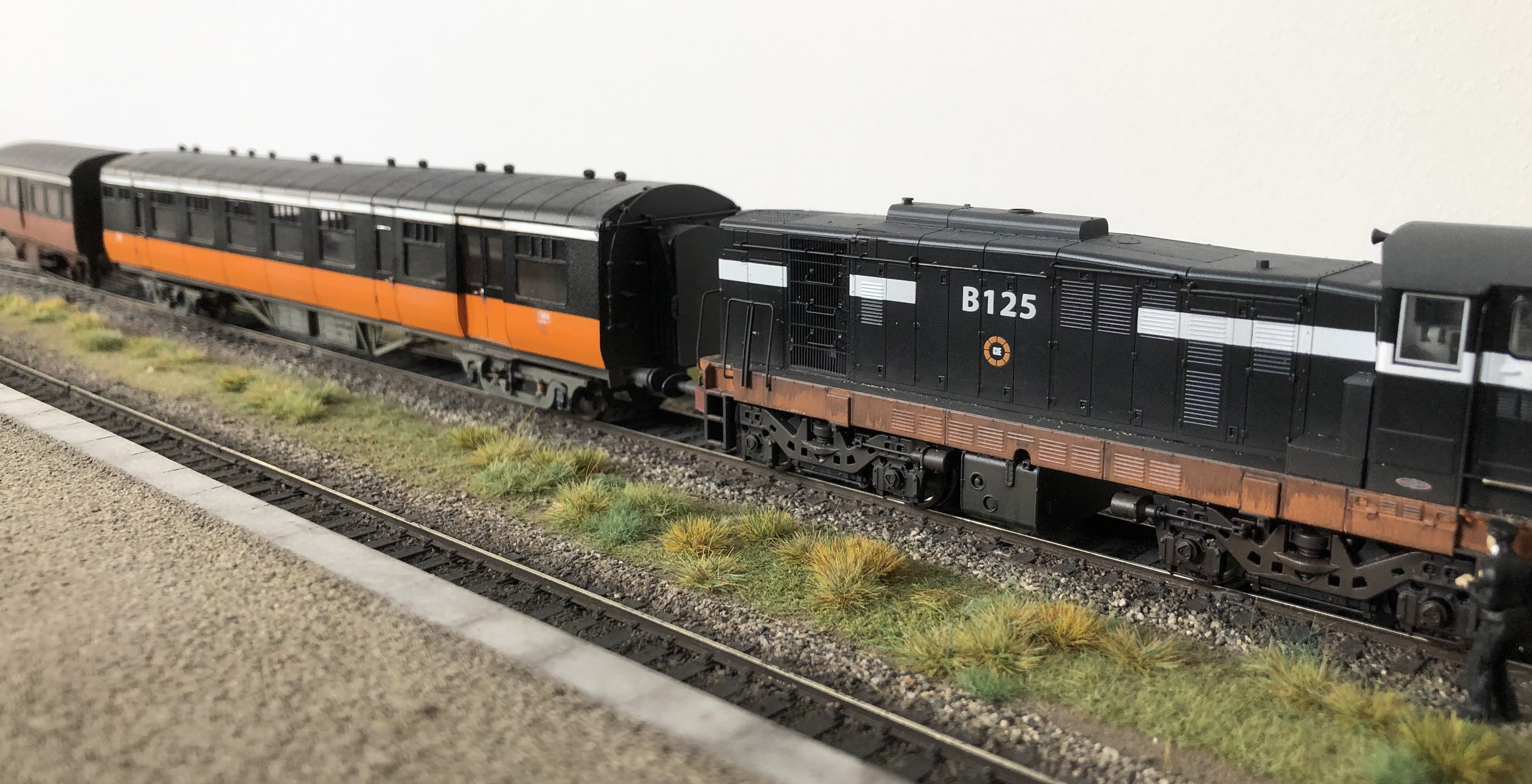
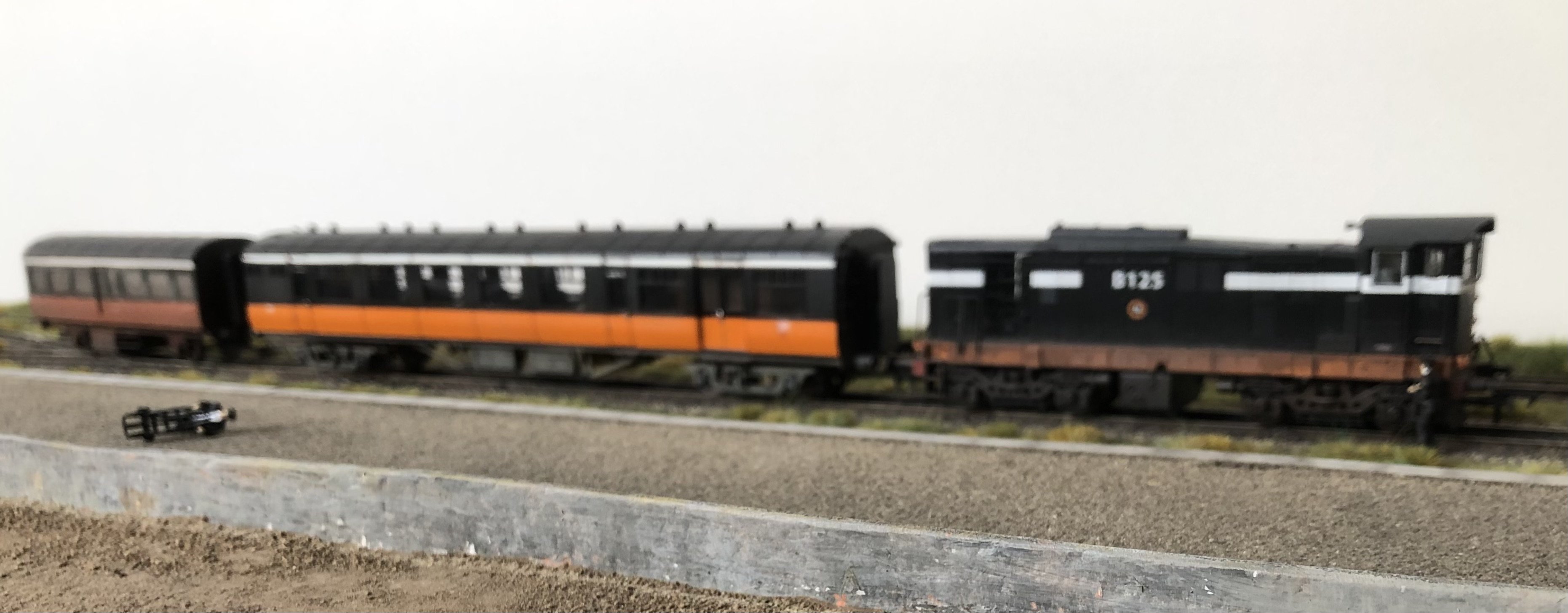
With the layout inoperable at the moment due to a large amount of stuff stored temporarily in the layout room, I have to content myself with a few posed shots. Over two ten-year gaps, we see the quieter midday train from Dugort Harbour to Castletown West. First, a clean 170 departs one summer day in 1954. Next, in summer 1964 we see the same service stabled a few hours before departure at the old cattle bank. The coach and van have yet to be repainted black’n’tan, but at least there’s a brand new 141 up front. By 1974, it’s a single 121, brake standard and van. Here, the driver prepares to shunt the set to the platform.

-
My understanding is that he has other commitments and will reply as he gets a chance. I last got stuff from him about 18 months ago and he replied thre and then when I emailed him.
-
Shows the all-over grey being relatively clean....!
-
Omagh Railway Station - A Journey through Time
jhb171achill replied to GNRi1959's topic in General Chat
Well done - richly deserved! I daresay they will do a 2nd edition, so worth contacting them in case you had any new info you'd want to add if they were to be doing a 2nd print run. -
All of those coaches were full compartment, i.e. no walk through at all anywhere - full width matchboarded partitions, like the vast majority of 6 wheelers elsewhere also.
-
Yes, as I explored one long-defunct one. The woodwork of the interior was painted a brownish colour up to roof height, with ceiling in off-white. If it's a third, upholstery - such as it was - seems to have been a dark browny-red colour. if second - I could be wrong on tghis but I think it was dark blue or somethiong of that sort. First was a dark flowery pattern, with greens and black predominant. Third class compartments had a mstchboarded interior, and probably seconds the same. First may have had better panelling, not sure. I doubt very much if the UTA ever re-upholstered any of them. The vast majority were scrapped some 18 months after gaining the privilege of UTA ownership. However, never say never; IF any were re-upholstered by the UTA, the cushions would have been dark green.
-
I hope so. In truth, every single thing on railway wheels which had succeeded them (and apologies for being an ancient bore), interests me somewhat (ok, a lot) less than a 1979 washing machine which doesn’t work….. So, while I prefer 141/121s, B101s, and (better still) steam; 071s appeared in my late teens, so I still see them as “new” engines…….
-
If powered by hydrogen, brocolli juice, fairy dust or eco-friendly, zero emissions, organic and vegan pigeon eyelashes, or powered by zen-approved spirituality or PC-friendly, and fully inclusive interpretative dance; these locomotives have OTHER components which are, ehh, entering the twilight of their lives.
-
It worked on a different computer, so was able to see it!
-
OUTSTANDING stuff!!!
-
I would be inclined to agree - albeit somewhat cautiously.
-
Clogherhead - A GNR(I) Seaside Terminus
jhb171achill replied to Patrick Davey's topic in Irish Model Layouts
“Leaps and bounds” springs to mind! -
Numerous narrow gauge variations in a number of South American countries…. 3ft, metre, 3’6”….
-
Delighted to be able to say that today the DCDR and Headhunters Railway Museum in Enniskillen took delivery of a number of former "Castle" models for display there on permanent loan. So it's out of the storage boxes for these fine models, and into the public eye. Several other items will eventually go to the Model Railway Society of Ireland and the South Dublin Model Railway Club. Other models have been retained in the Malahide Model Railway Museum, where they will be rotated to run on the upper level display track. These will include a total of nine trains representing the eras from pre-1925 to modern times, steam to diesel to Dart to Luas. Yes, even a 2-car 2600 in lime & navy livery. Future work will involve trying to get funding and display space for the remaining Fry-buyilt stuff which is still in storage - this consists of Fry's British models, which are mostly LNWR & LMS prototypes, which he was most familiar with.
- 49 replies
-
- 13
-

-