.png.c363cdf5c3fb7955cd92a55eb6dbbae0.png)

Angus
-
Posts
314 -
Joined
-
Last visited
-
Days Won
4
Content Type
Profiles
Forums
Events
Gallery
Blogs
Everything posted by Angus
-
In case anyone has missed it, there is a brief article on Irish traction in this month's Traction magazine (free with British Railway Modeller).
-
Yaxbury was an early influence for me. It was the first time I recall seeing a systems layout combined with a high standard of modelling. I seem to recall the layout even expanded onto two levels with a train lift in between.
-
Iain Rice also drew up a version of Minories that I always thought looked slightly more rural so probably better suited to an Irish location. That said opting for something based on Galway or Sligo would be better as you would have real trains to model and a working timetable to work from. I did explore the possibility of building Sligo in 2mm scale a while ago. The idea still appeals. The first page or so looks at the possibility Sligo offers.
-
So 12 thou? If so might be worth a punt if they can do 8 thou. I'll make an enquiry. Thanks On the off chance, if any else wants N gauge/ 2mm finescale version can they let me know?
-
Hi Mil, What thickness of material were they originally designed to be etched from? I'd quite like a 2mm scale version but would need to half the etch thickness to make a shot down version work. That's not always possible. Thanks Angus
-
That would be the STL files, probably stored on his computer. Sadly, even if his family could accesses them after his death they probably won't realise what they were. A print file for the Ashbury's vans are available as a file download from Rue d'etropal. The model doesn't look as refined as Ken's though.
-
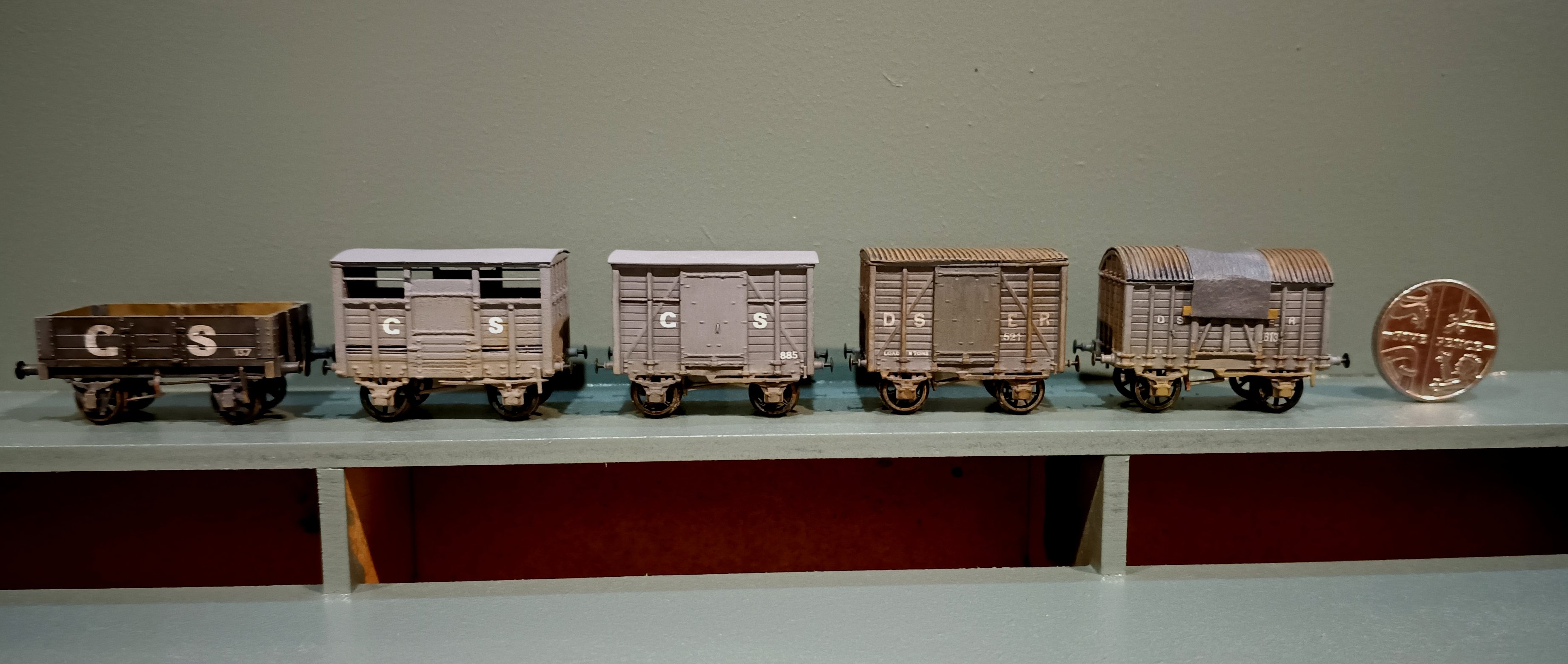
I've not done much Irish modelling as demonstrated by the lack of posts here, however, I am assisting with the 2mm Scale Association's stand at the Edinburgh Model Railway Show this weekend. As we normally have a range of models on display, I thought I'd finish some of the Irish models I had knocking around almost completed. I've not weathered the two Great Southern Vans yet but the others are nearly done. I need to do a bit more research on numbering and other markings (load, tare etc). I struggled to find a decent photo of Great Southern vans that showed these (or clearly showed an absence). The vans are all 3D prints from the much missed KMCE and are of DSER origin. The open was a gift from a fellow modeller received complete but unpainted and is I believe a CB&SCR Wagon. As is appropriate a 5p piece included for scale.

-
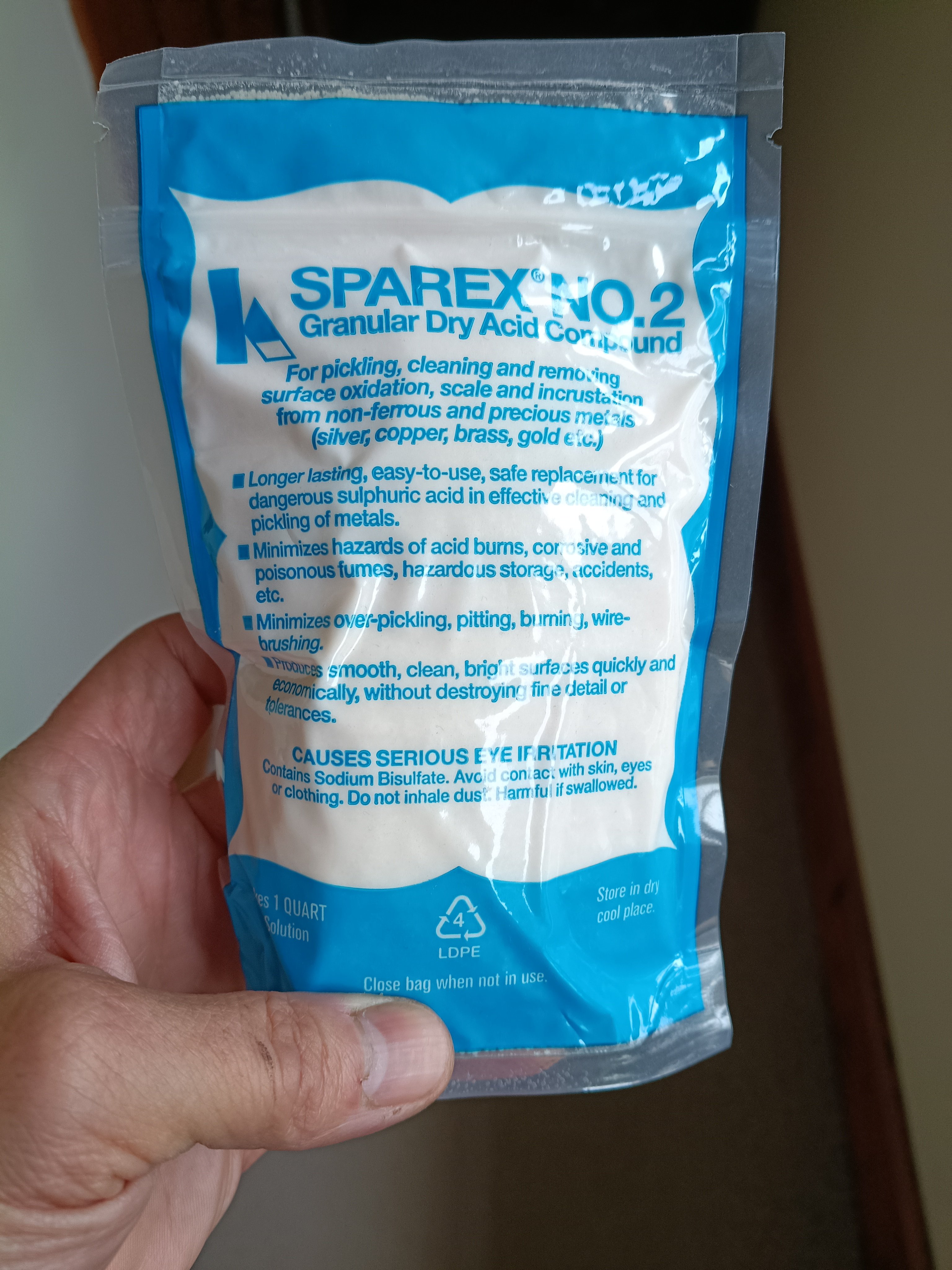
I should add if I've something particularly grotty then a quick soak in Sparex no 2 will shift most dirt. This is aggressive though so I only use this for any manky second-hand etches I bought (sellotape on the etch seems to be a recurring problem leaving black marks when removed after a length of time). It would be overkill for your carriage build above.
-
A quick wash in a limescale remover (I used Tesco's own brand) will bring the brass up nice and shiny. Spray it on, leave for about a minute, scrub with and old tooth brush getting into all those corners, then rinse and dry. I leave my cleaned brass on a paper kitchen towel somewhere warm overnight to ensure everything is dry, essential before applying paint. I usual do the above at the end of every soldering session to avoid build up over time (I'm not the quickest at building stuff!) Note on Coca-cola - it is actually the sugar in the liquid the cleans so you need the original not the diet stuff. You can just use sugar solution, it will be more effective as the sugar concentration is higher. I cleaned the surface rust off an old watchmakers lathe I bought on the cheep and refurbished it cosmetically using sugar mixed to a gloopy solution, it worked a treat.
-
What the recent posts have demonstrated is that there is a vest difference between designing a layout for home operation and designing a layout to keep the public engaged at an exhibition. by example: I have a part finished Canadian shortline terminal style layout. I can while away a pleasant hour bring on short trains of 2-3 cars, switching out various industries, reforming the train and returning to the fiddle yard. An hour would only see 2-3 trains run but is engrossing to operate. Would I watch this for any extended length of time at an exhibition? No that would be tedium beyond belief..... Whereas, at an exhibition I would happily stand and watch a well modelled roundy roundy with a parade of trains (so long as these are not just unboxed R-t-R) for an extended period. Would I enjoy operating such a layout at home? No, that would be tedium beyond belief..... Having spoken to many operators at exhibitions I am always surprised how few operate their layouts at home for fun when not exhibiting. This seems a real waste, but the drive for finescale fidelity has seen a move away from the more systems based layouts espoused by the likes of CJ Freezer in days past to small single station/location models. We seem to have lost more than we have gained in this move.
-
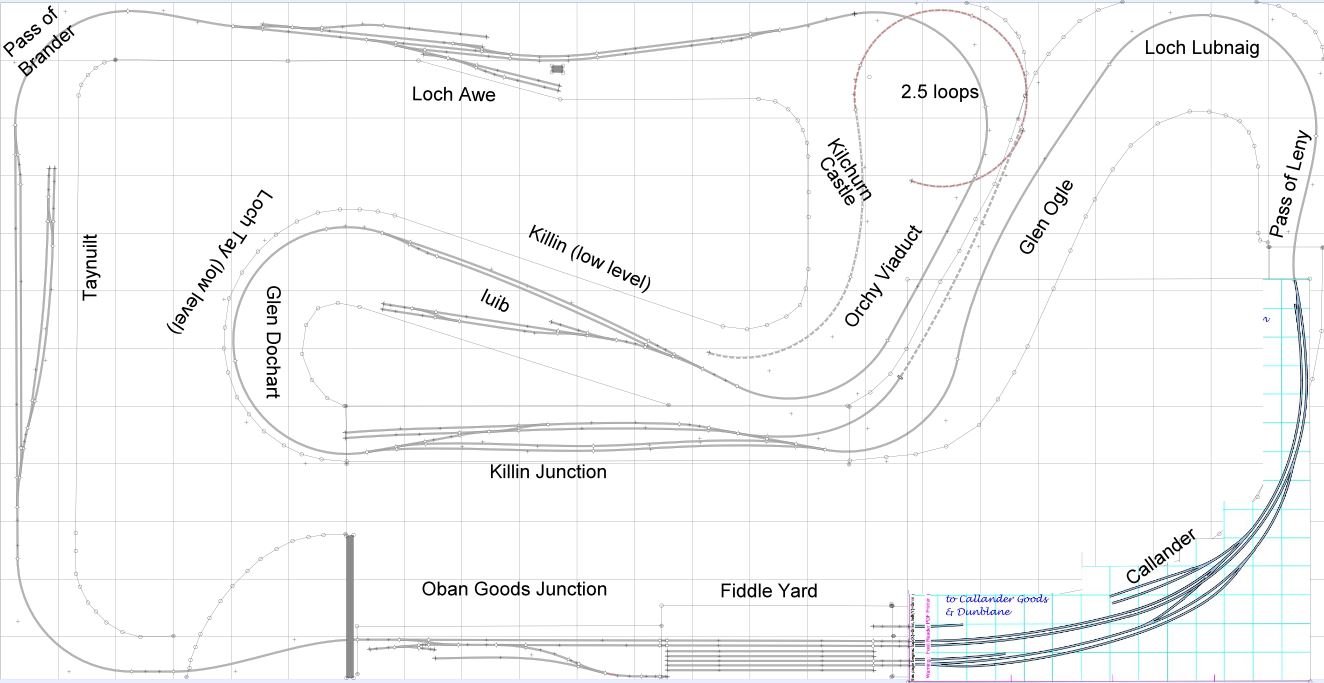
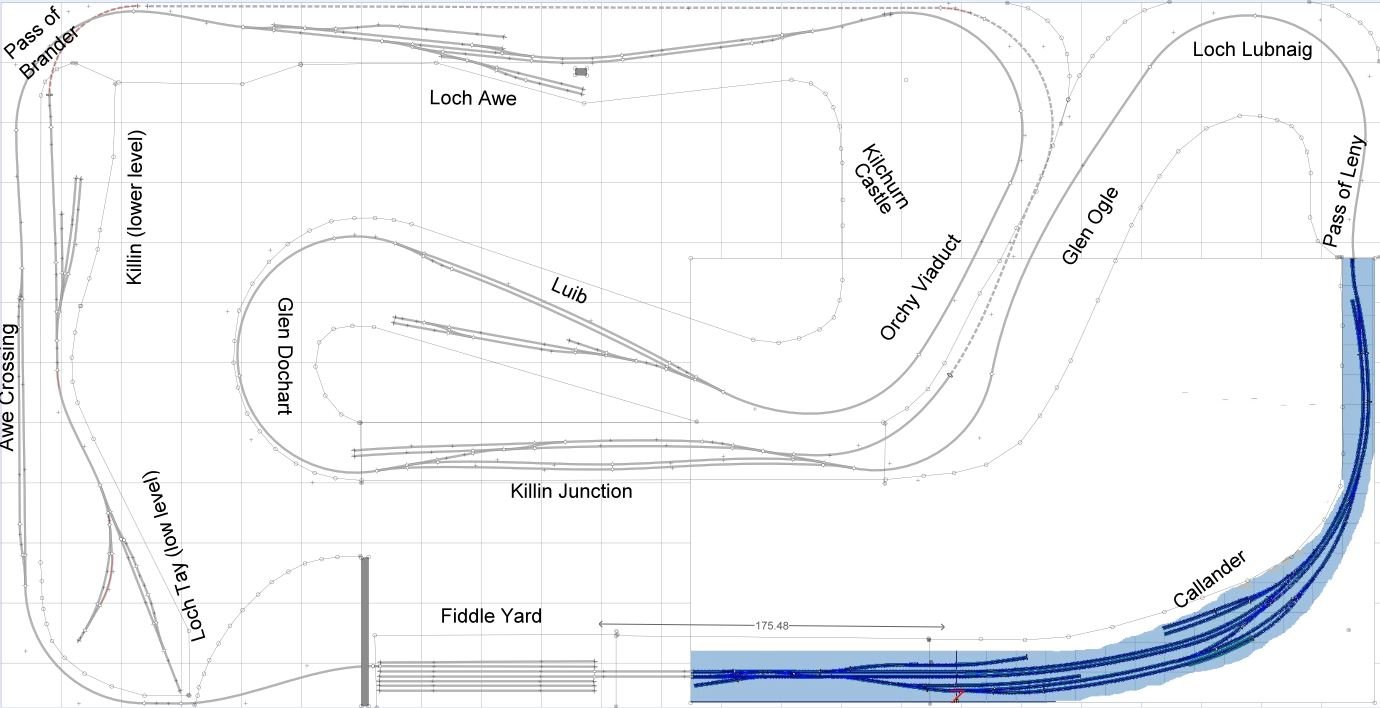
It always fascinates me that in the UK and Ireland operations on our layouts take a back seat to building them. A quick look through our online forums and the magazines will show very few topics or articles dedicated to the art of "playing" with our creations. To some extent I've put this down to the cliche of the branch line terminus. Whilst conveniently sized, operations are limited to the shuffle on, shuffle round, shuffle off variety. Not very entertaining for any length of time. I have built some small American shortline layouts which create much more purpose to moving the stock around the layout and so become more engaging to operate. Unfortunately such systems are not realistic (with a couple of exceptions) this side of the Atlantic. What I find slightly odd is that when given more space we tend to go for a bigger station rather than more open running/multiple locations. Even when multiple locations are modelled they are operated from the point of view of the Signal man rather than the driver (the operator works at a station, accepting trains from other stations rather than following the train through the various stations). This is compared to our American brethren who have a crew follow the train around the layout. I've always assumed this is down to how we watch the real thing. Over here we tend to stay static in one location and watch the trains come to us whereas on the other side of the Atlantic they seem to chase the trains along the route. I'm guessing traffic density has a lot to do with this. What we lose in our approach is a sense of journey. I've always enjoyed train travel and watching trains from the window, rather being sat in one location and connect more with layouts that replicate this. An early influence was Jan Milham Yaxbury that appeared in the model magazines back in the 80's: http://www.s-scale.org.uk/gallery25.htm Here Jan had modelled an entire branch line so trains moved through the scenery with a sense of purpose rather than just appearing and disappearing off scene. There are obviously other examples (e.g. Richard Chown's Castle Rackrent) but these seem few and far between. I'm in the lucky position of having the space to model this "system" approach. Last year we moved up to the West Coast of Scotland to a house in need of renovation but with two outside stores connected to the main building. When knocked through these gave a railway room 23' x 11.5' space. Other parts of the renovation have taken priority but I'm hoping to get started on the railway room toward the end of next month. This has given me a year or so to plan. The main layout will based on the Callander and Oban line (sorry not Irish! but I am intending to have an Irish layout in the room mounted at a lower level). One criteria I tried to keep to was to have three train lengths between locations to try to replicate that sense of journey and watch trains travel through the scenery. Focus is on the system rather than shunting, but having the trains pass at the various stations along with the local goods stopping and shunting along the way should offer engaging operation. Even then I've still fallen foul of the "cram too much in" sin. As an example below is an early iteration of the plan: I've obviously not achieved the three trains lengths between criteria Loch Awe and Taynuilt and Oban Goods Junction feels just crammed in. In a conversation at our local modellers group one of the group observed he enjoyed operating the Dunallander layout (owned and operated by the 2mm Scale Association's Grampian group. We assist at exhibitions) as it gave the chance to see scale length trains operating at scale speed through open scenery. This reminded me of my original intentions and drove a simplification of the plan removing some stations and creating more space for open running: The jury is still out on the inclusion of the station at Luib. Operationally this was linked to the School train movements at Killin Junction but I may remove this in favour of more open countryside.
-
 It is a skill I need to develop, however, even the most productive person would take years if not decades to reproduce Allen's extensive range, across the wide range of scales he offered. If I do develop the skills to produce etches, I would prefer to focus my time on adding previously unavailable items rather than replicating what had been a available.
 -
Hi Mol, I'm not sure that's what it says, unless you've got further information? There's been quite a bit of confusion with people claiming to have taken on bits of Allen's range, but it usually turns out they've just bought Allen's stock of unsold etches. The RMweb post refers to etches not artwork. I would love to the Worsley work range reappear but losing hope as time passes.
-
I had quite a few emails conversations with Allen before he shut up shop. I had a large outstanding order with him that he was struggling to fill due to issues with the photo tool (it wasn't any of the Irish stock that was affected). I finished up doing a deal with him to secure his remaining 2mm fine scale LMS kits and sides in lieu of what I actually ordered. The email exchange was a bit hit and miss so I came to the conclusion his health wasn't great. This was just speculation on my part though One thing people miss when talking about etching is the quantity required to make an order viable. The whole sheet needs to be produced which can contain several items. This means if you want an individual coach you have to order the whole sheet (which could be duplicates, something appropriate that may be of use or something else entirely) So the purchaser either needs to stump up for multiple items they don't necessarily want or the supplier has to carry stock that might not get sold. Not a simple as it first appears.
-
Hi Mayner, There are quite a few of our group who are now producing decent quality prints in 2mm. I suspect this is due to constant fettling to perfect the print, something that wouldn't be viable on a commercial basis, but is encouraging for the hobbiest. Cheers Angus
-
There has been a bit of a debate going on in our 2mm scale group about the best way to use 3d print technology. The consensus seems to be for wagons a 3d body on an etched chassis with 3d details such as buffer and axle boxes is the ideal. This also assumes you have access to a chassis etch or the skills to draw one up.......
-
Great view of Dromahair in the top picture. It nicely covers an area that is difficult to see in all the photos I've found of the station. One to log for the future.
-
Hi David, Thinking some more on this I've realised I am slightly confused by your comment on shortening the dropper. In 2mm the dropper (heavier iron wire) acts as the counter weight to pull the loop down. Even if the loop goes beyond the vertical the dropper will extend back past the vertical and return the loop back to horizontal. If you shorten the dropper surely you would reduce this counter weight effect? This started me thinking that your problem might be that the coupling is set further out relative to the end of the wagon/coach in 7mm. This would allow the loop to pass further through the vertical to the point where the dropper can't act as a counter weight. If so the solution would be to somehow restrict the movement of the loop. Hope the makes sense, it would be easier to explain with a sketch (assuming I had any drawing ability!)
-
Hi David, As a 2mm scale modeller I've been using DGs for a while now so have experience of my own and those shared by others in conversations amongst other 2mm modellers. I've never used them in 7mm scale though. The loops are recognised as a problem, that said, I don't have much of an issue. Some 2mm modellers just put the loop on one end of their stock, which works if your stock always travels in one direction. If not you are going to have problems due to stock with no loops trying to couple (or have to carefully choreograph the moves). When I first started using DGs I experimented with some soft iron wire for the loops. I thought I was being clever as this meant I could just fold the loop and dropper up out a single piece of wire, no need to solder on a dropper. The wire was thicker though, probably bigger than 0.5mm where the standard 2mm wire is 0.3mm. I found I had a couple of issues: Firstly the loops clashed more causing problems when coupling. Changing back to 0.3mm phosphor bronze wire all but removes the issue. I think the slight spring in the phosphor bronze wire also helps. Secondly the loops didn't drop back as consistently. I suspect this was do to the loop being heavier so the dropper didn't have as much of a counter balance effect bringing the loop down. The wire was also a slightly tighter fit in the mounting hole (but still free to move) so I suspect there was more friction involved. Again, moving back to phosphor bronze wire with an iron dropper resolved this. I've found the loops do pop out occasionally but only if I'm manhandling the stock, I've never had this issue if they are on the track and my fingers aren't involved. As your rakes are short might it be worth trying some 0.3 phospher bronze for the loops? It should be strong enough even for 7mm.
-
Hi David, a post on RMweb has just reminded me of an issue with DGs. If you have long stock and sharp curves body mounting the couplers can cause derailments. The loop pushes on the coupler vertical of the wagon in front sideways pushing it off the track. With a 2mm scale diesel (about 4" long) if the couplers are body mounted it will push anything longer than a short wheelbase wagon off the track on and A5 point (although I think the curve exiting the point is slightly sharper) I now bogie mount my couplers. It might be worth checking all your stocks works through your point work before progressing any further.
-
Just measured the wire that comes with the 2mm couplings and it's 0.3mm diameter. I'd guess this would be strong enough for 7mm?
-
Hi David, DGs are the chosen coupling in 2mm finescale circles with about 70%of people using them. My experience is to use as thin a wire as possible to form the loops. This is better visually but also operates better as the loops slide over one another easier. In 2mm the DGs come with thin phospher bronze wire which is also a bit springy. I'm guessing this also helps.
-
Just got a copy of the September Railway Modeller. The photos look great, a really good example of how a small layout can appear much bigger than it is.
-
I notice in the "coming next month" column in this month's Railway Modeller there is a photo of a rather attractive MGWR green loco...... Looking forward to reading this next month!
-
Chapeau Ben Healy, He deserved the win today.