Jump to content

Mol_PMB

Members
  • Posts

    3,618
  • Joined

  • Last visited

  • Days Won

    219

Everything posted by Mol_PMB

  1. I found a few more photos in the IRRS Flickr archive. Here's one of these coaches newly converted to a camping coach, in pristine (monochrome) red and cream livery in 1960. It may well be 837: KAM_GSWR_X_Inchicore_07_June_1960 | [Photographer: Kevin A M… | Flickr To get an idea of what it would have looked like in colour, here are a couple of other camping coaches in 1960 (not the same type of base vehicle): MPC_GSWR_Dungarvan 18_Apr_1960 | [Photographer: Michael P Co… | Flickr These two are not the clearest photos but are of interest to me as Fenit is a place I've thought about modelling, and might still do. Here's one of the regular summer Sunday excursions in 1960, with the set including one of the 50' open gangwayed thirds. It has lavatories fitted, so would be one of 835, 836, 840, 842. These trains ran through from Cork as an extension of the regular Cork-Tralee service. Note that the set also includes a Park Royal. GJH_CIE_C212_Fenit_21_Aug_1960 | [Photographer: Graham J Hoa… | Flickr GJH_CIE_C212_Fenit_21_Aug_1960 (4) | [Photographer: Graham J… | Flickr My impression from the photos is that several of these 50' open gangwayed thirds were based around Cork in the 1950s and early 1960s for use on Kerry and local services.
  2. True. They were originally built for Dublin-Cork expresses and although newer stock was available by the time of the 800s, there’s a good chance these would have been used to strengthen the train when needed. Once I’ve made a start on a design I’ll probably find it will be IRM’s next announcement
  3. Finally for now, some photos of them in departmental service. 836 became 463A, a Signal & Electrical mess car initially in green livery, seen here in colour from the IRRS in 1969: https://www.flickr.com/photos/irishrailwayarchive/53510434237 By the late 1970s it had been repainted black with red ends, as seen in monochrome from Jonathan Allen in 1978, and in colour from Ernie in 1979 with a roundel added. Note that all these images show it with lavatories. Another departmental survivor was 837 which became camping coach no.8 and then 530A. This IRRS colour photo at Thurles dated 27/11/1971 shows it as 530A in red livery with the roof boards being evidence of its former occupation. There are no roof tanks but the arrangement of the small droplight at the near end is similar to those vehicles which had lavatories fitted. It may have been part of the camping coach conversion: https://www.flickr.com/photos/irishrailwayarchive/53511762380 Another IRRS photo of the same coach at Kilkenny in the mid 1970s: https://www.flickr.com/photos/irishrailwayarchive/53527509963 And we've already seen Roger Joanes photo at Waterford in 1998: Finally, back to the early days here's one of these coaches in GSR brown in the 1940s. The caption says it's number 83, but I'm sure there's a digit missing from the end of that. https://www.flickr.com/photos/irishrailwayarchive/53508875601 So plenty of livery options to go at, and 100 years on the mainline network followed by 2 preservation survivors. Is this something that others would be interested in? I'm thinking etched brass broadly in the Comet style and using bogies, castings etc available from the likes of Wizard Models. Perhaps with interchangeable parts at one end for the lavatory or tea car variants?
  4. The compos used in that way were mostly the 57' compartment stock. I don't have any detail drawings of them, and they have more challenging elliptical rooves. So they don't meet my criteria this time round. The compo mentioned in my first post is a non-gangwayed type more at home on the DSER suburban in later days. But as you'll see from my post above, the third saloons were quite at home on local trains around Cork in the 1950s and early 1960s, and some were fitted for Radio Trains so could end up anywhere. They would also be ideal to hook behind an 800... If this project works out (and I could get some extras made if people are interested) then maybe I'd look something else afterwards.
  5. Let's look at some older photos. From the RPSI website, 836 at Westland Row on 12-04-1952, photo by Des Coakham. Unmodified, plain open third with no lavatory or catering: In the IRRS archive, a nice interior view of 837 on 10/11/1949: https://www.flickr.com/photos/irishrailwayarchive/53509061464/ In the IRRS archive, 843 at Sligo on 01/11/1947. This was one of the tea car conversions, and at the near end we can see a long water tank on the centreline of the roof, and evidence of a serving counter below. Some of the curtains have been replaced by blinds and there is a bar protecting the large window opposite the counter. Note also the large vents over the windows at the serving counter end: https://www.flickr.com/photos/irishrailwayarchive/53509172565/ Ernie has a photo for us in glorious colour. This is 840 at Cork on 26/04/1956. Two lavatories have been added at the right-hand end, each with its own water tank on the roof. The large window at the right-hand end has been replaced with a smaller droplight and small deadlights.Note the full complement of curtains in the saloon! Another colour shot from Ernie, this time dated 12/09/1960 and again at Cork. The nearest carriage could be the same one pictured above, or another of those fitted with lavatories: The IRRS archive has three photos of 843, again at Cork and still in service in 1964. We saw 843 at Sligo in 1947 as a tea car, but the carriage registers indicate that the catering facility was later removed and these photos show it without: https://www.flickr.com/photos/irishrailwayarchive/53511484089/ https://www.flickr.com/photos/irishrailwayarchive/53511166071/ https://www.flickr.com/photos/irishrailwayarchive/53511484084 Finally, an IRRS photo of the oddball - Tea Car 838 at Kingsbridge on 10/10/1947 showing off its high elliptical roof, electric lighting and rather different styling following its heavy rebuild in 1924: https://www.flickr.com/photos/irishrailwayarchive/53509061459/ So from the above, there are photos of all the main variants, I think.
  6. Each of the preservation groups has a page for their vehicle. Here are the links: https://www.downrail.co.uk/rollingstock/gswr836/ https://www.steamtrainsireland.com/rpsi-collection/66/837-open-third This is the GSWR diagram (Page 43, GS&WR Carriage Diagrams, Richards & Pender, 1976) actually linked from the RPSI website: The IRRS drawing pack contains a proper detailed and dimensioned GA drawing of the vehicle, which I can't reproduce here. Unfortunately the right-hand edge of the drawing is badly damaged so the end elevations are only partially visible, but the missing data can be derived from drawings of similar carriages in the pack. There are also two slightly different drawings for a 50' underframe (not for this exact coach type, but contemporary and suitable) and a drawing for the GSWR 8' wheelbase bogie that was fitted to these. So there's good data as a basis for a model, especially with two survivors to look at.
  7. These open gangwayed thirds were built in 1902 by Ashbury. They were part of a larger order which included other coaches in similar style. If you are lucky enough to have travelled in 836 at the DCDR (highly recommended), its open interior with 2+2 seating arranged in bays either side of a central aisle will feel similar to a modern train. But 124 years ago, this open layout was quite novel - the vast majority of coaches were of compartment layout, some with a connecting side corridor but most without. For a while around 1900, the GSWR seems to have favoured the open layout for long-distance trains, but later reverted to compartment stock. A brief history of these coaches can be gleaned from various GSWR and CIE carriage diagram and register documents, and what I've found is summarised below. The drawing in the IRRS archive has a hand-written annotation listing 12 numbers - 833 to 844 inclusive. However, the GSWR carriage diagrams book prepared by Transport Research Associates in the 1970s and representing the fleet as it was in 1924 lists only 10 vehicles of this type - 834 to 843. None of the other CIE documents I've studied mention 833 or 844. 834: Remained basically unchanged throughout its life. Listed with the nominal 72 seats in 1946 and 1953 registers. Withdrawn 1959. 835: Listed with the nominal 72 seats in 1946 and 1953 registers, demoted to secondary stock by 1961 when it is shown with 64 seats and 2 lavatories, fitted for Radio Train. Withdrawn 1964 and converted to departmental stock 540A. 836: Listed with the nominal 72 seats in 1946 and 1953 registers, demoted to secondary stock by 1961 when it is shown with 64 seats and 2 lavatories, fitted for Radio Train. Withdrawn 1963 and converted to departmental stock 463A. Sold to DCDR in the 1980s - restored and still in use. 837: Listed with the nominal 72 seats in 1946 and 1953 registers. Withdrawn 1960 and converted to camping coach no.8. Later transferred to departmental stock 530A. Survived at Waterford until 2002, then sold to RPSI and now at Whitehead under restoration. 838: Major rebuild in 1924 when it gained a high elliptical roof and electric lighting. Converted to 3rd class Tea Car at unknown date, listed with 58 seats in the 1946 and 1953 registers. Rebuilt again in 1957, still as Tea Car but with only 24 seats. Through-wired for operation with AEC railcars. Withdrawn 1965 and converted to departmental stock 522A. 839: Remained basically unchanged throughout its life. Listed with the nominal 72 seats in 1946 and 1953 registers. Withdrawn 1960. 840: Listed with the nominal 72 seats in 1946 and 1953 registers, demoted to secondary stock by 1961 when it is shown with 64 seats and 2 lavatories, fitted for Radio Train. Withdrawn 1964. 841: Converted to 3rd class Tea Car at unknown date after 1924, listed with 58 seats in the 1946 and 1953 registers. The 1961 register lists it as a primary 56-seat 2nd, no catering facilities. Withdrawn 1963. 842: Listed with the nominal 72 seats in 1946 and 1953 registers, demoted to secondary stock by 1961 when it is shown with 64 seats and 2 lavatories, fitted for Radio Train. Withdrawn 1964. 843: Converted to 3rd class Tea Car at unknown date after 1924, listed with 58 seats in the 1946 and 1953 registers. The 1961 register lists it as a primary 56-seat 2nd, no catering facilities. Withdrawn 1964. As can be seen from the above, the history of this class is complicated! While in passenger service, some were fitted with lavatories and others with catering facilities, while some remained unchanged. After withdrawal, some were converted for a variety of departmental usage. Amazingly, two of the class have been preserved! Here's a photo by Roger Joanes of the other survivor: More to follow...
  8. I recently became interested in the GSWR bogie coaches and thought I would record my research in another diatribe on the forum in case anyone else is interested. I've built a few of the SSM kits for GSWR 6-wheelers recently, including having some custom etches made so that I could model additional types not available from SSM. I also recently bought a set of GSWR carriage drawings from the IRRS, much more detailed than the carriage diagrams I had previously. The drawings which survived into the IRRS archives and have been scanned have excellent coverage of the earlier bogie coaches - but there's very little on the 6-wheelers or the later 57' or elliptical-roofed vehicles. So I've been wondering about a candidate for a model GSWR bogie passenger coach, based on a custom etch. The selection criteria I've set are as follows: Must have body and underframe drawings in the IRRS drawing set Arc roof (much easier to build than a clerestory) Reasonably numerous type (not just 1 or 2 built) At least one which survived in service into the mid-1960s The coach types meeting all these criteria were: Dia 16 45' compartment lavatory composite (4 vehicles, no.458 withdrawn in 1964 but all others gone by 1960) Dia 34 45' open gangwayed lavatory third (6 vehicles, no.562 withdrawn in 1964 but all others gone by 1960) Dia 36 45' 8-compartment third (11 vehicles, no.845 withdrawn in 1971 but all others gone by 1962) Dia 37 47' 8-compartment third (5 vehicles, 3 surviving to 1968-71) Dia 31 50' 4-compartment brake third (6 vehicles, 1092 / 1095 withdrawn in 1968 but all others gone by 1960) Dia 43 50' open gangwayed third (10 vehicles, 7 surviving to 1963-5) When I started searching for photos of these types, a clear favourite emerged - the 50' open gangwayed third. There was a good selection of photos of the prototype available, and many of them were in the Cork area (my modelling preferences are Cork/Kerry). Most of the late-surviving compartment types were on the Dublin suburban services. But another factor really swung the balance, 836 of this class is beautifully preserved in working order at Downpatrick: So in this thread I'll pull together some information on this type of coach and its close relatives, and perhaps that will lead to a custom etch and a model.
  9. Many thanks @jhb171achill! I think the full brake will be darker green without lining, as you suggest. The sleeping cars had many subtle variations as you say. I've based mine on 238A, partly because it was based at Mallow (conveniently close to my Quartertown Mill layout), and partly because there are several good photos of it over the years (and from both sides - they were different). The IRRS has a photo of it newly converted at Inchicore, some time between 1947 (when it was withdrawn as a passenger coach) and 1950, freshly painted in dark green complete will a full lining job: https://www.flickr.com/photos/irishrailwayarchive/53507984227/ Ernie has a couple of photos of it at Mallow in May 1955, still bearing the same livery but a bit faded and weathered by now: By August 1956, still at Mallow, it had been repainted with a plain coat of what seems to be a lighter green (compare to the carriage on the left) but the layout of the lettering remained identical: And it was still at Mallow in September 1969 in the same paint job but looking a bit the worse for wear, in this IRRS colour photo which is a lightish green: https://www.flickr.com/photos/irishrailwayarchive/53511470303/ Since I'm aiming at the early 1960s I think I need the plainer, lighter green livery. I have transfers for the lettering in EdN, which I hope is correct - no doubt someone will tell me these were an exception to the rule and should have white lettering! Links to many more photos of this species here: https://irishrailwaymodeller.com/topic/18453-cie-sleeping-cars
  10. I have made good progress on the 6-wheelers today, having found both time and motivation. I think they're looking the part, and they give me some rolling stock that not many other people have modelled. There are still a few details to add, mostly associated with the gas and brake plumbing. Also a final clean-up. But they're nearly there. I'll need to make a final decision on the livery for each of them too. Probably plain green with EdN lettering for both. Sadly I have some other chores to do today so I don't think I'll have a chance to finish them for a few days.
  11. Sounds like that would need a DCC decoder and JMRI to know which line the train's on!
  12. I've done some further study of the IRRS GSWR carriage drawings and cross-referenced them against the Transport Research Associates GSWR carriage diagram book. The IRRS drawings provide good coverage of the following: 45' arc roof bogie coaches of the 1897-1902 period, including 10 different body types (of 12) and 3 underframe drawings 50' arc roof bogie coaches of the 1901-1912 period, including 4 different body types (of 6) and 1 underframe drawing 50' and 66' clerestory coaches of the 1901-1907 period, including 6 different body types (of 10) and 3 underframe drawings There are also bogie drawings for the GSWR 8' wheelbase 4-wheel bogie and the 11'6" wheelbase 6-wheel bogie. A few oddments including a 47' compartment third, WLWR bogie saloon 935 and 6-wheel saloons 600/601 Very little for the 57' coaches, just a body drawing for diners 2092/3 and an underframe drawing that is in rather poor condition, and has confusing double dimensioning for 57' and 60' underframes. It also states that it is for 9'0" wheelbase bogies so I assume it is applicable to the 1920s carriages. There is a good variety of underframe drawings for 6-wheel coaches, both wooden and steel. The existence of drawings always makes me wonder about models! Most of the 45' stock was withdrawn by 1960 - the photo from Ernie is mid-50s: But the 50' stock was slightly longer-lived with some passenger coaches lasting to the mid-1960s and the full brakes into the 1970s. Photos from Ernie again: And from Jonathan Allen: Hmmmm. Do I foresee another custom etch?
  13. The 1946 CIE coach classification lists the following horseboxes, which are listed in order of length rather than origin. This seems consistent with the data I provided before but adds more info on the MGWR and GSR vehicles. MGWR 15'0" long, built 1881-1901: 5M, 6M, 7M, 8M, 14M, 19M, 24M, 47M, 48M, 50M, 52M, 53M, 55M, 60M DSER 15'3" long, built 1879-1913: 1D, 7D, 8D, 9D, 14D GSWR 15'6" long, built 1893: 195-198, 260-265, 267, 268, 270-279 WLWR 15'6" long, built 1897-1898: 1025, 1026, 1037, 1038, 1040 GSWR 16'0" long, built 1893-1907: 146-149, 155, 156, 159, 161-163, 166-172, 174-178, 181, 183, 185, 283-292, 1056-1061, 1063-1067 MGWR 16'6" long, built 1906-1921: 1M, 9M, 11M, 20M, 26M-32M, 35M-38M, 41M, 42M, 43M, 45M, 46M, 54M, 56M GSWR 19'9" long, built 1911-1913: 142, 144, 154, 164, 179, 199, 294-296, 298, 1023, 1024, 1028-1036, 1041, 1100-1109 GSWR 19'9" long, built 1924: 2980-2985 GSR 19'9" long, built 1926-1927: 2986-3005 In the 1946 listing, 24M is listed but struck out, so presumably an early withdrawal. I also have a listing dated 1953 which has both 24M and 279 struck out. For completeness, the following narrow-gauge horseboxes are also listed: 19L, 20L, 28C, 1T. One interesting addition to the information is which horseboxes were steam piped (i.e. for steam heating). I'm surprised that this was a minority of them, given that horseboxes were often marshalled at the front of a train and if they weren't piped then the loco couldn't provide heating to the train. Those shown as piped are: MGWR: 6M, 8M, 14M, 47M, 11M GSR: 2986-3005
  14. I've recently acquired a copy of the IRRS document "DCD 006.1 CIE Rolling Stock Painting and Lining Schedules". This includes livery and lettering drawings from the 1945-1961 period including 7 pages specifying the early black and tan livery in detail. It's interesting to note that the upper edge of the tan (golden brown) band is defined at 6'0" above rail height. Above that, the black band is 4'0", and the white band takes up the remaining space to the cantrail. The IRRS document does not include the 'normal' BnT livery adopted later in 1962, but for this thread it's perfect!
  15. Following some recommendations on the forum and seeing Richard Maclachlan's talk at IRRS Manchester, I have purchased some more sets of drawings and documents from the IRRS. I've only had a very quick look at them, but they appear very interesting and useful. What I've acquired: Early editions of the CIE carriage registers, lists of numbers and characteristics of all the coaching stock (including NPCCS): CCL 006.1 CIE Coach Classification 1946 (with alterations to 1950) CCL 007.1 CIE Coach Classification 1953 (with later alterations) They are equivalent in content (though not in format) to the 1961 and 1969 carriage registers that @seagoebox and @flange lubricator kindly shared with me last summer. With quite a bit of work they will enable me to add much more information to my carriage register spreadsheet. In the short term they give me some more information to add to the threads on horseboxes and 6-wheel coaches. CIE painting and lining drawings: DCD 006.1 CIE Rolling Stock Painting and Lining Schedules This includes detail drawings for the coaching stock transfers, and where they should be placed. The transfer drawings give details of the sizes, shapes and numbers/letters, plus a separate drawing for the snail. There are also a couple of very useful tables giving details of where each group of transfers is to be used, plus their colours and (where appropriate) outer lining width and colour. Some of the transfers are used inside the carriage. It even tells us that the shade of Eau-de-Nil is to BS381C. The drawing appears to date from around 1951/2 and includes items and notes for the original 1940s CIE livery and the early 1950s livery applied to the AEC railcars and new carriages. Also for horseboxes and other NPCCS. There are two drawings dated 1958 which appear to be focused on the repainting of former GNR stock (carriages, railcars and wagons) in light green livery (grey for wagons). There are a group of drawings dated October/November 1961 giving details of the early black and tan livery (with the shallower tan band, and the numbers on a black background). These cover both railcars and carriages. CIE rolling stock drawings: DCD 007.1 Compendium of CIE Rolling Stock Drawings These are mostly for NPCCS, with a few locos, carriages and wagons amongst them. Some are diagrams, but others are proper engineering drawings. Very useful for tin vans and TPOs, heating vans including the BR vans but not the Dutch. Also the last few pre-Cravens coaches built at Inchicore, as well as the Cravens themselves. Park Royals and a couple of dining cars. Some proposal drawings for stock which many not have been built. GSWR rolling stock drawings: GSWR Drawings for printing These are engineering drawings with much more detail that typical diagrams. As well as complete carriages, they include drawings for bogies, brakes, underframe details and other components. However, the coverage is far from complete and I expect this reflects what survived to reach the IRRS collection - about 60 drawings in total. There is a focus on older arc-roof bogie stock - 45' and 50' long vehicles and the 66' clerestories. Some good drawings of underframes for 6-wheelers as well as for the bogie stock. MGWR rolling stock drawings: DCD 002.1 MGWR NPCS Compendium These are the most attractive drawings of the ones I bought, many being coloured as well as fully dimensioned. There are detailed GA drawings of the construction of various 6-wheel full brakes, a brake third, TPO and a stores van. Also two types of horsebox, what is described as a 'cattle box' but looks more like a meat van, open carriage truck and drovers' brake. There are also detail drawings such as a Mansell wheelset and a drawing detailing the fitment of vacuum brake pipes to existing stock. Goods stock drawings include a ballast plough brake, 7t goods van, timber trucks and a 20t goods brake. Note there is a companion set of MGWR passenger coach drawings which I have not (yet) bought) Plenty of inspiration there!
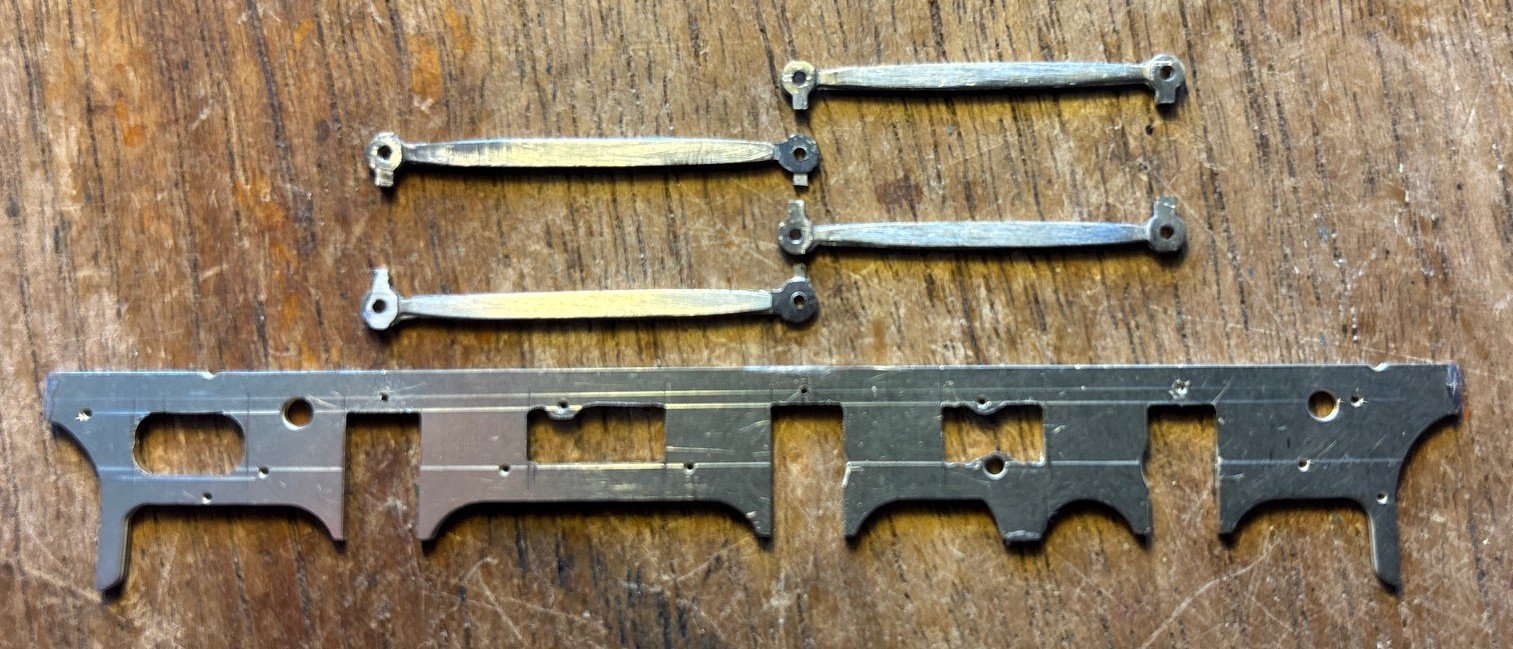
  16. The first half was excellent - hope the second half is just as good.
  17. Tonight! LIVE MEETING with online attendance option FRIDAY 20 FEBRUARY 2026 @ 18:00 - 20:40 "Celebrating Great Victoria Street – Part 1" by Robert White May 2024's final removal of Belfast's Great Victoria Street terminus from Ireland's railway map prompted this eulogy for the departed. A user of the station since the early 1960s, Robert White looks back over its life and times, from the early days of the Ulster Railway through to its evolution during the life of the GNR(I) and early UTA years. Could the earliest plans for a different station location have made the Belfast Central Railway unnecessary? Growth, alterations and many unknown features of the station are all illustrated. Robert is the absolute master of his subject. His meticulous and extensive research has uncovered many previously unseen images and much new information from a wide variety of sources. Step by step he traces the development of Great Victoria Street station and its surrounding railway lands, not just in terms of railway operations but also within the context of the social and economic development of Belfast over the decades. Every aspect of the station is examined and a clear story told from the initial identification of the station site to its operation at maximum extent under the GNR(I) and UTA. On the approaches to the station, Robert describes how the signalling arrangements evolved, and explains the expansion of loco, goods and carriage facilities complementary to the station itself - perhaps the most significant of these being the relocation of the GNR(I) Belfast loco depot from Great Victoria Street to Adelaide. This is an exceptionally well told railway story. It not only encapsulates the story of Great Victoria Street station, but is also a reflection of how railways and railway operations generally developed over the first century of railways in Ireland. The meeting will be held at The Gallery at Alan Baxter, 77 Cowcross Street, Farringdon LONDON EC1M 6EL. Entry is £3 for IRRS members, £5 for non-members. It will also be shown via Zoom. To obtain a Zoom link to the meeting : REGISTER HERE
  18. The GSR locos book is a large tome and was originally quite expensive, so I'm not sure whether either of these come within your definition of a 'reasonable' price? https://www.abebooks.co.uk/9781906578268/Locomotives-GSR-Clements-Jeremy-McMahon-1906578265/plp I only have the GSWR volume which is about A4 size, over an inch think and has about 300 pages. It is full of technical detail, drawings and photos.
  19. Leaving something for the modeller to do? IRM used to provide tail lamp kits - do AS do the same? For some of their career, I think these brake vans would have carried side lamps too. Most of the Irish vans had side lamps built in. I confess I'm not certain of the rules on the illumination and colour of side lamps in Ireland. No doubt someone with an old rulebook will enlighten us.
  20. Lucky for you it's not 2509 3/4, because the Harry Potter bus would be foul of the loading gauge.
  21. I hope the move goes well for you, and that you are up for another round of babysitting! I’m still working through the kits I bought from you last year - 2 done, 1 to go.
  22. I’ll give it a go - I’ve ordered the one @Galteemore shows. I generally find Carr’s Green to be an excellent flux but as my eyesight gets a bit worse with age I find myself being closer to the job and the fumes are not very kind to the lungs.
  23. That's a good tip - many thanks. Any particular brand you would recommend?
  24. Thanks to Ernie for the photos! Good question and I haven't yet found a definite answer. By 1967 the points at the junction were disconnected, but the junction seems to have been reinstated in the 1970s and a short portion of the branch used as a freight siding for a while.
  25. I only ordered one copy of this etch, but I've actually been sent two sets. The one I haven't used is marked 'Dodgy - Replace' but I'm struggling to see much wrong with most of it. I'll have a closer look at the weekend, but was just wondering if anyone else would be interested in a set of these bits for either the full brake or the sleeping car? It's not a complete kit, just sides and roof to go with the SSM underframe, ends and detailing parts.
×
×
  • Create New...

Important Information

Terms of Use