.png.c363cdf5c3fb7955cd92a55eb6dbbae0.png)


Mol_PMB
-
Posts
3,870 -
Joined
-
Last visited
-
Days Won
239
Content Type
Profiles
Forums
Events
Gallery
Blogs
Everything posted by Mol_PMB
-
White metal kit for a 141 class including wheels, gears, maybe motor, maybe spare bogie assemblies. Could be a bargain for someone: https://www.ebay.co.uk/itm/389876006028
-
Jack O’Neill has this to say on the J4 class:

-
Interesting - I’m surprised it’s undated though I’m sure the date could be estimated based on the list. With 90 shown at Fermoy and 800 at Thurles I assume that ‘Depot’ is the place they are stored, rather than an allocation as a working loco. In which case they were already set aside bi CIE for preservation and perhaps it was necessary to sanction them for scrap so that they could be disposed of for preservation?
-
On that basis, my chimneys are all too short (apart from the one in the kit which is the wrong style and too tall). I'm not convinced that all the J26s had chimneys (or dome covers) of the same height in latter days. But the appearance is very subjective according to the angle of the view. Other suggestions for where to get a slightly taller chimney would be very welcome!
-
Excellent! I look forward to seeing your progress.
-
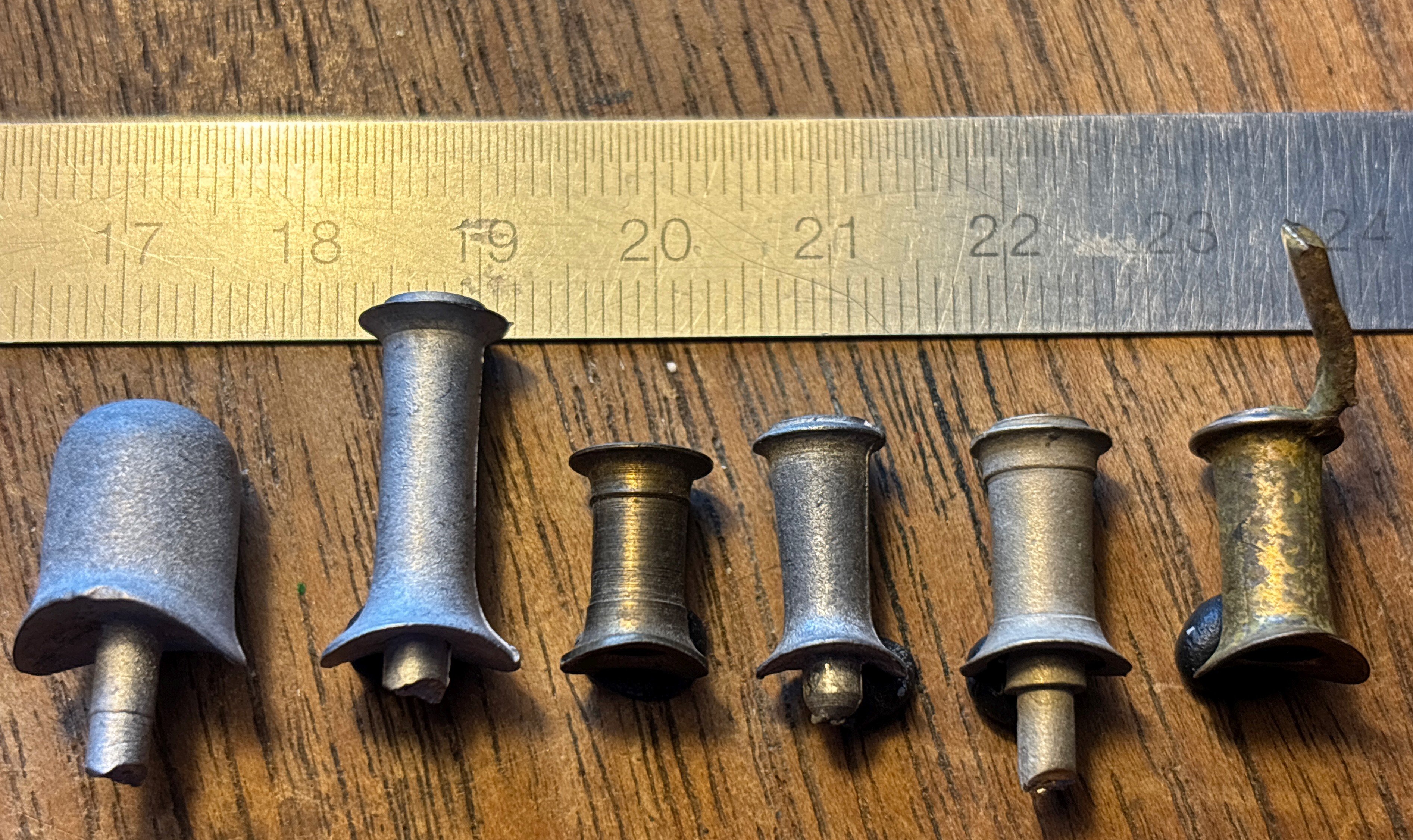
That's coming along very nicely - looks like you've found the invisible solder too! I'm still waiting on delivery of some parts for mine, but should be able to make more progress on the chassis tomorrow. Have you yet found a suitable chimney? I have ended up buying several and I'm still not sure which to choose! Left to right: The dome supplied with the kit, which is OK I think. 12.4mm high from boiler top, 10.0mm dia. The chimney supplied with the kit, which is the earlier type. 18.8mm high from boiler top, 5.0mm dia. A turned brass chimney acquired in a secondhand lot on ebay. 11.4mm high from boiler top, 5.0mm dia. A cast whitemetal chimney acquired in a secondhand lot on ebay. 13.2mm high from boiler top, 5.0mm dia near the top but more tapered than the othes. Mainly Trains MT328 for a GWR 0-4-2T, lost wax brass casting, 12.9mm high from boiler top, 5.1mm dia. Alan Gibson 4M614, lost wax casting, 12.6mm high from boiler top, 5.4mm dia.
-
121s are a bit shorter than 141s. 20'8" bogie centres compared to 22'6" for the 141s. Would be pretty close. C class are 21'0" bogie centres so the 121 is within 1mm. The bogie wheelbase is the same on both, 8'0".
-
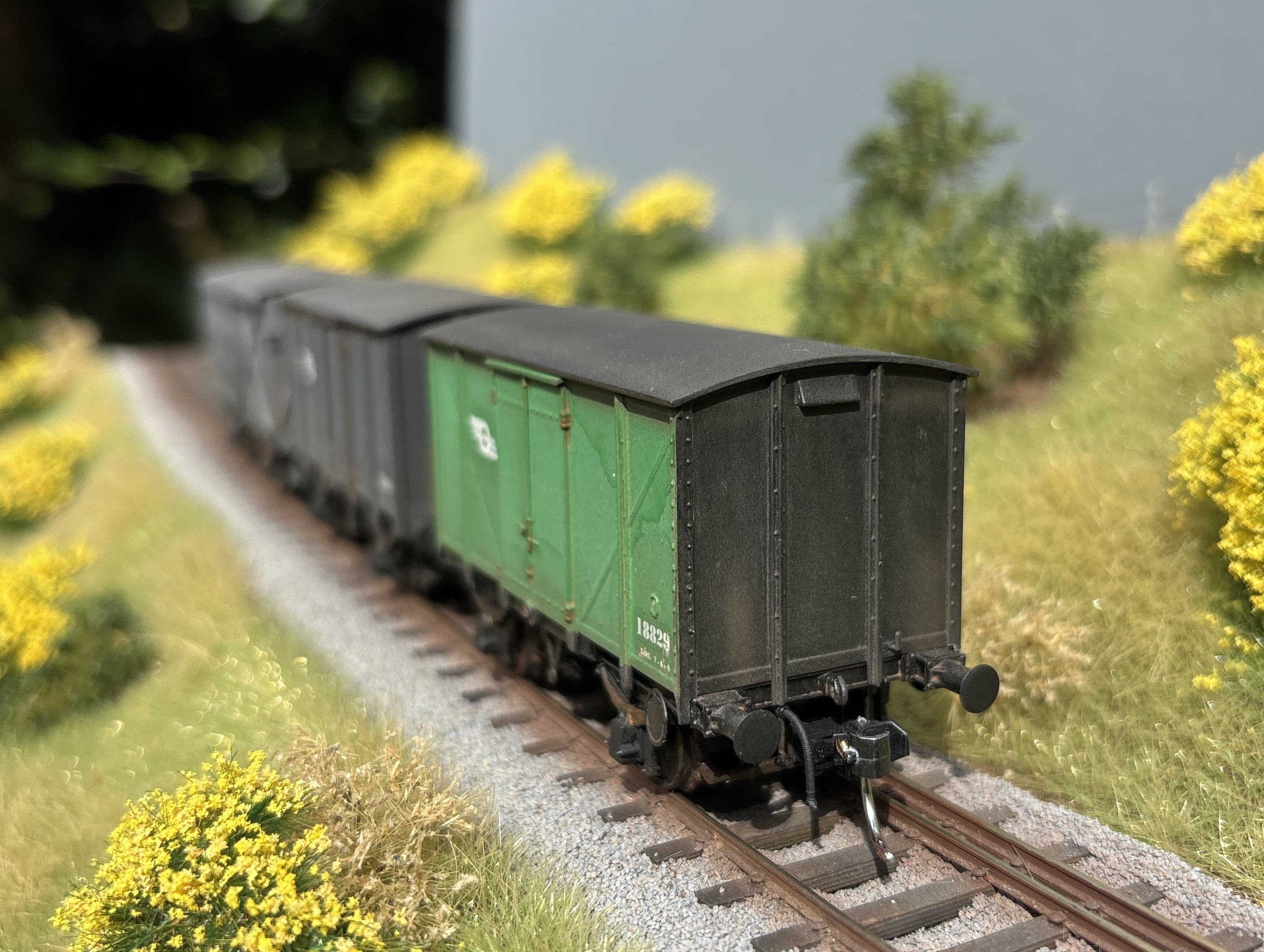
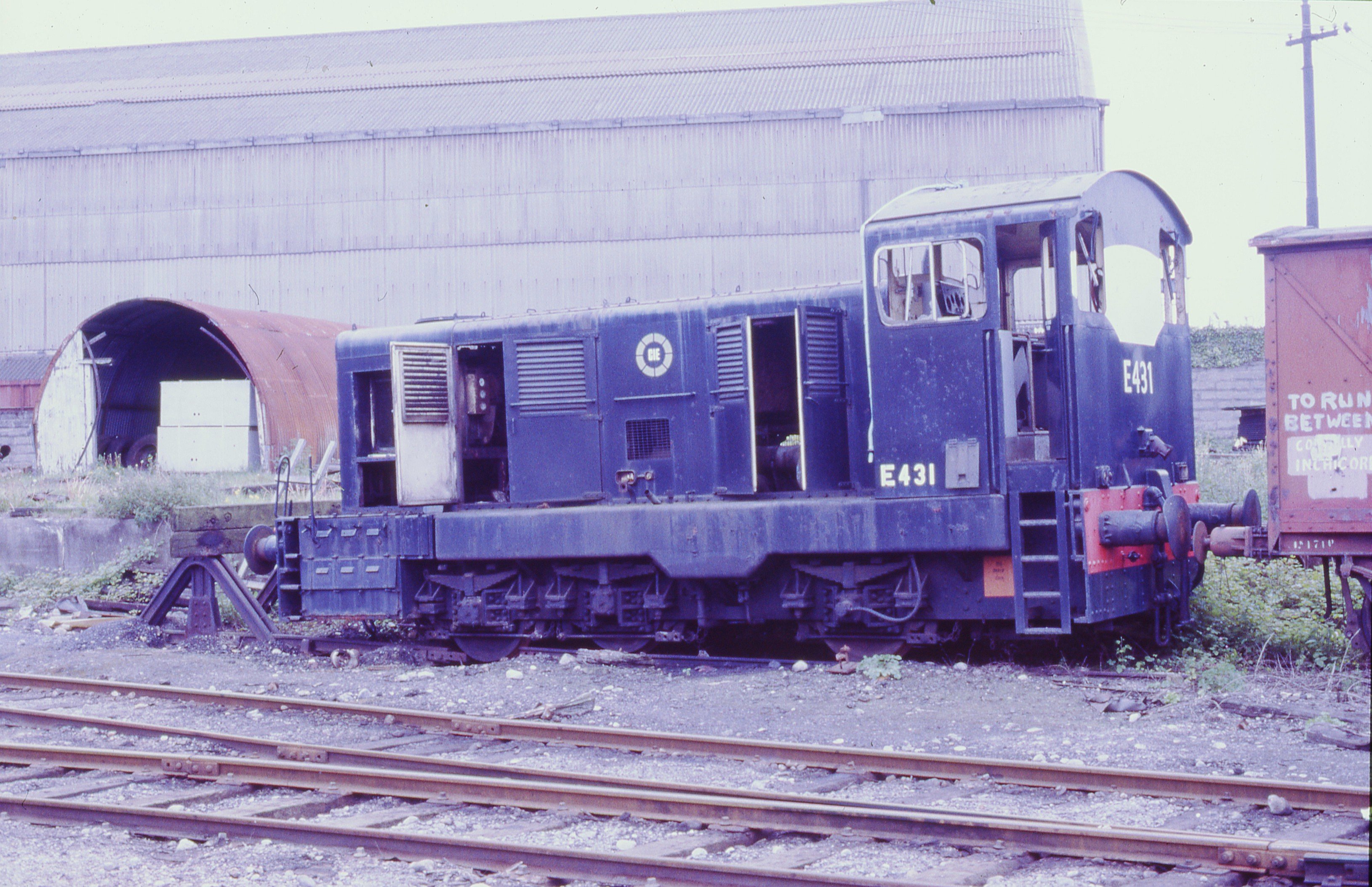
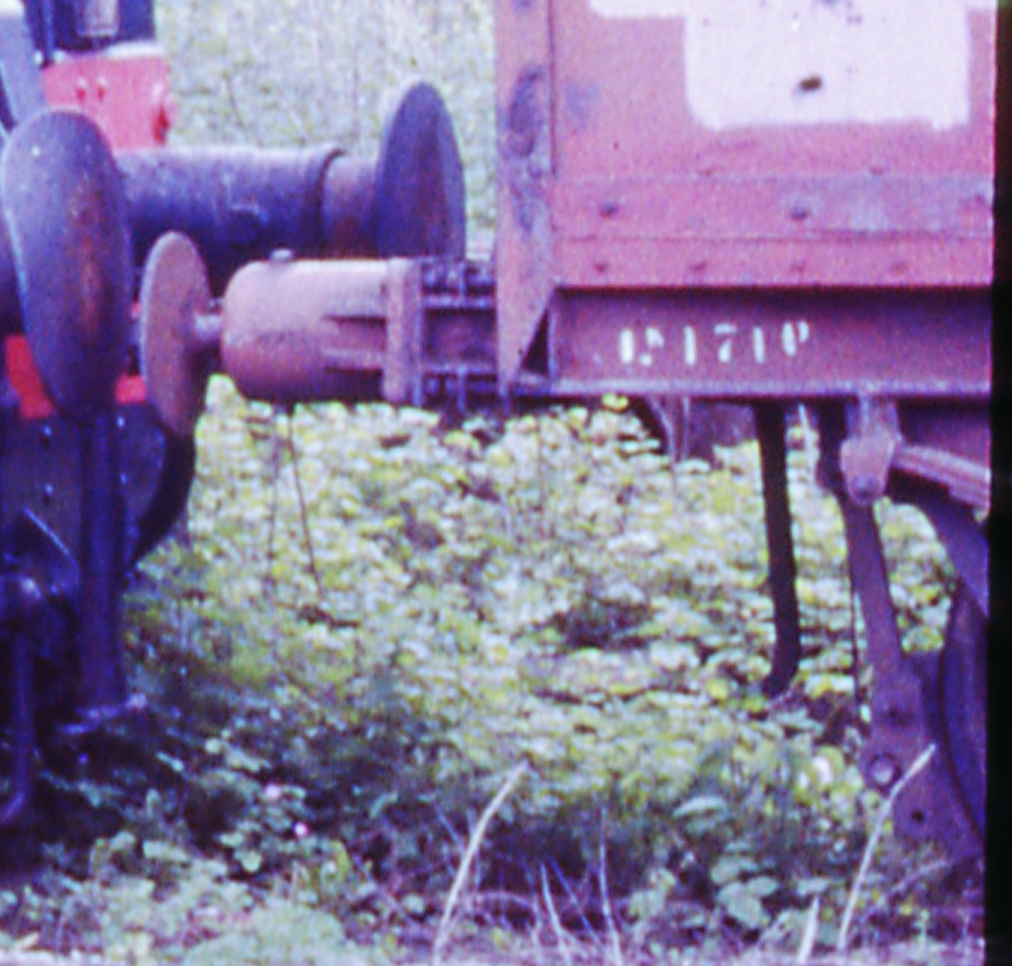
I recently bought a slide on eBay which shows one of the former green H vans in later life. The same vehicle also appears in the two links above, that I posted previously. Here is the new image of 18848: And a closeup of the extended buffers fitted to the green H vans: I represented these on my models:
-
Very nice, is there an stl file download?
-
Depends if there's an AEC railcar to go with it?
-
I must confess that a couple of weeks back, when I saw 086 on a buy it now for £279 including postage, I hit that button rather quickly! The model is much more pristine than the real thing was when I photographed it at Westport back in the day:
-
Next up for an 071 bidding war? black and silver livery on this one: https://ebay.us/m/hvJdSl Or if you prefer a 201: https://ebay.us/m/Bq3c3L https://ebay.us/m/d6MWlo This 141 might stay at a bargain price if you’re lucky: https://ebay.us/m/R7XZKX
-
Nice work! That captures the shape of the 'face' much better than the Silver Fox version.
-
Since starting this thread I have acquired more information, including the GSR 1937 carriage register and GSR / early CIE carriage diagrams. The diagrams include: An unnumbered and undated GSR diagram showing the original condition with 72 third class seats. Numbers listed are 833, 834, 835, 836, 837, 839, 840, 841, 842, 843, 844, but apart from 834 and 839 they are all marked with an X, presumably indicating that they no longer conform to this diagram. The diagram also has a crude pencil annotation with two end bays partitioned off and the remaining seating capacity shown as 56, and this is labelled with an almost illegible number which might be 841. A GSR diagram numbered 14, amended to show the lavatory conversion with 64 third class seats and 2 lavatories, which has a CIE CME drawing office stamp dated 3 Jan 1958. The same full list of numbers is shown, but some are struck through and the remaining ones are: 835, 836, 837, 840, 842. There is a note that 841 and 843 were converted to tea cars, and that 837 has 76 third class seats. A GSR diagram numbered 70 showing the unique 838 as rebuilt in 1924 with elliptical roof. The drawing has a CIE CME drawing office stamp dated 5 Oct 1950. It is shown as a tea car with 58 seats and the arrangement of the pantry is shown in detail, as well as the changes to the window arrangement on the pantry side. A diagram (not marked GSR) numbered 71 showing 841 and 843. The drawing has a CIE CME drawing office stamp dated 4 Oct 1950. They are shown as tea cars with 58 seats and the arrangement of the pantry is shown in detail; it is similar but not identical to 838. The window arrangement on the non-pantry side so it is not clear how the windows behind the pantry were altered. A crude pencil sketch titled 'Buffet 841' which shows 64 seats and one seating bay at the end partitioned off. I also some intriging gen on the last train to West Cork on 31 March 1961. The train formation was given in the 'bus substitution railtour' brochure from the West Cork Wanderer trip last month. It was: 2641 - 841 - 1410 - 2660. There are quite a few photos of the last train, but most show it from one end or the other, focusing on the railcars. It is apparent from photos that the intermediates are a Park Royal (1410, one of those recorded as being through-wired for the railcars), and an old arc-roofed bogie coach. The best photo I've found of that vehicle so far is here: It's not very clear, but from what we can see it could well be 841. This is interesting because 841 is not one of the vehicles recorded as being through-wired for the railcars - indeed of this batch of coaches only 838 (with its elliptical roof) is listed as through-wired. As a tea car, 841 would be a good candidate for through-wiring and with this evidence I think it must have been wired. I have therefore updated the listing of these carriages as follows: 834: Remained basically unchanged throughout its life. Listed with the nominal 72 seats in 1937, 1946 and 1953 registers. Withdrawn 1959. 835: Listed with the nominal 72 seats in 1937, 1946 and 1953 registers, 2 lavatories fitted around 1958? Demoted to secondary stock by 1961 when it is shown with 64 seats and 2 lavatories, fitted for Radio Train. Withdrawn 1964 and converted to departmental stock 540A. 836: Listed with the nominal 72 seats in 1937, 1946 and 1953 registers, 2 lavatories fitted around 1958?, demoted to secondary stock by 1961 when it is shown with 64 seats and 2 lavatories, fitted for Radio Train. Withdrawn 1963 and converted to departmental stock 463A. Sold to DCDR in the 1980s - restored and still in use. 837: Listed with the nominal 72 seats in 1937, 1946 and 1953 registers. Possibly modified with lavatory and 76 seats in the 1950s? Withdrawn 1960 and converted to camping coach no.8. Later transferred to departmental stock 530A. Survived at Waterford until 2002, then sold to RPSI and now at Whitehead under restoration. 838: Major rebuild in 1924 when it gained a high elliptical roof and electric lighting. Converted to 3rd class Tea Car at unknown date, listed with 58 seats in the 1937, 1946 and 1953 registers. Rebuilt again in 1957, still as Tea Car but with only 24 seats. Through-wired for operation with AEC railcars. Withdrawn 1965 and converted to departmental stock 522A. 839: Remained basically unchanged throughout its life. Listed with the nominal 72 seats in 1937, 1946 and 1953 registers. Withdrawn 1960. 840: Listed with the nominal 72 seats in 1937, 1946 and 1953 registers, 2 lavatories fitted around 1958?, demoted to secondary stock by 1961 when it is shown with 64 seats and 2 lavatories, fitted for Radio Train. Withdrawn 1964. 841: Converted to 3rd class Tea Car at unknown date after 1924, listed with 58 seats in the 1937, 1946 and 1953 registers. Through-wired for operation with AEC railcars. The 1961 register lists it as a primary 56-seat 2nd, no catering facilities. Possibly the former pantry area was removed but no seats reinstated. Withdrawn 1963. 842: Listed with the nominal 72 seats in 1937, 1946 and 1953 registers, 2 lavatories fitted around 1958?, demoted to secondary stock by 1961 when it is shown with 64 seats and 2 lavatories, fitted for Radio Train. Withdrawn 1964. 843: Converted to 3rd class Tea Car at unknown date after 1924, listed with 58 seats in the 1937, 1946 and 1953 registers. The 1961 register lists it as a primary 56-seat 2nd, no catering facilities. Withdrawn 1964. Although I now have more information on the Tea Car interior layout, good photographs of these are very hard to find and I still don't have enough enough information to know what the pantry side window arrangement was like.
-
I had sight of some early issues of the Irish Railfans' News last night; here are a few snippets on the topic of Park Royals: April 1955: July 1955: January 1956: July 1956: There's also an intriguing paragraph relating to a livery change, this is in the January 1959 journal: This suggests that some dark green railcars and carriages had previously been outshopped with dark green roofs. Sounds unlikely? There are occasional mistakes in the IRN. But there are some colour photos of Park Royals and AEC railcars where the roof colour hints at green under the grime, like these from Ernie. And we've seen that some Park Royals had entirely green ends (as did the AEC railcars). I wonder if some had the entire body painted green when new? I shall need to do some more research before engaging with JHB on roof colours!
-
I have found an interior layout drawing for one of the older invalid saloons, but not the later Park Royal ambulance cars. Looking at the dozen or so photos of AM14 and AM15 in the IRRS Flickr archive, it is apparent that they were different from each other - both exterior and interior. With all the big windows it's possible to make out some of the interior layout from exterior views, including the positioning of the bunks / stretcher racks and seating areas. The ambulance coaches also had a small catering facility and washroom. The carriage listings give AM14 with 8 seats and 20 stretchers, 2 lavatories, 1 cloak room and 2 gas rings. https://www.flickr.com/photos/irishrailwayarchive/54778604969/ https://www.flickr.com/photos/irishrailwayarchive/54778715435/ https://www.flickr.com/photos/irishrailwayarchive/53506776038/ https://www.flickr.com/photos/irishrailwayarchive/53511463103/ However AM15 had 16 seats and only 8 stretchers, also 2 lavatories, 1 cloak room and 2 gas rings. You can see the bigger seating area through the windows: https://www.flickr.com/photos/152343870@N07/49643717067/ https://www.flickr.com/photos/irishrailwayarchive/53511628724/ https://www.flickr.com/photos/irishrailwayarchive/53527291921/ https://www.flickr.com/photos/irishrailwayarchive/53511297106/ On the subject of the main line Park Royals, this is a scarce colour image of a green one, seen in 1958, with the ends entirely green as well. It still has inward-opening doors but has acquired '2' class digits on them. As an aside, Cultra need to get a tin of black paint to attend to the roof of B113!
-
Thank you so much for the update! I’m really looking forward to these. Would love to see some more photos. Has this put you off Park Royals for good, or is there still a chance of some of the other variants (main line with toilets, guards compartment, even ambulance?) If those are off the cards I’ll buy some more suburbans for conversion projects.
-
"Voiding the Warranty" - Mol's experiments in 21mm gauge
Mol_PMB replied to Mol_PMB's topic in Irish Models
Seems like we’ve got a fair proportion of the class on this forum! -
Wonderful - I have ordered a copy and no doubt it will tell me what I’ve got wrong on the J26!
-
Message from Richard with the Zoom link for tonight. I’ll be there in person. Dear all, We hope that you're looking forward to Alan's talk this evening. As a reminder, full details are below. For reference, the zoom link to dial into the talk is here and will be live from 18:15 in good time for a start at 18:30 and the payment link, should you wish to make a contribution to branch funds, is here. https://us02web.zoom.us/j/82713772388?pwd=wlSH5iJK5nMpkr6nX0eabqHX3vV2Xc.1 https://www.paypal.com/pool/9nKeaPT1BL?sr=accr We're really looking forward to the talk, and hope that you are too. Kind Regards Richard Ellis-Hobbs On behalf of the IRRS Manchester Commitee
-
Anyone know if this will be stocked by the RPSI?
-
Wonderful! Thanks for the heads-up.
-
"Voiding the Warranty" - Mol's experiments in 21mm gauge
Mol_PMB replied to Mol_PMB's topic in Irish Models
And I think there was only one vote for the F6, though I could have my arm twisted to add a second vote. Well, let's see how the MGWR coaches and loco turn out, maybe we can encourage some more people to bite? -
"Voiding the Warranty" - Mol's experiments in 21mm gauge
Mol_PMB replied to Mol_PMB's topic in Irish Models
A withdrawn Bandon Tank was stored in Mallow for a while, but that doesn't really count. If you can find evidence of one working in Mallow or Kerry I'd be interested. An F6 would be more at home in Mallow or Kerry in earlier years. -
"Voiding the Warranty" - Mol's experiments in 21mm gauge
Mol_PMB replied to Mol_PMB's topic in Irish Models
With the J26, J15 and G2 kits I've already got a shunter and both freight and passenger tender locos. The G2 doesn't fit my region but they're nice locos and worked a few railtours. I'm mostly focused on Cork and Kerry around 1960, which limits the options a lot. The F6 2-4-2Ts were withdrawn a fraction early for me, apart from the Inchicore pilot which is geographically wrong. I do like them but there's an Alphagraphix kit which could be shrunk, so no point me working on one of those. The 4-4-2Ts went even earlier. The last surviving Ivatt 0-6-0T, 201, would definitely fit the bill, but rather duplicates the J26. The J30 is another Alphagraphix kit with potential to be shrunk. The Bandon tank is already available from SSM, but geographically more limited than the GSWR classes. Hmm, I've probably got enough things in the stash already.