Tullygrainey Posted April 1 Author Posted April 1 23 minutes ago, Galteemore said: Oh that’s horrible Alan. Same thing happened to me this week as I reassembled my latest loco. Ah David, you have my sympathies. A real heart-sink moment. Hope you can get it sorted. 1
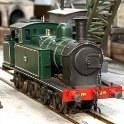
Mol_PMB Posted April 1 Posted April 1 I've had time for a bit more research. Of the 12 locos, 5 were withdrawn in 1954-56 and so don't fit your timeframe, these were 551, 553, 554, 555, 556. According to the list in Ernie Shepherd's book. But there is an IRRS photo of 554 in steam at Galway dated August 1958, so one of those dates is wrong. 553, 555 and 560 were on the W&T and had the enlarged cabs and modified steps. Only 560 saw use after its time on the W&T, lasting in service until 1963 working around Tralee. Considering the remainder with normal cabs and lasting into the late 1950s: 552 lasted until 1963, latterly working in Cork / West Cork. It had a slightly raised bunker. Loads of photos. 557 was withdrawn in 1959, latterly working in Cork / West Cork. Standard bunker, and retained numberplates well into the 1950s and probably until withdrawal. Some photos. 558 was withdrawn in 1960, latterly working in Sligo. It had a slightly raised bunker and large buffers. Loads of photos. 559 was withdrawn in 1960, latterly working around Tralee. It had a standard bunker and large buffers, and a unique vent on the cab roof. Some photos. 561 was withdrawn in 1959, seems to have been Dublin-based. Standard bunker and buffers. Some photos. 562 lasted until 1963, seems to have been Dublin-based. Standard bunker and buffers. Some photos. Happy choosing! 1 1 1
jhb171achill Posted April 1 Posted April 1 8 hours ago, Mol_PMB said: 557 may be the best bet, seems to have survived into the late 1950s with a numberplate but small bunker: https://www.flickr.com/photos/irishrailwayarchive/53511679834 https://www.flickr.com/photos/irishrailwayarchive/53511776694 551 was in this condition but withdrawn at Inchicore in 1955: https://www.flickr.com/photos/irishrailwayarchive/54251301311 https://www.flickr.com/photos/irishrailwayarchive/53509201534 Otherwise I think they all lost their plates, or got the W&T cab. 560 kept its plates to the end. Very very few engines did in CIE days. You're right about detail differences. Within ANY class, by the 1950s barely any two engines on the whole system were EXACTLY the same! And if they were, maybe one was green and one was grey! 1
Mayner Posted April 2 Posted April 2 (edited) I have a pair of Midland tanks both 21mm gauge 553 assembled about 30 years ago with the original brass chassis and rods and the 556 completed about about 8 years ago with the replacement n/s chassis. At the time I was not happy with the rods supplied with the n/s chassis (deeply bellied profile and half etched outer layer) and hoped to use the brass rods included with the body & chassis fret, but found brass and n/s rods had different centres! Looking at MIL_PMB very recent bumping up of Horsetans "Tmd/ssm mgwr 'e"/gsr j26/ cie 551 0-6-0t" thread it also looks like I had a similar 'accident"to Alan while assembling the n/s rods and seem to have produced a replacement set (2 layers full thickness) prepared in etched brass. Wrecking and replacing the rods no doubt contributed to my 2+ year delay in completing the loco. I still have to sort out a replacement set of rods for a High Level HL 0-6-0ST I started while travelling to New Zealand over 20 years ago As far as I recall the TMD kit is supplied with parts to complete the loco in original pre-1912 form (flush riveted smokebox, tall cast Iron chimney, fancy smokebox door and original safety valve cover. The locos were re-boilered in 1912 retaining a flush riveted smokebox and tall chimney, a conventional smokebox door (with spoked hand wheel) and ross pop safety valves. Some locos incl 561,552,558* retained these features until at least 1939 before being rebuilt with riveted smokebox, Inchacore "built up" chimney and smokebox with "dart" hand levers. * photos Great Southern Railways Donal Murray 2006. One of the "Tramore" locos with extended cab and recessed cab steps may have retained its flush smokebox and tall cast Iron chimney into the 1950s I guess its a question of whether you/Patrick would be prepared to complete the loco in its original pre-1912 form with ornate livery or with minor modifications in post 1912 condition in simplified MGW or GSR livery or late GSR/CIE condition with the challenge of forming a riveted smokebox and finding a suitable chimney. Both 553 & 556 are in rebuilt form with riveted smokebox and Inchacore chimney, I cheated with 553 by using a riveted smokebox overlay from a TMD J15 kit and produced an etched riveted wrapper for 556. Edited April 2 by Mayner 2 3
Tullygrainey Posted April 2 Author Posted April 2 Thanks for this John. A wealth of changes over the lifetime of this particular loco class so plenty to consider before deciding on which one to model. Not surprised to discover I wasn't the first to wreck one of the n/s rods! They really are flimsy. My first instinct was to try using the original brass ones but like you, discovered they had different centres. So much for that plan. I haven't even looked at the body etches yet. I'll try getting the chassis working first. It's had a coat of paint now so wheeling up is next - the moment of truth for the remade rod.
Mol_PMB Posted April 2 Posted April 2 I was reading the body instructions and noted that the whole thing ends up soldered together in one piece. My preference would normally be to have separate sub-assemblies for footplate, boiler and superstructure. I've got some ideas about how to do this which I am mulling over. I'll be interested to see how your motor/gearbox option looks within the footplate cutouts (which I suspect are much larger than needed for a modern motor/gearbox). Also, my kit has no boiler. Do you have one, and if so what are its dimensions? The photos in that old thread show a massively thick-walled pipe which explains why the instructions say it requires a lot of heat to solder to the smokebox! I would envisage using a much thinner tube.
Tullygrainey Posted April 2 Author Posted April 2 (edited) Yep, it's a solid bit of pipe left over from plumbing the Titanic. O.D. 16mm I.D. 13.5mm Length: 61mm Weight: 29 gms Tools required to fit it: An angle grinder and a very large blow lamp I reckon Edited April 2 by Tullygrainey 1
Mol_PMB Posted April 2 Posted April 2 I think I might buy one of these, if I don’t already have something suitable in stock: https://ebay.us/m/bMeZgB 2
Tullygrainey Posted April 3 Author Posted April 3 (edited) E Class/J26: Making the chassis work... The wheels that came with Kieran's E Class/J26 kit, presumably bought in by whoever originally purchased the kit but never built it, are from ScaleLink. They are similar to Markit wheels, having a square hole to fit onto square ended axles, but unlike Markits they have plastic centres not metal ones. They're consequently more fragile and I struggled to fit them square on the axles, conscious that I could be distorting the square hole as I forced them on. It's recommended that the square axle ends be lightly dressed with a fine file to remove any burrs. I did that and also tried to chamfer the edges of the hole in the wheels. First attempt resembled a clown car with wheels wobbling in all directions. Took them off again, tidied up the holes with a fine needle file and managed to get them on a bit straighter. It just needs care and patience. The wheeling up of the chassis and fitting of the coupling rods was the usual pantomime; two afternoons of fiddling and fettling, chasing tight spots round the chassis. At one point it ran smoothly forward but locked up in reverse. Eh? Eventually got it running reasonably smoothly in both directions. The cobbled up rod seems to have blended with its companions ok so that's a relief. IMG_4703.MOV Paul, Here's the running plate fitted to the chassis. Alan Edited April 3 by Tullygrainey 3 1
Galteemore Posted April 3 Posted April 3 Excellent Alan. Until I started into this game I’d never realised that ‘fettle’ was a synonym of ‘frustration’ 3
Mol_PMB Posted April 3 Posted April 3 Excellent work, good to hear you got there in the end! That last photo is very helpful - thank you. As expected the cutout in the footplate is bigger than it needs to be, though it will look quite different in 21mm gauge. Certainly that slot towards the right-hand end is unnecessary. This photo is a good broadside view looking through the cab, and my impression is that the backhead is aligned with the front of the cab doorway and is just behind the wheelset centreline. It may be necessary to tweak it back a tiny bit to conceal your gearbox position but I don't think that would be noticeable. https://www.thetransportlibrary.co.uk/-/galleries/rail/lens-of-sutton-association/lens-of-sutton-association-irish-railways-part-2/-/medias/40ebd796-82e9-4733-bd47-2682a9a71a2f-cie-560-ex-mgwr-j26-0-6-0-being-turned-at-tramore-16-4-53-jn Height-wise, I wonder whether those wheels are going to be taller than the splashers? Maybe maximum size wheel diameter plus slightly overscale flange size might cause a problem, or require the footplate to be packed up a bit relative to the frames? Have you looked at buffer height with it assembled as-is? This is another interesting photo! The dismantled loco will be light and hence high on its springs here, but the wheels hardly come above the footplate level: Also thinking about heights and clearances over the gearbox etc, many photos of the right hand side of the locos appear to show a raised floor in the cab: https://www.flickr.com/photos/irishrailwayarchive/53508698033/ https://www.flickr.com/photos/irishrailwayarchive/53511645263/ https://www.flickr.com/photos/irishrailwayarchive/53499079344/ https://www.flickr.com/photos/irishrailwayarchive/54419707859/ https://www.flickr.com/photos/irishrailwayarchive/53510472622/ But this is not so apparent on the left hand side: https://www.flickr.com/photos/irishrailwayarchive/54253010976/ https://www.flickr.com/photos/irishrailwayarchive/54253254994/ https://www.flickr.com/photos/irishrailwayarchive/53511776694/ https://www.flickr.com/photos/irishrailwayarchive/54253241858/ https://www.flickr.com/photos/irishrailwayarchive/53509091889/ https://www.flickr.com/photos/irishrailwayarchive/54252113662/ So maybe the raised floor was only on one side of the cab? I've spent all day staring at spreadsheets but perhaps tomorrow I'll get the soldering iron out. Or at least do some careful measuring and planning. I have some wheels in the stash somewhere which I think came from the 3mm Society. I'll have to look them out and remind myself. But my square-ended axles are the wrong gauge (maybe EM?) which will be a pain. 2
Mol_PMB Posted April 3 Posted April 3 These are the wheels I’ve got. They actually measure 17.8mm diameter over tread and 19.2mm over flanges. 1
Tullygrainey Posted April 3 Author Posted April 3 You may be right about the wheels being taller than the splashers. I had the same thought after I fitted the running plate. The instructions recommend 18 mm diameter Markits. The ScaleLinks are 18.5 mm, compounding the problem. Only the front axle is likely to be a problem. Middle axle will be inside the tanks. The splashers inside the cab can probably be enlarged without it being too noticeable. I'll cross that bridge when I come to it. Soon probably! I tend never to get round to cab detail anyway and most of my County Down locos have the crew placed strategically in the doorways to hide the fact. 1
Galteemore Posted April 3 Posted April 3 In case is of any help, here’s some cab interior views of the one I built about 5 years ago 7 2
Mayner Posted April 4 Posted April 4 4 hours ago, Tullygrainey said: You may be right about the wheels being taller than the splashers. I had the same thought after I fitted the running plate. The instructions recommend 18 mm diameter Markits. The ScaleLinks are 18.5 mm, compounding the problem. Only the front axle is likely to be a problem. Middle axle will be inside the tanks. The splashers inside the cab can probably be enlarged without it being too noticeable. I'll cross that bridge when I come to it. Soon probably! I tend never to get round to cab detail anyway and most of my County Down locos have the crew placed strategically in the doorways to hide the fact. 4'6" OO/EM profile Sharnan wheels fitted within the splashers on both my 21mm guage TMD E Class, the main issue is that the (scale width?) splasher tops do not fully cover/enclose the wheel tyres when viewed from above. Like Alan I never got round to fitting my E Class/J26 or most of my Irish outline steam locos with cab interior, challenging enough to get them to run reliably and complete the normally visible detail. 556 cab interior view, wheels OO/EM profile 21mm gauge 19.5mm B-B. A raised cab floor would appear to be the simplest option for modelling a detailed cab interior in OO. Again wheel typres partially visible with OO/EM profile wheels in 21mm. Possibly wider splasher tops in OO, potential clearance problems with smokebox wrapper & spring? I modelled the loco in late GSR condition with riveted smokebox. Looks like I used the original ornate TMD smokebox door with most of the raised detail removed, etched riveted strapping and wire for door hinge detail. Loco hasn't run since being largely completed 7-8 years ago, still have to fit couplings. 6 1
Tullygrainey Posted April 4 Author Posted April 4 6 hours ago, Mayner said: 4'6" OO/EM profile Sharnan wheels fitted within the splashers on both my 21mm guage TMD E Class, the main issue is that the (scale width?) splasher tops do not fully cover/enclose the wheel tyres when viewed from above. Like Alan I never got round to fitting my E Class/J26 or most of my Irish outline steam locos with cab interior, challenging enough to get them to run reliably and complete the normally visible detail. 556 cab interior view, wheels OO/EM profile 21mm gauge 19.5mm B-B. A raised cab floor would appear to be the simplest option for modelling a detailed cab interior in OO. Again wheel typres partially visible with OO/EM profile wheels in 21mm. Possibly wider splasher tops in OO, potential clearance problems with smokebox wrapper & spring? I modelled the loco in late GSR condition with riveted smokebox. Looks like I used the original ornate TMD smokebox door with most of the raised detail removed, etched riveted strapping and wire for door hinge detail. Loco hasn't run since being largely completed 7-8 years ago, still have to fit couplings. Thanks for this John. Most useful. That's a lovely model. Such a shame that Mike Sharman's wheels aren't available any more. They were beautifully made and the moulded-in crankpins made life so much easier. I have a couple of locos fitted with them. The wheel visibility issue on the J26 will be even more pronounced in 16.5 OO. 1
Tullygrainey Posted April 4 Author Posted April 4 (edited) Storm Dave has been banging its coat tails against the windows all afternoon here so there was time for more J26. The instructions suggest soldering the splasher tops to their respective sides on the running plate before bending them up which is definitely the easier way to do a tricky job. Two done, two more to bend up here... OO 16.5mm gauge meets the Irish Locomotive... Maybe we'll just view it from the side. These steps were another fiddly soldering job. Contrary to the instructions this time, it's easier to solder them on before the valances are fitted to the running plate. Coupling hooks and strengthening plates are also easier to add before the buffer beams go on. All the best jigs are made from lollipop sticks and masking tape but spot the deliberate mistake. I didn't. That'll teach me to be blasé. Running plate is a bit less floppy now. Time to knock off. Alan Edited April 5 by Tullygrainey 5 1
Mol_PMB Posted April 4 Posted April 4 Lovely work! I was looking at those steps earlier and wondering why the kid designer hadn't used slots and tabs - would make it a lot easier! I'll be tackling them tomorrow. I think I might make the splasher tops a bit wider, even in 21mm gauge. 1
Tullygrainey Posted April 4 Author Posted April 4 6 minutes ago, Mol_PMB said: I think I might make the splasher tops a bit wider, even in 21mm gauge. Might be wise
Horsetan Posted April 4 Posted April 4 12 hours ago, Tullygrainey said: ... Such a shame that Mike Sharman's wheels aren't available any more. They were beautifully made and the moulded-in crankpins made life so much easier. ... Sharman wheels had the one advantage of having a wider range of wheel diameters and wheel centre types than everyone else put together. I really need a set for an ex-LNWR Claughton, and Sharman were the only wheels that correctly reproduced the outsize wheel bosses. I didn’t think the moulded-in crankpins were much good, though - they were too short if you had an outside-cylindered locomotive and wanted to fit connecting rods that had full-width big ends. They were fine if you were modelling an engine with inside motion, needing only coupling rods.
Horsetan Posted April 4 Posted April 4 On 1/4/2026 at 12:33 PM, Tullygrainey said: The Case of the Crippled Coupling Rod Each coupling rod assembly for the E Class/J26 is made up from two sections which hinge by overlapping on the centre axle. Each section is a lamination with two layers soldered together. At the overlap, each rod has only a single layer. With some half-etching to create bosses, the bits are pretty flimsy.... ....and yet this is the way that almost all chassis kits were designed in the 1980s onwards, rods jointed on the crankpin, even though most actually had the joint on the knuckle. For the real-life J26, the front section of the coupling rods were in fact forked on the middle crankpin, and the rear rod section fitted into the fork, so the fully-assembled rods were then fitted all in one; this can't have been an easy job, requiring at least three men to lift the full length of the rods as a single unit. Fun fact: on the LNER, the Gresley D49 4-4-0s had a similar arrangement in which the connecting rod big-end was forked, with the leading boss of the coupling rod fitting into the fork - they were apparently called Woodard connecting rods, after the name of the patent holder. 3
Mayner Posted April 5 Posted April 5 As far as I recall the TMD (Terry McDermott) E Class/J26 was originally introduced in 1983/4 TMDs first Irish kit. TMD initially produced a SDJR milk van (etched brass & plasticard) followed by an etched kit for a Glasgow & South Western 0-6-2T both 4mm scale. The Midland Tank introduced during the early stages of the development of etched kits, more a set of parts similar to a traditional pressed metal kit rather than the rather complex kits with slot and tab construction and half etched parts that evolved in later years. I think the etched n/s chassis was introduced during the late 80s in response to problems experienced by some customers while assembling the original chassis. Some modellers who assembled the chassis with a rigid chassis (as described in the original chassis) found that the etched brass chassis distorted (& de-railed)when fixed (at both ends) to the body. I recently read an Iain Rice magazine article on compensation and as a novice builder (1984/5) got around the problem by assembling the kit as a compensated loco simply by using Sharman hornblock bushes (on all axles) in combination with the etched hornblock cut outs in the original brass chassis. I fitted a compensation beam above the leading and centre axle with the axles free to move up and down in their etched hornblock cutouts and treated the trailing (driving axle) as rigid without vertical movement, I fabricated a keeperplate to retain wheels in place and represent brake pull-rods as the original etched brake gear was extremely fragile. I overhauled and re-painted the model about 10 years later. I was a novice kit builder when I first assembled the loco (Frylux paste flux and goodness knows what solder) and I liked to believe that my standard of workmanship had improved during the 10 years since I originally assembled the kit, 30 years later loco still looks and runs reasonably, but could potentially do with a mechanical upgrade (new gearbox and motor). But probabably better to let sleeping dogs lie, goodness knows when I'll actually get around to building a 21mm gauge layout or find work for my current collection of locos. Like Horsetan I prefer the origonal brass chassis to the n/s replacement although we have different preferences when it comes to wheel/track standards and suspension systems. 3
Colonel Posted April 5 Posted April 5 (edited) When you look at the photo of the footplate on the chassis, it is easy to see why rtr Irish steam outline locos are so rare. The extra width required for 21mm gauge makes accommodating splashers a compromise too far. Had to smile at the coupling hook - done the same (or similar), so many times... Edited April 5 by Colonel 4
Tullygrainey Posted April 5 Author Posted April 5 11 hours ago, Horsetan said: I didn’t think the moulded-in crankpins were much good, though - they were too short if you had an outside-cylindered locomotive and wanted to fit connecting rods that had full-width big ends. They were fine if you were modelling an engine with inside motion, needing only coupling rods. Good point. Luckily, I only ever hung coupling rods on mine. 6 hours ago, Mayner said: As far as I recall the TMD (Terry McDermott) E Class/J26 was originally introduced in 1983/4 TMDs first Irish kit. Possibly even earlier. This on the E Class/J26 etch...
Horsetan Posted April 5 Posted April 5 (edited) 12 minutes ago, Tullygrainey said: .... even earlier. This on the E Class/J26 etch... Same on mine. The interesting thing about the box that mine came in was that it was labelled "J26 - October 1976"!!! Did Terry MacDermott start drawing the design as early as that? 6 hours ago, Mayner said: As far as I recall the TMD (Terry McDermott) E Class/J26 was originally introduced in 1983/4 TMDs first Irish kit. TMD initially produced a SDJR milk van (etched brass & plasticard) followed by an etched kit for a Glasgow & South Western 0-6-2T both 4mm scale. ... The Glasgow tank eventually became part of the Perseverance etched kit range, I think, which became part of the Puffers brand run by the late Chris Parrish. One kit came up on eBay last year and sat around for some weeks. All of the Perseverance/Westward/Puffers kits and parts effectively died when Chris passed away. There was some talk a while ago that the range had now found a new owner, but it will take many years for anything to be relaunched as the chassis designs are now mostly very old and need to be redesigned - most were the work of Rod Neep, whose design techniques tended to worsen if the chassis was complicated by outside valve gear. I remember buying a Perseverance chassis kit meant tor the Ivatt "2" 2-6-0 and 2-6-2Ts, and then realising the frame profiles were completely wrong in front, and the motion bracket design would obstruct the operation of the valve gear! So that was 25 quid wasted. Likewise the kit for the Bulleid Light Pacific could not be built properly due to design mistakes in the crosshead and slidebar - 20 quid wasted there. Edited April 5 by Horsetan 1 1 1
Tullygrainey Posted April 11 Author Posted April 11 More T26. Taking a lead from Paul, I made wider splasher tops for the front axle in an attempt to disguise the OO gauge wheel spacing. It's certainly helped. A bit. The cab is a fold up design, front and sides, with the rear sheet soldered to this. Attaching the cab beading was a delicate task as was the beading on the bunker and tanks. Cab, bunker and tanks are soldered together into a single unit. This needs a bit of to and fro to get everything lined up and properly spaced. The instructions suggest soldering bunker and tanks to the running plate and there's no real reason not to do this. However, most of my BCDR locos were built as sub-sections which bolt together, which helps with painting and lining later. It's an approach I first came across in building Judith Edge kits and I've done it here too. There are two 14BA captive nuts in the back corners of the bunker and one at the front of each tank. Four 14BA bolts hold the whole structure tightly down onto the running plate. The boiler supplied with the kit is a heavy duty bit of brass tube. I got through 3 piercing saw blades cutting a clearance for the motor and gearbox. Soldering things to it was an even bigger challenge. It needed a lot of heat and plenty of time to get the solder melting and the whole thing was too hot to touch for about a minute after each task. The Resistance Soldering Unit came in handy to effectively tack boiler bands in place. Some detail bits added. The whitemetal castings were attached with 5 minute epoxy. More work needed on the chassis now - brakes and pickups. Always a joy to do Alan 8 2
Galteemore Posted April 11 Posted April 11 Looks fabulous Alan. Characterful loco. As for the brakes, just be glad it’s internal rods 1
Mol_PMB Posted April 11 Posted April 11 11 minutes ago, Tullygrainey said: More T26. Taking a lead from Paul, I made wider splasher tops for the front axle in an attempt to disguise the OO gauge wheel spacing. It's certainly helped. A bit. The cab is a fold up design, front and sides, with the rear sheet soldered to this. Attaching the cab beading was a delicate task as was the beading on the bunker and tanks. Cab, bunker and tanks are soldered together into a single unit. This needs a bit of to and fro to get everything lined up and properly spaced. The instructions suggest soldering bunker and tanks to the running plate and there's no real reason not to do this. However, most of my BCDR locos were built as sub-sections which bolt together, which helps with painting and lining later. It's an approach I first came across in building Judith Edge kits and I've done it here too. There are two 14BA captive nuts in the back corners of the bunker and one at the front of each tank. Four 14BA bolts hold the whole structure tightly down onto the running plate. The boiler supplied with the kit is a heavy duty bit of brass tube. I got through 3 piercing saw blades cutting a clearance for the motor and gearbox. Soldering things to it was an even bigger challenge. It needed a lot of heat and plenty of time to get the solder melting and the whole thing was too hot to touch for about a minute after each task. The Resistance Soldering Unit came in handy to effectively tack boiler bands in place. Some detail bits added. The whitemetal castings were attached with 5 minute epoxy. More work needed on the chassis now - brakes and pickups. Always a joy to do Alan That's coming along very nicely - looks like you've found the invisible solder too! I'm still waiting on delivery of some parts for mine, but should be able to make more progress on the chassis tomorrow. Have you yet found a suitable chimney? I have ended up buying several and I'm still not sure which to choose! Left to right: The dome supplied with the kit, which is OK I think. 12.4mm high from boiler top, 10.0mm dia. The chimney supplied with the kit, which is the earlier type. 18.8mm high from boiler top, 5.0mm dia. A turned brass chimney acquired in a secondhand lot on ebay. 11.4mm high from boiler top, 5.0mm dia. A cast whitemetal chimney acquired in a secondhand lot on ebay. 13.2mm high from boiler top, 5.0mm dia near the top but more tapered than the othes. Mainly Trains MT328 for a GWR 0-4-2T, lost wax brass casting, 12.9mm high from boiler top, 5.1mm dia. Alan Gibson 4M614, lost wax casting, 12.6mm high from boiler top, 5.4mm dia. 1 1
Galteemore Posted April 11 Posted April 11 9 minutes ago, Mol_PMB said: That's coming along very nicely - looks like you've found the invisible solder too! I'm still waiting on delivery of some parts for mine, but should be able to make more progress on the chassis tomorrow. Have you yet found a suitable chimney? I have ended up buying several and I'm still not sure which to choose! Left to right: The dome supplied with the kit, which is OK I think. 12.4mm high from boiler top, 10.0mm dia. The chimney supplied with the kit, which is the earlier type. 18.8mm high from boiler top, 5.0mm dia. A turned brass chimney acquired in a secondhand lot on ebay. 11.4mm high from boiler top, 5.0mm dia. A cast whitemetal chimney acquired in a secondhand lot on ebay. 13.2mm high from boiler top, 5.0mm dia near the top but more tapered than the othes. Mainly Trains MT328 for a GWR 0-4-2T, lost wax brass casting, 12.9mm high from boiler top, 5.1mm dia. Alan Gibson 4M614, lost wax casting, 12.6mm high from boiler top, 5.4mm dia. Here’s a pic of Tim Cramer’s drawing. With 7mm ruler for scale. 2
Mol_PMB Posted April 11 Posted April 11 On that basis, my chimneys are all too short (apart from the one in the kit which is the wrong style and too tall). I'm not convinced that all the J26s had chimneys (or dome covers) of the same height in latter days. But the appearance is very subjective according to the angle of the view. Other suggestions for where to get a slightly taller chimney would be very welcome!
Galteemore Posted April 11 Posted April 11 5 minutes ago, Mol_PMB said: On that basis, my chimneys are all too short (apart from the one in the kit which is the wrong style and too tall). I'm not convinced that all the J26s had chimneys (or dome covers) of the same height in latter days. But the appearance is very subjective according to the angle of the view. Other suggestions for where to get a slightly taller chimney would be very welcome! GW chimneys seem a fair bet. Maybe a Dean Goods or similar ? TBH I think you could get off with the 14xx one near enough…, 1
Tullygrainey Posted April 11 Author Posted April 11 38 minutes ago, Mol_PMB said: Have you yet found a suitable chimney? I have ended up buying several and I'm still not sure which to choose! From left to right: Dome from the kit. I would agree it's ok. Turned brass chimney from Kieran's bits box. Origin? Around 14.5mm tall. Cast brass Alan Gibson chimney (4M730). Around 14.3mm tall Not sure yet which is better. Like you, I suspect there were variations across the class and over time so I'm not going to be too doctrinaire about it. I'll use the one that looks best. 4
Galteemore Posted April 11 Posted April 11 Alan - just admiring this again, but noticed one of the cab handrails is adrift? Makes it look as if rear bunker is askew….
.png.c363cdf5c3fb7955cd92a55eb6dbbae0.png)
Recommended Posts
Create an account or sign in to comment
You need to be a member in order to leave a comment
Create an account
Sign up for a new account in our community. It's easy!
Register a new accountSign in
Already have an account? Sign in here.
Sign In Now