.png.c363cdf5c3fb7955cd92a55eb6dbbae0.png)

jhb171achill
-
Posts
16,656 -
Joined
-
Last visited
-
Days Won
413
Content Type
Profiles
Forums
Events
Gallery
Blogs
Everything posted by jhb171achill
-
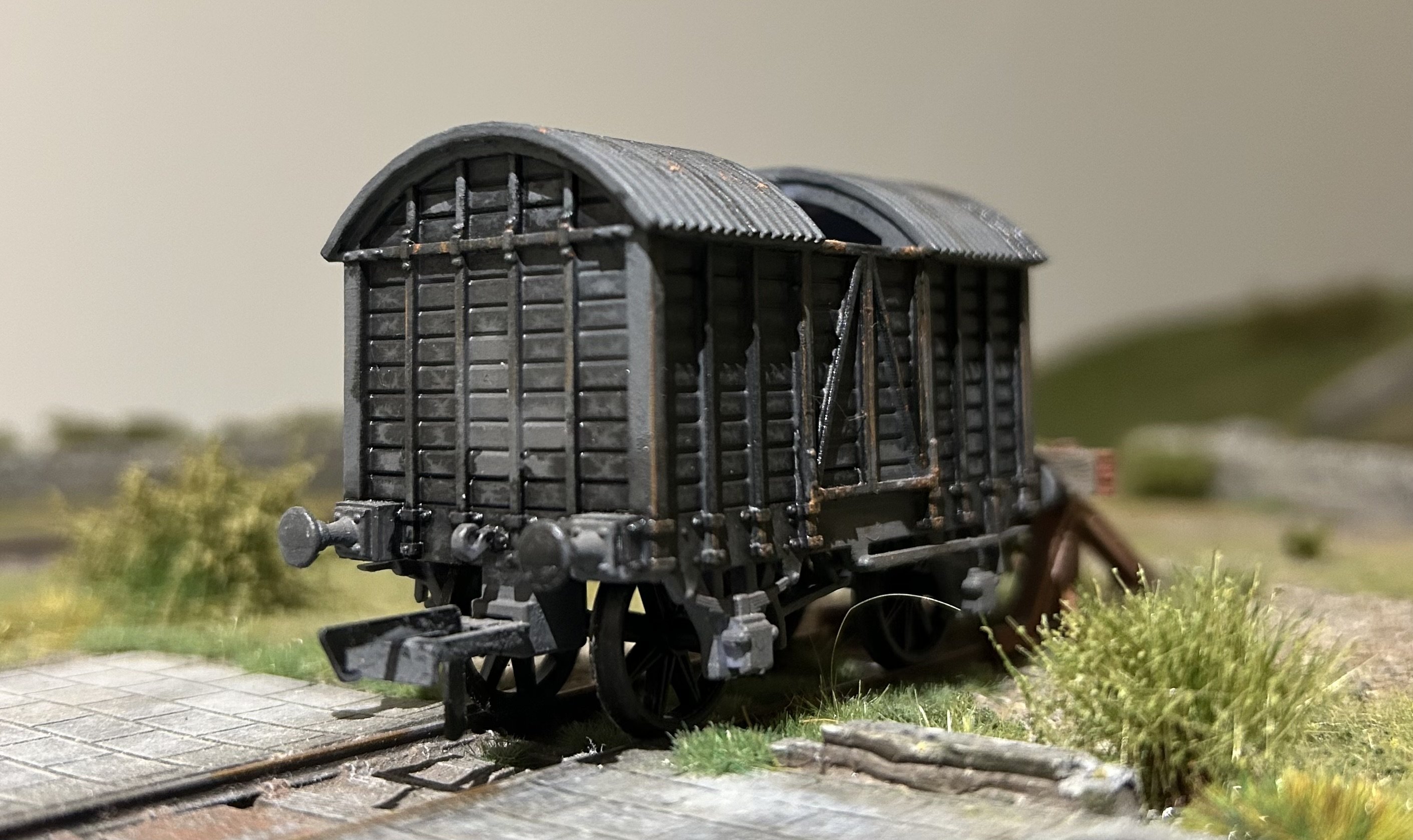
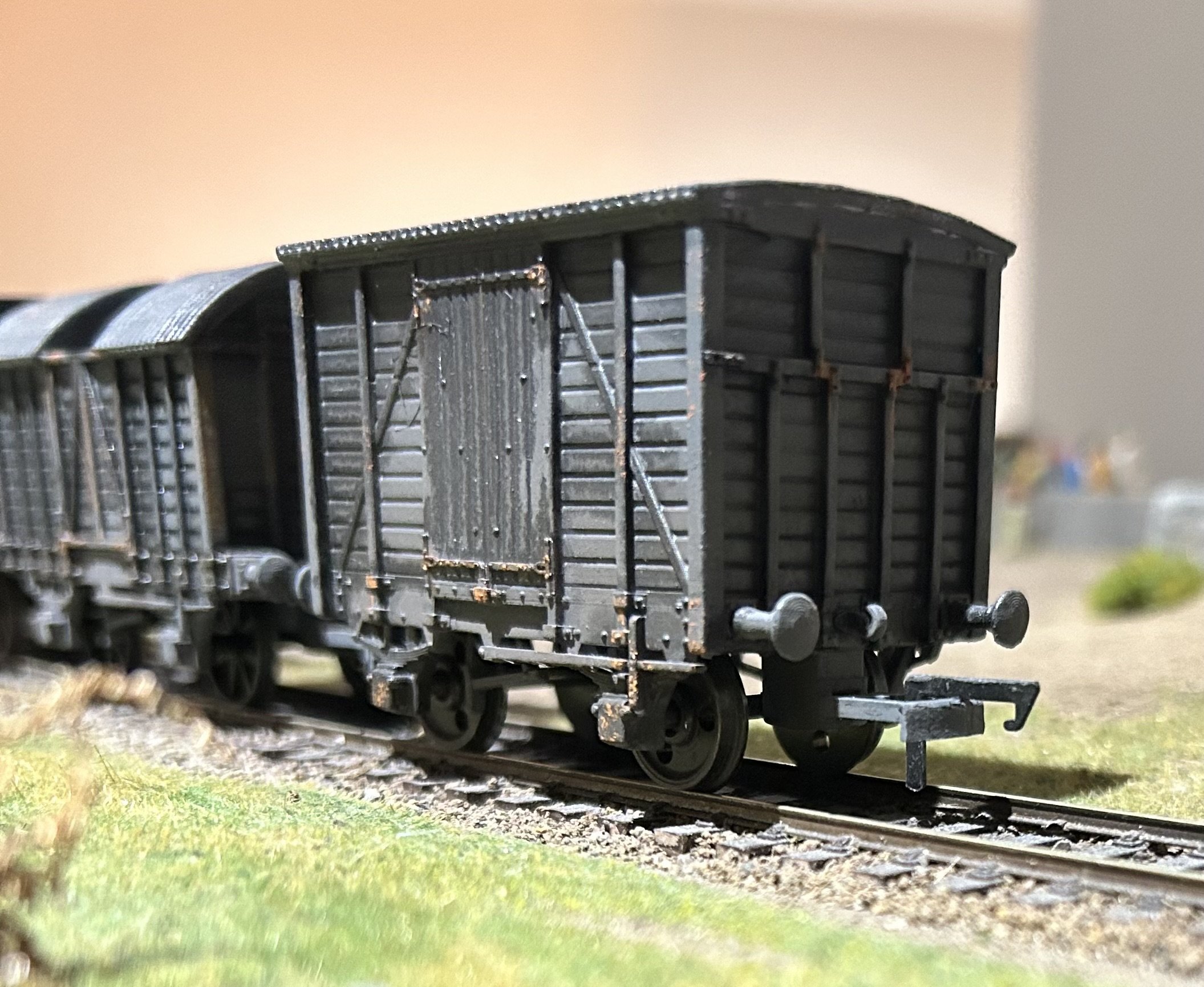
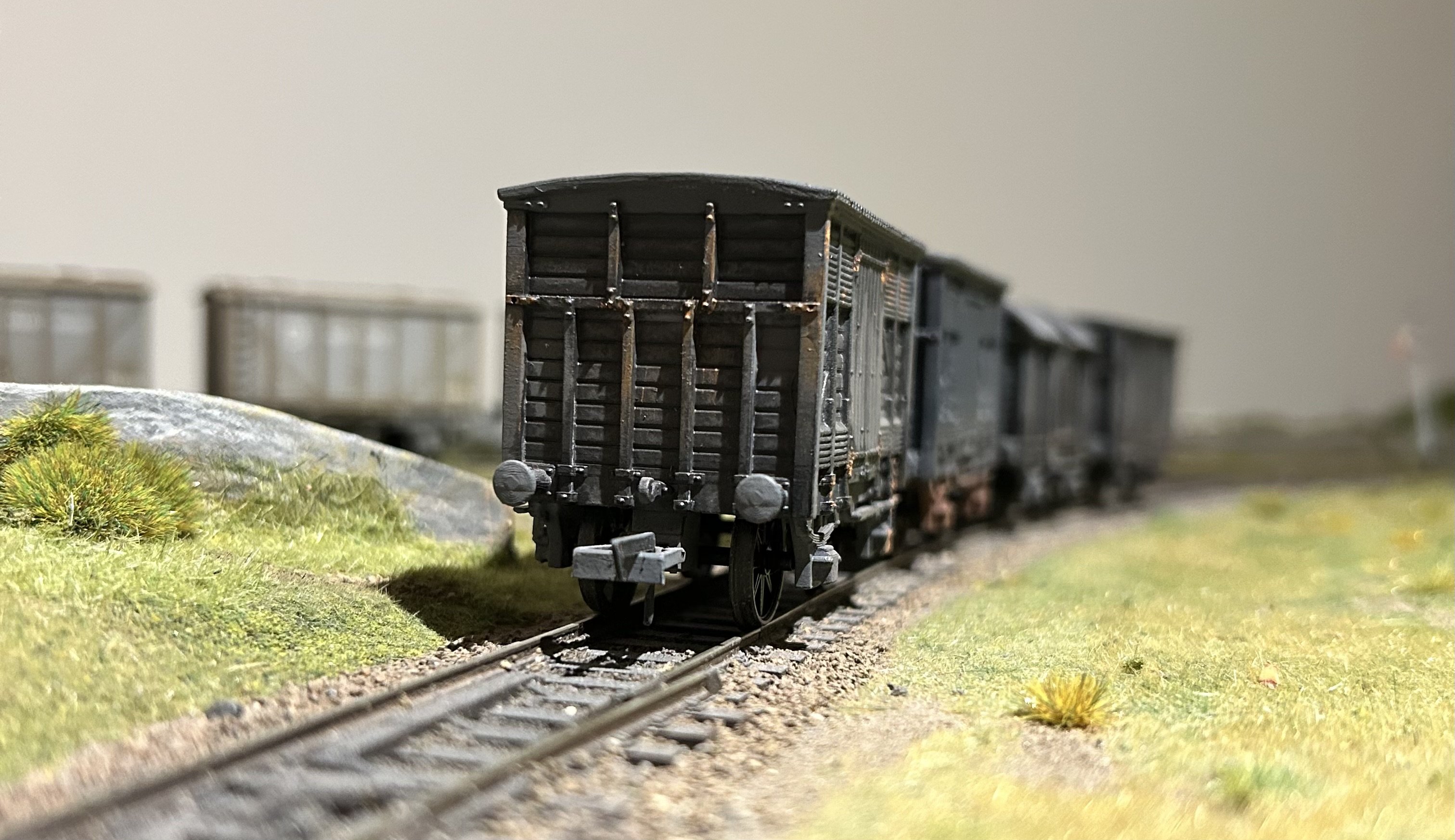
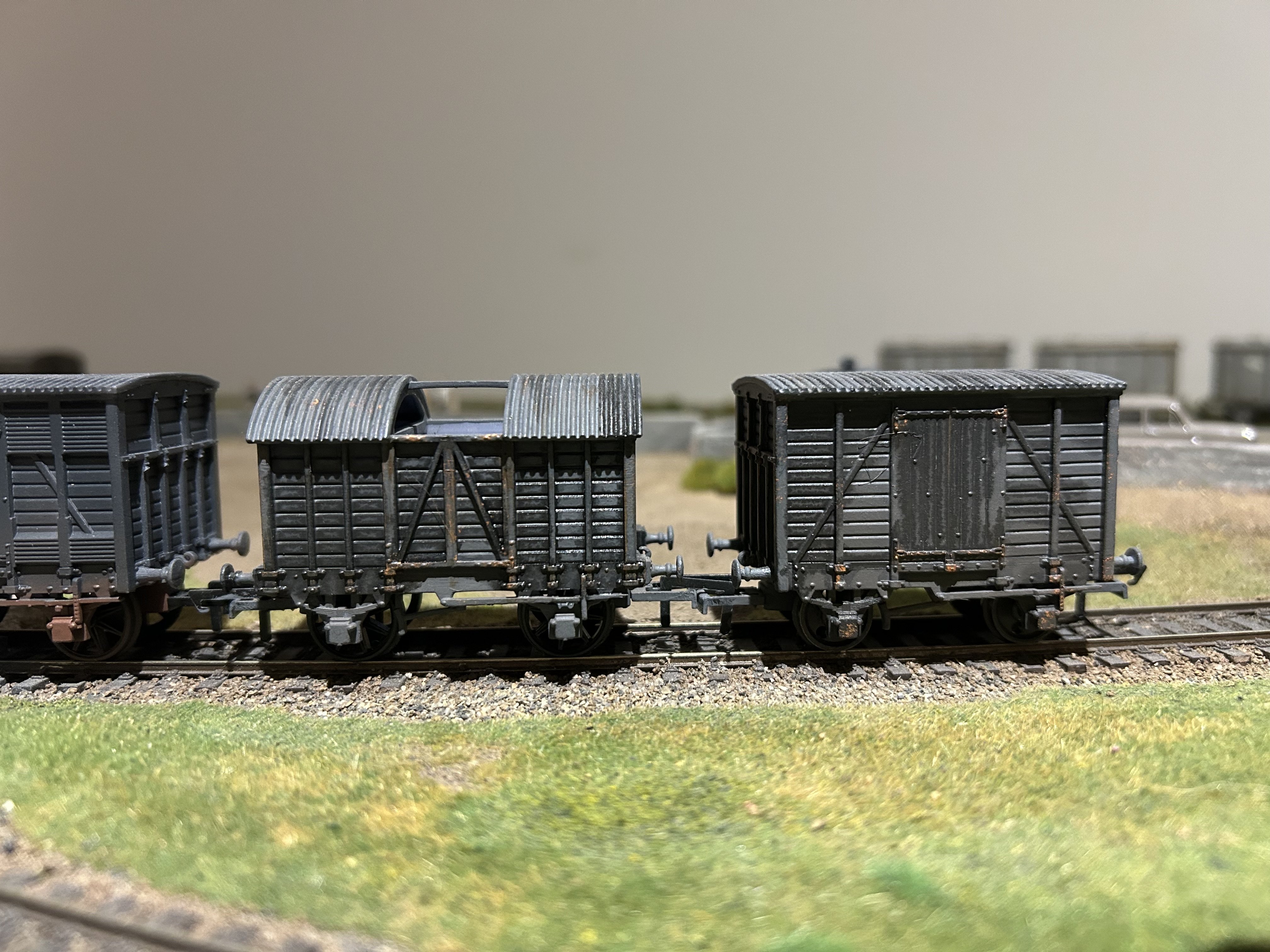
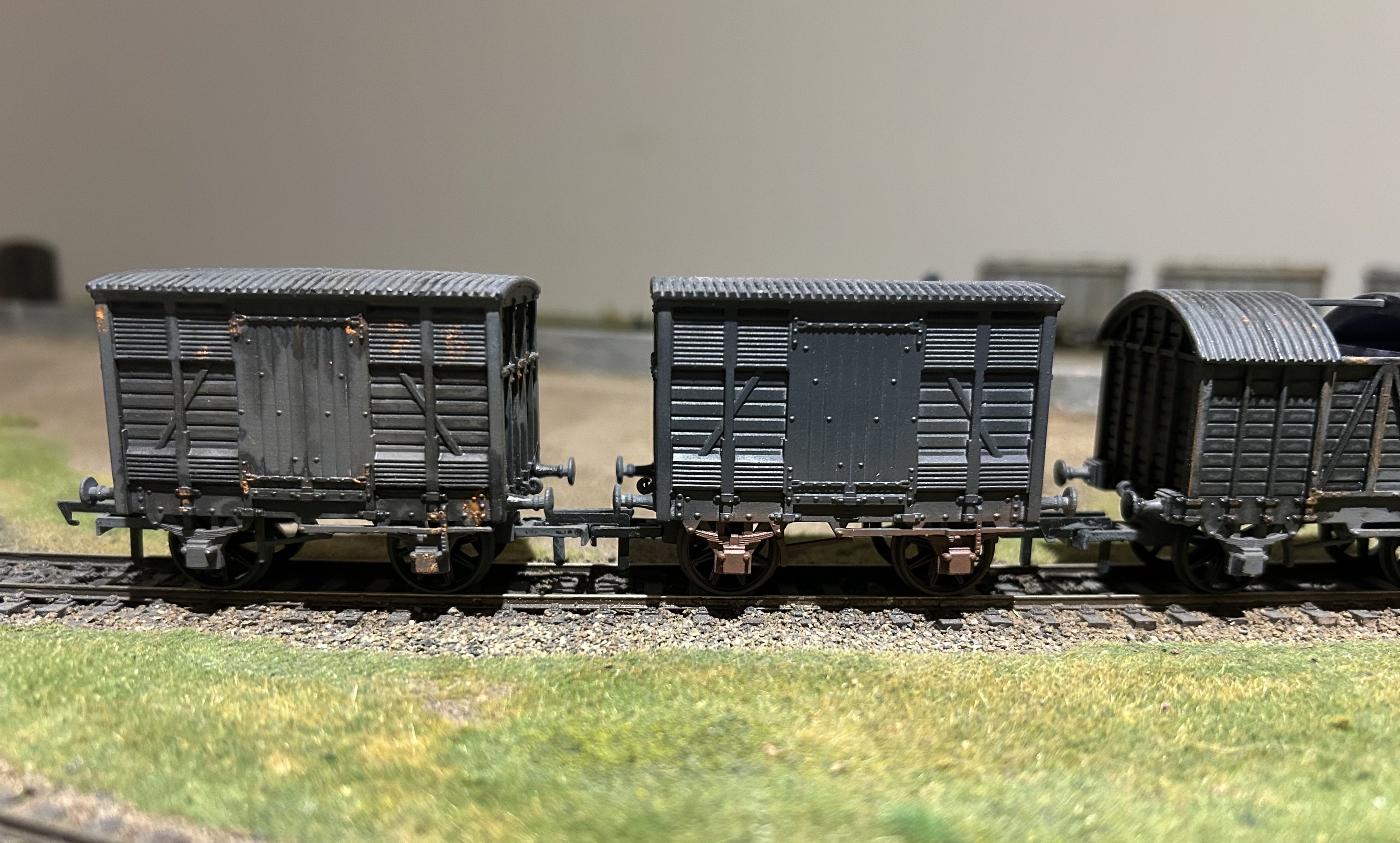
These are the four vans I got from Ken. I had ordered another vent van and two goods vans with “smooth” roof instead of corrugated. Never got round to lettering….. yet!

-
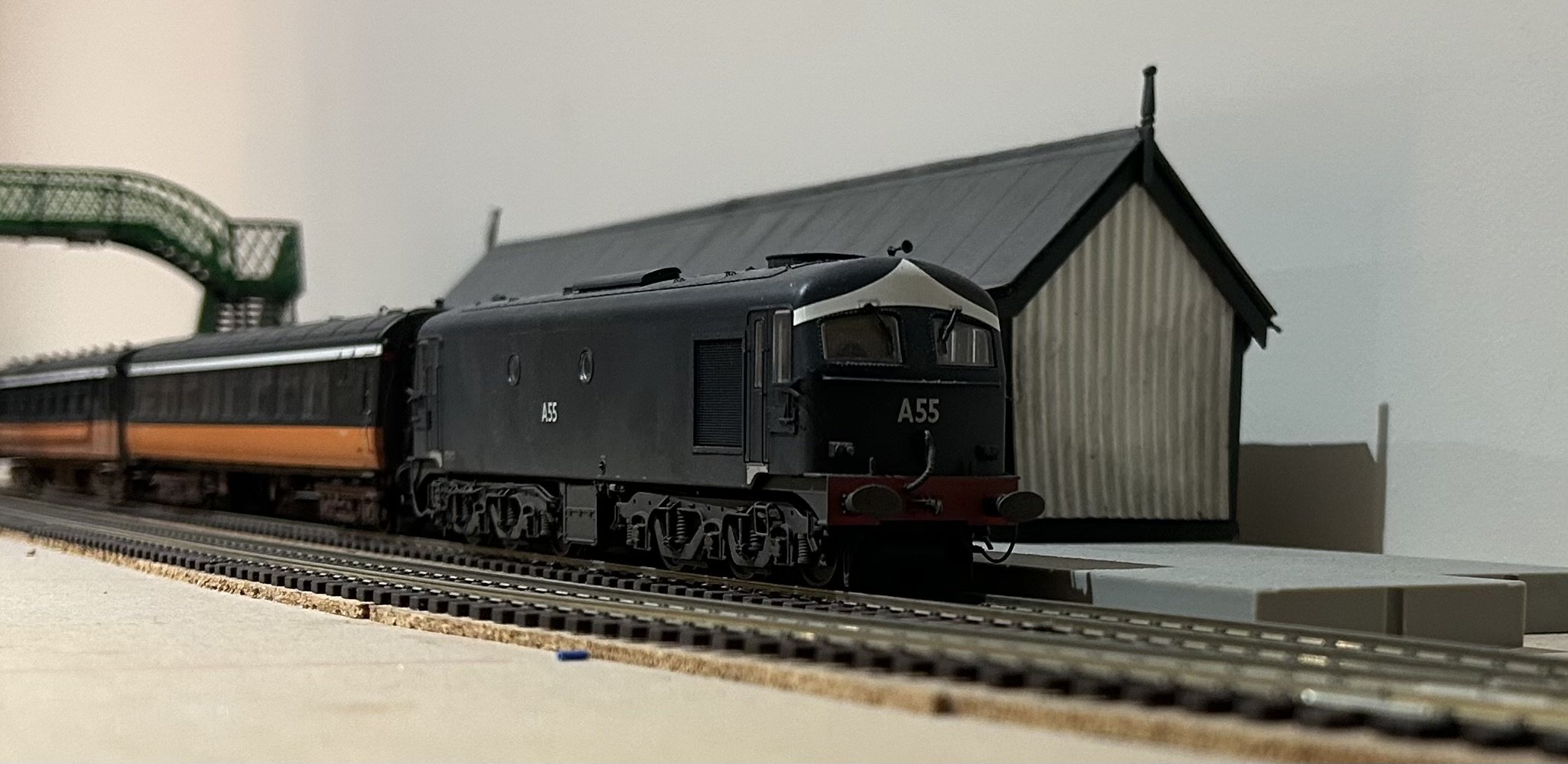
One spring morning in 1965, A55 prepares to depart from Castletown with the 08:30. It’s rare to see a new Craven on this service.
-
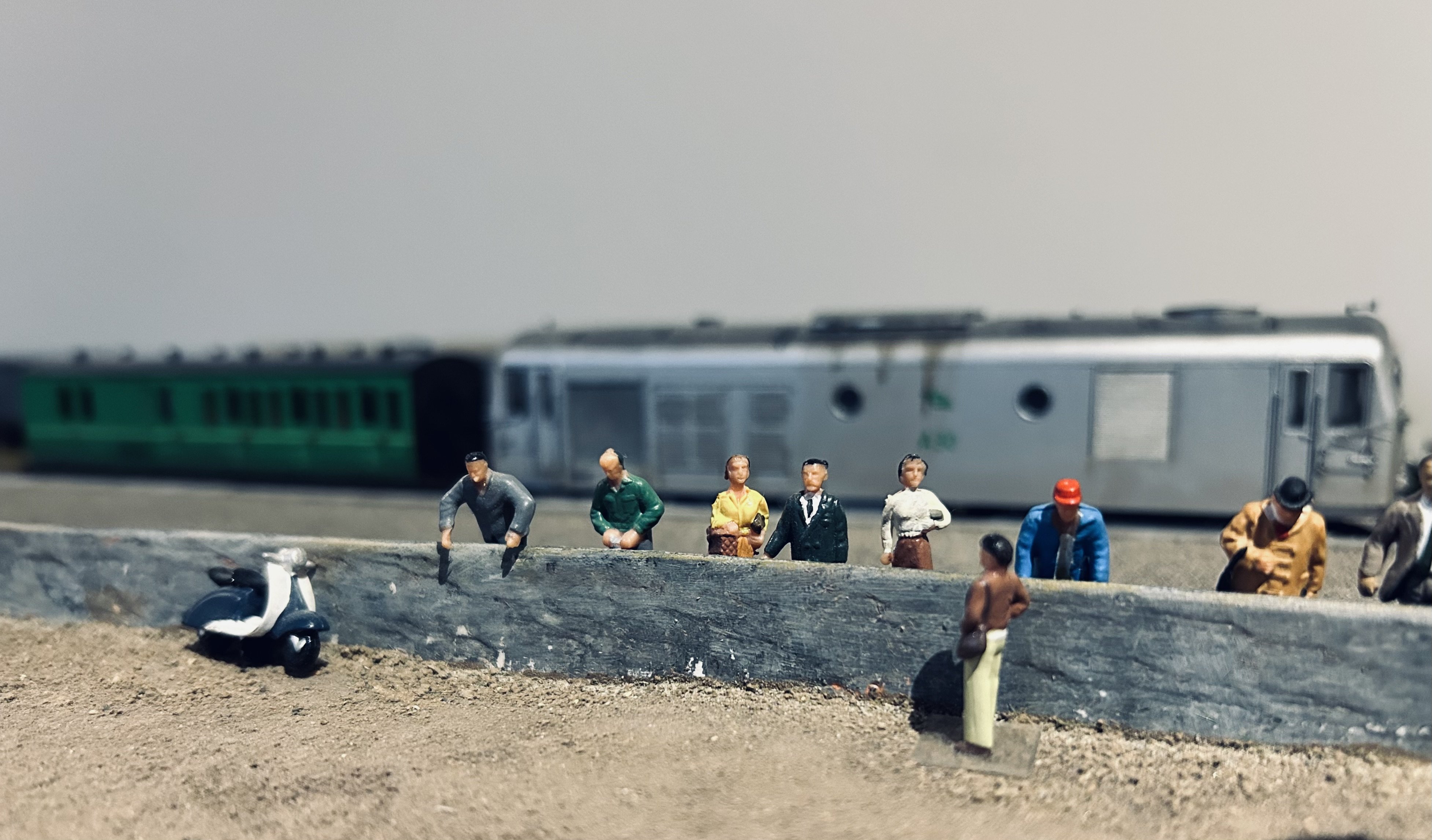
From an old colour slide dated July 1958….. ”It’s broken down. They’re sending a steam engine. They’ll hold the connection at the junction for Tralee….”
-
Gauge of interest: Alphagraphix 4mm Irish kits
jhb171achill replied to GSR 800's topic in Irish Models
Whole area redeveloped now without any sign there was ever any railway near it! -
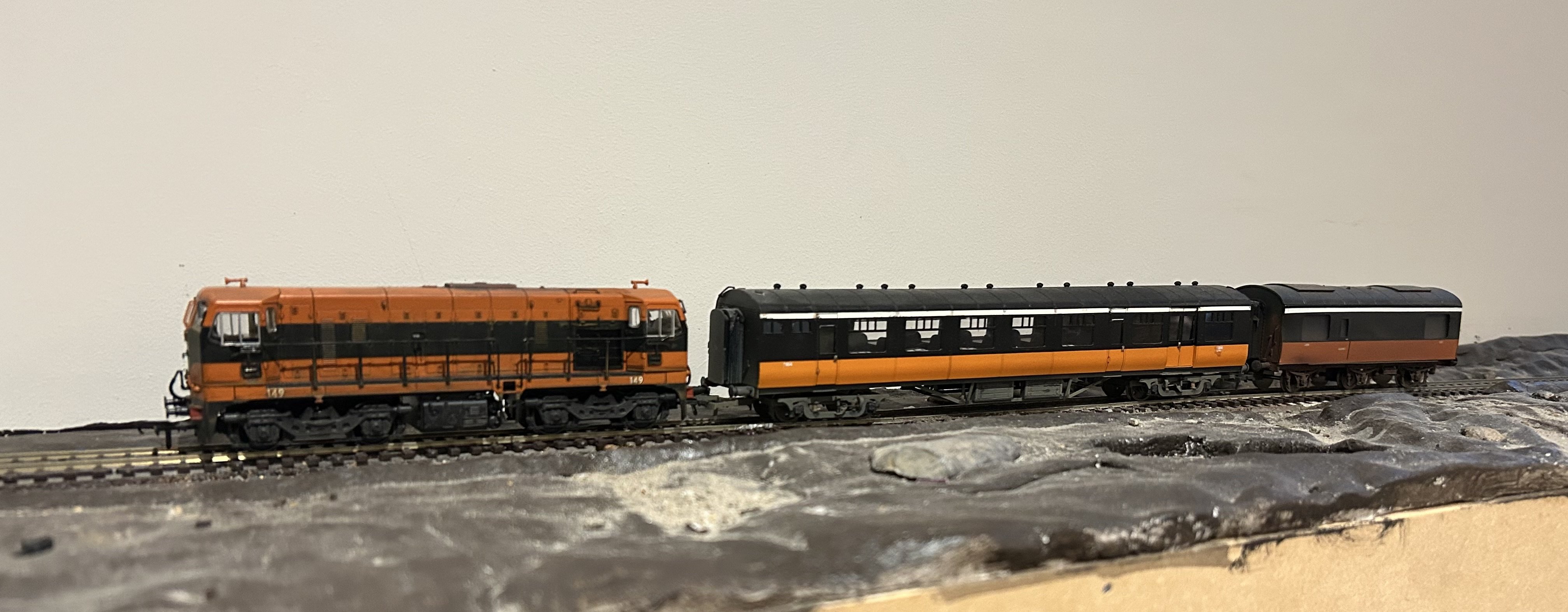
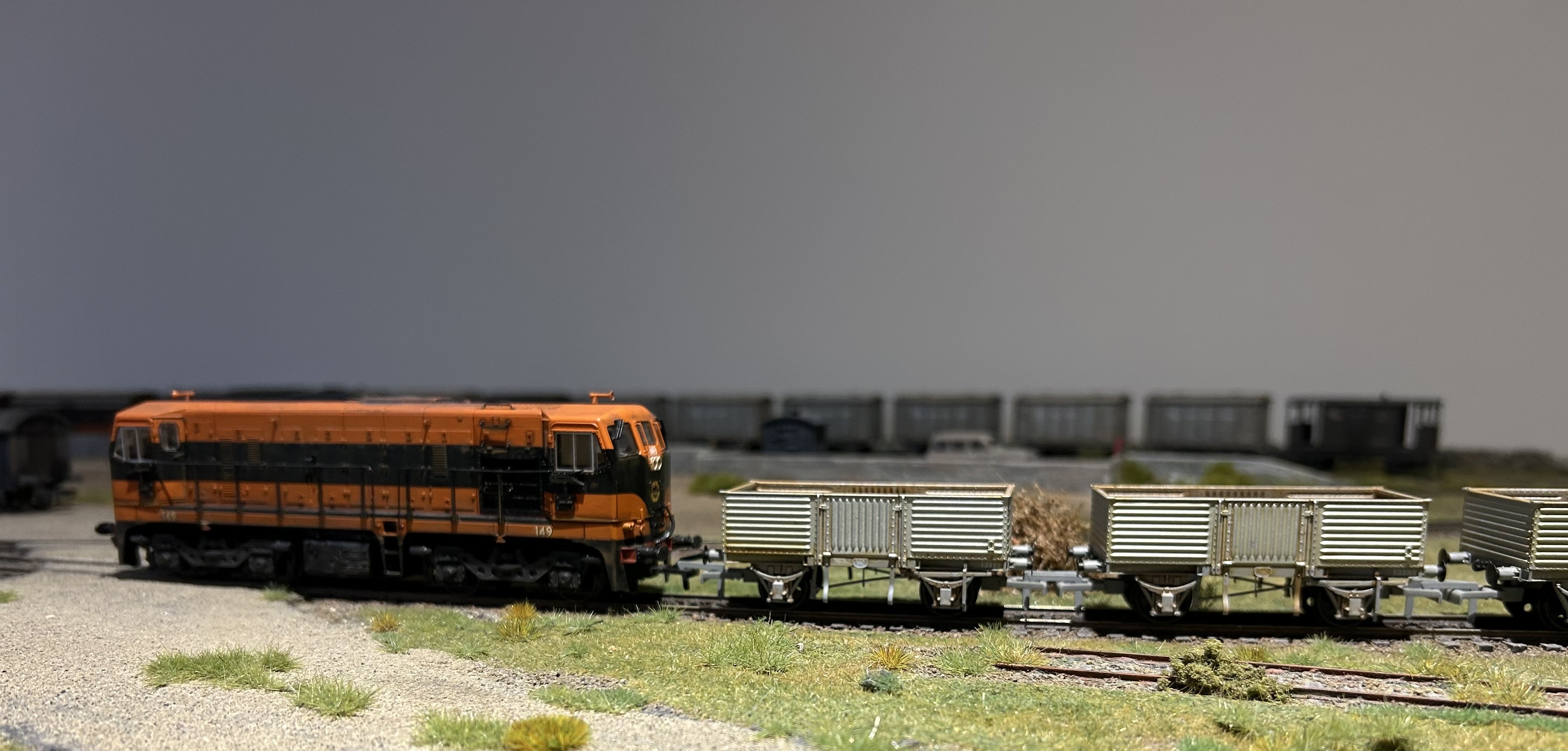
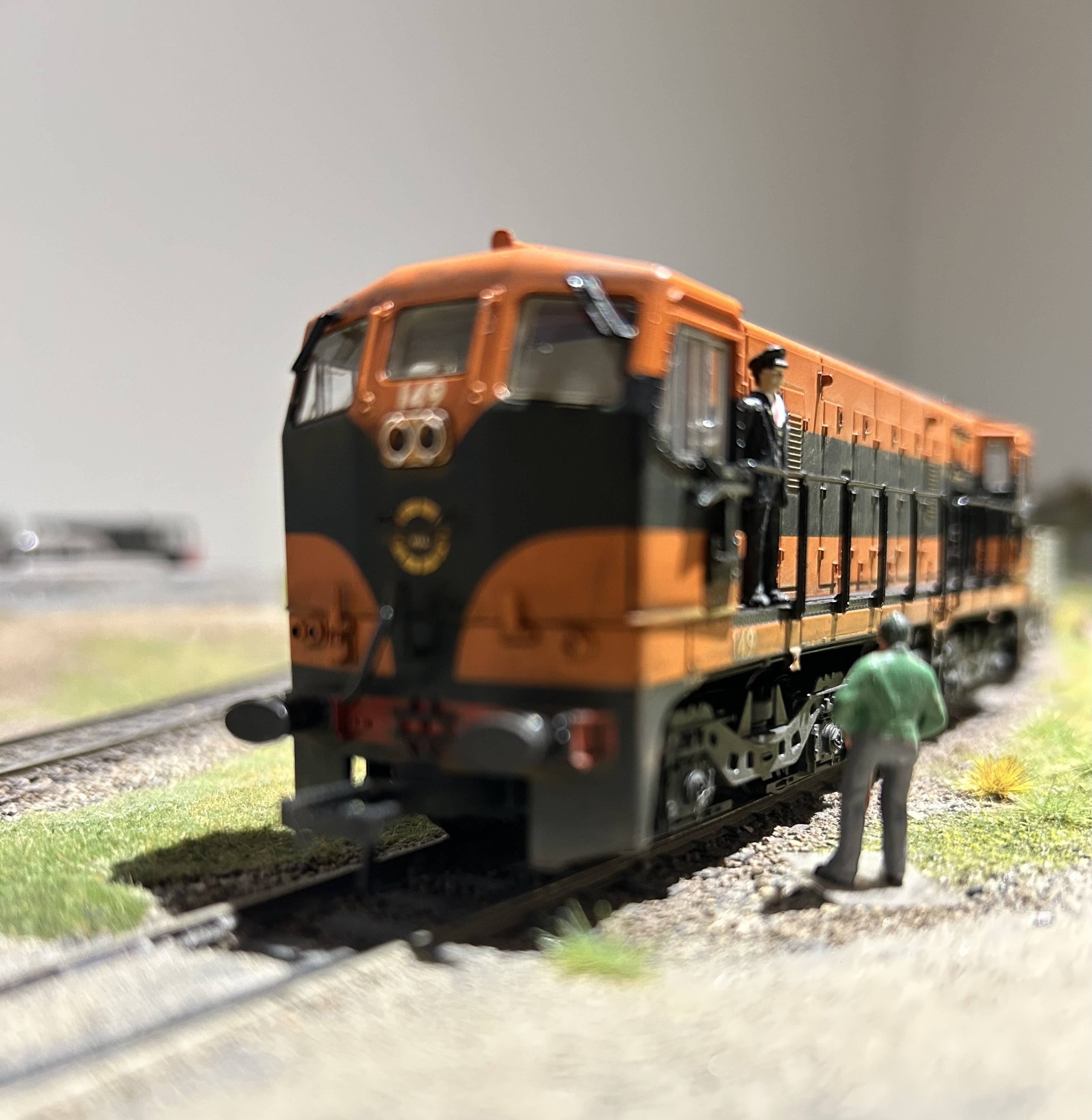
In August 1975, with weeks to go before withdrawal of passenger trains, 149 hurries across Carrowmore Bog with the 14:30 local from Castletown.
-
Early January 1974 at Dugort Harbour. “Is that the last of the beet for this year?” ”Yeah, these for here and another three or four up at Castletown….” ”Gimme a shout when you’re back in town, it’s gonna bucket down any minute!”
-
Yes, but it tarnished, often looking almost black as a result. I saw numerals on carriage doors ("1" or "2" - 12 ins high, incidentally) where the outline looked a sort of greyish-brownish from wear and weathering. But dull gold originally. Always a dullish gold, not bright ever.
-
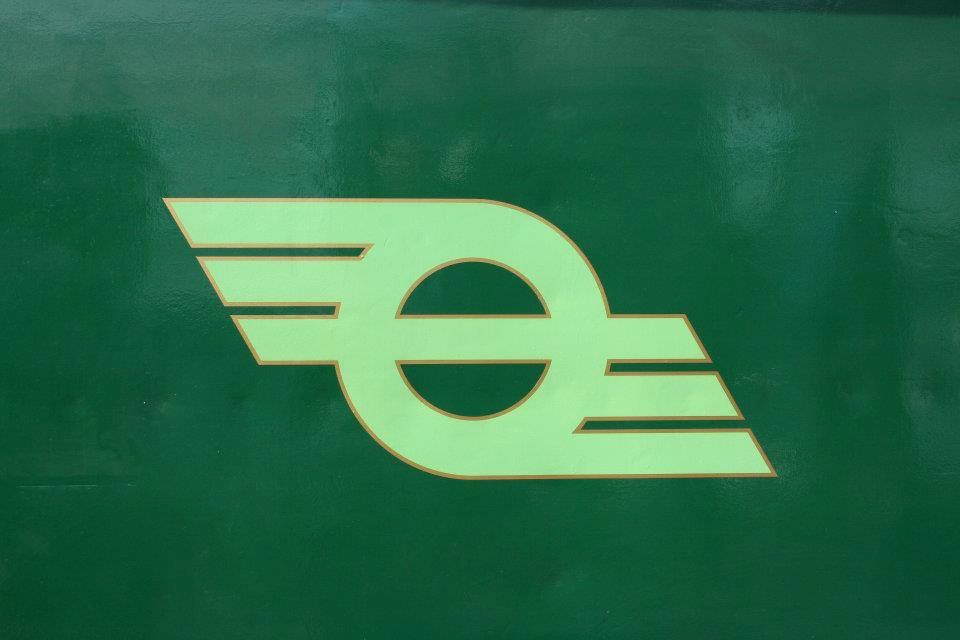
A point on the use of this yoke on steam locos and carriages. While snails were painted (originally) and stencilled (late 50s onwards) onto goods stock, carriages and steam locos ALWAY had this transfer applied. This is why despite numerals on steam engines being pale yellow, the "flying snail" on the tender was ALWAYS pale green, edged gold - or else no snail at all. The transfers were not made in any other colour. Thus, without exception, yellow, gold or white (or pink, tartan, pale blue or rainbow) coloured snails on tenders of locos are always as incorrect as a bright red double-arrow BR logo would be on a BR blue diesel.
-
Mention must be made of a large batch of weathering on most of the above by (of course) Dempsey of this community. Absolutely excellent, as always. The intention is to show things as my earliest memories are; wagons in varying stages of light weathering to absolute worn-out rust and filth. When I was a person of limited stature, many H vans and corrugated opens were new, so quite clean (maybe for their first week in service with steam locos and rain in the vicinity); palvans had yet to be built so they’d be quite clean too when I saw them. On the other hand there were still a good many older wooden wagons about, and thus in older, darker grey, often having seen heavy use but no paintbrushes in a decade or more, with markings barely visible. Hence the mix. Shown here is probably about a third of the wagon stock I have. And I’m getting three of Enda CK’s superb Ranks wagons tomorrow!
-
I think it’s overall in very good condition and could be “fast-tracked” back into traffic without much fuss.
-
Yes, I have. Will post when I dig out the details. I spent the first 25 years of my life seeing an original hung in the hall on a board painted at Inchicore….
-
Interesting you mention it. I was considering ordering a 2-car set, but it would have to be the correct livery agreed in advance. The CIE green-era liveries produced by Silverfox continue to be wrong in every single detail, despite them being given the correct info several times. The green is wrong for either the 1945 or 1955 liveries - it looks more BR green to me. The lining and logos are white - they should be pale green. The roofs, worst of all, are pale grey. They should be black. If SF are prepared to do this thing in the correct livery, and that’s not a big ask - it’s patently and obviously doable - then I’d order one. If not, I wouldn’t - who here would buy a Silverfox Hunslet if it was green, brown and pink?
-
The five vehicles which went there were all the lighter green livery. All the ancient older (locomotive-hauled) coaches there previously were the 1945 darker green.
-
It’s a DSER one, made by the late Ken McElhinney (formerly KMCE here). Ken had only just started making 3D wagons and carriages, all DWWR / DSER stuff when he passed away. I am delighted to have about half a dozen of his wagons and what I think was the first ever coach he did. I had ordered another of the vent vans above but it was not to be unfortunately. I’ll post pics of what I have later.
-
Busy times at Dugort Harbour….1964. IMG_6074.mov
-
Filmed from the road, empty “K” vans await the signal for Castletown West station, 1st February 1964. A few have the brand-new “roundel” on them….. IMG_6076.mov And here it is in colour….
-
Grain wagons at Dugort Harbour, awaiting transit back to Cork.
-
GNR architecture details
jhb171achill replied to jhb171achill's topic in Buildings and kits of buildings
Many of you will know of Dr Siobhán Osgood, without doubt the leading authority on Irish railway architecture, and whose actual speciality is Mill's GNR work as above. There will be a TV programme featuring her and GNR architecture in the next couple of years - it is currently in early research stage. -
Where our old family home was in Dublin, I was visiting one day in the early 2000s to see my elderly aunt who lived there. I had a new car (blue Ford Focus), but it was normally driven by Madam, while I was driving about myself in my aunt's 20-year-old red Polo (she was to old to drive at this stage). But THIS time, as almost a one-off, I had "borrowed" my OWN Ford Focus to visit the oul wan. I always went there in her old Polo as that's what i normally drove. Went into the house, checked up on her, got her shopping list for Dunnes, and came out to go to get her messages. And what do I find - some damn clown had parked a blue Ford Focus RIGHT across my gateway. Since Junior's car (separate issue) was inside the gate, I thought "how will he get out"? Across the road was having a family gathering of some sort, so I knocked on the door to ask whoever was in there to move it. Out came the householder. "It's not one of ours", sez he. Then I realised I had the keys of this car in my pocket.......................................................................................................................
-
Gauge of interest: Alphagraphix 4mm Irish kits
jhb171achill replied to GSR 800's topic in Irish Models
Another siding was added in GSR times, which ran from the top of the image shown, along to the right of the words "WESTPORT QUAY". In the 1960s, the pier siding shown at the bottom of this image above was shorteden to within the station limits (i.e. above the level crossing). When I first explored the site about 1969/70 it looked as if it had just been lifted, but the extra siding mentioned above, which would show on the right in this image, stayed to the end. -
With so many excellent new wagons on the market in recent times courtesy of "Provincial" Leslie, CK Enda, and of course IRM, I've had to make up an excuse for grain traffic appearing in an outpost as remote as Dugort Harbour, which in concept is meant to be in the utter back of beyond down the Beara Peninsula (on the Kerry side, of course; can't have too many Corkmen about, can we!)..... As some here will know, this started as a shunting layout - which is the scenic bit now as it was delivered that way. A house move meant that an attic was now free, so an extension of the layout was possible. Thus, the concept expanded into something like a long straggling branch like Cahirciveen, with a short, almost seperately worked local extension (think Valentia, Westport Quay or Skib - baltimore). That's up'n'running now, so the layout has the original "extension", leading up to "town" - the main station (Castletown West) and then onwards to a fiddle yard. That bit has no scenery, yet. I'm gradually mastering brass kit constructioin, and scenery will have to follow for the rest. Now, the ideal thing would be to have a private siding for a grain mill and / or a textile factory or something else, to justify a line like this having not just heavy goods traffic, but with specific wagons types like grain vans - a type of wagon not seen everywhere by any means, therefore needing "justification". I wondered for some time how I would fit in a siding, inspired by many posts here about small layouts, industrial sidings, types of traffic, models of mill sidings like Mol_PB's one, etc etc etc. And then the solution hit me as obvious. The goods train comes into C West, where grain vans and H vans for the textile factory are detached, and a separate local run (justification for a pilot engine / shunter at C West) runs these wagons up the line to these two industrial sidings - in reality, BACK to the fiddle yard! It means the operations within the C West station area will now be appropriate to what real life would have been had such a place existed....... Photos to follow.
-
"....We are gathered here today to witness the happy union of my daughter, Alternator, and our new son-in-law, Punctured spare wheel!....."
-
Interesting!!
-
CIE bulk grain vans - a study of the variations
jhb171achill replied to Mol_PMB's topic in General Chat
I must have a look. I’ve seen a pic somewhere comparatively recently, when I was researching liveries for these things, but can’t remember where….. In real life, the only ones I ever saw were all grey.