.png.c363cdf5c3fb7955cd92a55eb6dbbae0.png)


Mol_PMB
-
Posts
3,869 -
Joined
-
Last visited
-
Days Won
239
Content Type
Profiles
Forums
Events
Gallery
Blogs
Everything posted by Mol_PMB
-
Excellent and creative - and what an atmospheric setting to see them in. Rather reminiscent of this photo... 105 at Magheramorne loop | One of the more elusive MVs, MV 1… | Flickr
-
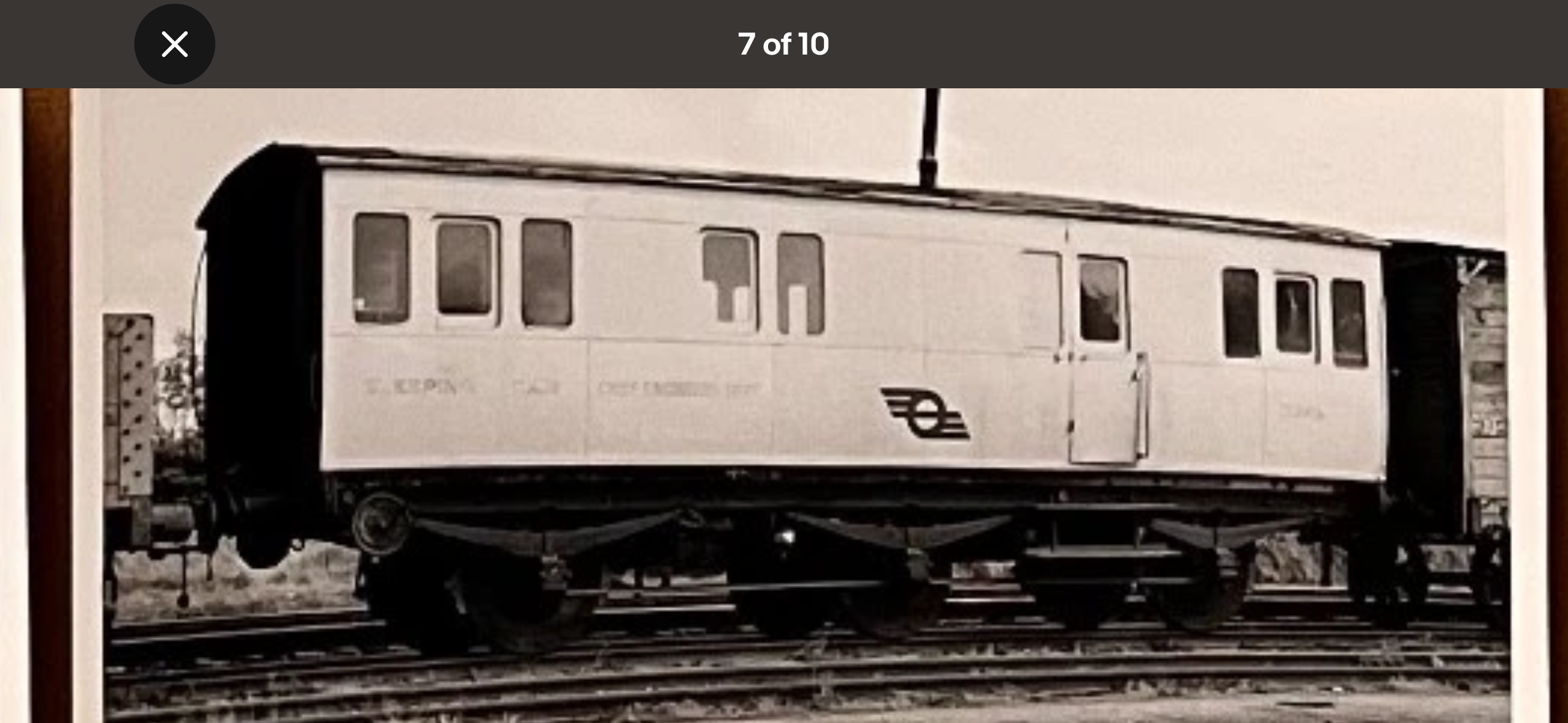
Good spot! Also interesting that it is branded for the Chief Engineer's Department. Most were Traffic Department. From Neil Smith, here is a view of 234A in 1983: And this IRRS photo shows it when newly converted, which I believe was in 1947: https://www.flickr.com/photos/irishrailwayarchive/53509192299
-
One for @jhb171achill’s livery files. What colour is this sleeping car, I wonder? And what colour is the snail? The date is 1964. I may have a go at bidding on this lot of photos on ebay… https://ebay.io/m/VJGODW

-
DCDR acquires three ex-CIÉ wagons for preservation
Mol_PMB replied to Niles's topic in What's happening on the network?
Excellent. I now have visions of a set of iconic Irish 20' containers recreated - Bell, B&I and a CIE orange one. Maybe in conjunction with a re-issue of the models from IRM / C-rail? -
Lovely photos by the way - thanks again! The clerestory brake (tri-) compo 854 is a super vehicle - would make a lovely model and it would fit my 50’ underframe. Built in 1901, there were 5 of these with the last withdrawn in 1959. Although not gangwayed, all compartments had access to a lavatory. Early 1950s plain dark green livery. Note that some of the wheelsets have been replaced with newer all-steel ones; they would originally have been partly wooden Mansell wheels. The 6-wheel third might be 655. Not many of these survived so late; this one has been partly re-panelled and retains the elaborately lined green livery of the late 1940s. Note also 211D on the left.
-
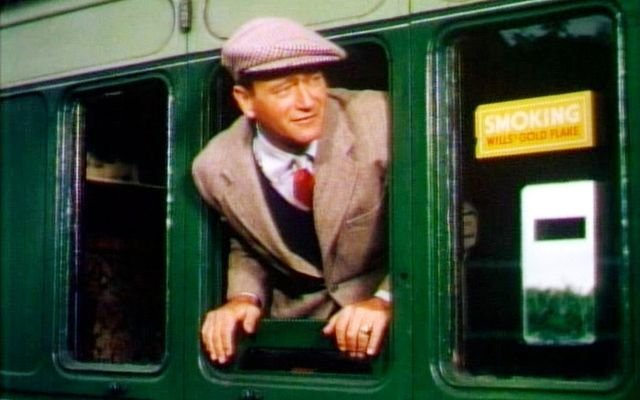
They identify smoking compartments (rather than non-smoking). They also advertise Wills Gold Flake tobacco. Early to mid 1950s period, some were still around in 1960. Some Park Royals had them. I have had some custom transfers made for them!
-
I think both kits’ bogie sideframes are stretched slightly to suit the longer wheelbase of the SD9 or HO scale Deltic which are about 5-6mm longer than the true B101 wheelbase. So if you had a bogie of the correct wheelbase (which is unusually short) then the supplied sideframes would not line up with the wheels.
-
Sorry to hear that. seems really odd that several controllers are all giving problems that you haven’t had before. Is it possible there’s a gremlin in the layout wiring - something other than the controllers? Maybe a connection has gone high resistance through corrosion? Have you got a loose piece of track you could test on to rule that out?
-
Nicely done. Am I right in thinking that the Lima Deltic had HO scale bogies, making them too short for the Deltic model but conveniently a better match for the B101? as a reminder, there are some drawings here:
-
I bought one of the last SSM kits last year, but I confess I haven’t started it. Having looked at the parts and lots of photos and drawings of the real thing, I decided it would take a LOT of work to capture the shape of the real thing correctly, as well as the fine details on the slab sides. I think the same would be true of the Silver Fox model. I admire those who have put in that work to produce a decent model - there are some nice examples on forum threads. I did mull over the idea of doing entire etched sides, or even a complete etched body kit, but there are challenges there too. I wonder whether 3D printed ends and etched sides/roof wrapper would be the optimum. Whatever method is used, one of the biggest challenges is the face - it is not as flat as it looks, there are lots of subtle curves, facets and rebates.
-
Thanks for the update. This trip was tempting me, but I had held off booking travel and accommodation until I was sure it was going ahead.
-
Some CDR railcar trailers were 4-wheelers, do they count as coaches? Where are you drawing the line between railways and tramways? Arguably S&S is already on the tramway side. In which case Giant’s Causeway and C&VBT should be considered.
-
National Library of Ireland publication permissions
Mol_PMB replied to Mol_PMB's topic in General Chat
I have done exactly that. Maybe I’ve misunderstood it? Researching, writing and presenting this talk is something I’m doing for fun, not for monetary gain or because I want to get embroiled in a legal dispute! I’ll just drop the NLI images. There’s plenty of other good ones from IRRS, Ernie, Jonathan, Roger and my own collection. -
National Library of Ireland publication permissions
Mol_PMB replied to Mol_PMB's topic in General Chat
That’s interesting- thanks JB. Having first approached them with an email enquiry, I was asked to fill in and sign a permission request form before they would even give me a price. That form has a load of small print terms and conditions at the back, and by submitting the signed form I would be agreeing to the terms. So even before I have got the images or paid for them, I have to promise to give them a rights-free copy of my ‘entire work’. It may be that these requirements are not regularly enforced, but I still can’t agree to them because my ‘entire work’ includes many images where the copyright belongs to others. For a few images I don’t think it’s worth it. -
As you may know, I'm currently preparing a talk on the AEC Railcars to present to the IRRS Manchester Branch, and perhaps later to the Dublin Branch. I'm using almost 100 old photos from various sources, and I'm very grateful to the IRRS archives team, plus our own forum members such as Ernie and Jonathan Allen for permission to use their images for this specific purpose, along with others including Roger Joanes who have all happily given their permission. I was also hoping to use 4 or 5 images from the O'Dea collection held by the National Library of Ireland. As well as having to pay for these images (tens of euros per image), their terms require that I provide a copy of 'the entire work', i.e. my presentation, rights-free, to the NLI. Most of the copyright of the images in my presentation belongs to other people and organisations including those mentioned above. So they're not mine to give away. Also, why should I give away my work for free when they are charging me to use theirs? This seems an unfair and disproportionate requirement, and I cannot comply with it. My present approach is to delete the NLI images from my presentation and try to substitute alternatives, but there will be some topics that can not be so well described without them. I was wondering if anyone else (perhaps including the authors amongst us) had found a way through this minefield? Many thanks, Mol
-
There's a technical reason why those EMD engines don't like antifreeze. I can't remember exactly what it is, perhaps the glycol attacks the seals used. So they tend to be left idling if there's a risk of cold weather. Batteries don't like the cold either, of course, and the oil is thicker when cold making the engine harder to turn over. In more recent years, auxiliary heaters have been installed on some locos to keep temperatures above freezing while using less fuel than leaving the engine idling.
-
So Into Chatgpt for GNRI Guniness Bogie Van Drawing in 4mm
Mol_PMB replied to Auto-Train Original's topic in General Chat
Lots of people at work sing the praises of AI. When it can do my job, I’ll retire. Looks like I’ll be working until I drop then. It can produce pretty but false pictures but it’s absolutely useless for anything requiring an accurate answer. Just do the sums on the dimensions it’s put on those sketches… -
British locos and stock that can be disguised as Irish
Mol_PMB replied to Westcorkrailway's topic in Irish Models
At least I think he only has one. Knowing Darius and his Hunslets, it wouldn’t surprise me if he has three! -
So Into Chatgpt for GNRI Guniness Bogie Van Drawing in 4mm
Mol_PMB replied to Auto-Train Original's topic in General Chat
Try comparing what it produced to the real drawing of the real thing! Also, look at its unit conversions… -
British locos and stock that can be disguised as Irish
Mol_PMB replied to Westcorkrailway's topic in Irish Models
Darius has one. -
Hmm, so the ideal Irish heritage railway would be a horse-drawn one… Several options available.
- 89 replies
-
- 4
-

-

-
- west clare
- narrow gauge
- (and 2 more)
-
Wow! I’ve got one of those I have no use for, but hadn’t anticipated it might be worth that much! It probably isn’t really. Surely the Cravens at £76 are a better deal even if they seem overpriced?
-
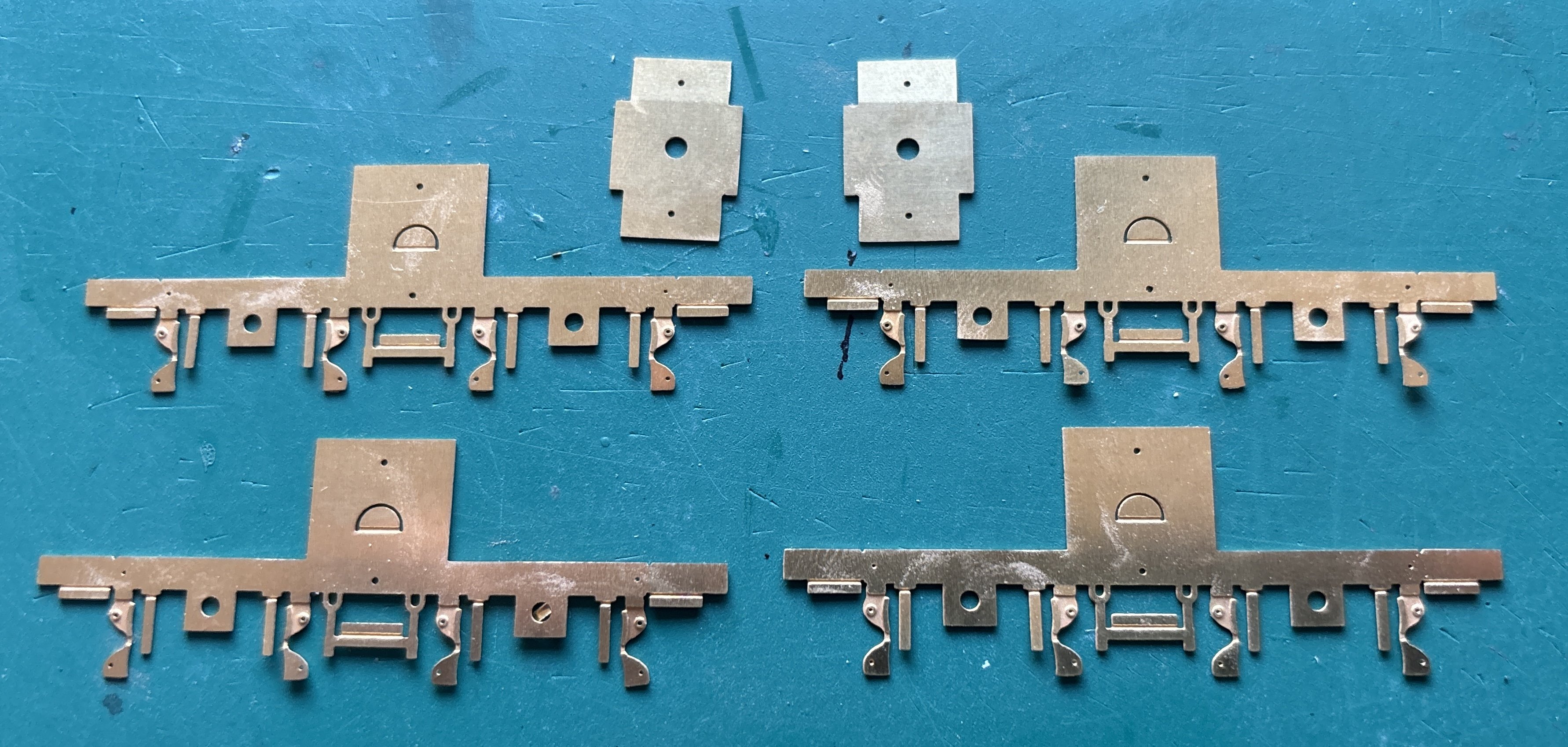
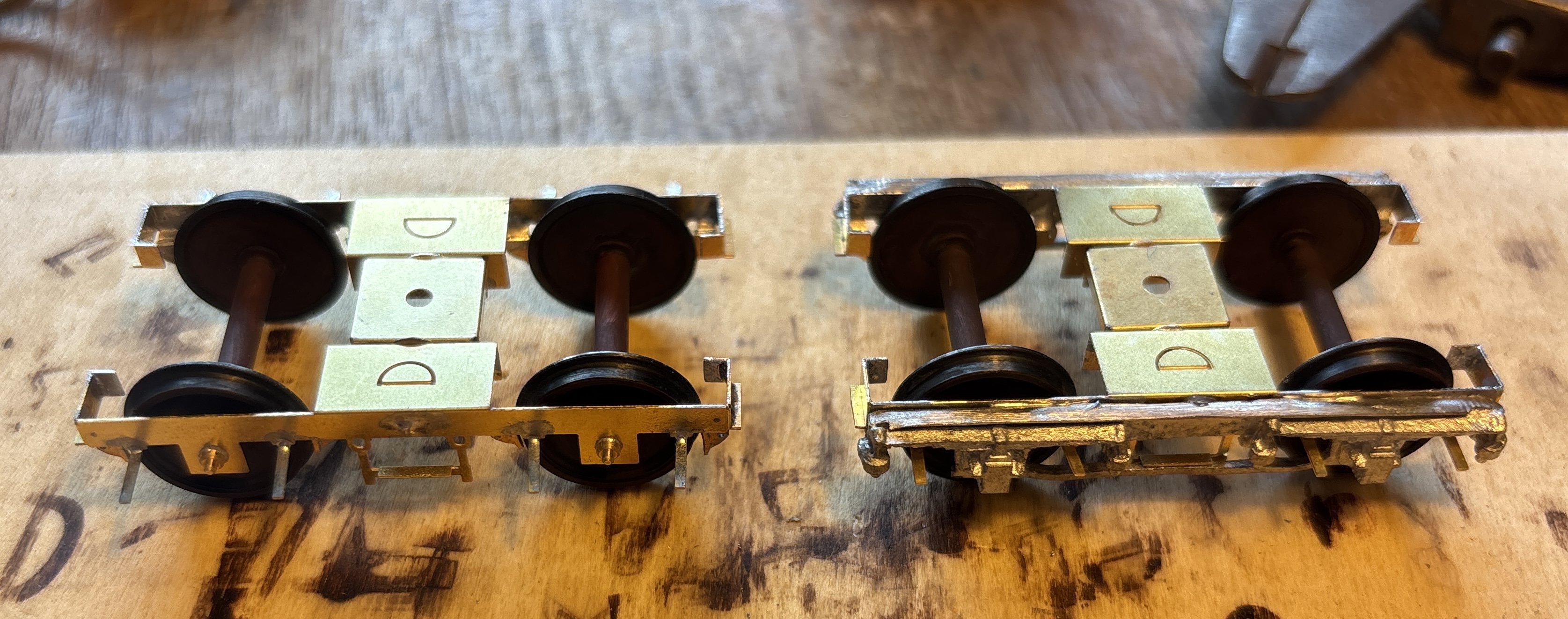
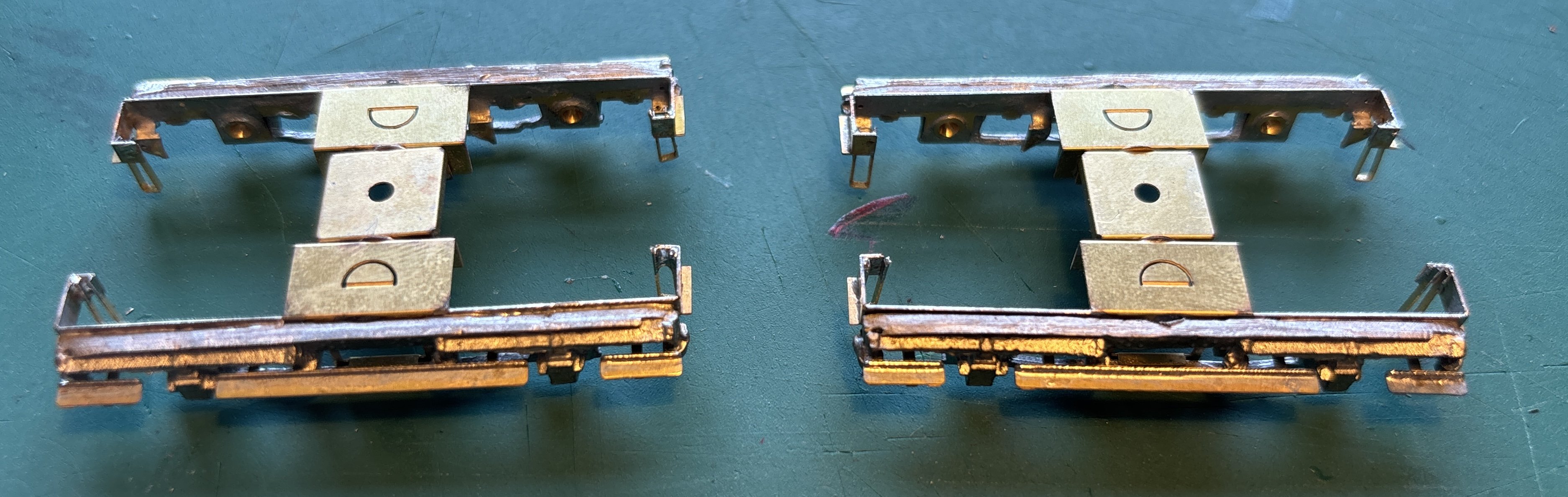
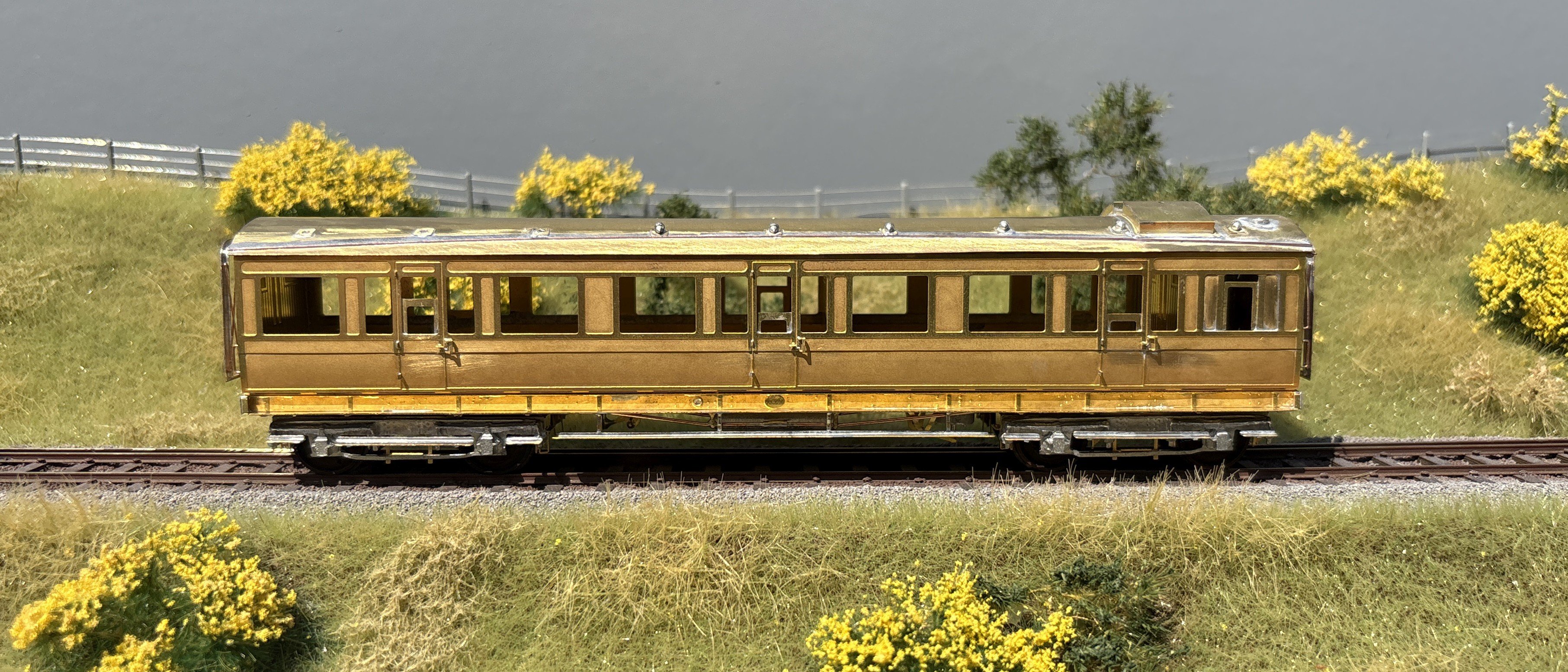
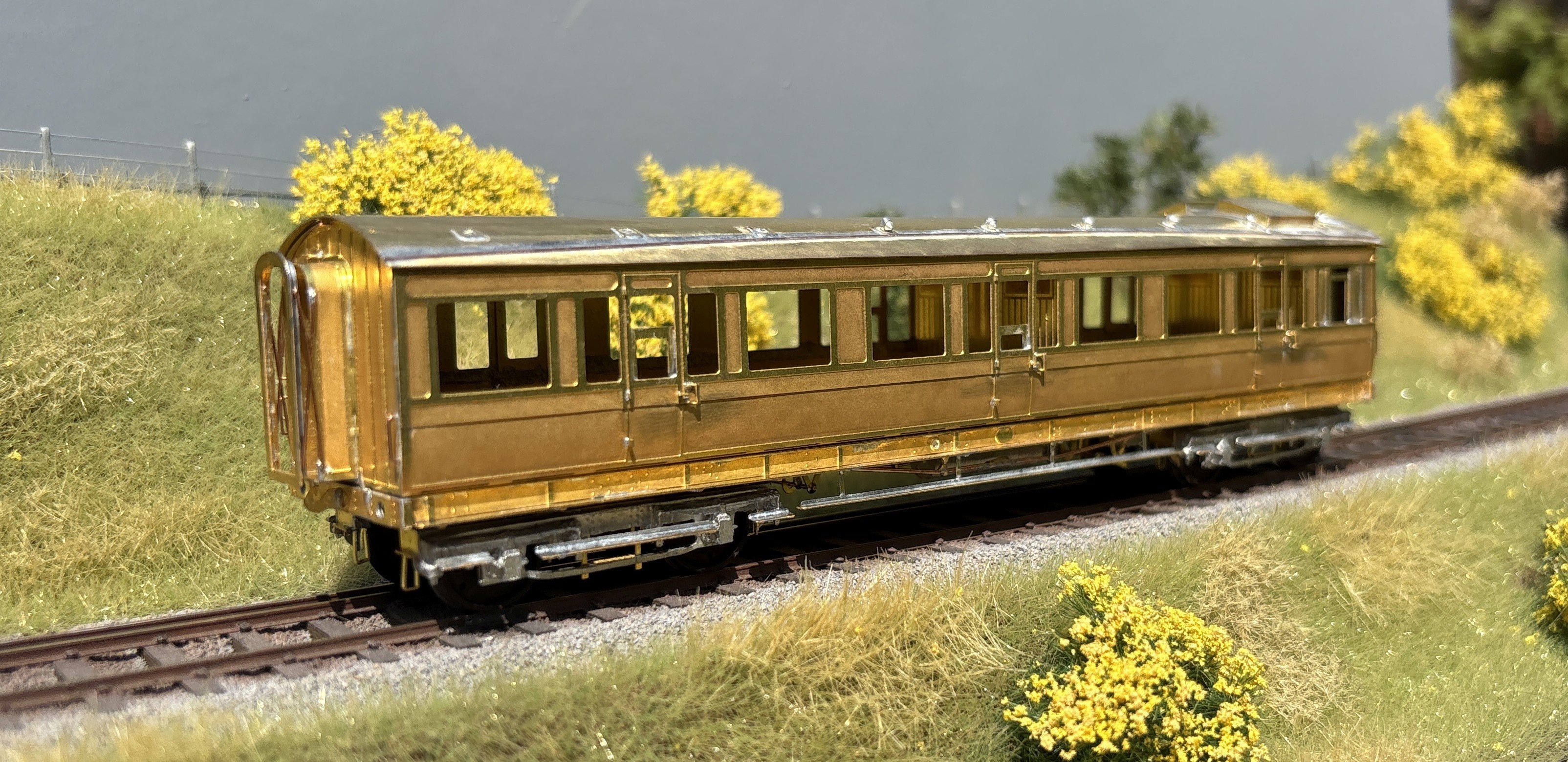
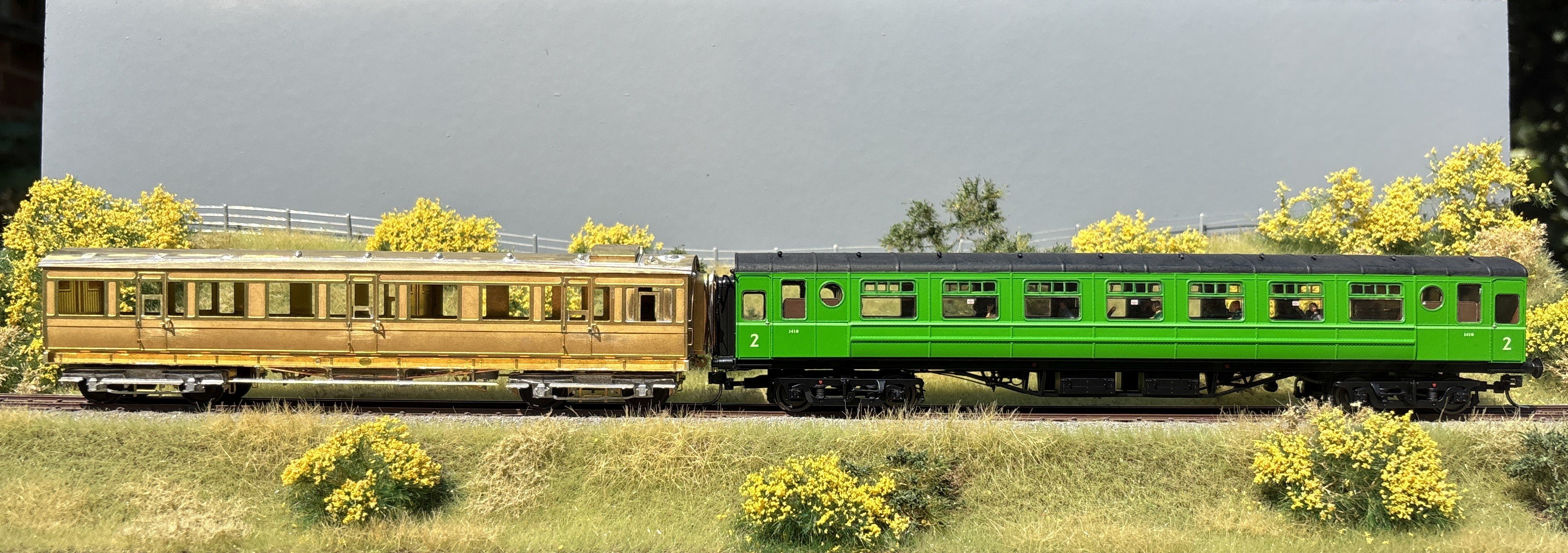
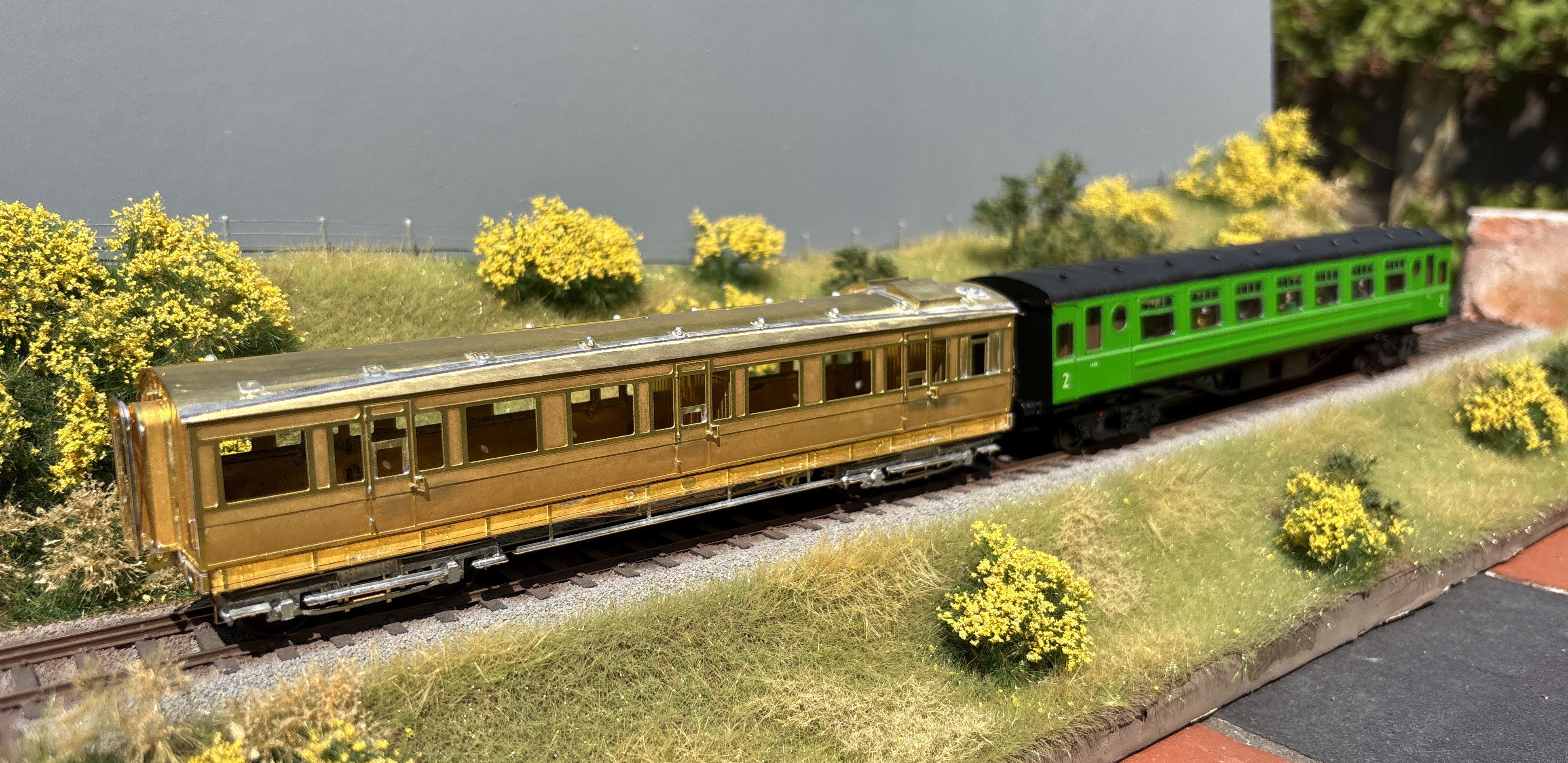
While waiting for a delivery from Wizard to enable me to complete the roof, I have built the bogies. Fortunately the weather isn't quite so impossibly hot today (29C rather than 34C), so I could contemplate soldering. Here are a few photos during construction: These are compensated on the Brassmasters principle. I still need to add the springy wires across the ends to make them a bit less floppy, but I think I'll do that after completing the basic painting and putting in the wheels. After an ultrasonic bath, I did a trial assembly and took some photos. Looking OK I think though not quite complete: And a size comparison with a modified IRM Park Royal. The prototypes were built over 50 years apart, but provided very similar accommodation - a third class open saloon in two parts, and gangways. The older coaches were built with 72 seats (compared to 82 for the Park Royal). Some later had 2 toilets added, reducing the seating to 64 (compared to 70 for the Park Royal with 2 toilets). There are some 1950s and 1960s photos around Cork showing these two types of coach coupled up in a train, and the relative sizes and heights of the models look about right. The length difference between a 50' coach and a 61'6" coach is quite significant. The older coach is much narrower as well, of course.
- 104 replies
-
- 15
-
-

-
Thanks to Ernie for uploading some more excellent old photos this morning, showing a journey on the Valentia Harbour line. In 1902, the 10 gangwayed open thirds that are the subject of this thread, were supplied alongside 4 open brake thirds of identical dimensions, styling and construction. Originally they had gangways at the passenger end only, but later a second gangway was fitted at the van end. They were numbers 857 to 860, and survived until the 1960s - the last one going in 1966. I don't have a 'proper' drawing of these but I do have two diagrams and several good photos which would enable a brake third variant of the all-third model to be produced if people were interested. In Ernie's latest photos the leading coach in this train is one of these open brake thirds:
-
Rails have a load more Irish stuff on eBay including some scarcer models and a mix of overpriced and apparently good value. IRM 054, Murphy 086, a selection of Cravens, Weedspray train, various others.