.png.c363cdf5c3fb7955cd92a55eb6dbbae0.png)


Mol_PMB
-
Posts
3,869 -
Joined
-
Last visited
-
Days Won
239
Content Type
Profiles
Forums
Events
Gallery
Blogs
Everything posted by Mol_PMB
-
I just thought to look at the CIE archives and they contain quite a bit on the CBPR including page-by-page scans of almost all the minute books: Cork, Blackrock and Passage Railway Company Archives For example this page from August 1893 refers to the cost of adding automatic brakes to the trains in that year (which helps to date the surviving photos which all show vacuum brakes fitted): Minute book, board, committee and shareholders' meetings of the Cork, Blackrock and Passage Railway Company Obviously there's a huge amount more to read... The annual Board of Trade returns ought to include details of the rolling stock too; I'm not sure where they would be available but I'm sure they are somewhere.
-
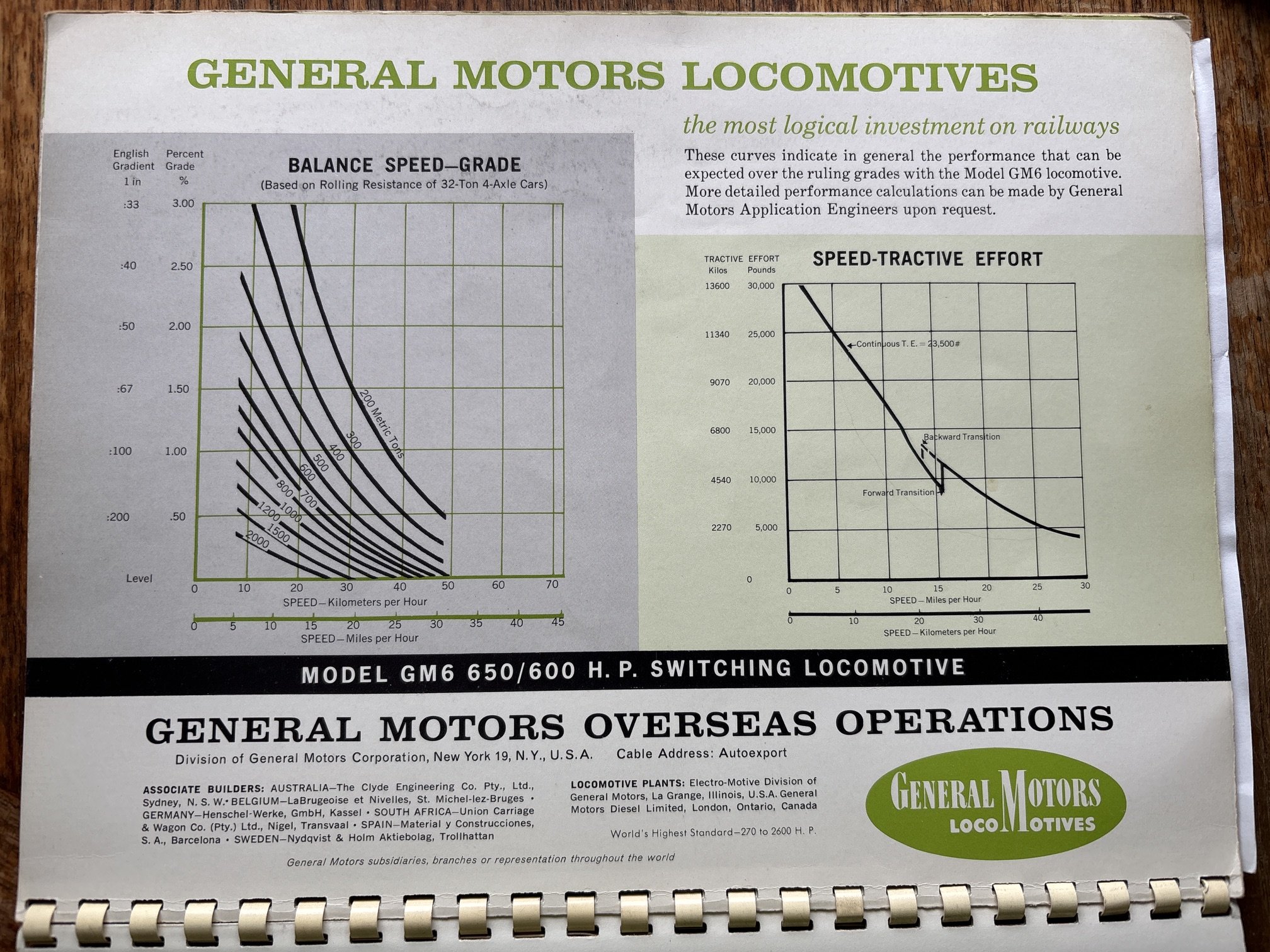
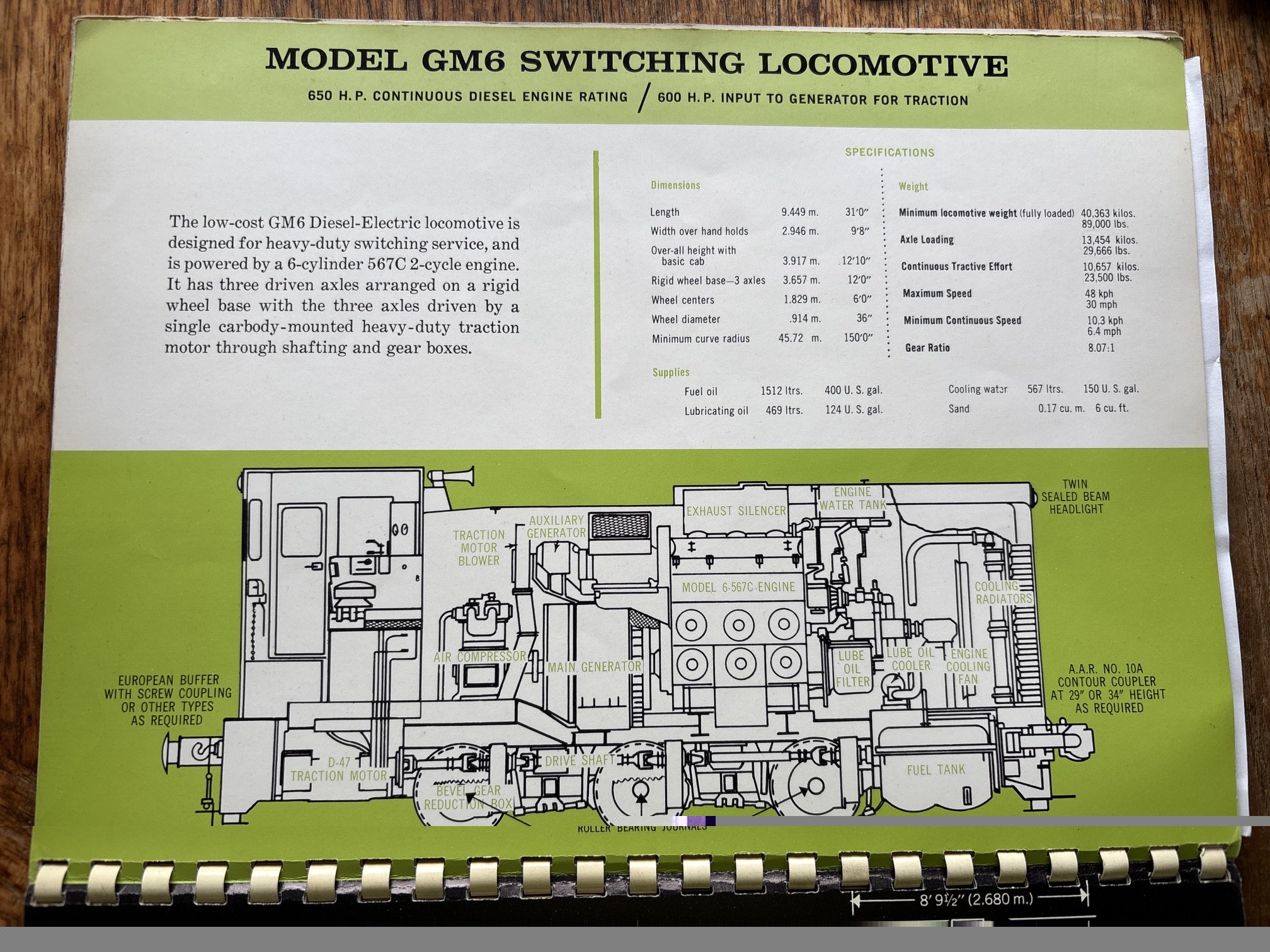
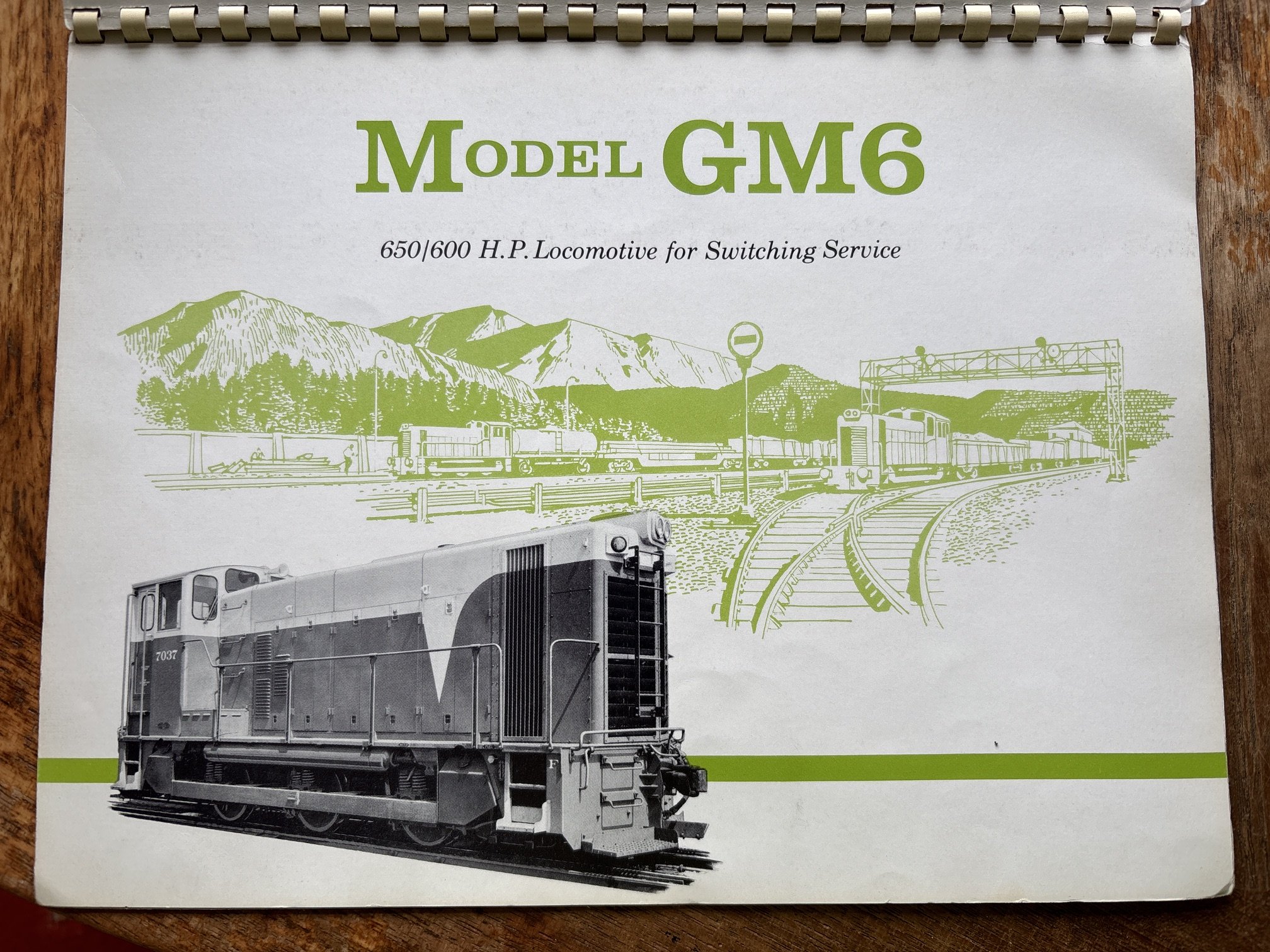
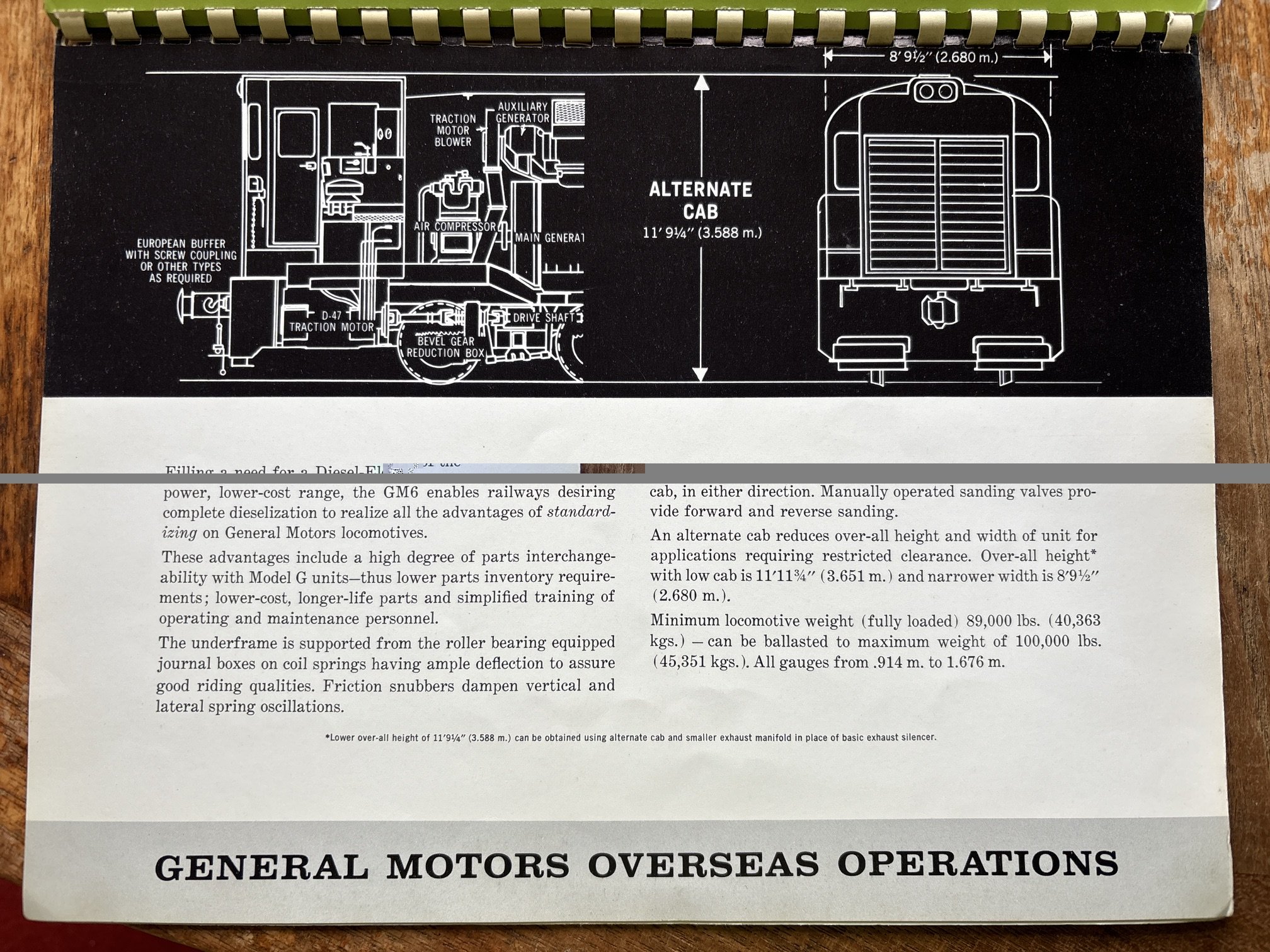
@jhb171achill mentioned this class of loco to me on the Achill tour at the weekend, so I thought I'd post the info I had on them. I hope this is a suitable part of the forum. The EMD GM6 were a shortened version of the 121 class with a rigid 6-wheel chassis and a 6-cylinder version of the standard EMD 567 engine. At the time that CIE ordered the 121s from EMD, they also invited bids for a batch of 6-wheeled diesel shunters which actually emerged as the E421 class. But CIE could have chosen the equivalent EMD GM6 design instead - they are similar in size, power and capability to the E class. They have drive by cardan shaft like the E, but are diesel-electrics rather than diesel hydraulics. So this is a plausible 'what-if' loco for CIE. I have an EMD Export catalogue from that period which gives the technical specifications of the GM6. (not sure why these images have been slightly corrupted - sorry) Thanks to this excellent thread (and unique model railway) over on RMweb, here are some photos of the GM6 locos supplied to Lebanon: https://www.rmweb.co.uk/topic/181696-les-caves-du-roy-beirut-lebanon-in-the-1980s-chemin-de-fer-de-letat-libanais-cel/

-
There seems to have been an early design of third class coaches with saloon accommodation, rather than doors to individual compartments. They usually had 2 doors on each side, and benches around the edges, sometimes also longitudinal benches back-to-back in the middle of the vehicle. Noting that the description of the CBPR broad gauge carriages said 'in several instances had the seats arranged around the sides' I suspect some of them were of this type, including the first carriage in the photo above. As mentioned previously, there's a drawing of a 4-wheeler in Ernie Shepherd's MGWR book, a third saloon with longitudinal seating and 2 doors per side. There are also two photos of an older variant in MGWR service. One is in a c1870 photo of Sligo, page 28 in Ernie Shepherd's MGWR book. The second carriage in this train is of the same type:
-
Thanks JB. Here's the link: Holdings: Rail Station, Kenmare, Co. Kerry :: Library Catalog This would be around 1893 when the line was brand new - note the contractor's wagons in the siding on the right. Also another view: Holdings: Rail Station, Kenmare, Co. Kerry :: Library Catalog This photo at Clifden shows one of the MGWR 4-wheelers: Holdings: Railway station, Clifden :: Library Catalog This image at Cahirciveen shows a 4-wheeler at the cattle bank, much smaller than the 6-wheeler behind it. This is probably late 1890s. Lots of other interest in this photo including cattle wagons loaded with empty barrels. Holdings: Rail Station, Cahirciveen, Co. Kerry :: Library Catalog Galway, and this is an earlier photo before vacuum brakes were introduced. A mix of 4 and 6 wheelers with the flat sides and small windows typical of the early days, and a variety of framing/panelling arrangements: Holdings: Railway Station, Galway City, Co. Galway :: Library Catalog Now, none of the above are CB&PR carriages, but they help us to interpret the styles of carriage seen in this image. It would be lovely to find a better quality version of this!
-
On the big railway, one would only apply cant through platforms if trains regularly run through at high speed without stopping. For stopping trains it's better without, and cant causes all sorts of problems with stepping distances and platform/train clearances.
-
It's a good point. When building etched kits I usually try to make them as several bolt-together sub-assemblies so they are easier to clean up, paint and weather. For a steam loco I'd look to make separate assemblies for: the cab/tanks the boiler the footplate the cab roof the chassis Having it all in one 3D printed piece isn't necessarily an advantage - especially if there is a need to smooth off surfaces before painting. I'm no expert on 3D prints - I'm sure there are other factors to consider such as strength, distortion, support etc. There may also be some items where it's better to fit metal components for strength or fine appearance (buffers, handrails, whistle etc.) and printing a 'hole' is better than printing the item. The SLNCR loco is a good example of that approach.
-
Thanks Rob. Those are narrow gauge coaches.
-
It's quite possible, though I haven't yet seen that anywhere else. The Macroom did have some elderly 4-wheelers in the fleet. I believe that the Bandon converted some 4-wheelers to 6-wheelers as well, there were lots of things going on back in the 1870s that might not make sense to us today.
-
A selection of links to IRRS photos showing early carriages, including flat-sided carriages with small windows and early panelling arrangements, and 4-wheelers. None of these are CB&PR vehicles but some of the features seen on these are likely to be common with the early CB&PR vehicles. https://www.flickr.com/photos/irishrailwayarchive/53509066884 https://www.flickr.com/photos/irishrailwayarchive/53508947283 https://www.flickr.com/photos/irishrailwayarchive/53507891682 https://www.flickr.com/photos/irishrailwayarchive/53508783246 https://www.flickr.com/photos/irishrailwayarchive/53508868966 https://www.flickr.com/photos/irishrailwayarchive/53813564205 https://www.flickr.com/photos/irishrailwayarchive/54252080997 https://www.flickr.com/photos/irishrailwayarchive/53509099215 https://www.flickr.com/photos/irishrailwayarchive/53507783077 https://www.flickr.com/photos/irishrailwayarchive/53508989859 https://www.flickr.com/photos/irishrailwayarchive/53508838503 https://www.flickr.com/photos/irishrailwayarchive/53509061219 https://www.flickr.com/photos/irishrailwayarchive/53509169905 https://www.flickr.com/photos/irishrailwayarchive/53507782157 https://www.flickr.com/photos/irishrailwayarchive/53507118254 https://www.flickr.com/photos/irishrailwayarchive/53508937380 https://www.flickr.com/photos/irishrailwayarchive/53508511591
-
I disagree. The telegraph poles behind are out of focus, but the clerestory is in focus.
-
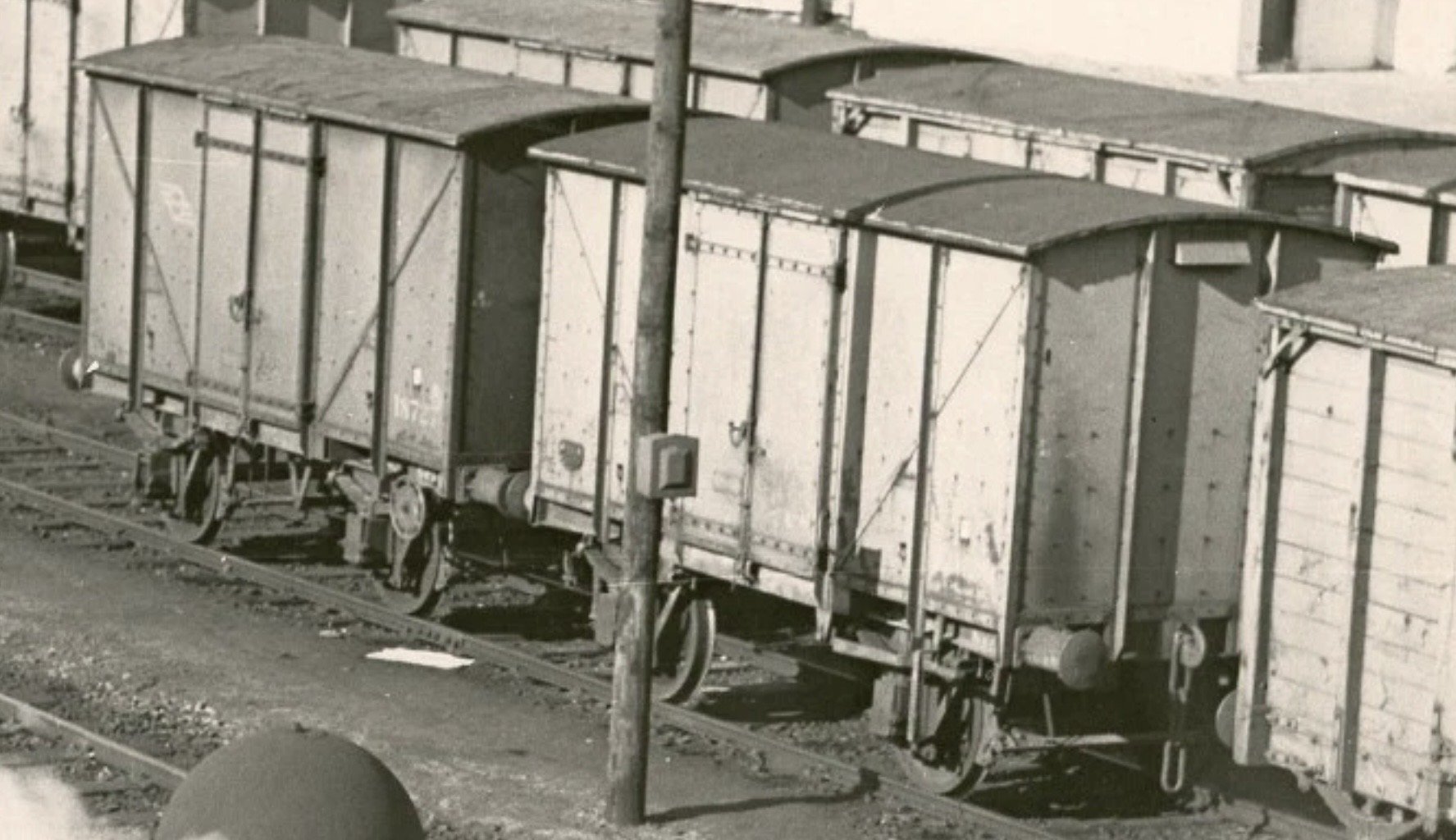
Another interesting H van photo. On the left, 18727 is a fitted H van. To its right is an unfitted H van with the earlier or less common brake configuration - 4 brake blocks outboard of the wheels. It has its numberplate on the side of the body rather than on the underframe, but I can’t make out the number.
-
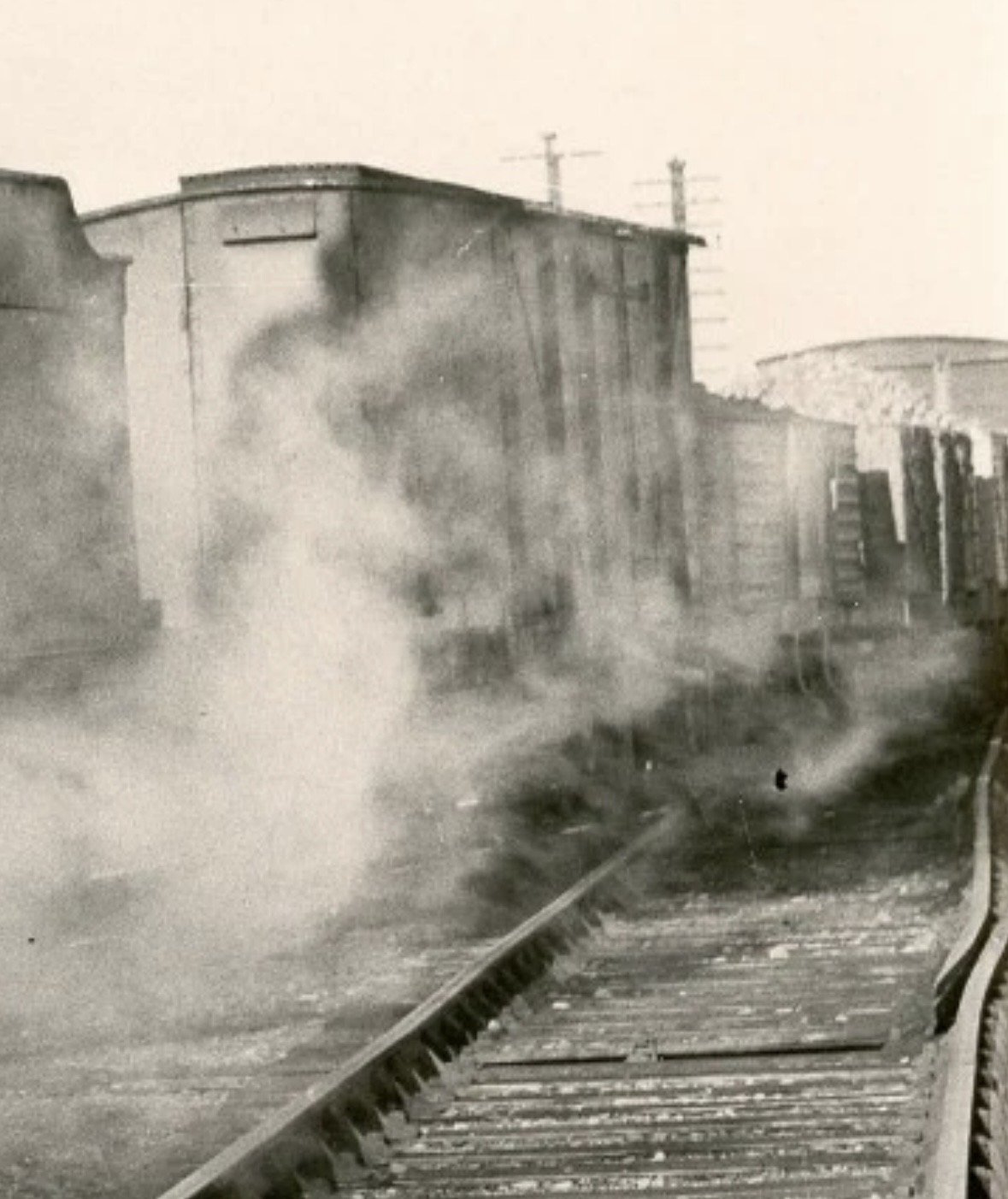
On the topic of H vans, what do people make of this? I’ve seen mention in official documents of a fibreglass-roofed H van, but this looks almost like a mini clerestory roof.
-
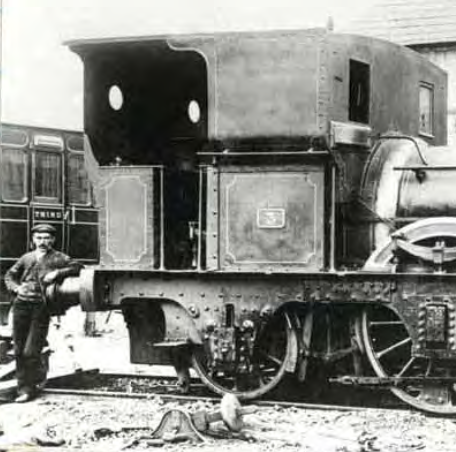
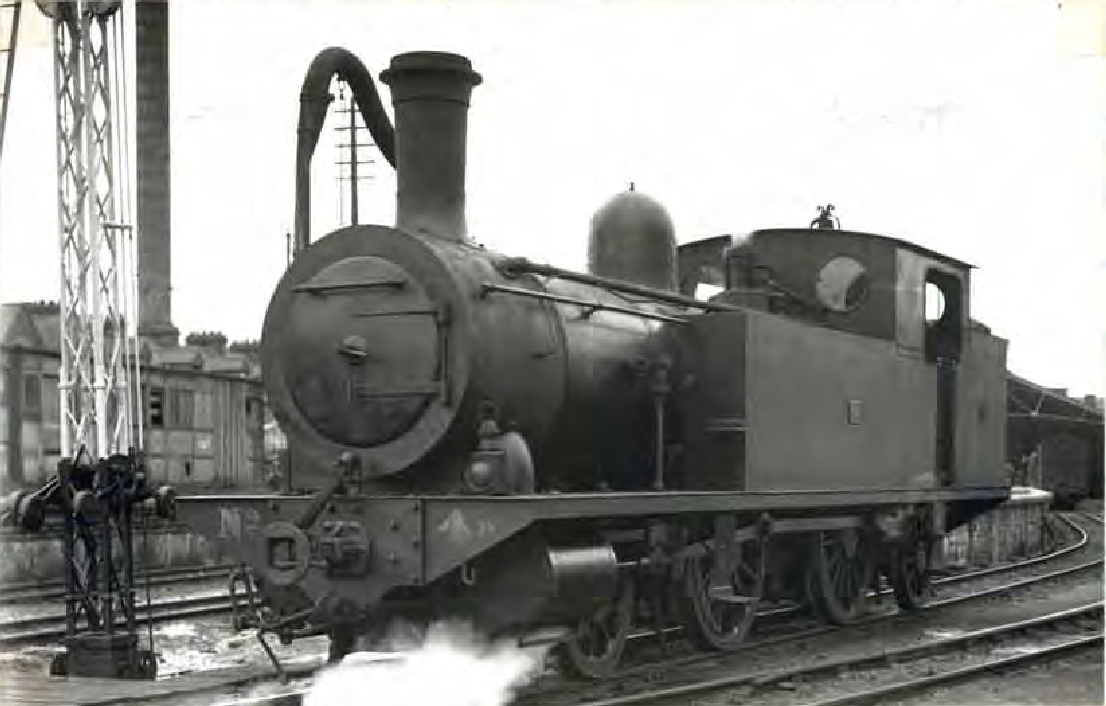
Carriages. This is more tricky. For the first season, the CB&PR contracted out the operation of its line to John Dawson of the Phibsboro' Coach Works, Dublin. Dawson was one of several builders of railway carriages in Dublin in the 1850s, and also supplied stock to many other early lines including the MGWR, W&TR, DW&WR, W&LR etc. Looking at the histories of those lines it appears that as well as building new stock, he later also traded in second-hand carriages. It is likely that Dawson provided the initial coaching stock for the CB&PR, and (unlike the locos) this arrived in time for the trials in May 1850. Dawson only ran the line for a year, after which the railway company purchased the rolling stock and operated it themselves. In the Oakwood Press book on the CB&PR attributed to Stanley C Jenkins, the chapters on the early history of the line were actually written by A.T.Newham. He had this to say on the broad gauge coaching stock: Later in the text: I have only found one photo that shows the coaching stock in use; this is post-1890 and shows a train of 7 small carriages, with a variety of styles and profiles: The normal timetable provided an hourly service, and the journey time was only 15 minutes, so a single train would have been sufficient. Until the 1880s there were no passing loops on the line, so it would have been impractical to operate a more frequent service. However, once the loop at Blackrock was installed, two-train services could operate at busy times. The first quote above lists a total of 15 carriages which would be enough for two trains of this length. The quoted snippets above may not tell the full story of the carriage fleet. However, it appears that there was a policy of building new first-class carriages and cascading the older stock to the lower classes. Given that the railway operated on the broad gauge for 50 years, some of the original stock may have been scrapped in that time; i.e. there may have been more than 15 carriages in total during the life of the railway. The train in the 1890s photo above shows several flat-sided coaches which are in the 1850s Dawson style, so I suggest that some of the originals would have lasted throughout. Comparing with what was being supplied to other railways at the time, these were probably 4-wheelers and about 22' long. The coaches with curved sides are likely to be the additional vehicles purchased in the 1860s-1880s period. These might well have been 6-wheelers, but still probably shorter than the 'standard' 30'. A photo of loco No.3 includes a slice of carriage on the left hand margin, but I'm pretty confident this is a new narrow gauge carriage: On the other hand, a much later photo of loco No.4 shows what appears to be the grounded body of a broad gauge carriage in the background, and this bears a resemblance to the second carriage in the photo of the train above: It would be interesting to look at old photos and drawings showing other Irish railway coaches and see if they would give clues on the dimensions and body styles of the CB&PR coaches. Whilst the GSWR was an early convert to 6-wheelers, the MGWR was still ordering new 22' 4-wheelers in the 1860s and 1870s. For example, there's a drawing of one in Ernie Shepherd's MGWR book, a third saloon with longitudinal seating and 2 doors per side. Pages 15 and 28 of that same book show 1870s photos of similarly small and primitive stock which may give hints to the 1850s/1860s style of vehicles used by the CB&PR.
-
The CB&PR locos weren't delivered in time for opening day. At least one GSWR 2-2-2 was borrowed, possibly initially by Dargan for ballasting etc. This was also a Sharpie 2-2-2, but it was a tender loco, which explains why the Illustrated London News engraving at Dundanion shows a tender loco with larger driving wheels that the CB&PR tank engines. There is also a written report from May 1850 describing a trial train for the directors and shareholders 'as many as could be accommodated on both engine and tender, besides what the carriage could contain.' In the Oakwood Press book on the CB&PR attributed to Stanley C Jenkins, the chapters on the early history of the line were actually written by A.T.Newham. That source states that the loco borrowed was GSWR No.2. On the other hand, the book 'Railway History in Pictures: Ireland: Volume 1' by Alan McCutcheon states that the GSWR lent two of its locos to the CB&PR at this time. Two locos, or one loco numbered 2, or perhaps two locos one of which was numbered 2?
-
Good work! I also have to apologise for lack of progress. I am still working on research but owing to work and family commitments I’ve had no time for modelling or CAD work recently. Sorry! Hopefully I’ll have things under control again soon.
-
The Achill Explorer - a Bustitution Railtour
Mol_PMB commented on Niles's event in Community Calendar
@Niles, I think we’ve broken JB. At least he’s stopped talking, and I’ve never known him do that before -
Excellent! I thought that looked like a good deal. Missed your company on the Achill trip today, but it’s been good to catch up with a few others.
-
Interesting - so some of the Belmod coaches join the short list of Irish-built rail vehicles to run in GB.
-
Marks Models at Greenogue have an unbuilt SSM kit for a GNR T2 loco, appears to be complete with wheels, gearbox, motor. €125. They also have several Backwoods and Branchlines etched kits for CDR and CVR narrow gauge stock. Plus plenty of the MIR wagon kits (ferts, bubbles, 20’ and 40’ flats) going cheap, though most of those have now been superseded by IRM RTR models.
-
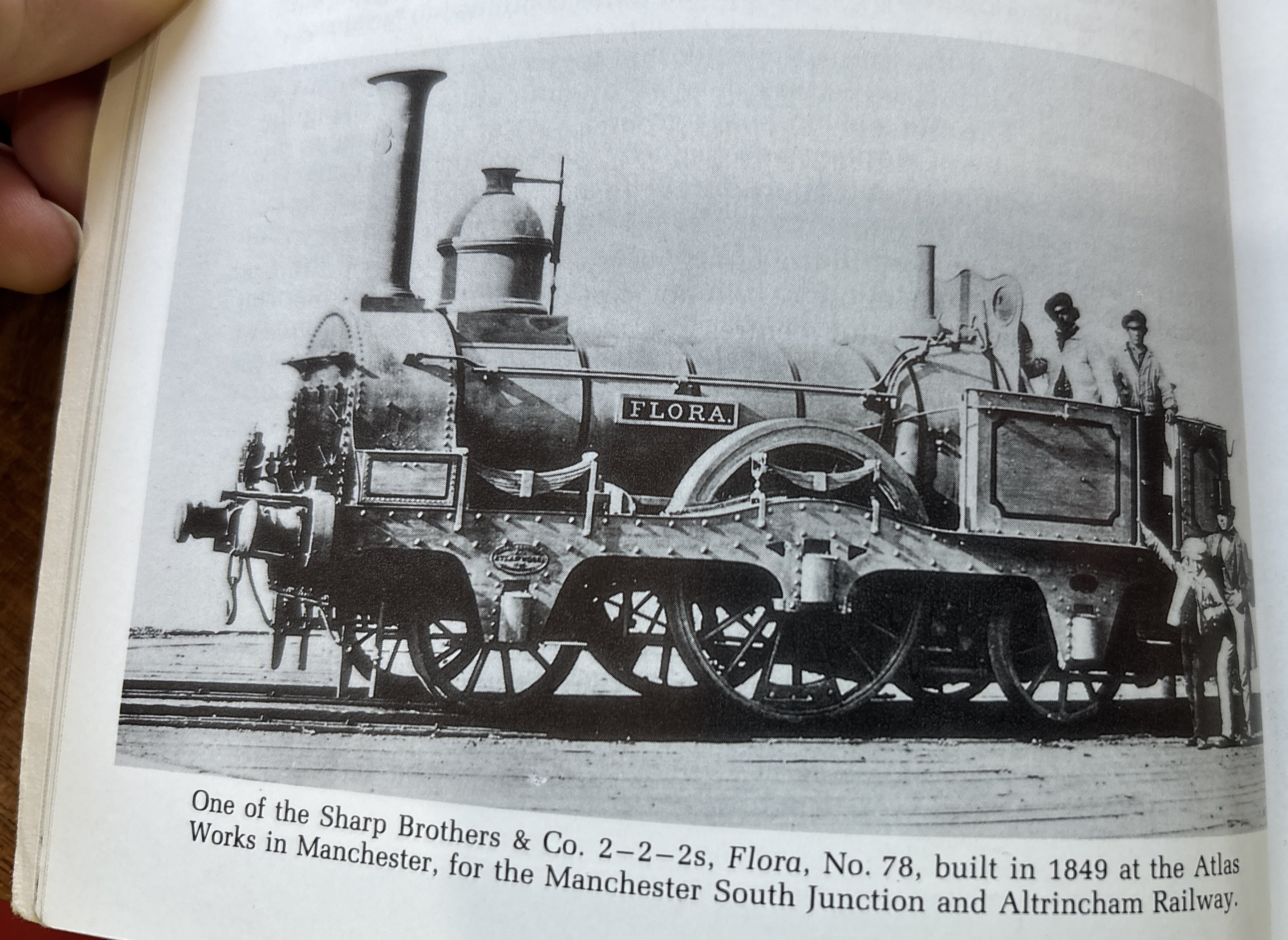
Here’s another view of an MSJ&A Sharpie, which appears in the Oakwood Press book on the line: The MSJ&A line ran within 100 yards of Sharp’s Atlas Works, but there was never a rail connection to the factory.
-
Straying a little from Ireland, there is a working replica Sharpie 2-2-2 in Denmark. It's a tender loco rather than a well tank, but otherwise similar to the CB&PR locos:
-
So Lovely 2C You - Mark 2 Production Samples Are Here
Mol_PMB replied to Warbonnet's topic in British Outline Modelling
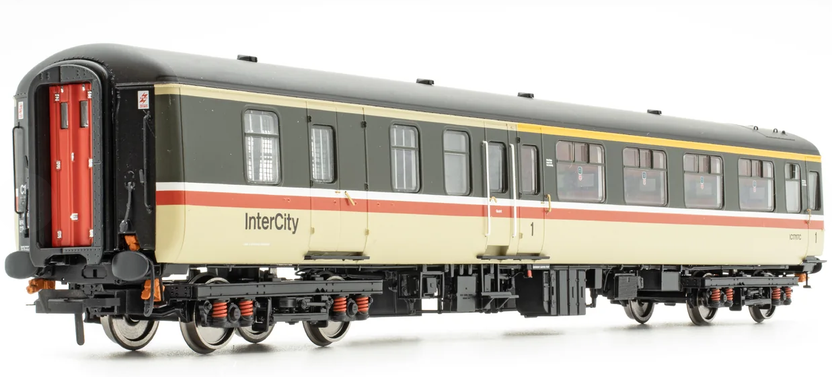
With a handful of the Mk2C BFKs still available, I've been mulling over a conversion project. As if I don't already have too much to do! But the NIR driving trailers seem in short supply and I think it would be a fairly easy fix to convert one of these: into one of these: I think it's really just adding two cab windows and two headlights, plus a repaint. Somewhere I have a spare set of broad gauge bogies, though I haven't seen them for a while. The unique DBFO 813 was delivered in the maroon and blue: https://www.flickr.com/photos/irishrailwayarchive/53511736095/ Later carried the grey/blue livery: https://www.flickr.com/photos/irishrailwayarchive/54419841610/ https://www.flickr.com/photos/irishrailwayarchive/54419645964/ and then the grey/blue/white as shown in Neil Smith's photo above. Ideal for a shorter low-season Enterprise rake.
-
If it stays there much longer someone’s going to find the big NIR stencil and some white paint…
-
The three 2-2-2T locos were built by Sharp Brothers in Manchester. The firm Sharp, Roberts & Co was formed in 1826 in Manchester, operating the Globe Works and the Atlas Works. Amongst other things, they built steam locos including 'Hibernia' for the Dublin & Kingstown Railway in 1834. In 1837 they introduced a new design of 2-2-2 loco, no doubt with significant influence from their draughtsman Charles Beyer (later a founder of Beyer Peacock). About 600 of these 'Sharpie' 2-2-2s were built over the following 20 years for railways around the world - whilst they varied in dimensions, the basic design was consistent and successful. In 1843 the partnership with Roberts was dissolved; the Atlas Works was thereafter run by Sharp Brothers with Charles Beyer as chief engineer. This factory was on Oxford St and Great Bridgewater St, close to Manchester Oxford Road station. In this period their production of 2-2-2s included the first 20 locos for the GS&WR, as well as the 2-2-2WTs for the CB&PR. In 1852 the firm was renamed Sharp, Stewart & Co, continuing in the same business and building 2-2-2s, later also larger locos. Beyer left in 1853 to form his own firm with Peacock. Sharp, Stewart relocated from Manchester to Glasgow in 1888. Although built 16 years after the CB&PR locos, this Sharp Stewart 2-2-2WT for the Furness Railway has a lot in common with its Irish cousins: (Photo from Historical Railway Images on Flickr) Sharp, Roberts and Co - Graces Guide Sharp Brothers and Co - Graces Guide Sharp, Stewart and Co - Graces Guide