.png.c363cdf5c3fb7955cd92a55eb6dbbae0.png)


Mol_PMB
-
Posts
3,869 -
Joined
-
Last visited
-
Days Won
239
Content Type
Profiles
Forums
Events
Gallery
Blogs
Everything posted by Mol_PMB
-
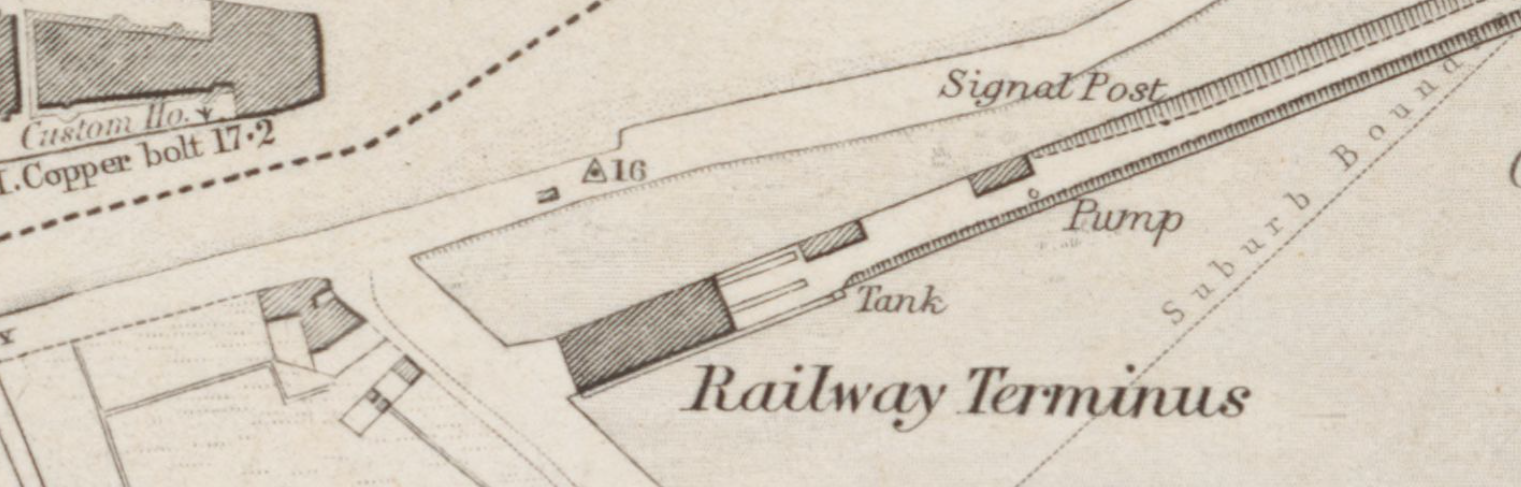
This page has a nice photo of the original station too: 9. The Old Railway Line | Cllr. Kieran McCarthy http://kieranmccarthy.ie/wp-content/uploads/2022/01/9b.-Cork-Blackrock-and-Passage-Railway-Company-Terminus-Cork-South-Docks-c.1860-now-demolished-900x759.jpg Note the water tank visible in the right background which is shown on the NLS map:

-
The former Victoria Road / City Park station:
-
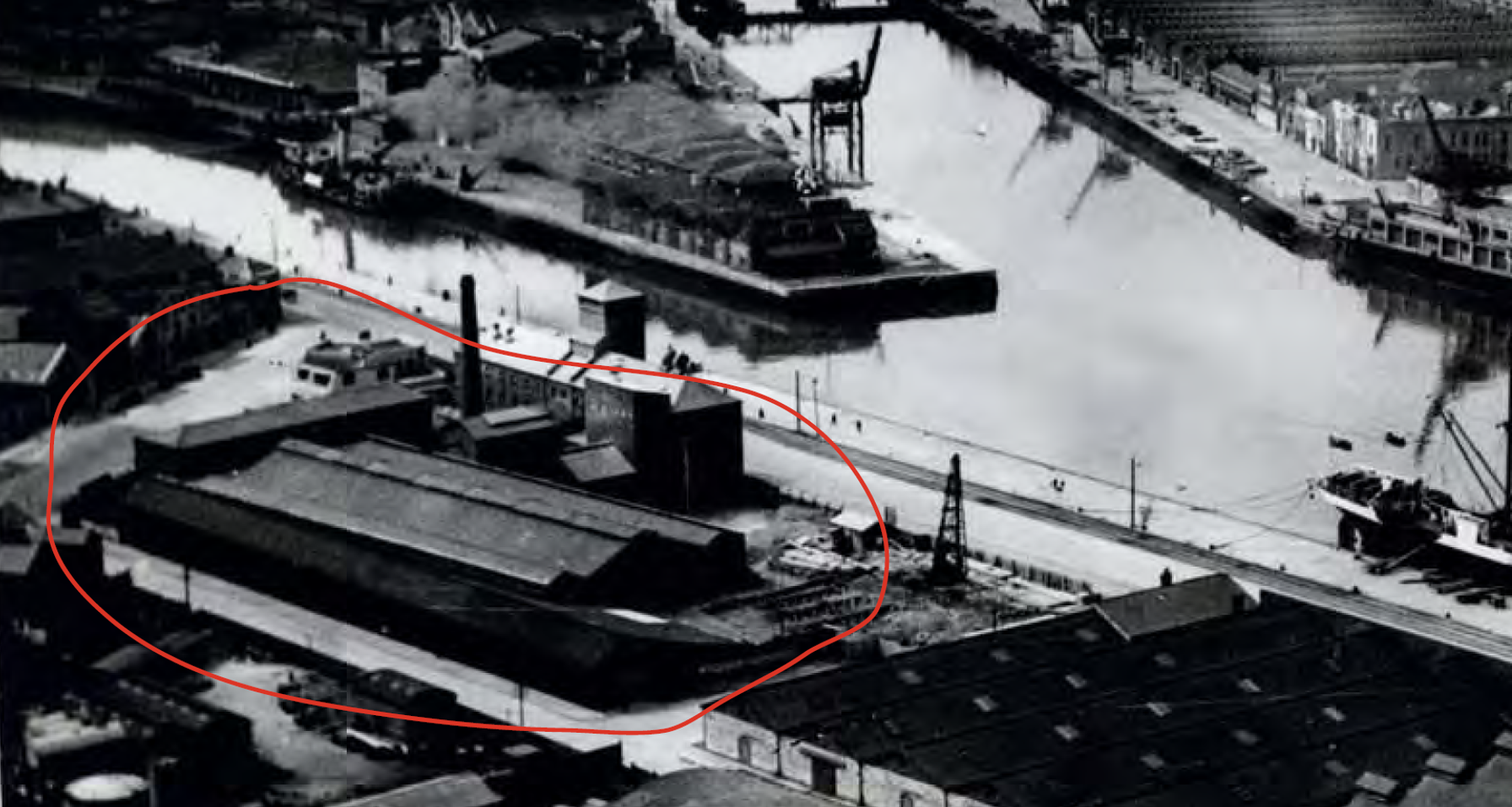
A few useful links on the early history here: Cork Blackrock & Passage Railway 5c. On Track, Cork & its Railway Heritage | Cork Heritage Map of the Cork City Railway, with Albert St station at C and the former Victoria Road (City Park) station roughly where the word 'Marina' is. The lines shown onto Victoria Wharf weren't installed until long after the CB&PR was converted to 3' gauge. Image 9 in this lot (I can't seem to get the link to work direct to image 9) shows an aerial view with the CBPR approaches to Cork visible: https://digital.corkpastandpresent.com/Documents/Detail/aerial-photographs-of-cork-city-and-crookhaven/105267?item=105277 Some of the other images also show the same area. Image 13 is a good one too. By the date of these images the Victoria Road station had been demolished to make way for new mill buildings, and the Albert Street station had closed and been converted for other use.
-
Nice - thank you. It's interesting that the three locos seem to have ended up different to each other. No.1 and No.2 had flat sides to the cab, but No.2 had a small saddle tank added. No.3 had a wider upper cab, and a different style of buffer. All these photos show the locos fitted with vacuum brakes, so I assume they are from the latter years of broad gauge operation (1890s) I also found these: (from https://oldphotosofcork.files.wordpress.com/2020/05/98195547_2891388294291418_8321570423867179008_o.jpg) Plus Colm Creedon's notes (linked in my first post) include a photo of a train at Passage in 1897, and another photo of No.2 with its saddle tank.
-
I've is busy at present as I'm away from home a lot with no time for modelling. But after a recent discussion which touched on the railway stations of Cork, I have spent a few odd moments looking at the two termini of the broad gauge Cork, Blackrock and Passage Railway. These don't get much coverage in the normal Irish Railway books, as the first was abandoned in the 1870s and the second regauged to 3' in 1900 and then abandoned in 1932 - nearly a century ago. However, the buildings themselves both long outlasted the railways. I just thought I'd jot down a few links and bits of information in this thread in case anyone else was interested. Please feel free to add more on the topic, ideally keeping to the pre-1900 broad gauge theme. A proposal for a railway from Cork to Passage was first made in the 1830s. This map shows the entire route, running on the south bank of the river. At the city end it is shown going further west than the line actually built, and terminating where the City Hall is now: 1836 Cork–Passage Proposed Railway - Cork Past & Present The line as actually built in 1850 followed a similar route but terminated east of Victoria Road, at a station known as City Park or Victoria Road. There are a couple of maps from 1852 and 1872 here which show the location: The Catholic Heritage Association of Ireland: Back on the Rails II - All Rails Lead To Cork Also here: View map: Ordnance Survey of Ireland, Cork Sheet 74 (St. Finbar's;Inishkenny;Carrigaline;St. Anne's, Shandon;Caherlag;Carrigrohane;St. Nic... - Ordnance Survey Six-inch Ireland, 1829-1969 Colm Creedon's research notes available on the Cork Local Studies website include some more detailed plans of the City Park terminus Cork, Blackrock and Passage Railway 1850 - 1932: digital format · Cork Local Studies Digital Archive Colm Creedon also found a couple of external photos of the buildings in 1878 and 1932 (both after it had been closed as a railway station) and they can also be seen in the document linked above. The station building including the train shed remained as part of the mill complex built around it, at least into the 1930s. I imagine that many of these plans and photos are reproduced to a better quality in Colm Creedon's book on the CB&PR, but that book is hard to find. In the early 1870s about 2km of the western end of the line was realigned further south, to free the river bank for development of quays and industries. A new terminus was built alongside Albert Road, about 200m south-west of the original, and it opened in 1873. At this stage the line was still 5'3" gauge. Colm Creedon's notes (linked above) include trackplans of this station in its broad gauge days; there was also a siding towards the mills on the quay. This map shows the realigned route: View map: Ordnance Survey of Ireland, Cork - Sheet 74 (includes: St. Finbar's;Inishkenny;Carrigaline;St. Anne's, Shandon;Caherlag;Carrigro... - Ordnance Survey Six-inch Ireland, 1829-1969 I think the 25-inch map at this location shows the broad gauge era at Albert Street, though the track layout may be simplified: Irish Townland and Historical Map Viewer I don't think there was ever a link line between the CB&PR and the Bandon or Macroom lines. And the CB&PR was regauged well before the Cork City Railway was constructed. When the line was regauged to 3' in 1900, the Albert Street station was re-used, but with a very different layout of tracks and platforms. The building still exists today, though probably threatened with re-development. There are several photos of the broad-gauge locos - there were three, all 2-2-2Ts. Here are 3 images: No.2 - 2-2-2WT - built 1850 by Sharp Bros & Co., W… - THE CORK, BLACKROCK & PASSAGE RAILWAY - transportsofdelight No.1 - 2-2-2WT - built 1850 by Sharp Bros & Co., W… - THE CORK, BLACKROCK & PASSAGE RAILWAY - transportsofdelight No.2 - 2-2-2WT - built 1850 by Sharp Bros & Co., W… - THE CORK, BLACKROCK & PASSAGE RAILWAY - transportsofdelight There are a couple more photos in Colm Creedon's notes that may also be published elsewhere, but so far I've only found about 6 images of the line in broad gauge days. Good views of the other rolling stock seem non-existent. That's what I've found so far but I may do some more research. I was idly wondering whether it might make an interesting 'what-if' layout imagining the scenario that it remained 5'3" gauge and thrived into the early 1960s and perhaps beyond - a busy but small city suburban terminus.
-
The Achill Explorer - a Bustitution Railtour
Mol_PMB commented on Niles's event in Community Calendar
A couple of quick admin questions. I will be starting at Heuston and have a Tailte ticket including rail travel. It's an electronic ticket with QR code. Will there be a Tailte representative at Heuston or only from Kildare? Will this Tailte ticket be accepted on the bus transfer? Where at Heuston do the bus transfers leave from? Many thanks, Paul -
Rare Books from The Syndicate (supporting Irish railway preservation)
Mol_PMB replied to leslie10646's topic in Weblinks
I've just had another look through the list and there are some great titles there at good prices - recommended! I may be dropping Leslie a message to get a few for myself. One book that may pass under people's radar that I would highly recommend: 50 Years of Railway Life by Tatlow. We've probably all read footplate reminiscences from the 1950s but this is something else entirely - it was first published in 1920 and so the 50 years start in the 1860s. It's a first-hand account of life on the railways in Victorian times. Tatlow started his career as a Midland clerk in Derby, then moved to Scotland, but spent most of his life in Ireland, rising to become a senior manager and then a director of the MGWR. -
Brass etches for Mol's GSWR 50ft GSWR third - ORDERING NOW!
Mol_PMB replied to jhb171achill's topic in Irish Models
The RPSI has 837, which is being restored to act as extra seating for the cafe at Whitehead: https://www.steamtrainsireland.com/rpsi-collection/66/837-open-third So 2 of the 10 have survived in good condition - not bad considering they were built in 1902! This was one of the reasons I chose this type of coach to model. -
Brass etches for Mol's GSWR 50ft GSWR third - ORDERING NOW!
Mol_PMB replied to jhb171achill's topic in Irish Models
A summary of the liveries carried by some or all of this class are as follows (thanks to JB for the basis of this). 1. All-over dark "lake" (an extremely dark brownish red) with GSWR markings 1902-25 2. For any used on main lines after 1906, same with white upper panels. This is the livery 836 is preserved in. Being only a few years old in 1906, they were front line stock and it's likely that some of them received this scheme when repainted. 3. All-over dark lake but with GSR markings, 1925-early 30s. 4. Some of these did receive the short-lived GSR "main line" livery of chocolate brown and cream (late 1920s to mid 30s) - there is photographic evidence. 5. Standard GSR all-over maroon, same as LMS maroon in Britain (and for that matter NCC & BCDR here). 6. From around 1946, CIE dark green with elaborate lining, snails and 3 digits on the doors 7. From around 1951, CIE plain dark green with no lining, snails or class digits 8. From 1952, the tea cars used with railcars had CIE plain dark green with a single thin EdN waist line. No snails or class digits. 9. From 1954, CIE brilliant green with a single thin EdN waist line. No snails or class digits. 10. From 1956, CIE brilliant green with a single thin EdN waist line and 2 digits on the doors. No snails. 11. From 1959, some may have received snails on a livery similar to 10, but I haven't yet found a photo like this. I have not yet found a photo of any in 'black and tan'. It's possible; some other carriages of a similar era and shape did receive that livery. There were also some more liveries once they were withdrawn from passenger service: 837 was converted into a camping coach no.8 and was painted in a bright red and white/cream livery. Later it became departmental 530A and was painted red oxide (including ends), and later again dark red (including ends). 836 was also subsequently in departmental use (463A). Initially repainted in dark green, it was later very dark grey with red oxide ends. 835 became departmental 540A and may have had had another different livery but I'm not sure what it was. -
I like the carriages at Athenry. With 2 on the doors it will be after June 1956.
-
If you don't find one, note that Accurascale do presently have small numbers of the sets of 3 in stock - of your preferred era. I assume they have found a few more in the warehouse as these haven't been available for some time. You might be able to flog the other two? https://www.accurascale.com/collections/bullied-wagons?filter.p.m.Custom.Availability=In+Stock I've found the IRM 20' containers hard to find these days - I did get eventually a pair of the CIE side-door versions on eBay but at a premium price.
-
If you buy the property, you could ask about the fixtures and fittings?
-
It looks like Accurascale have been sweeping out the dark corners of the warehouse again, as small numbers of some old items are showing in stock. A few are even discounted... https://www.accurascale.com/collections/irish-models?filter.p.m.Custom.Availability=In+Stock&sort_by=created-ascending These include Bulleid flats, corrugated opens, and grain vans, plus Esso tanks. There are also some Irish accessories in the general listing: https://www.accurascale.com/collections/in-stock-now?page=2&sort_by=created-ascending https://www.accurascale.com/products/rawie-friction-bufferstop-standard-irish https://www.accurascale.com/products/y33-y33-sambre-et-meuse-bogie-pack (3 colours available) Must confess I'm wondering about getting another set of grain vans for the stash...
-
Longest lived is undoubtedly the preserved loco, in its present condition. But not many miles…
-
I continue to work on the instructions but I'm not quite finished yet. Apologies for this - I have a lot going on in life at present and limited time to spend on this. I haven't done any actual modelling for a while but I am trying to find time to finish the instructions. I'm aware that some people are looking to order these so I need to provide the instructions for you. Here is an updated, still incomplete version. GSWR_50'_Instructions.pdf I have also prepared artwork for the brake third version. At present I have so many other things going on in life that I haven't been able to prioritise getting an etch made. The AEC railcar drawings are also on the list, as are some Park Royal conversions. Too much to do and not enough time. Sorry. Please be patient.
-
From Brian Daniels on Flickr. From Ernie, the box but also note the accommodation in the background. These buildings seem to have changed in style over the years - I'm not sure if they were completely replaced or heavily modified. More recent view from Marius: A search on Flickr for Butlins Mosney will produce lots of old photos of the holiday camp.
-
My impression is that the Bandon tanks weren’t often used on west Cork passenger services at this time. The Ivatt tanks gave way to diesels. Of course the Bandon tanks were popular for railtours which comprise many of the photos but are atypical.
-
In the 1980s the Dublin suburban services were in a separate WTT to the main line services, and I only have one example of the suburban WTT which is summer 1983 (a year before the DART began, but perhaps affected by DART infrastructure works). At that time, only some of the outer suburban services called at Mosney, others went past without stopping. But in season, one Enterprise called there. Here are the southbound weekday services that called: 0720 Drogheda - Bray (Mosney 0733) 0806 Drogheda - Bray (Mosney 0816) 0810 Dundalk - Pearse (Mosney 0851) 0950 Mosney - Pearse 0850 Belfast - Connolly (Mosney 1058 during Butlins holiday season only) 1035 Dundalk - Pearse (Mosney 1119) 1141 Drogheda - Pearse (Mosney 1154) 1256 Mosney - Pearse 1328 Mosney - Pearse 1340 Dundalk - Connolly (Mosney 1424) 1506 Drogheda - Dalkey (Mosney 1519) 1611 Mosney - Bray 1645 Dundalk - Connolly (Mosney 1727) 1813 Drogheda - Connolly (Mosney 1826) 1944 Drogheda - Pearse (Mosney 1957)
-
This is perhaps more your era? GNR 85 when it was still in front line service on the Enterprise, passing a GNR AEC set calling at Mosney: https://www.flickr.com/photos/irishrailwayarchive/53507047875 And I do hope there will be space for this in the background:
-
From Jonathan Allen, a terminating loco-hauled train running round, and then waiting for the Enterprise to pass before heading south again: 042 at Mosney | Butlins established a holiday camp at Mosney… | Flickr 087 passing Mosney | As 042 waits, 087 passes Mosney with th… | Flickr From hgricer, a Mk3P-P: 6103 & 123 on the rear. | A nice new push/pull 6103 123 at t… | Flickr Also from hgricer, a loco-hauled set with details of one of the trains that terminated at Mosney (read the comments): 121+124 Malahide | 121+124 at Malahide with 16.12 Mosney / C… | Flickr And another suburban train leaving the loop. With only one platform on the down side they had to cross over to the up line: 055 departng Mosney loop. | 055 departing Mosney loop with 1… | Flickr From Neil Smith and from the era when the C class were still around, here's a train that terminated at Mosney, seen both northbound and southbound: Plenty of options!
-
Also worth noting that quite a few suburban trains terminated at Mosney, even into the 121+Mk3PP era. So not all the trains have to just go by - some of them can terminate and run round (if needed).
-
Interestingly it looks like the character of the foreshore has changed over the years. In the 1980s and 1990s it was scrub and gorse (here's another hgricer photo, and one from Jonathan Allen): 042 at Mosney | Butlins established a holiday camp at Mosney… | Flickr But more recently bigger shrubs and small trees have grown up, as in this photo by Finbarr O'Neill: Here's a link to the IRRS track diagram: https://live.staticflickr.com/65535/51569723683_0f65f19910_c.jpg And a few more interesting workings from hgricer and Roger Joanes: Note the evolution of the track and signalling too. In this photo the Up (southbound) line has been relaid with flat-bottom CWR on concrete sleepers, but the other two tracks are still jointed bullhead on timber:
-
If only it was an AEC instead of an ICR, it would look much like this...
-
A very good mix of passenger and freight trains through there. In a landscape that is quite flat in the prototype, you would need some creativity to avoid the 'flat earth' often seen on model railway baseboards. I think the key would be to represent the levels dropping away down to the beach in subtle undulating dunes. i.e. allow for scenery below track level by having the track a few inches above the baseboard frame. Photo from hgricer on Flickr; there are plenty more nice photos on there - search also Jonathan Allen's:
-
Get one of those new Rapido open carriage trucks for it to haul, and put a Delorean on it.