Galteemore Posted December 7, 2025 Posted December 7, 2025 53 minutes ago, Horsetan said: It wasn't the carpet! I put the body in a box temporarily, and now I can't find the box!!! Sounds like a particularly incompetent murderer talking to defence brief ! 6
Horsetan Posted December 7, 2025 Posted December 7, 2025 34 minutes ago, Galteemore said: Sounds like a particularly incompetent murderer talking to defence brief ! More like a "retired" 'RA member trying to remember where he buried one of the Disappeared.
jhb171achill Posted December 7, 2025 Posted December 7, 2025 1 hour ago, Mol_PMB said: Ah, a "Safe Place". I've made that mistake a few times too. Hmmmm indeed. I have many such "safe places", wherein dwell model railway stuff, one set of house keys, an IR£4 winning lotto ticket, two sets of car keys, at least one mobile phone, an expensive jacket, a practically unused 10-day CIE runabout ticket from summer 1979 and gawd only knows what else. Trouble is, they are VERY safe. VERY safe indeed. 4
Galteemore Posted December 7, 2025 Posted December 7, 2025 Big question of course Alan is - what’s next ? New loco for Kilmore ? 1
Tullygrainey Posted December 7, 2025 Author Posted December 7, 2025 7 hours ago, Galteemore said: Big question of course Alan is - what’s next ? New loco for Kilmore ? I've been trying to resist that temptation David. Kilmore needs some attention to get it properly operational, I have half finished wagons that need doing and other bits of rolling stock I'd like to have a go at. But then again.... 6 3
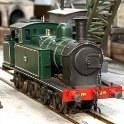
Galteemore Posted December 7, 2025 Posted December 7, 2025 (edited) Excellent. Old no 9 - which was re numbered when the BCDR’s last 4-4-2Ts were delivered c1945 I think Edited December 7, 2025 by Galteemore
Tullygrainey Posted December 8, 2025 Author Posted December 8, 2025 15 hours ago, Galteemore said: Excellent. Old no 9 - which was re numbered when the BCDR’s last 4-4-2Ts were delivered c1945 I think Yep that's the one David. Built originally as a tender engine in 1887 but subsequently converted to a tank engine. Marked down for scrapping in 1929 but survived derelict until the UTA takeover. Lost its number to a new bogie tank in 1945. (Information from Desmond Coakham's book) I thought it might be interesting to try building a 0-4-2 chassis with drive on the front axle and the other two axles compensated. It ought to be possible to hide a motor/gearbox in the smokebox and boiler. Much the same as my chassis for BCDR No.6, just the other way round. 2
Horsetan Posted December 8, 2025 Posted December 8, 2025 1 hour ago, Tullygrainey said: ....I thought it might be interesting to try building a 0-4-2 chassis with drive on the front axle and the other two axles compensated. It ought to be possible to hide a motor/gearbox in the smokebox and boiler.... Anyone fancy a go at Sambo?
Mol_PMB Posted December 8, 2025 Posted December 8, 2025 28 minutes ago, Horsetan said: Anyone fancy a go at Sambo? I don’t think either Sambo or Negro would be acceptable these days. The GSWR did choose some strange names for their locos. 1
Metrovik Posted December 8, 2025 Posted December 8, 2025 1 hour ago, Mol_PMB said: I don’t think either Sambo or Negro would be acceptable these days. The GSWR did choose some strange names for their locos. Never realised Sambo was a derogatory term til now, I had always thought they named the loco after a sandwich! (That term actually dates from the 1970s) 1 1 1
cheesy_peas Posted December 8, 2025 Posted December 8, 2025 1 hour ago, Mol_PMB said: I don’t think either Sambo or Negro would be acceptable these days. The GSWR did choose some strange names for their locos. I imagine the choosing of Sambo and Jumbo was from popular culture of the time; Jumbo the Elephant being world famous in the mid to late 1800s, he unfortunately (and ironically) met his end when a train collided with him and his remains were mounted and put on display by a certain PT Barnum. The Story of Little Black Sambo was a hugely popular childrens' book first published in 1899. Unusually for the time, the main character was one of the first black heroes in childrens' literature, a positive portrayal of black characters compared to contemporary books that regarded black people as uncultured and uncivilised, unfortunately the characters' names chosen were of course racial slurs. 1 1 1
Killian Keane Posted December 8, 2025 Posted December 8, 2025 0-4-2 tank, a rare type in Ireland, tender versions were common enough in the 19thC The WLWR did however have a very handsome example 9
Tullygrainey Posted December 23, 2025 Author Posted December 23, 2025 A wagon for Kilmore. This is the Weighbridge Fitters' van, apparently a one-off with no number. Desmond Coakham speculated that it was built on the chassis of a ballast brake ordered to be broken up in 1908. I used plasticard for the body with some brass strapping from an Alan Gibson etch. The sides apparently differed from one another but the two photos I was able to find were both of the same side so I guessed the layout of the hidden side based on the description in Desmond Coakhams' book. (The Belfast and County Down Railway, Colourpoint, 2010) The chassis uses an MJT compensation etch to create one fixed and one rocking axle mounted on a brass floor. These will do the work of carrying the wheels behind the scene. Brake details came variously from Gibson and Brassmasters wagon chassis etches. All of this then hides behind the outside W irons typical of BCDR rolling stock. They are cosmetic in this model and are superglued to the sole bars. Along with spring units, they are pre-production 3D printed items from Enda Byrne (ckprints.ie) which I got the opportunity to try out (many thanks to Gareth Brennan, Kieran Lagan and Enda for moving this along). They're finely printed and suit this project well. I used tissue paper to texture the roof, flooding it with liquid poly to bond it to the plastic card. The skylight is also a guesstimate since the available photos don't show it well. Next, paint, transfers and weathering. Some couplings, then it's just about ready to go. There are a number of errors (should have a window in each end for one thing) which I'm not going to lose sleep over. 8 3
popeye Posted December 23, 2025 Posted December 23, 2025 That's a nice wagon and looks well. Now take a few days off for Christmas 1
Colonel Posted December 24, 2025 Posted December 24, 2025 Unusual, to say the least, but all the more interesting! Fair bet that nobody is going to do an rtr version any time soon as well - though these days, who knows? Either way, another fine model. As for time off over Christmas, having hosted the family diaspora last week, it tends to be fairly quiet and having just seen the dismal range of stuff that the media has to offer am hoping Santa fulfils my usual wishlist of things to read, things to drink and things to make. Have a good one everybody. 2
Galteemore Posted December 24, 2025 Posted December 24, 2025 Fabulous and unusual. Your subtle finishing really works well 1
Tullygrainey Posted January 9 Author Posted January 9 (edited) I started this trio of BCDR vans ages ago then lost interest in them for a while. Bar couplings, they're just about finished now. Resin bodies. Chassis made using bits from Alan Gibson kits giving one fixed and one rocking axle. Gibson wheels. W-irons fabricated from MJT etches. Springs and axle boxes are white metal castings, also from MJT. Edited January 11 by Tullygrainey typo 16
popeye Posted January 9 Posted January 9 Very nice, they will look good behind a loco or in a goods yard. 1
Tullygrainey Posted February 4 Author Posted February 4 (edited) More rolling stock for Kilmore. A six wheeler passenger coach from a Mousa Models kit this time. This is the 4th one I've built and, whilst I'm getting better at it, I still find them challenging. Lots of repetitive work with small fiddly bits. However, a new toy, a Resistance Soldering Unit from London Road Models is proving its worth and among other things made attaching all those ventilator panels above the doors so much easier. It's like having a third hand. Brilliant gadget! Seats from Slater's. Couplings are Kadee. The bolts that attach them also hold the chassis to the bodywork. Wheels from A Gibson. All are independently sprung and the centre axle has lots of sideways movement with the wheels mounted on a length of 2mm OD brass tube sliding on a 1.5mm diameter brass rod set between the pinpoint bearings. Edited February 4 by Tullygrainey 13 4
Mol_PMB Posted February 4 Posted February 4 Very nice indeed. Amazing how many ways a model 6-wheel chassis can be constructed. I have never tried a resistance soldering unit, I have been tempted a few times but I seem to be able to do most things with a conventional iron. But if you’re already finding it ‘brilliant’ then maybe I should consider it again. 1
popeye Posted February 4 Posted February 4 Another beautiful build That's why your ranked as a grand master. 1 1 1
Tullygrainey Posted February 5 Author Posted February 5 Thanks everyone. I’ve said it before, the support and encouragement on this forum is second to none. It’s a pleasure to be part of it. 2
Galteemore Posted February 5 Posted February 5 That’s really rather lovely. And your helpful illustrations of how you do things give hope to lesser mortals ! 1 1
Tullygrainey Posted February 5 Author Posted February 5 (edited) On 4/2/2026 at 4:13 PM, Mol_PMB said: I have never tried a resistance soldering unit, I have been tempted a few times but I seem to be able to do most things with a conventional iron. But if you’re already finding it ‘brilliant’ then maybe I should consider it again. If you're managing ok with the standard iron, then you maybe don't need an RSU. I have difficulty getting things like lamp irons, small overlays or similar soldered into place securely and straight. The act of removing the iron often causes the small item being soldered to shift or stick to the iron. The job often requires the iron in one hand, and a cocktail stick in the other hand holding the item in place. It can all get a bit crowded! I usually end up with multiple attempts and a load of excess solder which can be difficult/impossible to remove. One of the advantages of the RSU is that the probe holds the piece while soldering takes place. A foot pedal controls the action so the probe can be continue to be held on the job after the foot pedal comes off. The solder has time to solidify and the bit being soldered stays where you put it. Provided both surfaces are tinned and fluxed, it works well. There's a guidance video on the London Road Models website which is worth a watch and would help you decide if you need one or not. Edited February 7 by Tullygrainey Spelling - pedal not peddle! 1 1
Colonel Posted February 5 Posted February 5 That reminds me - I've got one of those! Should have been using it on the current railcar project. The extra hand it offers would have been very useful. 1
Horsetan Posted February 5 Posted February 5 On 4/2/2026 at 4:13 PM, Mol_PMB said: ...I have never tried a resistance soldering unit, I have been tempted a few times but I seem to be able to do most things with a conventional iron. But if you’re already finding it ‘brilliant’ then maybe I should consider it again. I have two, inherited from a friend a couple of decades ago - one Exactoscale, one London Road Models - neither of which I have ever used, as the traditional Antex 25w takes up less space. The last time I used the RSU was at the end of 2002...in Australia. It's certainly very quick, from what I can remember, but things like layers laminated together might still benefit from a wipe with a traditional iron. 2
Mayner Posted February 7 Posted February 7 Really neat work, think its time to invest in an RSU as my hands are not as steady as they once were. 1
Tullygrainey Posted February 11 Author Posted February 11 (edited) Something a bit different. A while ago, Kieran Lagan gave me this partially dismantled kit (now completely dismantled) of a Midland Railways Kirtley, an outside framed 0-6-0 tender engine. Neither of us have any idea of its origins. Loco and tender bodies are whitemetal. Chassis frames for the loco are solid lumps of brass with screw-in spacers. The tender chassis is a plastic moulding as are the outside cranks for the driving axles. Wheels look like Gibsons or good copies. The coupling rods are basic and pickups are confined to the tender. Both motor and tender chassis have the same logo. Any ideas anyone? Edited February 11 by Tullygrainey 3
Mol_PMB Posted February 11 Posted February 11 That looks like it will scrub up well with a bit of TLC. Outside-frame steam locos with cranks are always a treat to watch. Not a very common arrangement in Ireland I think, perhaps because the wider track gauge gave plenty of space for frames between the wheels. Ratio and K's did some early kits for Midland locos - possibly it is based on parts from those? 2
Rob R Posted February 11 Posted February 11 It's a late K's kit. Says on the keeper plate - stylized intertwined K and S logo. I have seen them done up nicely with new under pinnings, fettled boiler fittings and a decent paint job. 1 1 1
Horsetan Posted February 11 Posted February 11 1 hour ago, Tullygrainey said: Something a bit different. A while ago, Kieran Lagan gave me this partially dismantled kit (now completely dismantled) of a Midland Railways Kirtley, an outside framed 0-6-0 tender engine. Neither of us have any idea of its origins. Loco and tender bodies are whitemetal. Chassis frames for the loco are solid lumps of brass with screw-in spacers. The tender chassis is a plastic moulding as are the outside cranks for the driving axles. Wheels look like Gibsons or good copies. The coupling rods are basic and pickups are confined to the tender. Both motor and tender chassis have the same logo. Any ideas anyone? This looks like a mid-1980s K's spec. By this time, K's were operating out of a premises in Teignmouth, Devon. The wheels are K's own - they were mounted on "D"-ended axles to try to make quartering easier. Problem is that the plastic wheel centres can go brittle with age, and wobbly wheels aren't unknown. The biggest weakness is the motor - by this time, K's included the H2M motor in every kit except for their "Milestones" range - even the LMS Garratt kit had the H2M in it. Whilst it had a built-in gear cradle, quality was a bit hit-and-miss as the motors were made on the cheap. If you're really unlucky - as I was back then - the motor will lack proper bearings either on the front of the shaft (where the gear cradle is) or behind, or both. This is a factor in the H2M running hot even when not under load, which then leads to distortion. It's not really a suitable motor for anything heavier than a light shunter. 1 1
Tullygrainey Posted February 11 Author Posted February 11 (edited) Thanks everyone. I knew the collective knowledge on here would deliver. It wasn't a runner when Kieran got it and I reckon it wouldn't be worth the effort required to restore it to original form. Most of the outside cranks are damaged, some of the wheels are loose on their axles (the axles were seized in their bearings). The motor shrieks a bit and needs a fair bit of wellie to get it moving. There'd be no slow takeoff with that in the drivetrain. The coupling rods are pretty basic and just look toy-like. The white metal bodies are attractive though and fairly intact. They've been assembled with Araldite. Rather than scrap the whole thing, I'd like to make something using as much of the original as possible, or sensible: mainly the bodies and the wheels if I can get the rust off them. Add to these a scratch-built compensated chassis for the loco with a nice High Level gearbox and motor. For the tender, another scratch-built chassis with one fixed and two sprung axles. I have it in mind to build it with live chassis, picking up on the loco one side and the tender t'other. I've never done this before so I thought this was a good excuse for a little project. Gibsons have started selling tender wheels with one insulated and one non-insulated wheel on each axle so that makes things a bit easier. I'll need to short out half of the loco's wheels though. 4 hours ago, Rob R said: It's a late K's kit. Says on the keeper plate - stylized intertwined K and S logo. Ah, I see it now. Couldn't make sense of it before Edited February 11 by Tullygrainey 1
.png.c363cdf5c3fb7955cd92a55eb6dbbae0.png)
Recommended Posts
Create an account or sign in to comment
You need to be a member in order to leave a comment
Create an account
Sign up for a new account in our community. It's easy!
Register a new accountSign in
Already have an account? Sign in here.
Sign In Now